
A few months ago, we were all enamored of those darling Easter Bunnies. History, however, indicates these sweet furry critters may have a more eye opening beginning. And perhaps the Killer Rabbit of Caerbannog in Monty Python's "In Search of the Holy Grail" wasn't so outrageous after all.


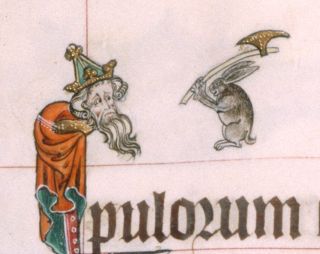


It's kind of reassuring to think this covert sense of humor survived during a time when so many had so little. And wouldn't this be a good plot devise, secret information in the margins of an old manuscript...or a new manuscript depending the time period and genre in which you write.
Facebook https://www.facebook.com/people/Gini-Rifkin-Author/100001680213365
Amazon author https://amzn.to/2R53KA9
Pinterest https://www.pinterest.com/ginirifkin/pins/
Goodreads http://bit.ly/2OnHbrK
Barnes and Noble http://bit.ly/2xPs9S4
AudioBooks https://adbl.co/2OlWbGJ
LinkedIn https://www.linkedin.com/in/gini-rifkin-15950489/
Universal link https://books2read.com/u/3JLGMv
The wild rose press https://wildrosepress.com/?s=rifkin&post_type=product&type_aws=true
The drawings certainly are interesting ( and a bit disturbing, lol) Thank you for sharing, Gini!
ReplyDelete