Showing posts with label @pattisherrycrews. Show all posts

Friday, November 6, 2020

Ledger Art of the Plains Indians

by Patti Sherry-Crews


Dance

Ledger art is a type of narrative drawing done by Plains Indians, which emerged largely between the 1860's and and 1920's. Not so coincidently this was a time period of heightened contact, often hostile, between Native Americans and encroaching white civilization. Ironically, this close contact provided the Plains tribes with the tools to record the demise of a way of life.

Ledger Book


With their need for record-keeping and list-making, missionaries, military officers, traders, and agents came equipped with ledger books, pencils, and watercolors. These ledger books and drawing implements provided the Native Americans with a very portable, easy to use art medium.

Previously, painting was done on hides. Women typically worked in abstract design on portable artifacts such as bags or parfleches, while the men decorated shields, shirts, and tipis with representational art depicting visions, bouts of warfare, or hunting feats. Buffalo hides were a favorite canvas, but when the herds were decimated by the white men, buffalos became a scarce resource.

Bison Hunt


Ledger art depicts scenes of action without the noise of any images filling in the background--other than perhaps, lines marking columns and rows on the paper, making striking statements. Sometimes these works of art were communal with for instance, one artist drawing the people while another artist drew the animals. Other times the individual artists are known and their names have passed down to us. 

A large collection of ledger art came out of Fort Marion, Saint Augustine, Florida where a mixed group of 72 Cheyenne, Kiowa, Comanche, and Arapaho Indians were imprisoned there between 1875 and 1878. 

The battles between U.S. soldiers and Indians have proved valuable because we get the other side's view of the events. For instance, it's not true that there were no survivors of the Battle of the Little Bighorn. None of the men under Custer's command survived but there were thousands of survivors on the Indian side, and the ledger art they left behind has helped historians understand what happened on that day. 

Battle of Little Big Horn by White Swan


Sand Creek Massacre


Or glimpses of intertribal warfare.

Kiowa Mounted Warfare


Crow and Cheyenne Warriors 


The images presented in this narrative artform show a culture in transition and a memorialization of the before-days prior to reservation life. 


Big Elk's Tipi, complete with painting of two river steam boats 

Lakota Sioux Chief, Black Hawk, Depicting a Horned Thunder Being or Haokah


Images courtesy of Wiki Commons

You can find Patti Sherry-Crews books on Amazon
 https://www.amazon.com/Patti-Sherry-Crews/e/B01C7L8QUU


Friday, August 7, 2020

Can a Girl Get a Drink (in 19th century America)?


by Patti Sherry-Crews


Could a woman on her own get a drink in a restaurant before the 20th century in America? Could she order a meal? Could two female friends meet up in a hotel to catch up over lunch? The answer is no, no, and no.

Restaurants were the purview of men. Lunch hour business meetings or stepping out for a quick meal when running home was inconvenient was part of a man’s world. A woman could go into a restaurant but only accompanied by a man who wanted to show her off.

It’s an interesting reflection on the mindset of men at the time that they thought women dining alone could invite unwelcome attention, be subject to unwholesome ogling, or heaven’s forbid, she might be a prostitute drumming up business.

Some hotels had what was called a Ladies’ Ordinary. A women-only room set aside in a restaurant or hotel for respectable ladies to dine.

But fear not! There was a fun place for ladies to meet up. Behold the Ice Cream Saloon! These havens of purity didn’t serve alcohol, knowing women abhor liquor (what!?). Ice cream saloons were placed near stores because after a hard day of shopping a group of ladies could relax with light fare. The fare being ice cream and oysters (who is thinking these things on behalf of 19th century women? Oh, yeah, 19th century men). 

The ice cream saloons were decorated to look like the parlors the women had in their homes (so as not to distress or confuse the ladies by placing them in unfamiliar settings, I suppose). Hence the later term ice cream parlors.

Ironically, these ice cream saloons did take on the unsavory reputation that excluding women from restaurants tried to avoid. Because the ice cream saloons were not restricted to ladies only, they became a handy place for unchaperoned young people to meet on the sly, or worse yet, a trysting spot for adulterous couples.

This changed in the early 20th century thanks to women activists, calling for other reforms, challenged the restaurants. This was at a time where women were joining the workforce and becoming more visible in society at large. And ultimately, the restaurant industry recognized it was profitable to them to serve women diners.


I like ice cream. I like oysters too, but I prefer to pair my oysters with a chilled bottle of Pinot Grigio while sitting at a sidewalk cafe. Or if I’m day-drinking, a Bloody Mary over an oyster bar brunch.
In my new release, His Unexpected Companion, my hero who is dining with an old friend first sets eyes the heroine. The girl only wants a decent meal and a drink before hitting the trail. Here's how she handles the situation:

“I don’t plan on being a bachelor forever, but when I meet the right girl, I’ll...” Henry’s eyes lit up and his jaw slackened like the incarnation of his every hope and dream had just stepped into the room wrapped in ribbon and carrying a birthday cake. Kit turned in his seat to see what had caused such a reaction. A vision. A woman with hair the color of mahogany piled in curls on top of her head and large eyes set in an intelligent face, where all features rested in perfect proportion. Her creamy skin had a hint of rose across the cheeks. Her dress was almost the same shade of brown as her hair, only iridescent, with a silver panel on the bodice filled with pink seed beads and narrow ribbons of light green and pink. She stood in the doorway, looking from side to side. “That’s her. That’s the woman I’m going to marry,” said Henry, his Adam’s apple rising and falling above his stiff collar. “Hang on, sport. She’s probably looking for her husband. A lady wouldn’t be here on her own.” Just then, a waiter approached the woman and said something in a low whisper. Kit turned back around. “Beautiful...” muttered Henry. The lady’s voice carried sure and clear across the room. “No, I will not sit in the lounge until my husband gets here. As I am not married, that wait could put me well beyond any dinner time in the foreseeable future.” Kit turned sideways and cocked an ear in the direction of this unseemly display. “Madame, I’m sorry we cannot serve unaccompanied ladies in the restaurant. Perhaps you’d like dinner sent up to your room?” said the waiter, still speaking in a quiet voice. “I don’t think I would like that. Do you know how long the evening can be when you’re trapped in a room? Hmmm? Thought not. No, I’m going to sit at a table right here.” The waiter bent and said something so low, Kit couldn’t hear him. Henry was staring, his face frozen. “I have one particular talent. Do you want to know what that is?” She continued to the waiter, her voice louder now. Kit and Henry exchanged wide-eyed looks. Faces turned as other diners honed in on the conversation taking place. And though he hadn’t been aware of it until it's deafening silence, the chatter of silverware on bone china ceased. The waiter must have asked her what her one talent was, because she answered with her voice very loud, now. “I can shout longer and louder than anyone else in my family. Came in handy when Ma wanted everyone called in from outdoors. Want to hear me? No? Thought not...” she leaned toward the man whispering in her ear. “Yes, get the manager, by all means. The service here is appalling.” Kit spun around again to get a glimpse of this trouble- making woman, who must surely be ashamed of herself. She stood tall and straight, her chin tilted upward. In the dim room, lit only by candles and gas lights on the walls, she shimmered from head to toe. The image of a rainbow trout of many hued scales stilled in a mountain stream came to his mind. Oh, he knew this was not the most romantic description, but seeing her now, he could almost smell the pine trees and hear the tinkling of water running down a brook. Wild, yet majestic. Holding its own against an opposing current. She looked at her audience with an unflinching countenance. The maître d’ made his way toward her, and all prepared for the next act in the drama. Henry leaned in. “Oh, here we go. It’s time someone put her in her place.” Though not his concern, Kit blushed with shame on behalf of the woman. Sometimes, a person could get them-selves into a situation that was hard to dig out of. He under- stood that. He wanted to look away, but he was riveted to the unfolding scene. The maître d’ tilted his head sideways as he quietly explained something to the woman. She sucked in her cheeks. “I see. Thank you for explaining why a woman traveling alone cannot sit down to a nice meal.” Her voice raised as if addressing the room. “However, though you haven’t exactly voiced this, what I infer from your explanation is you appear to take a dim view of your fellow beings. Either my presence is likely to result in the gentlemen here to behave in base ways—which I very much doubt, since as you say yourself this is a respectable establishment, not a saloon—or, I am here to procure more than a meal. Rest assured, I am not a prostitute.” The sound of cutlery hitting plates filled the room. Someone choked on their food. She met the flustered maître d’s eyes. “I have money of my own and intend to spend it lavishly in your establishment. Now, if you will kindly see me to a table... You may tuck me in a corner if that makes you feel better, and we shall see how well everyone behaves themselves.” He thought she was going to get shown the door for sure. But, instead, the maître d’ gave a slight bow from the waist and led the way to a table. When she passed their table, Henry ducked his head and put up a hand to shield his face, but Kit couldn’t look away. She turned her face to him as if deigning to acknowledge his presence. His mouth went dry and his chest expanded, holding a deep breath when their eyes met. She raised her eyebrows in surprise.

About the book:
Olivia Darling is her own woman—self-sufficient, intelligent, and wise to the ways of the world. She’s also beautiful enough to rile other women and garner unwanted attention from men, which could bring more danger down on her than living the outlaw life she’s taken to. Headed home to Colorado, she’s ready to put her past behind her—but what kind of reception will she get?
Kit Traver is headed home to Colorado, giving up his law practice back East to return to the place he loves—and the woman he intends to marry. His life neatly planned, this journey will give him the time he needs to be alone with nature before he takes on the responsibilities of practicing law again and being a married man. 
When Kit and Olivia meet in Denver, it’s not the best first impression—for either of them. But, they are traveling the same trail, so it’s only natural they ride along together. It’s obvious to Kit that Olivia needs his protection—if only from herself!
But traveling together ignites a fire between them that can’t be ignored, especially once they arrive, only to discover that everything has changed while they’ve been away. With her father mysteriously murdered, Olivia has her hands full trying to keep the big ranchers from pushing her off her family’s small spread. Can Olivia and Kit make a home together? Will Kit walk away from his socialite family for the love of HIS UNEXPECTED COMPANION?

Friday, June 5, 2020

The Fine Folks of Browns Park: Author Inspiration

by Patti Sherry-Crews


Browns Park, a Haven for Horse Thieves, Cattle Rustlers, and Outlaws


While writing my first historical western romance, Margarita and the Hired Gun, I researched the outlaw hideouts strung out along the outlaw trail—places a fleeing gang could get fresh horses, stock up on ammunition, connect with fellow gang members, and in general cool their heels without fear of the law. Hole in the Wall and Robbers Roost instantly grabbed my fancy: secret havens, never once breached by the law. Self-contained outlaw towns.

And then there is Browns Park. Browns Park or Browns Hole is an isolated mountain valley following the Green River through Colorado and Utah. It’s almost inaccessible terrain with its scattered population of independent ranchers who were sympathetic to the likes of Butch Cassidy and his sort, made it an ideal retreat.

Even today it isn’t an easy jaunt. A sign at the entrance to the park warns visitors:
“Due to the remote nature of the Refuge, visitors are encouraged to bring extra supplies including water, food, and fuel in case of emergency. Cell phone coverage is sporadic at best in this area and should not be relied upon in times of emergency. If you are planning on being in this area for an extended time, Refuge staff suggest notifying a friend or family member of your location in case you need to be contacted in an emergency.”

 I tended to glance over this “hideout” while taking notes. Nothing secret about the place. Just a bunch of mundane cattle ranches. But then while doing a series of posts about the women of the Wild Bunch, I learned about the Bassett sisters, Ann and Josie, and the other colorful inhabitants of Browns Park. Here's a quick thumb nail sketch of a few of those folks.

One enterprising early settler was John Jarvie, a Scottish immigrant. In 1880, he set up camp at a crossing used by fur trappers, Native Americans, and cattlemen. Taking advantage of the traffic, Jarvie established a store, a post office, and a ferry. Today, Jarvie’s ranch is a historical site.

John Jarvie

John Jarvie was a beloved character who met an unfortunate end. He offered his hospitality to two strangers who repaid him by forcing him to open his safe. After taking anything of value, they shot and killed Jarvie. The pair got away and when their trail grew cold, the search was called off. But Jarvie's son, Jimmy, wouldn't let it go and spent a year tracking down the killers. Unfortunately, when he did manage to find them, he fell out of a second story window and died instantly.

John Jarvie Historical Ranch (photo credit Bureau of Land Managment)

Ann Bassett, known as Queen Ann, was the first white person born in Browns Park to homesteaders, Herb and Elizabeth Bassett. It is said her mother gets credit from changing the name from Browns Hole to Browns Park when upon first setting eyes on the spot declared it too beautiful to be called a hole. Sometimes there are people who step out of the pages of history in a spectacular, larger than life way, and Ann Bassett is one of these characters. Her parents raised their daughters to be skilled at all the things including riding and shooting. Both Ann and her sister, Josie, were great beauties who had many lovers especially of the outlaw variety. Incongruous in this rough and rugged setting, the girls were well-read and refined after receiving a boarding school education.

Ann Bassett

You can read a more detailed account of Queen Ann and her cattle rustling, lover-taking, defeater of millionaire cattle baron ways in my series Bad Girls, Bad Girls.


The Bassett Ranch

Ned Huddleston was born into slavery in 1849. During the Civil War, Ned served as a cook for the Confederates. After Emancipation, he headed west to Texas and Mexico traveling as a rodeo clown and bronco buster. But it wasn’t long before he turned to gambling and cattle rustling. At one point he rode with an outlaw gang, which is probably how he ended up in Browns Park.

Isom Dart

It was here that Ned decided to settle down and go straight. He changed his name to Isom Dart and bought a ranch, becoming a friend of the Bassett family. Things were looking sweet for Isom until he got caught up in the Browns Park Range War where the large cattle barons, tired of the cattle rustling behavior of the smaller homesteads, decided to rid themselves of their troublesome neighbors and grab their land in the bargain. Isom, along with other small ranchers in the valley, got a note inviting them to leave, or else. Isom chose the or-else-option. 
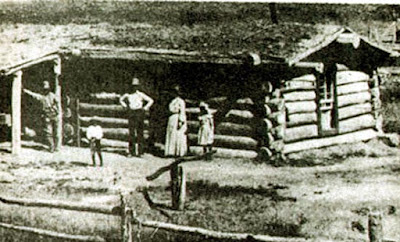
Isom Dart's Cabin

The notorious Tom Horn, hired by the Two Bar Ranch owner, shot Isom in cold blood as he exited his cabin. He was 51. It was Dart’s murder along with the murder of her fiance, Matt Rash, that sent Ann Bassett on a course of revenge against cattle baron, Ora Haley, that lasted for years and eventually saw her victorious.

When I started to write a new book for the Prairie Rose Publication's series Women of Destiny celebrating strong women, I had to look no further than Browns Park for inspiration. My thanks to Queen Ann, Isom Dart and all the other folks of Browns Park who lived extraordinary lives and left their tales behind to fuel a humble author's imagination.

His Unexpected Companion is set for release in July 2020. I'm sharing an unofficial blurb and the first chapter, which is from my own unedited copy. Any mistakes or typos blame me, not the editors at Prairie Rose Publications.

Unofficial Blurb:

After getting a taste of living the outlaw life, Olivia Darling wants nothing more than to return to the simple life and family she left behind on the ranch they carved out in the Colorado wilderness. She feels guilty about leaving her father and sister alone and plans to make amends.

Kit Traver, tired of practicing law in a congested city out east with its strict social structure, longs for the freeing air of his native Colorado. Traveling back home on horseback, camping out, just man and nature, will be the healing journey he needs. And when he gets home, there is a girl he intends to marry—judging by their correspondence she’s everything he wants.

When Kit and Olivia first meet in Denver it's not the best first impression. But as they find they are traveling in the same direction on the trail to their respective homes, it’s only natural they travel together—it’s obvious that woman needs his protection, if only from herself. Except when they get home she finds home is changed, while he finds home the same but he’s changed. Can they find a new sense of home together? First Kit has to find the mysterious Olivia.

First chapter:
Chapter 1

Like a warm welcome from an old friend. Presented on a plate of the finest bone china, and floating on a sea of pristine, white linen, the offering seemed to speak to him, saying, All yours. I’m here for you and you are here for me. This moment is ours. His tongue darted in and out of his mouth, moistening his lips. The impulse to lunge forward and pounce, held in check by the desire to draw out and savor the pleasure for as long as possible.
The thick slice of ham, glistening in rich brown gravy, had his mouth watering in anticipation of the sweet, salty, smoky goodness. Still steaming roast potatoes, crispy skins lightly seasoned with salt and pepper. Emerald green peas in a neat pile on the side. Heavy, scrolled silverware reflected the light from the crystal chandelier hanging above the table. A feast fit for a man of his station. 
Kit Traver looked down at the meal before him with reverence. He studied it until the image planted in his brain, taking in a deep breath through widened nostrils to pair the scents with the vision. If he were an artist, he’d immortalize it in oil paints.
“You gonna eat that or are you fixing to write a tribute to it?” Smoothing down his mustache with one hand, Henry grinned at him from across the table.
Kit glanced up, a contented smile lifting the corners of his mouth. “Well, I’m sitting here thinking two things. First off, this is the last full dinner I’ll get in days. Second, I was thinking that even the food tastes and smells better in Colorado. It must be the fresh air.”
“I don’t envy you for the trip you have ahead of you, my friend. It will be beef jerky and hard tack from now on.”
He leaned forward barely able to control his excitement. “Oh, I’m looking forward to it! I’m itching to get back in the saddle—”
“Saddle sores.”
Kit looked up to the ceiling. “Sleeping under the stars—”
“On the cold, hard ground.”
“Besides it won’t be jerky and hardtack, I can hunt for my food and have some fine meals out in the wilderness as man is intended.”
“Will you be using bullets or do you think your hopes and dreams will be enough to persuade the critters to jump on your plate?”
“So cynical, Henry. You can’t imagine how hemmed in I got to feeling in that city. Boston. You don’t know how lucky you are to be so close to wide open spaces free of human congestion. A man can get out there in nature and really think. Get to know himself.”
“I’m happy here in Denver. I do get out in the backwoods occasionally, which is just about right. So, are you telling me you’re back to stay?”
Kit had to suppress the mirth bubbling up inside him, but his traitor lips quivered into a grin. “I am. Can I let you in on a little secret?”
“Sure.”
He paused long enough to get his friend’s full attention. “I’m going to get married and settle down back home.”
Henry perked up. “When’s the wedding?”
“I don’t know. I have to ask the lady first.”
Henry relaxed back into his seat. “Another Kit plan based on idealistic notions. Do you know which lady you plan to propose to?”
“Emily Partridge.”
Disappointment flickered across Henry’s face, but he staunched it so quickly, Kit chose to believe he’s misread his friend.
Henry scratched behind his ear and glanced at the table. “When did this happen? Last I heard from you, you had just got yourself engaged in Boston.”
Kit waved a hand in front of him, the episode a distant memory to him now. “I was, but by mutual agreement we decided to end things. Millicent was too...opinionated. Now, I don’t mind a lady speaking her mind, but Millicent made a competition out of it, and when the opinion expressed rarely agrees with your own….” He picked up the cut glass goblet and swallowed a sip of wine. “Oh, that’s divine.”
“How does Emily come into this? When’s the last time you saw her?”
“I haven’t seen her in a couple of years. But what happened is, I was kind of low after parting ways with Millicent, and Emily and I have always corresponded—she is a dear friend of my little sister. When I told her what happened with Millicent she expressed her sympathy and worried about me, so we wrote to each other more often. Gradually, I discovered I felt more than a passing affection for her. I would go so far as to say we have an understanding. But the engagement isn’t official yet.”
Henry’s toffee brown eyes registered concern. “Don’t do anything rash, Kit. Exchanging letters with someone isn’t the same as seeing them in person and holding a real discourse.”
“But, I can tell by her writing she’s everything I want in a wife. She’s kind and gentle. She seems to know just what to say. I appreciate a person who puts thought into their words before speaking. She’s a very...” He thought about her for a moment, sights on the plaster scroll-work in the ceiling. “She’s a very measured young lady.”
“Well, yes, she’s a nice enough girl, but I have to say this as your friend and don’t take offense.”
Kit sat back and folded his arms across his chest. “What?”
“You can be fickle where the fairer sex is concerned. I wish you’d pick one girl and stick with her.”
“Says the other bachelor at the table.”
“I don’t plan on being a bachelor forever, but when I meet the right girl I’ll….” Henry’s eyes lit up and his jaw slackened like the incarnation of his every hope and dream had just stepped into the room wrapped in ribbon and carrying a birthday cake.
Kit turned in his seat to see what had caused such a reaction.
A vision. A woman with hair the color of mahogany piled in curls on top of her head and large eyes set in an intelligent face, where all features rested in perfect proportion. Her creamy skin had a hint of rose across the cheeks. Her dress was almost the same shade of brown as her hair, only iridescent, with a silver panel on the bodice filled with pink seed beads and narrow ribbons of light green and pink. She stood in the doorway, looking from side to side.
“That’s her. That’s the woman I’m going to marry,” said Henry, his Adam’s apple rising and falling above his stiff collar.
“Hang on, sport. She’s probably looking for her husband. A lady wouldn’t be here on her own.”
Just then a waiter approached the woman and said something in a low whisper. Kit turned back around.
“...Beautiful,” muttered Henry.
The lady’s voice carried sure and clear across the room. “No, I will not sit in the lounge until my husband gets here. As I am not married, that wait could put me well beyond any dinner time in the foreseeable future.”
Kit turned sideways and cocked an ear in the direction of this unseemly display. 
“Madame, I’m sorry we cannot serve unaccompanied ladies in the restaurant. Perhaps you’d like dinner sent up to your room?” said the waiter, still speaking in a quiet voice.
“I don’t think I would like that. Do you know how long the evening can be when you’re trapped in a room? Hmmm? Thought not. No, I’m going to sit at a table right here.”
The waiter bent and said something so low, Kit couldn’t hear him. Henry was staring, his face frozen.
“I have one particular talent. Do you want to know what that is?” She continued to the waiter, her voice louder now. 
Kit and Henry exchanged wide-eyed looks. Faces turned as other diners honed in on the conversation taking place. And though he hadn’t been aware of it until it's deafening silence, the chatter of silverware on bone china ceased. The waiter must have asked her what her one talent was because she answered with her voice very loud now.
“I can shout longer and louder than anyone else in my family. Came in handy when Ma wanted everyone called in from outdoors. Want to hear me? No? Thought not…” she leaned toward the man whispering in her ear. “Yes, get the manager by all means. The service here is appalling.”
Kit spun around again to get a glimpse of this trouble-making woman, who must surely be ashamed of herself. She stood tall and straight, her chin tilted upwards. In the dim room, lit only by candles and gas lights on the walls, she shimmered from head to toe. 
The image of a rainbow trout of many hued scales stilled in a mountain stream came to his mind. Oh, he knew this was not the most romantic description but seeing her now, he could almost smell the pine trees and hear the tinkling of water running down a brook. Wild, yet majestic. Holding its own against an opposing current.
She looked at her audience with an unflinching countenance. The maître d’ made his way toward her, and all prepared for the next act in the drama. 
Henry leaned in. “Oh, here we go. It’s time someone put her in her place.”
Though not his concern, Kit blushed with shame on behalf of the woman. Sometimes you just get yourself in a situation that was hard to dig out of. He understood that. He wanted to look away, but he was riveted to the unfolding scene. The maître d’ tilted his head sideways as he quietly explained something to the woman.
She sucked in her cheeks. “I see. Thank you for explaining why a woman traveling alone cannot sit down to a nice meal.” Her voice raised as if addressing the room. “However, though you haven’t exactly voiced this, what I infer from your explanation is you appear to take a dim view of your fellow beings. Either my presence is likely to result in the gentlemen here to behave in base ways—which I very much doubt since as you say yourself this is a respectable establishment not a saloon—or I am here to procure more than a meal. Rest assured I am not a prostitute.”
The sound of cutlery hitting plates filled the room. Someone choked on their food.
She met the flustered maître d’s eyes. “I have money of my own and intend to spend it lavishly in your establishment. Now if you will kindly see me to a table... You may tuck me in a corner if that makes you feel better, and we shall see how well everyone behaves themselves.”
He thought she was going to get shown the door for sure. But, instead the maître d’ gave a slight bow from the waist and led the way to a table. 
When she passed their table, Henry ducked his head and put up a hand to shield his face, but Kit couldn’t look away. She turned her face to him as if deigning to acknowledge his presence. His mouth went dry and his chest expanded, holding a deep breath when their eyes met. She raised her eyebrows in surprise. She had startlingly light blue eyes, he noted. 
When she was seated at a table, everyone went back to their meals and companions with an uneasy caution.
Henry patted his mustache down again. “Well, hell, that was really something you don’t see every day. Talk about your opinionated woman.”
“Extraordinary,” was the only expression Kit managed to utter.
The woman now sat at a table across from him in his direct line of vision. 
She unfolded the linen napkin and placed it in her lap with great calm as a waiter approached. “I’ll start with the oysters, please. And follow that with the biggest steak you have, so rare it calls for mercy when I stick my fork in it.”
“Yes, madam,” the near-terrified waiter said.
“Oh, and bring me a brandy, please.”
“I’m sorry. Women aren’t served alcohol here.”
Henry put down his fork on his plate with a loud clunk. “Here we go again.”
Rather than go into another tirade, the woman sat with a dumbfounded expression on her face as the waiter scurried away.
“Excuse me!” An elderly gentleman seated with his wife caught the waiter before he got far. “I’d like a snifter of brandy, please.”
The waiter returned and handed the gentleman his brandy, leaving with a quick bow. Shock fell over the room again when the man stood up and took the brandy over to the woman seated alone.
“My dear. Do enjoy your brandy,” he said, putting the glass on the table in front of her.
At his table, the man’s wife beamed with pride at her husband.
The single lady smiled, and when she did so, Kit felt his insides shift downward. She had a dazzling smile.
He breathed out a sigh of relief the drama ended and went back to his food, which had grown cold. Annoying. His last good meal in the near future almost ruined. He thought about asking the waiter to reheat his plate, but then decided the poor man had been through enough this evening. He grudgingly cut off a piece of ham and shoved it in his mouth.
As he chewed he felt someone watching him. He startled when he looked up and found the mysterious woman boldly taking a bead on him. When their eyes met, she closed one eye in a slow, lazy wink.
Brazen! Bold as Brass.
He quickly looked down at his plate. He felt shaken to his very core. Appetite gone.
***********
You can find books,both contemporary and historical, by Patti Sherry-Crews at http://pattisherrycrews16.wix.com/author-blog


Friday, February 7, 2020

Archange Ouilmette Had a Reservation: How One Woman Came to Own Parts of Wilmette and Evanston

by Patti Sherry-Crews
Portrait of Archange Ouilmette as imagined by George Lusk, 1936


Someone recently tagged me in a post on Facebook, saying “I can see your house on this map!” I looked at the map, an old map of my town, Evanston, Illinois, and sure enough there’s where my house sits. Lots numbers 10 and 11 on what was then called Railroad Ave. There have been some other changes, like Old Town Line Rd is now called Central st., but much is recognizable: the railroad tracks and depot...Jenks Street...Chancellor Street... the Indian Reservation...What? A few blocks down Chancellor, on the map is a large plot of land labeled the Ouilmette Reservation.
Old Map of Evanston with my House in Blue Circle with View Straight Down Chancellor to  Ouilmette Reservation (indicated by blue arrow)

This old map is so full of incongruities, my mind is boggled. When and why was there a reservation smack dab in the middle of a clearly developed area? There’s no date on this map, so I had to wonder what year all these things coexisted together. And why didn’t I know this before? As a writer of historical fiction, I research other people’s history all the time, while apparently missing huge chunks of my own town’s history. I was intrigued.

With a few clicks my confusion was quickly lifted. In fact, that land was not the Ouilmette Reservation, but the Ouilmette Reserve, land not for a tribe of Native Americans but for one Potawatomi woman, Archange Ouilmette, and her children. 

Archange (who may have had a French father) lived in the Illinois Territory in the area that is present day Chicago, Evanston, and Wilmette with her French Canadian husband, Antoine Ouilmette. (the name Wilmette comes from Ouilmette)

In 1829 the United States government gave her land amounting to 1280 acres in what is now downtown Wilmette, stretching into Evanston. Why? And why Archange and not her husband, Antoine? The reason is lost to us today. Even the Wilmette Historical Society in a newsletter on the subject of Archange declares this a mystery.

What did Archange’s world look like? Let’s put her in context. Before the War of 1812, there were few white settlers in this area, but there was a substantial Native American presence. Tribes connected by kinship, lived in large villages, which were linked by trails. Though nearby Wilmette and Skokie were home to Indian settlements, the area that is now Evanston was too swampy for habitation. 

But, what Evanston did have were a series of high ridges left by retreating glaciers. Native Americans and French fur trappers made use of these natural land bridges for hunting, traveling, and communication routes. The trails were often marked by trees, artificially manipulated as saplings to point in the direction of the trail or features like where water could be found. These ridges are remarkable features even today and are still main arteries across town. Namely, Ridge Avenue, Green Bay Road, and Prairie Avenue. 

A possible Indian Trail Marker Tree near Lake Michigan, Evanston,IL

The first white settlement in Evanston was built along what is now Ridge Avenue and called Ridgeville. The historic Green Bay Trail which ran all the way up to Green Bay, Wisconsin is another one of these ridges. My house literally sits on the Green Bay Trail. Today it’s a popular paved biking and pedestrian trail running alongside the railroad tracks through the suburbs north of Chicago. 

Mural of the First White Settlement in Evanston on Community Center Wall of Ridgeville Park District (note: "Frogtown" in lower portion...it's swampy off the ridge!)

An interesting thing I noticed about Antoine most times I looked him up, it would often first reference him as "husband of Archange Ouilmette" as if she was the most noteworthy Ouilmette—which is kind of unusual.

The Ouilmettes lived across the Chicago River from Fort Dearborn, where they had a farm with livestock and Antoine worked as a trapper for the American Fur Company. The Ouilmettes supplied food to the fort and acted as guides. As a person who spoke both her native language and French, Archange was invaluable as an interpreter.
So, Archange was a good neighbor. Maybe that’s why the US government gave her land. But wasn’t Antoine also a good neighbor?

But on further digging I found Archange and her sister, Susannah Bisson, played a role in the Fort Dearborn Massacre, risking their lives in order to save Americans fleeing from the slaughter.

During the War of 1812, and British enlisted Native American tribes to help them guard their rich holdings in Canada from the Americans. At one point during the war, the order came to the Americans to evacuate Fort Dearborn and retreat to the safety of Fort Wayne. Potawatomi chieftain, Black Partridge, warned the commander at the Fort that trouble was brewing, and he wouldn’t be able to control the young warriors under him who were bent on war. 

During the retreat, the Patawatomi attacked and battle was waged on the sand dunes of Lake Michigan. Fifty two of the fleeing Americans were killed, including two women and twelve children. Black Partridge saved the wife of an officer and whisked her away to the Ouilmette homestead where she was taken in and hidden under a feather bed.

Here is the account of the incident by Juliette Augusta Magill Kinzie, daughter-in-law of early Chicago settler and neighbor to the Ouilmettes, John Kinzie, in her book Wau-Bun:

"The Indians entered and she could occasionally see them from her hiding place, gliding about and stealthily inspecting every part of the room, though without making any ostensible search, until apparently satisfied that there was no one concealed, they left the house... All this time Mrs. Bisson had kept her seat upon the side of the bed, calmly sorting and arranging the patchwork of the quilt on which she was then engaged and preserving the appearance of the utmost tranquility, although she didn't know if in the next moment she might receive a tomahawk in her head. Her self-command unquestionably saved the lives of all present... From Ouilmette's house, the party proceeded to the dwelling of Mr. Kinzie." 

The Indians had just left Ouilmette's house when one Griffin, a non-commissioned officer, who had escaped and had been concealed among the currant bushes of Ouilmette's garden, climbed into Ouilmette's house through a window to hide from the Indians. The family stripped him of his uniform and arrayed him in a suit of deerskin with a belt, moccasins, and pipe like a French engage, in which disguise he also escaped." 

More than just a good neighbor then, Archange and her family were saviors. This act of heroism further adds to why the land may have been given to Archange and her children.

Following the battle, Fort Dearborn was burned to the ground. Antoine remained the sole white settler in the area for a time. But 1812 was a turning point and like the Battle of Little Bighorn, a defeat of the army would bring the wrath of the United States government down on the Indians. The discovery of lead brought in white prospectors and the Indians that did not voluntarily head west across the Mississippi were forcibly removed.

A final piece of the puzzle is that Antoine may have been part of negotiations between Native American tribes and the US government in the Treaty of Prairie du Chien, 1829 which delineated tribal lands. It seems likely that Antoine secured land under his wife’s name at that time. 

The treaty ceded Indian land in north west Illinois to the United States, including land in what is now Wilmette, Evanston, and Chicago. From the Publications of the Illininois State Historical Library: "15,000 acres parceled out to 16 favored individuals, some of them Frenchmen, some of them Indian wives of white men."
Aha! And so that happened.

The Ouilmettes with their eight children moved to their new property in what is now Wilmette and Evanston. Antoine appears to have been a very enterprising man, running a store, raising sheep to sell wool to other settlers, farming, and towing boats along the Chicago river with his ox team. He was also among a group of three that petitioned to have the first Roman Catholic church built in Chicago.

In 1838 Antoine and Archange moved to Iowa to join others of the Potawatomi tribe who had relocated there. Archange died in 1940 and Antoine died the following year. After the death of their parents, the Ouilmette children sold off the parcels of land left to them in Illinois to developers. They sold some of the most valuable pieces of real estate on the north shore for a pittance.

There aren't many clues left telling us of the once thriving Native American culture other than place-names like Chicago, Skokie, or hints at places in the city such as Indian Boundary Park that speaks of another time. Chicago and its surrounding areas developed at an astonishingly fast rate, changing the landscape. Settlers plowed down burial grounds and a dense grid-work of streets superimposed on the land hid the natural features and erased evidence of the Indians who once lived there. There are still the occasional trail marker trees to see, but mainly we only have signs to remind us of the presence of the Native Americans.

The Oak Tree is Gone but the Plaque Remains


There is a plaque at Lighthouse Beach in Evanston noting the boundary of land given to Archange and her children. It says as thanks to her FATHER for helping negotiate the Treaty of Prairie du Chien. Not only does Antoine fail to get his name on the plaque but he gets called Archange's father! And there is some question whether he had a part in this treaty at all by some accounts. But at least there's something to remember the Ouilmette chapter in history by.


When I sit at my desk, I look straight down Chancellor Street to what was once the southern-most portion of the Ouilmette Reserve. Now my view ends at the Northwestern University football stadium and parking lot which completely cover that lot.

Ryan Field and Parking Lot Where Once was the Ouilmette Reserve

Oh, well, at least when the minute I step out my front door I'm on the Green Bay Trail.

You can find my books, both historical and contemporary at http://pattisherrycrews16.wix.com/author-blog