Showing posts with label 1800s. Show all posts

Monday, December 6, 2021

Board Games in the 1800's


By Kristy McCaffrey 

During the holidays, families gather and it’s the perfect time to play a board game. What games were popular in the 1800’s?

Chess, checkers, and backgammon have been around for hundreds of years, with backgammon dating back nearly 5000 years. The first known board game was invented by the Chinese in 200 BC.


Board games became popular in the U.S. at the beginning of the Civil War and encompassed educational themes such as quiz games about history, literature, and geography. Some were based on nursery rhymes and fairy tales, and often taught a moral along with a story. Many of the earliest games emphasized Christian morality, rewarding players who landed on designated squares with specific virtues, such as honesty and humility. In the 1880’s when the U.S. experienced a period of economic prosperity, the games began to emphasize the acquisition of material wealth.

Spiritualism became popular after the Civil War because so many had lost loved ones and they wanted to reconnect with them. This led to fortune-telling games, and in 1891 the Ouija Board was marketed to the American public, claiming that it could provide answers “about the past, present and future with marvelous accuracy.”

What’s your favorite board game?


Wishing you all a blessed holiday season. See you
in 2022! ~ Kristy


Wednesday, April 12, 2017

Westward, HO!

I’ve always been fascinated by the brave, intrepid souls who decided to traverse across the country to California in the period of American history we now call the “Westward Expansion.” Having just made that trip (albeit in what would be considered unbelievable comfort and ease by those early travelers) to California for the Collie Nationals, I’m even more amazed at how much perseverance those emigrants possessed. Driving along Interstate 80 to the summit of Donner Pass, it just wasn’t the snow that gave me chills. People perished and souls were lost. I read somewhere that if all those who perished attempting to traverse the trail from Missouri to California or Oregon were placed along those trails, there would be a grave every one thousand feet. (And as of this writing, when I checked to see just how much snow has fallen on Donner Pass this winter, it's STILL snowing at Donner and Truckee.) 
Memorial to the Donner Party at Donner Pass


And, that journey got me to thinking about what one might need to make that trip. So, I went to my trusty, handy-dandy reprint of The Prairie Traveler by Captain Randolph Marcy. This book was THE handbook for American pioneers.


The list of provisions makes my head spin and I just can’t wrap my head around storing one hundred pounds of bacon packed with bran and sewn into heavy canvas sacks and boxed up and stored in the bottom of the wagon to keep it cool. I’m just envisioning one hundred pounds of rancid bacon and bran…

 The list of clothing for one man for a three month long journey is as follows:
2 red or blue flannel overshirts, open in the front with buttons
2 woolen undershirts
2 pairs of thick cotton drawers
4 pair of woolen socks
2 pair of cotton socks
4 colored silk handkerchiefs (I’m guessing which color isn’t that important, unlike the overshirt which specified they should be red or blue)
2 pair stout shoes
1 pair of boots
1 pair of walking shoes
 3 towels
1 gutta percha poncho (I assume that is a water proof poncho)
1 broad-brimmed hat of soft felt
1 comb and brush
2 tooth-brushes
1 pound of Castile soap
3 pounds of bar soap to wash clothes with
1 belt knife and small whetstone
Stout linen thread, large needles, a bit of beeswax, a few buttons, paper of pins and a thimble—all contained in a small bag
1 coat
1 overcoat
1 rifle
1 revolver

Oddly enough, there is no mention of ammunition for said rifle and revolver.

It was enough of a trek cross country with eight collies and three people in my van. I cannot imagine making that journey to California on foot.


Tuesday, June 2, 2015

Satisfying a Sweet Tooth

by Shanna Hatfield


I often include candy in the stories I write partly because it’s fun to research the history and partly because I have such a sweet tooth, I pass that malady along to some of my characters.


We’ve probably all read stories that include someone in an old West setting enjoying a peppermint, lemon drop, candy stick, chewing gum, or perhaps a licorice whip.

Today, I’d thought it might be fun to highlight a few other vintage candies...

 
Jelly beans
Legend has it that jelly beans are a combination of the soft Middle Eastern treat called Turkish Delight (around for thousands of years) and the hard candy shell of Jordan Almonds (popular since the 17th century). The earliest recorded reference to jelly beans is from Boston candy maker William Schrafft. He urged people to send his jelly beans to Union soldiers fighting in the Civil War. Jelly beans became wide-spread in America by the turn of the century and sold with other penny candies. It wasn’t until the 1930s that jelly beans became firmly entrenched as a must-have for Easter.


Gumdrops
Although the origin of the gumdrop remains a mystery, the term first appeared in print in 1860. The candy was described as a soft gelatin-based candy that stretched like rubber when pulled. Some manufacturers also used a potato-based less stretchy method of producing the sweet at a lower cost. The candy became quite popular at the end of the 19th century. Ohio candy manufacturer Percy Truesdell is credited with developing the modern gumdrop in 1915.


NECCO Wafers
During my years growing up on a farm, I can’t think of a time when my dad didn’t have a roll of these candies around. He most often kept a handful of them in his shirt pocket, but they could be found in his pickup, the tractors, and sometimes even a stash of them in the shop. This was possible thanks to a young English immigrant by the name of Oliver Chase who invented the first American candy cutting machine in 1847- for lozenges. He and his brother Silas Edwin founded Chase and Co., which became the pioneer member of the New England Confectionary Company family. NECCO wafers were originally formulated to give Union solders a burst of energy during the American Civil War. They reportedly worked so well, they were still included in military rations during World War II. The classic product contained 40 wafers in a roll with eight original flavors: lemon, lime, orange, chocolate, cinnamon, licorice, wintergreen, and clove.


Whitman Sampler
Stephen F. Whitman, a 19-year-old Quaker, set up a small "confectionery and fruiterer shoppe" near the Philadelphia waterfront in 1842. He included exotic ingredients brought to him by well-traveled sailors and his candies quickly gained renown across the Northeast. Aware that presentation could be as important to selling his chocolates as the taste, he created beautiful packaging and advertised his sweets. Whitman’s Chocolates became a familiar name through advertisements in newspapers and magazines as early as 1857. His business thrived and expanded. In 1869, Horace Whitman replaced his father as president of the company. He introduced America to cellophane packaging - an astounding material that kept candy fresh, colorful, and clean. By 1907, “better” drug stores carried the boxes of candy on their shelves. In 1911, Walter Sharp took over as president and developed the Whitman's Sampler®, an assortment of the company's best-selling chocolates. Inspired by a cross-stitched sampler hanging in his home, Sharp worked with an employee to create the sampler that's reproduced on Sampler boxes to this day. By 1915, the Sampler had become America's best-selling box of chocolates.


Candy Corn
George Renninger, a candymaker at the Wunderlee Candy Company in Philadelphia, invented the revolutionary tri-color candy in the 1880s. The Goelitz Confectionery Company brought the candy to the masses at the turn of the century. 


Hershey’s Chocolates
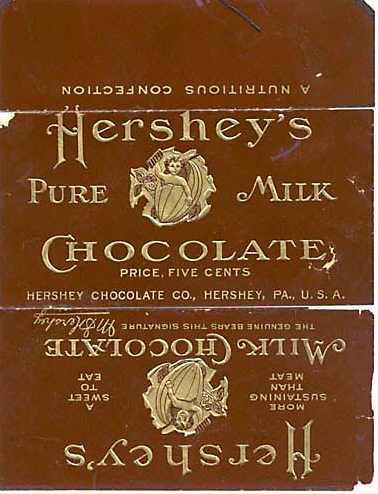
Candy manufacturer Milton Hershey made the decision to try adding chocolate coating to his caramels in 1894. Calling this new enterprise the Hershey Chocolate Company, the company began producing milk chocolate in bars, wafers and other shapes in 1900. With mass production, Hershey was able to lower the per-unit cost and make milk chocolate, once a luxury item for the wealthy, affordable to all. In 1907, the company produced a flat-bottomed, conical milk chocolate candy that Mr. Hershey named Hershey’s Kisses Chocolates. At first, they were individually wrapped in little squares of silver foil, but in 1921 machine wrapping took over that job. Hershey provided milk chocolate bars to American doughboys in the first war. By the end of World War II, more than a billion Ration D bars had been produced and the company had earned no less than five Army-Navy “E” Production Awards for its exceptional contributions to the war effort. In fact, the company’s machine shop even turned out parts for the Navy’s antiaircraft guns.


Tootsie Rolls
In 1896, Leo Hirschfield invented the Tootsie Roll and named it for his daughter, Tootsie. His new hand-rolled candy sold for one penny. By 1905, the candy production moved to a four-story New York City candy manufacturing plant and deliveries were made by horse and buggy.

 
Lollipops
 The beginnings of lollipops go all the way back to the stone age when sticks were inserted into hives and the honey was eaten from the sticks. Fast forward to the 17th century when sugar became more plentiful. The English enjoyed boiled sugar candy treats, inserted on sticks to make it easier to eat. The word lollipop first appeared in print in 1784, referring to a sweet in general, not specifically candy on a stick. Even Charles Dickens included the term in his writings. Reportedly, the term  “lolly pop” literally means “tongue slap.” The word for “tongue” is “lolly” in Northern England and “pop” means “slap.” It is thought London street vendors coined this term as they peddled the treat. In the decade leading up to the Civil War, supposedly the ends of pencils were dipped in candy for children to enjoy while they wrote. (It wasn't until 1858 that pencils were manufactured with erasers on the end). Around the turn of the century, the Bradley Smith Company, the McAviney Candy Company, and the Racine Confectionary Machine Company were all manufacturing candy on sticks. It wasn’t until 1931 when the Bradley Smith Company patented the name “lollipop” for their version of candy on a stick.


http://amzn.to/1KG9XM2
In my new release, Lacy, (Pendleton Petticoats, Book 5) Lacy Williams has never had much opportunity to enjoy candy. Grant Hill decides to give her a sampling of the variety of sweets available. 

Here's a little excerpt from their story:


“Do you really not enjoy candy?” He opened the box of chocolates and held it out to her.
“I never said that.” Lacy accepted a piece and took a small bite, savoring the creamy, smooth confection. “It’s just that I’ve never had much candy.”
“That’s because you were too busy eating ancient blood-sucking fish and venomous reptiles.”
Lacy frowned at him as she finished the bite of candy in her mouth. “When you say it like that, it sounds positively horrendous. As I mentioned at the store, Father most often purchased NECCO wafers, so we could each have one. Once in a great while, we might get a lemon drop or a peppermint from a visitor. Tony brought Grandmother a box of chocolates once. It was divine.”
“Personally, I much prefer chocolates or even licorice whips to snakes and rodents.” Grant hid a sarcastic smile by studying the candy in the box he still held. After selecting a piece, he held it out to Lacy. “Here, try this one. It’s my favorite.”
She started to take it from his hand, but he refused to relinquish it, holding it up to her lips. “Take a bite.”
After she did, he popped the remainder into his mouth and gave her a roguish grin. “That’s the sweetest it’s ever tasted.”
Pink suffused her cheeks at his comment and the heated look he gave her. “For an upstanding citizen and respected banker in this town, I think you could be quite scandalous, given the opportunity.”
Grant winked at her and popped a peppermint into his mouth. “Only with the right girl. I wouldn’t scandalize just anyone, you know.”


  What's your favorite type of candy (vintage or otherwise)?
 

A hopeless romantic with a bit of sarcasm thrown in for good measure, Shanna Hatfield is a bestselling author of sweet romantic fiction written with a healthy dose of humor. In addition to blogging and eating too much chocolate, she is completely smitten with her husband, lovingly known as Captain Cavedweller.

Shanna creates character-driven romances with realistic heroes and heroines. Her historical westerns have been described as “reminiscent of the era captured by Bonanza and The Virginian” while her contemporary works have been called “laugh-out-loud funny, and a little heart-pumping sexy without being explicit in any way.”

She is a member of Western Writers of America, Women Writing the West, and Romance Writers of America.

Find Shanna’s books at:
Amazon | Amazon UK | Barnes & Noble | Smashwords | Apple

Shanna loves to hear from readers! Follow her online:
ShannaHatfield | Facebook | Pinterest | Goodreads | You Tube | Twitter

Tuesday, December 2, 2014

Holiday Goodies - Old West Style

 by Shanna Hatfield

http://savvyentertaining.com/2014/10/03/gingerbread/

I love to bake, especially during the holiday season. There is nothing like the smell of gingerbread or some cinnamon-laden concoction creating mouth-watering aroma as it bakes in the oven on a cold wintery day.
It's like wrapping yourself in a warm blanket of sweet comfort.
Because of my interest in baking and recipes, it's always incredibly fun for me when one of my characters also likes to bake or cook.
The challenge comes in making sure the food I mention in the stories is appropriate to the time-period.
One resource that has been so helpful to me is FoodTimeline.org


Want to know when salt was first used (neolithic times), you can find all the details on the site.
Did you know ginger as a spice goes back to 5000 B.C.?

Or that vanilla came onto the scene in 1500 B.C., a New World flavoring used by the Aztecs to add a little oomph to their chocolate?
Egg nog, that creamy staple at so many holiday celebrations, was first introduced in 1760.

Ever received an orange in your stocking Christmas morning? Blood oranges first arrived in the US in 1878.
In addition, you'll find when certain recipes and dishes first debuted. The 1880s were a sweet success for bakers, ushering in such classics as angel food cake, chocolate pie and pumpkin pie.

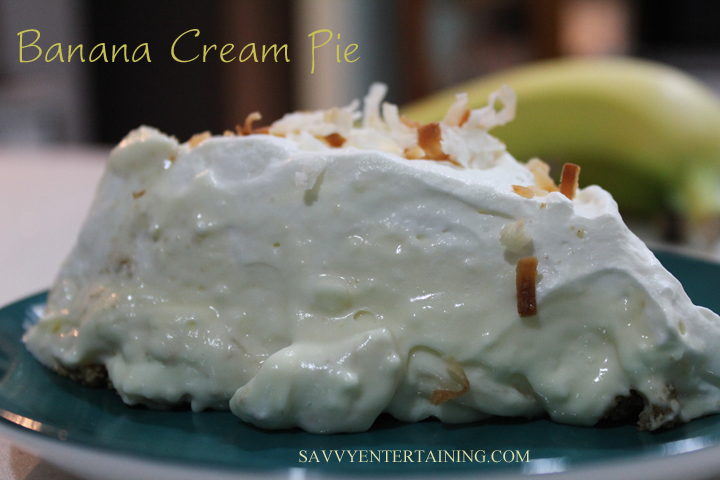
Brownies and banana cream pie made 1906 a great year! Divinity, one of my dad's favorite holiday treats, debuted in 1907.
Hungry yet?

http://www.amazon.com/Christmas-Bargain-Victorian-Holiday-Holidays-ebook/dp/B00A71KP8O/ref=sr_1_1?ie=UTF8&qid=1417479724&sr=8-1&keywords=the+christmas+bargain
In my sweet holiday romance, The Christmas Bargain, the heroine, Filly Granger, is an amazing cook. It was her cooking that made it possible for her to marry her husband, Luke, the town's banker. 
He went out to her father's farm to collect on a long overdue loan and, after eating dinner with them, accepted Filly in lieu of the payment. The pastor insists Luke marry the girl before he takes her home, and Luke reluctantly agrees. Although he plans for her to be his housekeeper and cook,  it doesn't take long for him to realize he's gotten the best end of the bargain with a wife who turns out to be sweet, gentle, sassy, and an incredible cook.

***
Luke glanced at her. “I have observed, dear woman, that you put others before yourself, you are a dedicated and caring friend, and that you have a keen mind with a quick wit. You are clever, smart, and not afraid of hard work. Also, you’re very talented with domestic skills and inspiring as a cook. Your chocolate pudding could make grown men weep.”
Filly offered him a perturbed glare. “So, Mr. Granger, I have missed my calling as a schoolteacher or perhaps a cook at the restaurant. If my chocolate pudding makes grown men weep, what will my peach pie do to the male population? Bring them to their knees? Make them beg for mercy?”

***
It was interesting to me to research the types of foods, especially the holiday treats, Filly would have made in the early 1890s. She creates pralines, caramels and sweet breads, along with Boston cream pie (she had to dig through a recipe book for that one), and a variety of cookies, including sugar cookies.
Here's my favorite recipe for Sugar Cookies. Enjoy and Happy Holidays!

http://savvyentertaining.com/2013/12/17/sugar-cookies-2/


1 cup butter, softened
3/4 cup sugar
1/2 cup powdered sugar
2 eggs
1 tsp. vanilla
dash of lemon juice
1 tsp. baking powder
1 tsp. salt
2 1/2 cups flour
Frosting
Cream together butter and sugars. Add in eggs, vanilla, and lemon juice. Mix dry ingredients together and gradually add into creamed mixture. Cover with plastic wrap and refrigerate for an hour (or overnight).
Preheat oven to 375 degrees.
Generously flour a flat surface and your rolling pin. Scoop out half the dough and roll until about 1/4 inch thick. You want to work quickly at this point because the warmer the dough gets, the stickier it becomes and you don’t want to add more flour. Cut into shapes and bake about 6-8 minutes or until cookies are just set. You do not want them to get brown (unless you like crispy cookies, then go ahead). Cool in pan for one minute. Remove to wire rack to cool completely. Frost and decorate then watch them disappear.
You can use a royal icing if you are of a mind to stir up a batch or, if you are a lazy slug like me, whip out a can of Betty Crocker vanilla frosting and frost away. I like to use decorator gels, especially the sparkly variety, along with sprinkles to finish the cookies - if I get to them before Captain Cavedweller starts eating them!
Makes about three dozen, depending on the size of your cookie cutters.

***
Now through Dec. 24, I'll donate 10 percent of the net proceeds from all book sales to the Justin Cowboy Crisis Fund. The JCCF is a non-profit organization that assists rodeo athletes who’ve sustained catastrophic injuries and are unable to work for an extended period.

About Shanna Hatfield
A hopeless romantic with a bit of sarcasm thrown in for good measure, Shanna Hatfield is a bestselling author of sweet romantic fiction written with a healthy dose of humor. In addition to blogging and eating too much chocolate, she is completely smitten with her husband, lovingly known as Captain Cavedweller.
Shanna creates character-driven romances with realistic heroes and heroines. Her historical westerns have been described as “reminiscent of the era captured by Bonanza and The Virginian” while her contemporary works have been called “laugh-out-loud funny, and a little heart-pumping sexy without being explicit in any way.”
She is a member of Western Writers of America, Women Writing the West, and Romance Writers of America.
Find Shanna’s books at:
Shanna loves to hear from readers! Follow her online:
 

Wednesday, June 25, 2014

The Trail of Tears by Ginger Simpson

http://questgarden.com/
The Trail of Tears is a sad testament of the greed displayed against Native Americans in the 1800s.  In order to achieve land and build states, the Native American tribes were forced to leave the lands they occupied, and moved against their will.  Although those who wanted to stay were allowed to remain and assimilate into society, there is no doubt they were not treated well as white men didn't look favorably upon those with red skin.

Oklahoma, not yet formed was the home of the Choctaw Nation, later named Indian Territory. The government's aim to achieve their personal goal was to relocate Native Americans to the west.  The Indian Removal At of 1830 allowed President Andrew Jackson to enact treaties allowing the removal of all tribes living east of the Mississippi.  For the most part, the removal of the Choctaw was peaceful, but those who resisted were eventually forced to leave if they didn't wish to assimilate into society.
The Creek refused to move, but in good faith, signed a treaty in March 1832 to surrender a large portion of their land as long as the remaining lands were afforded protection.  The US failed to deliver, and in 1837, the military forcibly removed the tribe without benefit of a treaty this time.
The Chickasaw realized they had no other alternative, and and signed a treaty in 1832 to include their protection until their move. The Chickasaws were forced to move earlier than expected as a result of white settlers.  The war department refused to intercede.
A small group of Seminoles signed a relocation treaty, but the majority of the tribe rebuked the agreement.. After resulting in what is known as the Second and Third Seminole Wars, those who survived were paid to move west.. 
www.seerandolphcounty.com
In 1833, the Treaty of New Echota provided two years for the Cherokees in the state of Georgia to move west or face a forced exit.. By the deadline, only a small number of Cherokees had migrated westward and sixteen thousand remained steadfast on their land. As a result, the US sent seven thousand soldiers to enforce the treaty, not even giving the tribe time to gather their belongings.  The escorted march westward became known as the Trail of Tears because four thousand people died along the way.
The thousand-mile march began In the winter of 1838, many Cherokee covered only with skimpy clothing, most on feet without shoes/moccasins.  Beginning in Red Clay, Tennessee, the tribe crossed Tennessee and Kentucky, never allowed to step foot into any towns or villages because of the fear of disease.  Having to bypass these places added miles to their journey, but when they finally arrived at the Ohio River in Southern Illinois around December 3, 1838, they were subjected to a dollar per person toll to use Berry's Ferry.  The traditional charge was twelve cents per head, and the Indians were not allowed to cross until all others were served.  During their wait, as many of the tribe as possible sought shelter under "Mantle Rock," a  bluff on the Kentucky side of the river.  While huddled together, many died from exposure. Several Cherokee were murdered by locals.
The marchers reached southern Illinois on December 26.  An agent for the detachment wrote, "There is the coldest weather in Illinois I ever experienced anywhere.  The streams are all frozen over...  We are compelled to cut through the ice to get water... It snows here every two or three days...we are now camped in Mississippi swamp 4 miles from the river, and there is no possible chance of crossing the river... We have only traveled sixty-five miles in the last month, including the time spent at this place, which has been about three weeks.  It is unknown when we shall cross the river...."

"I fought through the War Between the States and have seen many men shot, but the Cherokee Removal was the cruelest work I ever knew.".
—- Georgia soldier who participated in the removal
The Trail of Tears
Historical information for the blog was gleaned from Wikipedia, including the map above.  Other photographs have been given attribution.

Friday, June 21, 2013

GO WEST, YOUNG WOMAN! by Meg Mims


Born an Englishwoman in 1831, Isabella Lucy Bird grew up in Tattenhall, a village about eight miles southeast of Chester and 35 miles from Liverpool. The county of Chesire is in the west of England. Her father was a Church of England minister. Isabella suffered from poor health – a possible mix of boredom and the lack of education and social restrictions. I can imagine that!
Her father gave her 100 pounds sterling in 1854 to visit relatives in America, with the directions to stay as long as the money lasted. The 23-year-old Isabella jumped at the chance. To think she had to wear hoops, lived out of a trunk while traveling, had to visit outhouses or worse, and keep the proprieties of the day -- I'm ashamed to say I haven't accomplished one tenth of the traveling this 19th century woman did!
Isabella wrote her first book, The Englishwoman in America, about her adventures, published in 1856 as a first-hand account of her shipboard journey from England to Halifax, Canada, and then overland to Boston, Cincinnati and Chicago. The Kindle edition is free, if you’re interested in reading bits like this:
“The path is a narrow, slippery ledge of rock. I am blinded with spray, the darkening sheet of water is before me. Shall I go on? The spray beats against my face, driven by the contending gusts of wind which rush into the eyes, nostrils, and mouth, and almost prevent my progress; the narrowing ledge is not more than a foot wide, and the boiling gulf is seventy feet below. Yet thousands have pursued this way before, so why should not I? I grasp tighter hold of the guide's hand, and proceed step by step holding down my head. The water beats against me, the path narrows, and will only hold my two feet abreast….”
Interesting, first-person narration that proves she could write, in the flowery style of the times. After her parents’ death, Isabella returned to the British Isles and lived with her sister Henrietta in Scotland. She used her royalties to help Scottish craftsmen to emigrate to America after writing numerous articles in journals and magazines. But "poor health" soon descended again.
In 1872, Isabella took off and toured Australia – which she disliked – before she traveled to Hawaii (called the Sandwich Islands at the time). Clearly she preferred the latter, since she wrote a second travelogue book, The Hawaiian Archipelago, published in 1875. But before that, she returned to tour Canada and the United States.
Colorado, in fact, in 1873. Isabella explored the Rocky Mountains (800 miles of it) while riding “like a man” instead of sidesaddle. A Lady’s Life in the Rocky Mountains is also free on Kindle, and includes her friendship with “Rocky Mountain Jim.” She described Jim Nugent, a one-eyed “dear desperado” who seemed to appreciate her independent spirit and returned her affection, as “a man any woman might love but no sane woman would marry.” Smart woman! Within a year after Isabella headed onward in her travels, Nugent was shot and killed.
Back home in Scotland, she was courted by an Edinburgh physician, John Bishop, but decided her health needed a tour of Asia instead – Japan, China, Vietnam, Singapore and Malaysia. After her sister died of typhoid in 1880, a despondent Isabella decided to marry John Bishop. That led her to become a nurse by studying medicine so that she could travel as a missionary. At almost sixty, she toured mission stations in India, Persia, Kurdistan and Turkey.
Isabella Bird's many travelogue books of all her adventures led her to being named the first woman “fellow” of the Royal Geographical Society in 1892, and also a member of the Royal Photographic Society in 1897. She wasn’t done, though. Isabella soon traveled to China and Korea, as well as Morocco. A few months after her return to Edinburgh in 1904, she died at 72 with plans for another trip to China.
A formidable woman, indeed!
~~~~~~~~~~~~~~~~~~~~~~~~~~~~~~~~~~~~~
Meg Mims is the award-winning author of Double Crossing (WWA Spur Award - Best First Novel, 2012) and Double or Nothing, the sequel. She also writes contemporary romance novellas. Meg loves westerns on film and TV despite her lack of enthusiasm for riding a real horse -- a mutual feeling in the few instances they've attempted to pair up. Meg prefers her sofa while watching cowboys at work. Less dust, bugs and sunburn, too.


Meg is also one half of the team D.E. Ireland, contracted for a cozy mystery series featuring G.B. Shaw's Professor Henry Higgins and Eliza Doolittle - coming in 2014 from St. Martin's Press.