

By Kristy McCaffrey
I live in the
desert north of Phoenix, Arizona. Our property buffers an open area of desert
belonging to the city, so we get a fair amount of wildlife (coyotes, javelina,
bobcats) as well as snakes that wander onto our land. Most are
non-poisonous—bull and garter snakes—but we’ve also encountered and caught a
good number of rattlesnakes. In this area the prevalent species is the Western
Diamondback Rattlesnake. It blends well into its surroundings, with a
dirt-colored hide, but does have one outstanding feature which helps with a
swift identification. On its tail, just below the rattle, are one to two inches
of black and white stripes.

Western Diamondback Rattlesnake
In the summer,
when it’s very hot, snakes gravitate toward water, so puddles can pose a
problem. We found a young rattler near the house this way. My husband captured
and placed it in an empty apple juice bottle. We then deposited the snake
off-property. We’ve been told that rattlers will live within a one-mile
territory; because we have dogs we prefer to relocate the snakes. The other
alternative is to kill them, which many of our neighbors do. Not only is this
dangerous (to kill one you must get close to it—distance is always the safest
course of action when dealing with a poisonous reptile) but I also feel it’s
unnecessary. Western Diamondbacks aren’t very aggressive unless threatened. And
even then they’ll slither away the first chance they get.
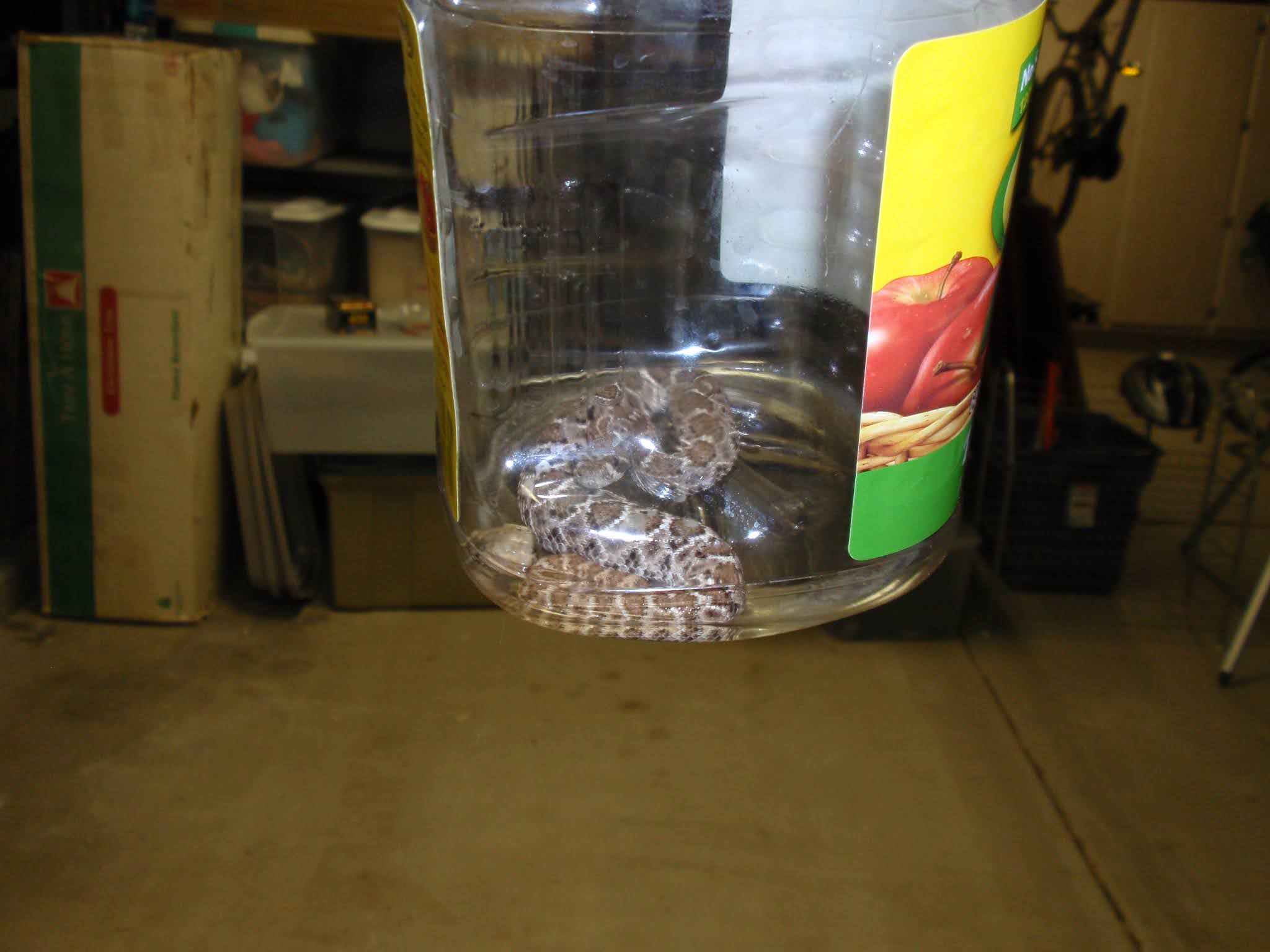
A juvenile rattlesnake we caught near our garage.
This was apparent when one of our chocolate labs, Lily, encountered a rattler during a walk in the desert. It lay coiled and when she poked her nose at it the snake struck. Luckily she pulled back just in time to avoid a bite. Just as quickly the snake turned and slithered into a bush, rattling its very subdued rattle (nothing like in the movies).
My husband and older son often ride motorcycles and quads in the desert and have come across rattlesnakes on the trails several times. Sometimes they can pass but often are forced to turn back. Rattlesnakes tend to enjoy their moments of sunning and simply won’t move unless pressed. In the winter months it’s never a good idea to be out in the desert during the day since the snakes will be warming themselves from the cold night. And during the summer, dusk is a dangerous time since they’ll be out after staying in the shade of a bush for the better part of the day. Initially we had the false impression that rattlesnakes hibernate but have come to learn this isn’t true. They can be out and about year-round.
We’ve found big rattlers on our driveway twice on chilly winter nights, likely soaking up the warmth of the concrete. My husband has a long metal snake catcher, which he uses to capture the reptile and then lift it into a large garbage bin. We then load the can on the back of our pickup truck and drive it to a portion of the desert far from our house for release.

We've sometimes found rattlesnakes buried in the dirt
in our backyard.
 |
| We try to catch the snake and place it in a tall trash bin. Then we transport it into the desert and release it. |
I must admit I
don’t fear rattlesnakes as much as I did when we first arrived over ten years
ago. I have a healthy respect for them, scan my surroundings at all times, and
don’t walk outside barefoot. We keep a close eye on our dogs during walks. It’s
also important to keep the property clear of clutter, to minimize hiding
places.
Still, we had a terrible cluster of them a few years ago, finding six large ones in our backyard over a three-day period in October. We began to wonder if there was a nest nearby. But we removed and relocated them and the yard has been clear since.
 |
| One year we had so many snakes in the backyard that we put out sticky pads and were able to catch several this way. |
 |
| Because we never want to directly handle the snakes, we place them in a garbage can while still attached to the sticky pad. We coat them in about a cup of vegetable oil and within a few hours they're able to free themselves. Then we transfer them away from the house. This guy is still covered in oil. |
Now, if we could just get rid of the scorpions...


