Showing posts with label yellowstone. Show all posts

Monday, June 12, 2023

1923—How true is the Paramount+ series by Jan Scarbrough

Maybe you’ve watched “Yellowstone.” Maybe you’re one of its big fans.

An article in Variety says: “Yellowstone” ended the season as the only non-sports show to average over 10 million viewers a week — at 11.6 million. (CBS’ “NCIS,” next in line, is just shy of that, at 9.8 million).

I must admit I got lost in Yellowstone and didn’t follow it after the first season. I tried its popular prequel “1883,” but stopped watching after a while. I didn’t care for one of the characters. However, I did watch all the next Yellowstone prequel “1923,” an American Western drama television series that premiered on December 18, 2022, on Paramount+.

It was often over the top violent. But the love story between Spencer Dutton and Alexandra kept me watching. Now HE was a true romantic hero!

The setting was Montana in 1923. How true was the history the show portrayed?

It was very true.

From ‘1923’: Why the Great Depression Is Already Underway in Montana

Those who paid attention in history class may recall that the Great Depression in the United States officially took place between 1929 and 1939. The stock market crash of 1929 kicked off this era, sending Wall Street into a panic. By 1933, an estimated 15 million Americans were unemployed, and close to half the country’s banks had failed.

Historic Montana says: The Great Depression came early to Montana, beginning in 1918 while the rest of the country thrived. Drought and reduced demand for agricultural products following World War I forced many farmers to default on wartime loans, causing widespread bank failure.

From Montana.gov: Cattle and sheep ranches continued to take advantage of Montana's abundant grasslands. Passage of the Enlarged Homestead Act in 1909 brought tens of thousands of homestead farmers into the state looking for inexpensive land. Wheat farming was popular until an extended drought, and a drop in market prices after World War I, ruined many farmers. The homestead "bust" forced many farmers to abandon Montana.

Montana's post-World War I depression extended through the 1920s and right into the Great Depression of the 1930s.

Even the horrible portrayal of the Indian boarding school rings with truth.

From '1923': How Realistic Are the Brutal Boarding School Scenes?  In taking viewers inside Native American boarding schools, creator Taylor Sheridan is shining a light on government-sanctioned abuse in the late 19th and early 20th century. Yes, Indian boarding schools were real and yes, they were as brutal as the one depicted in 1923.

If you enjoyed the series, you might want to look at where it was filmed in Where was 1923 filmed? Guide to all the filming locations in Montana & Africa

I have romances and romantic mystery series set in Montana. Check them out! 

Ghost Mountain Ranch Box Set 

Dawsons of Montana:
Brody 
Mercer 
Liz 
Ben 

Monday, March 6, 2023

We've Got Your Yellowstone


By Kristy McCaffrey

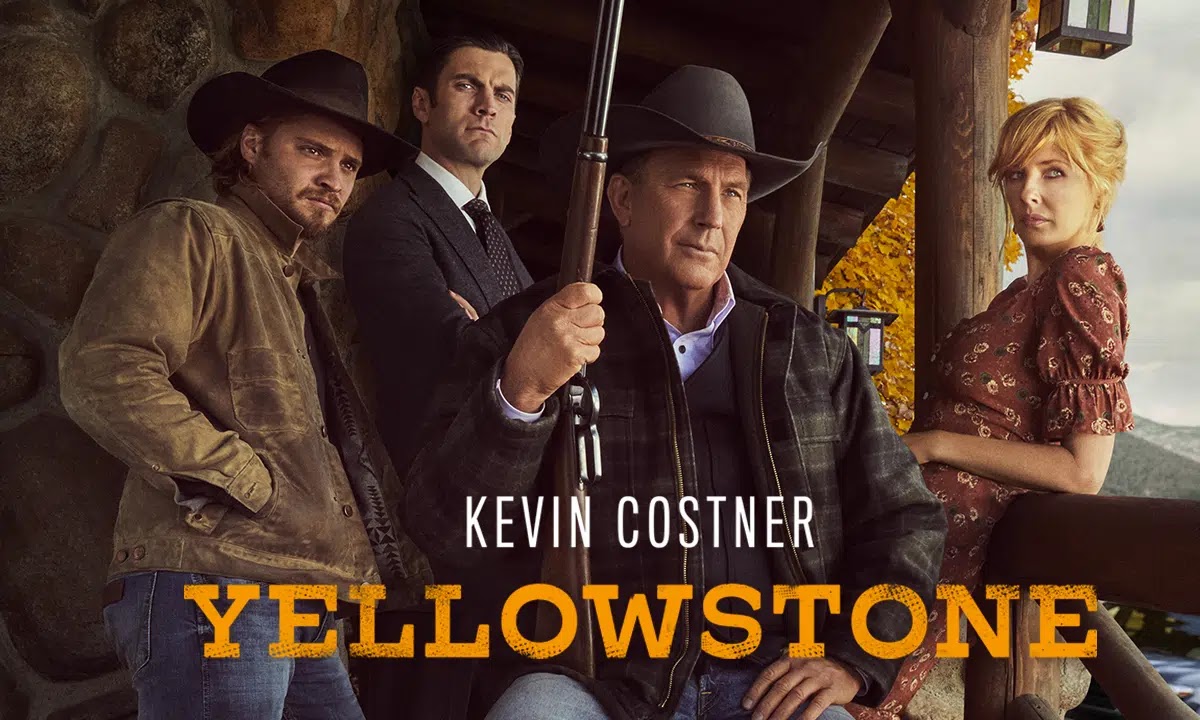
If you enjoy the western television series "Yellowstone" starring Kevin Costner, then please check out this promo of contemporary cowboy romance books.


Includes my novella, BLUE SAGE.

Braden Delaney has taken over the family cattle business after the death of his father, but faced with difficult financial decisions, he contemplates selling a portion of the massive Delaney ranch holdings known as Whisper Rock. Archaeologist Audrey Driggs has come to the remote wilderness of Northern Arizona for clues to a life-altering experience from her childhood. Together, they’ll uncover a long-lost secret.


Blue Sage Excerpt

Northern Arizona
September

The damned calf was stuck in the brambles again.

Braden Delaney swung down from his horse, his spurs jangling, and approached the mewling youngster. The calf thrashed in a mess of bushes beneath a stately juniper tree with shredded, red-colored bark. It reminded Braden of pulled-pork barbecue. It was on the menu tonight if Lewis, wrangler and cook during roundups, had been telling the truth this morning before the five of them had headed out.

It was late in the day and Braden’s stomach rumbled in response.

He’d take care of this problem and then head back to base camp—two airstream trailers and a horse trailer with a built-in bunk for Braden.

Braden knocked the brim of his Stetson up a notch and went to work prying the animal from the tangled jumble of branches. His gloved hands made fast work of the situation, and before long he’d set the calf on all fours. The animal took off at a lope, headed toward a band of larger cows, one of whom was likely his mama.

“You’re welcome,” Braden uttered under his breath.

It was the third rescue he’d performed on the calf in the past two days. The contrary little beast had a knack for wandering and getting into untenable predicaments. He should just usher it to the makeshift corral a few miles to the southeast, but Braden wasn’t quite ready to bring in this cluster of cattle, and he didn’t want to separate the calf from its mother.

Billy Lasco, his range foreman, would be up in a few days with two large semi-trucks to collect the cattle they’d gathered and transport them to the Delaney Ranch fifty miles to the south. Braden would guide the wayward calf and his mama into camp then. His current plan was to simply flush the cows and steers hiding out in the rocky hillside into the open plain below.

As he returned to his horse, a scream and a crash spun him around.

Had a steer just rolled down the slope? Braden circled, searching for an injured critter.

But it was no animal.

A woman lay on her back, grimacing.

Braden moved quickly to her side. “Are you all right, miss?”

She pushed to sit, leaves and sticks in her brown hair, askew in a haphazard ponytail. She wore trail pants, hiking boots and an ivory t-shirt. His eyes jerked back to the shirt, not sure he’d read correctly the word printed on it. Yep, he had. BOOBIES covered the spot where those very things resided, round and nicely shaped. Then he saw the image above the word—two birds with blue feet. Blue-footed boobies. Despite the dire situation, a smile tugged at his mouth.


Find your next western read here.


Friday, July 1, 2016

North American Bison - American's National Mammal

By: Peggy L. Henderson

"There is perhaps no other animal that roams in this, or in the wilds of any other country,more fierce and forbidden that a buffalo ... neither the polar bear nor the bengal tiger, surpass that animal in ferocity." Alexander Ross, Fur Trapper 1825

Just last month, the bison has officially been named the National Mammal

Bison have roamed the area known as Yellowstone as long as they roamed the Great Plains in the millions. It was a common belief that the Yellowstone bison were escapees and survivors of the mass slaughter that occurred in the 1800’s on the plains. Actually, the historic Yellowstone bison were a subspecies of that group, and lived there for thousands of years. 
Fur trapper Osborne Russell, has mentioned the large numbers of bison in an area of Idaho, about 30 miles from the present park. Members of the earlier park expeditions commented that "buffalo skulls are strewn by thousands" in the Yellowstone valley about 40 miles north of the park. From these and other accounts of wild bison within what is today the park, and in adjacent areas, dating from 1860 through 1902, it is clear that a great number of bison inhabited the Yellowstone Plateau at all seasons, and long before the killing of the northern herd of Great Plains bison in the early 1880s.
Rifleman shooting bison ca 1880 NPS photo 
After Yellowstone was established as our first national park in 1872, there was no regulation in place for the killing of animals, and poachers freely killed bison. By 1902, less than thirty bison remained.
In 1886, the army took control of Yellowstone, and one of their main objectives was to regulate the killing and decimating of the natural features and wildlife. While the soldiers worked to stop illegal hunting, they were pretty much powerless to do anything other than escort the offenders outside of park boundaries, confiscate their kills, and tell them not to come back. 
One brazen poacher, Ed Howell, came back time and again, and boasted of his exploits. Luckily, this backfired on him when the public finally heard about his poaching activities, and in 1894, the Lacey Act was passed by Congress, making poaching illegal and punishable.
In 1906, the Lamar Buffalo Ranch was established within Yellowstone to preserve the last free-roaming herd in the US. The bison that were brought to the ranch to mix with the last of the native mountain herd were plains bison, and as a result, today’s Yellowstone bison are a hybrid of the two. Still, they are the last genetically pure bison herd in the wild, as most other herds now have some cattle genes in them.
Lamar Buffalo Ranch 1930  NPS photo
By the 1950’s the herd grew to over 600 animals, and ranching was stopped. The bison were set free to once again roam the park. Today, there are two distinct herds in the park – the Lamar herd, and the Mary Mountain herd. Their numbers fluctuate in any given year, but is usually somewhere around 3000 head. 
Seeing bison in their natural habitat is one of the great joys when visiting Yellowstone. What many people need to remember, is that these animals are wild and dangerous.
 Unfortunately, many ignore the warnings, and year after year, injuries and even deaths occur from encounters with bison. 
People have been known to set their children on the backs of bison for a photo op, “bison selfies” have become quite popular in recent years, and this year it has escalated to petting the bison for that perfect picture as well as one well-meaning tourist putting a newborn bison calf in his car because he thought the animal was cold. This particular incident has caused quite an uproar, and I won’t go into the particulars in this post.


bison calves
The best place to see these magnificent animals is in the Hayden and Lamar Valleys. “Bison jams” are a common occurrence, since bison cross and even travel on the park road. 


present day bison jam

Some fun facts about bison:

Bison are the largest mammals in North America

Bison are often called buffalo. What’s the difference? The scientific name for our North American bison is Bison bison. The buffalo is a species in Africa. The word buffalo comes from the French word beouf (beef)

Yellowstone is the only place in America where bison have continuously lived since prehistoric times

Baby bison are called “red dogs” because of their red/orange coat color

Bison may look like lumbering beasts, but they can run at speeds up to 35mph

You can judge a bison’s mood by it’s tail – if it’s raised straight up, you’d better look out! He’s gonna charge. If it’s just swishing back and forth, he’s calm and happy.


Peggy L Henderson
Western Historical and Time Travel Romance
“Where Adventure Awaits and Love is Timeless”

Award-Winning Author of:
Yellowstone Romance Series
Teton Romance Trilogy
Second Chances Time Travel Romance Series
Blemished Brides Western Historical Romance Series
Wilderness Brides Historical Romance Series
                

Friday, March 4, 2016

Happy 144th Birthday, Yellowstone National Park!

In honor of  Yellowstone National Park's birthday this week ...

The Act of Dedication March 1, 1872

AN ACT to set apart a certain tract of land lying near the headwaters of the Yellowstone River as a public park. Be it enacted by the Senate and House of Representatives of the United States of America in Congress assembled, That the tract of land in the Territories of Montana and Wyoming …. is hereby reserved and withdrawn from settlement, occupancy, or sale under the laws of the United States, and dedicated and set apart as a public park or pleasuring ground for the benefit and enjoyment of the people; and all persons who shall locate, or settle upon, or occupy the same or any part thereof, except as hereinafter provided, shall be considered trespassers and removed there from…Approved March 1, 1872.

I love Yellowstone - it’s beauty, diversity, and history. There is just no place like it on earth. It’s what inspired me to write the Yellowstone Romance Series. Book 3, Yellowstone Awakening, is my fictional account of events that would have prevented the national park from becoming a reality. I spent hours reading the congressional transcripts of the debates about the park.  While my story is fictional, the names of the prominent men who had a hand in the creation of the park, as well as the senators who are mentioned in the story, and their opinions (not taken verbatim) are historically accurate.  

At the end of this post, I have an excerpt from the audiobook of Yellowstone Awakening. Listen in on a snippet of the congressional hearings (I promise, it's much more entertaining than reading the actual transcripts), as they happened in my story. 

Nathaniel Langford
If you’ve ever been to Yellowstone, and sat at one of the Ranger campfire programs at Madison Junction, the ranger will almost always point behind him or her, to a tall mountain across the valley. The mountain is named National Park Mountain, and legend has it that this is where the national park idea was born. It is said that Henry Washburn, Nathaniel Langford, and Cornelius Hedges camped in the valley just beneath the mountain during their expedition through the area in 1870, and came up with the grand idea of preserving the wonders they saw – the geysers, hot springs, canyons, rivers and lakes – for everyone to enjoy for generations to come. They wanted the area set aside as a nation’s park.
Whether this conversation actually occurred, and in that precise location, is up for debate, but it makes for a nice campfire story.  So what did lead to the birth of the national park idea?

Lewis and Clark, during their expedition in 1805, missed the area that is now the park. In 1806, John Colter, who was part of the expedition, set out with a group of fur trappers, and some historical accounts say he is the first white man to have seen the area and its geysers. He described a place of “hell and brimstone” that most people dismissed as delirium. Those who heard of his tales called this imaginary place “Colter’s Hell.”
Over the years, more fur trappers entered the Rocky Mountains, and more and more reports found their way back to civilization of a place with boiling mud, steaming rivers, and petrified trees. These fantastical stories were believed to be just that – men’s tall tales who had been in the wilderness too long. 

In 1856, mountain man Jim Bridger reported observing boiling springs, spouting water, and a mountain of glass and yellow rock. But since Bridger had a reputation as a “spinner of yarn,” his reports were also ignored. 
The first detailed exploration of the Yellowstone area came in 1869, when three privately funded explorers trekked through what is now the park. The members of the Folsom party kept detailed records and journals, and based on their information, a group of Montana residents organized the Washburn/Langford/Doane Expedition of 1870. Henry Washburn was surveyor-general of Montana at the time. 

The group included Nathaniel Langford, who later would be known as “National Park Langford.” They spent a month exploring the region, collecting specimens, and naming sites of interest (Old Faithful, anyone?) Another member of the group, lawyer Cornelius Hedges, proposed that the region should be set aside and protected as a national park. Other prominent men also made similar suggestions that “Congress pass a bill reserving the Great Geyser Basin as a public park forever.”

Hayden Expedition
In 1871, Dr. Ferdinand Hayden, a geologist, organized the first government-sponsored exploration of the region. The Hayden Geological Survey of 1871 included numerous scientists, as well as photographer William Henry Jackson, and artist Thomas Moran. Together, they compiled a comprehensive report on Yellowstone, which helped convince Congress to withdraw the region from public auction. The Act of Dedication Law was signed by the President Ulysses S. Grant on March 1st, 1872.


Peggy L Henderson
Western Historical and Time Travel Romance
“Where Adventure Awaits and Love is Timeless”

Award-Winning Author of:
Yellowstone Romance Series
Teton Romance Trilogy
Second Chances Time Travel Romance Series
Blemished Brides Western Historical Romance Series


Friday, July 4, 2014

Yellowstone Through a Teenager's Eyes


 By the time this post goes live, I will be in Yellowstone! I wanted to post some historical tidbits about the park this month, but I came across something even better. I hope you allow me to indulge. 

The following is an essay that my son wrote for school. I happen to get a glimpse of it when he left it laying on the dining room table and, being the nosy mom that I am, had to look at it. I don't generally police my son's homework - he's an honor student and rarely asks for my help, so when I read this, my heart melted. Both my sons have gone to Yellowstone nearly every summer since they were five and six years old, and as they've gotten older, they grumble a lot about going "to Yellowstone again" this year. Last summer, Collin didn't even want to go with us. Understandable for a teenager. But, he went, and he's going again this year, and I got the impression that he actually is looking forward to the trip. All these years, I wasn't sure if all the Junior Ranger badges the boys have earned, all the hikes they've been on, and all the campfire programs they've sat through had made any impact on them. After reading the essay, I know differently now.

 Yellowstone National Park is my happy place.
By Collin Henderson


Relaxing along Yellowstone Lake at Storm Point
The forests of Yellowstone are impregnable to the noises of the outside world. Only the soft chirping of the birds can be heard mixed with the wind. The lake beats the shore ever so gently. Swish. Swish. Swish. Then plop. A fish can be heard jumping in and out of the water. But where? Oh, there it is, to the left. 


Hellroaring Creek Trail
Yellowstone’s tranquility puts me at ease. My muscles loosen and I can just close my eyes and relax. The gray monotony of daily life elsewhere is outshined by Yellowstone’s variety. Every day a new trail awaits. The dirt under my feet is rocky and rough and soft and comforting. Maybe today I will see another white heron on the Madison River. Or perchance a garter snake will cross my path. The trail shall be my guide and lead to wonderful discoveries. Yellowstone’s never ending variety always has me on my toes, wondering what will come next. I can explore to my heart’s content.

Hiking to Shoshone Lake

Yellowstone’s natural forests far outshine any concrete forest. The forests are full of crisp, clean, pine scented air. Every so often one might come across a clearing along a trail, covered in emerald green grass and a wide assortment of flowers. Time feels frozen in Yellowstone, every second lasting an eternity. The landscape takes my breath away.


Black Bear
The animals of Yellowstone are unlike any that can be found in a zoo. I am a guest in their territory. The animals here are wild and will attack if I am not cautious. My personal favorites are the ground squirrels and chipmunks that scurry around looking for food. All sorts of birds live in Yellowstone. Every now and then I’m lucky enough to see a bald eagle in all its grace. The animals of Yellowstone are wild and untamed but cute as well. Rather than watching my dog sleep all day, not that I dislike my dog, I can enjoy watching large beasts majestically roam their habitat.

Yellowstone National Park is my happy place.

The resident Uinta Ground Squirrel in camp. We named him Phil

Friday, April 4, 2014

Top Ten Ways to Die in Yellowstone


Top Ten Ways to Die In Yellowstone
by: Peggy L Henderson

For my post today, I thought I’d stray away from the usual western-themed topic. Instead, here are some gruesome facts about ways people have been knows to die in Yellowstone, whether it was early tourists in the 1800’s, or people visiting the park today


Boiling in a Hot Spring
People have fallen in, jumped in to rescue dogs or personal items, or thought it was safe to bathe in . Some of the springs reach temperatures in excess of 200 Degrees Fahrenheit.


Death by Bison
Gorings and stompings by bison occur often because people don’t heed the warnings to stay at least 25 yards away. These animals may look slow and docile, but a two ton bison can charge at 35 miles per hour. That’s faster than the average human can run.

Lightning Strikes
Most lightning strikes occur while out boating or hiking, and not having adequate cover when a storm hits.


Drowning
Aside from car accidents and illnesses, drowning claims more lives than any other danger in Yellowstone. Several deaths have been reported as recently as 2007–2010. Swimmers who underestimate their abilities, boaters whose boats capsize, and hikers who fall into a lake or river account for most of the drownings.


Poison Plants and Gases
Water hemlock looks a lot like an edible wild parsnip or carrot, but it's a virulent poison. For both of the confirmed deaths, it was, unfortunately, their final meal. Deadly hydrogen sulphide, which occurs naturally in Yellowstone, killed a worker helping to dig a pit in 1939.

Falling
One fall involved a driver who backed his car off a cliff, killing both himself and his wife. Several workers have died after falling from scaffoldings or buildings. Others who have fallen to their deaths from cliffs have ignored warning signs and wandered from established trails.


Exposure
A number of people froze to death or died in avalanches in Yellowstone during its early years. Since 1921, however, such deaths have been very rare; three people died in two separate avalanches in the 1990s.

Rolling Rocks
Setting a boulder tumbling into a canyon might seem like innocent fun until you realize there are hikers down below. One person died this way, while several others were killed by rocks that were unintentionally dislodged or just happened to fall.

Falling Trees
Although rare, deaths from being hit by a tree have happened several times in Yellowstone, either during logging operations or windstorms.

Grizzly Mauling
The first documented death caused by a bear in Yellowstone happened in 1916; the latest two, in summer 2011, after a gap of 25 years when no bear-related deaths were recorded. Visitors have died while hiking, sleeping in tents, or getting too close to a bear while trying to snap that perfect picture.


This list was complied from one of my favorite books about Yellowstone. For more details about deaths in America's oldest national park, check out Death in Yellowstone - Accidents and Foolhardiness in the First National Park
By park historian Lee Whittlesey.
In the introduction, the author states, “Play safely, and think before you act.”
Now go out and enjoy your national parks!