Showing posts with label #Pendleton. Show all posts

Tuesday, August 6, 2024

Sugar Rations and World War I


In 1917, the United states Food Administration was created, and headed by Herbert Hoover (who would later become president).
As America entered World War I, a campaign was launched to encouraged Americans to conserve wheat, meat, sugar, and fats so those items could be sent to overseas to the troops.


Even children were encouraged to do their part. There were meatless Mondays, wheatless Wednesdays, and encouraged people to eat corn and not wheat, and consume more fruits and vegetables. The Food Administration suggested alternatives to white sugar, like honey and molasses. 

They came up with slogans like "when in doubt, eat potatoes. To keep transportation free for carrying war supplies, Americans were encouraged to buy local or grow liberty gardens. 


Sugar became rationed, with a two pound per month per person limit, then was later relaxed slightly to provide more sugar for things like home canning, etc.  Shoppers had to present a card issued by the county food administrator to purchase sugar, and retailers and wholesalers had to sign certificates stating they would follow the food laws.

Cutting back on sugar wasn't easy for a country with a serious sweet tooth. Reportedly, the average American in 1916, consumed 85 pounds of sugar! Some people saw an opportunity to take advantage of that.

In August 1918, the Oregon State Food Administrator issued a proclamation that stated all grocery stores were limited to sell two pounds of sugar per tourist, and their names and addresses had to be collected. An arrest was made by the Pendleton law enforcement when two “tourists” were found to be buying sugar everywhere using fake names and addresses, and reselling it at a higher price out of their automobile.

That's the kind of historical tidbit I had to work into a book. So I did.

You'll find mention of it in my new historical romance, Molly. 


Here's a little snippet from the book. It's in a letter from Molly's father to her:

Kade and I tracked down some regular hardened criminals the other day. The State Food Administrator had sent out word that people were traveling from town to town, buying up sugar and reselling it at a considerable profit. A proclamation put a limit on all grocery stores to sell no more than two pounds per person, and the grocers have to record their names and addresses. Anyway, we got a call from Mr. Johnson that he had two questionable shoppers trying to buy more than their limit of sugar. When we investigated, we found the back of their car loaded with sugar and hauled them to the jail. It was a “sweet” ending to that problem.


She longs to make a difference.

He yearns to claim her heart.

After years of managing the Pendleton telephone office, Molly Thorsen answers the call for women to serve as telephone operators during World War I. Upon her arrival in France, she navigates the challenges of working near the front lines and battles the prejudices and skepticism of the men around her. Determined to prove her worth and skill, Molly faces adversity head-on while unexpectedly falling in love with a charming soldier.

Friday Fitzpatrick may not have been eager to engage in combat, but when he is drafted into the American Expeditionary Forces, he embraces the role of a soldier with unwavering determination. While fighting to survive the harrowing battlefield experiences, he clings to his sanity by dreaming about the captivating Hello Girl who has captured his heart. Though his opportunities to see her are limited, she serves as a beacon of hope in the midst of his darkest days.

Through their shared experiences and the trials they endure, Molly and Friday find comfort and encouragement in each other's company, forging a connection that defies the chaos of a world in conflict. As the war draws to a close and they return home, will civilian life bring them together or pull them apart?

Find out in this sweet and wholesome historical romance filled with hope, faith, courage, and love.  


USA Today bestselling author Shanna Hatfield is a farm girl who loves to write. Her sweet historical and contemporary romances are filled with heart, humor, hope, and hunky heroes. When Shanna isn’t dreaming up unforgettable characters, twisting plots, or covertly seeking dark, decadent chocolate, she hangs out with her beloved husband, Captain Cavedweller.

Shanna loves to hear from readers. Follow her online at: ShannaHatfield | Facebook | Newsletter

Tuesday, July 2, 2024

Luna Release Day!


Today is release day for my new sweet historical western romance - Luna!


Luna was such a fun story to write. When I was doing the research, I looked to old newspapers from Pendleton, Oregon, in 191, where and when the story takes place. 

Among the top headlines that summer were a train robbery, Buffalo Bill's appearance at a circus that came to town, and the start of World War I. 

I was able to have the hero and heroine, Hunter and Luna, on the train that is robbed. It was reportedly one of the last Wild West robberies where an old six-shooter was used. 

Hunter and Luna also attend the circus and see Buffalo Bill Cody. I unearthed an old video of actual footage from some of the circus performances with him and his Wild West performers. It was so neat to watch that and imagine my characters in the crowd. 

There's also a scene with a "damsel in distress" as well as Hunter keeping his real identity (it isn't a bronc buster) from Luna when they first meet. 

I hope you'll give the story a try!


She’s searching for peace and grace.

He’s ready to step into his next big adventure.

Haunted by memories of the fateful day that changed her life, Luna Campanelli seeks a fresh start in Pendleton, Oregon. Life in the wild western town is nothing like she imagined, although the rugged beauty of the area soothes her troubled spirit. An unlikely friendship with one of the area ranch hands lifts her hopes, until she discovers the cowboy isn’t who he’s led her to believe.

Hunter Douglas didn’t intend to hide his identity from the woman he met on the train, but when she assumed he was his sister’s hired hand, he didn’t correct her. He never anticipated forming such a deep connection to her, especially when thoughts of her continue to infiltrate his carefully made plans. As a recent college graduate with an inheritance he intends to use to start his own ranch in Pendleton, Hunter must decide if he is willing to open his heart and include Luna in his future.

Will they embrace the unexpected love that has blossomed between them, or let fear tear them apart?

This sweet and wholesome romance is a story of love, healing, and the power of hope in a delightful western setting. Join Luna and Hunter on their journey as they discover what it truly means to love unconditionally.


After spending her formative years on a farm in Eastern Oregon, hopeless romantic Shanna Hatfield turns her rural experiences into sweet historical and contemporary romances filled with hope, humor, and hunky heroes.

When this award-winning author isn’t writing or covertly seeking dark, decadent chocolate, Shanna hangs out with her beloved husband, Captain Cavedweller.

Shanna loves to hear from readers. Follow her online at:

ShannaHatfield | Facebook | Newsletter

Tuesday, August 3, 2021

A Bovine Mix-Up


I love diving into research for the sweet romances I write. Recently, while I was combing through old newspapers from 1917, I happened upon an article that made me laugh as I pictured the story unfolding. 

Since 1910, the town of Pendleton, Oregon, has hosted the Pendleton Round-Up every autumn (except during World War II). Even back in the early days of the event, the rodeo committee contracted out the stock, meaning they hired people to bring in the horses and cattle used in the events. 


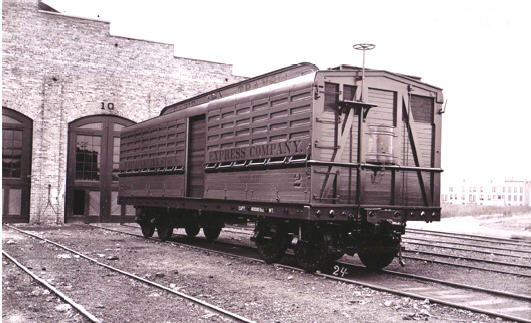
According to the article, the rodeo committee had contracted with a man named Jenks to purchase a train car load of  "long-horned, spider legged steers" from "the border."  

The animals were reputed to be the "real article" and better stock than previously used at the Round-Up. 


A few days later, another article ran on the front age of the paper. This one titled "Round-Up Given Wrong Steer - Milk Cows for Bulldoggers." 

See why that got my attention? 

I did a double-take and went back to read the article. 

It seems Jenks and a train car load of bovines arrived in Pendleton. Proud of his success in getting them there, Jenks had gone to the Hotel Pendleton where he was settling in when he received a telephone call. He picked up the phone to find the livestock director on the phone. 

"Say, were you crazy, or drunk, or asleep when you bought those steers?" Sam, the livestock director asked.

Jenks took slight offense at the opening line of the conversation, demanding to know what prompted the question.

"How in the name of Lucifer and Long Tom do you think we are going to hold steer roping and bull dogging contests with a bunch of milk cows, and muley cows at that?" Sam asked. (I think a conversation with Sam would have been incredibly fascinating!)

Reportedly, Jenks exploded with fury, swearing in three languages, and accusing Sam of not knowing the difference between a Mexican steer and a horned toad, if he couldn't see the train car load of bovines were the wildest, most rangy beasts to ever arrive in town.

At this point, I pictured the telephone operator who was likely listening to the heated conversation, perhaps even appalled by the salty language being used, but not disturbed enough to keep from sharing the story with a reporter. 

Anyway, Jenks and Sam went to the depot where there was, indeed, a train car full of docile half Jersey, half dehorned shorthorn cattle instead of the roughest, toughest steers Jenks could find. 


After some investigation, it was discovered the car load of steers ended up a few hours south of Pendleton where a dairy farmer had purchased the cows. Oh, I would have paid money to see the look on his face when they opened that train car door and out came the wild steers! 

Sometimes real life is far more entertaining than anything I could make up. I just love stories like this. And I love incorporating factual historical details into my sweet historical romances. 

You can read more about this little tidbit and others in my upcoming release Sadie


Inspired by the true stories of women who served in France during World War I, Sadie is a sweet romance filled with courage, hope, and lasting love.

She yearns for far-flung adventures. He longs for the home he’s found in her heart. 

Will a world at war tear them apart, or draw them closer together?

For most of her life, Doctor Sadie Thorsen has imagined seeing the world on grand adventures. When America joins the war raging across the world in 1917, it seems her dreams are about to come true. She travels overseas as a contracted physician, eager to do her part, and hoping to encounter the man she loves. Endless streams of wounded push her to the limits of endurance, then she receives word Harley John Hobbs, the man who owns her heart, is missing in action. Unable to bear the thought of life without him in it, she refuses to let go of her hope that he’s alive.

 The day Sadie Thorsen shoved Harley John Hobbs down on the playground was the day she marched off with his heart. He spent years doing everything in his power to become successful, determined to have more than himself to offer Sadie if she ever returns to their eastern Oregon town. Conscripted to join American Expeditionary Forces, Harley John answers the call and heads to France. Wounded and alone, he clings to the promise of seeing Sadie one last time.

Can deep, abiding love withstand the tragedies and trials of a world at war?


Pre-order Sadie today!


Tuesday, April 3, 2018

Oregon Suffrage Movement

by Shanna Hatfield

While researching my soon-to-be-released book Quinn (Pendleton Petticoats Book 9), I looked into the suffrage movement in Oregon in 1912.

This was a pivotal year for the cause because the suffrage issue had made it on the ballet in four previous elections and faced defeat each time. 

Many were determined the November election would bring success. One of those women was Abigail Scott Duniway. 

Born in 1934 in Groveland, Illinois to John and Anne Scott, Abigail was one of nine children who survived infancy. She grew up on the family farm and attended school intermittently. 

In March 1852, despite Anne's health concerns, John organized a party of thirty people and five ox-drawn wagons to emigrate to Oregon. Anne died of cholera near Fort Laramie on the Oregon Trail in June. Willie, the youngest of Abigail's siblings, died in August along the Burnt River in Oregon. In October, the emigrants finally reached the Willamette Valley in Oregon. 

Abigail taught school then married Benjamin Charles Duniway, a farmer from Illinois. They had six children and farmed in Clackamas County until Benjamin moved the family to a farm near Lafayette, Oregon. They lost the second farm after a friend of Benjamin's defaulted on a note endorsed by Benjamin. Soon after, Benjamin was permanently disabled in a wagon accident involving a runaway team, leaving Abigail to support the family. 

She opened and ran a small boarding school in Lafayette, then moved the family to Albany where she taught in a private school for a year. She then opened a millinery and notions shop that she ran for five years. Stories relayed to her by married patrons of her shop about the injustice and mistreatment they received at the hands of their husbands left her angry and determined to do something.
In 1871, with Benjamin's support, they moved to Portland and founded The New Northwest, a weekly newspaper devoted to women's rights, including suffrage. She continued publishing the paper for sixteen years.


Abigail encountered personal setbacks such as poor health, money problems, and opposition to her efforts from her brother, Harvey, who also edited a Portland paper, The Oregonian. Reportedly, her brother opposed woman receiving the right to vote and wrote many articles on the subject. Abigail persisted in her suffrage efforts despite political opposition.

Abigail Scott Duniway signs Oregon's
 Equal Suffrage Proclamation on 
Nov. 30, 1912 as Governor Oswald West 
and Viola M. Coe watch. 
(Image courtesy Library of Congress)

 Her tenacious endeavors paid off in 1912 when Oregon became the seventh state to pass a women's suffrage amendment.

Governor Oswald West asked Abigail to write and sign the equal suffrage proclamation. She was the first woman to register to vote in Multnomah County.

You can find the proclamation here.

After years of fighting for the right to vote, women in Oregon finally received it, in no small part thanks to the efforts of Abigail Scott Duniway. 

Women around the state had formed suffrage leagues, joining the efforts made around the country.

In 1912, Elizabeth Arden (yes, that Elizabeth Arden of skincare and cosmetics fame) participated in the suffrage movement and supplied red lipstick to the suffragettes. The striking shade (that was often shunned before), became part of a standard rally uniform and a symbol of female anticipation.


Women wore buttons proclaiming Votes for Women. 

This particular button boasted 10 stars representing the 10 states in which women had the right to vote at the time the button was created: Wyoming (1869), Colorado (1893), Utah (1896), Idaho (1896), Washington (1910), California (1911), Kansas, Oregon and Arizona (all 1912), and Montana (1914).


Women also donned sashes that reminded everyone who saw them to consider Votes for Women.

In my story, Quinn, the local seamstress creates sashes for the women of the Pendleton suffrage league to wear. The women proudly donned them, along with their red lipstick and buttons, to march around town, singing suffrage songs.

As I tried to imagine the songs they might sing, I searched for some tidbits from the past and found an old songbook published in Kansas. 

 The songbook contains 28 songs (set to common tunes, many hymns) that express the perspective of women's rights. Titles include "Dare You Do It?" and "Three Blind Men." The lyrics to the songs touch on the issues of the women's rights movement in America at the time. The songs were written by Henry W. Roby, a prominent medical doctor, and published by Crane and Company in Topeka, KS. 


To learn more about Quinn and the fictional account (peppered with historical tidbits) of the Oregon suffrage movement shared in my story, join us April 12 for the 4th annual Petticoat Ball!

~*~
USA Today Bestselling Author Shanna Hatfield writes character-driven romances with relatable heroes and heroines. Her historical westerns have been described as “reminiscent of the era captured by Bonanza and The Virginian” while her contemporary works have been called “laugh-out-loud funny, and a little heart-pumping sexy without being explicit in any way.”
Convinced everyone deserves a happy ending, this hopeless romantic is out to make it happen, one story at a time. When she isn’t writing or indulging in chocolate (dark and decadent, please), Shanna hangs out with her husband, lovingly known as Captain Cavedweller.
Shanna loves to hear from readers. Follow her online at: