Showing posts with label cowboys. Show all posts

Thursday, September 17, 2026

Election Day on the Trail


A cowboy on a cattle drive generally could not vote from the trail. In the 1880s, there was no modern absentee ballot system that allowed a man to mail in his vote from wherever he happened to be. Voting was normally done in person at a designated polling place, and in many places voting was still a very public affair. By the 1880s, paper ballots were increasingly common, but voters often used party-printed  tickets, and voting could still be closely watched.

So if a cowboy knew an election was coming, he might arrange to leave the trail temporarily and get to the county seat, a nearby settlement,or another polling place where he was legally entitled to vote. Though, a long cattle drive could make this difficult or impossible. Trail drives of the era commonly lasted for weeks or months, and the great drives were often headed hundreds of miles north from Texas to Kansas rail-heads. A cowboy who was still out with the herd on Election Day simply might have to miss the election.

There wasn't one universal cowboy party. Location mattered enormously.  In Texas during the 1880s, the Democratic Party was overwhelmingly dominant, and many Texas ranchers and other white Southern voters were Democrats. In the cattle country farther north and west, political loyalties were more mixed, with Republicans, Democrats, and smaller parties such as the Greenback Party attracting support.  The Greenbacks were particularly interesting to workingmen and debtors because they favored expanding the nation's money supply.

For a cowboy, the right to vote was worth making the trip to town for--even if it meant leaving the herd behind for a spell and riding a long way to have his say. 


Available at Amazon


 Sandra

Thursday, August 20, 2026

What Cowboys Read on the Trail


For a cowboy riding the open range in the  late nineteenth century, reading material was often as scarce as shade beneath a prairie sun. Still, when a man had a few quiet moments beside the chuck wagon or around a campfire, he might reach for a well-worn dime novel, a newspaper, or a small pocket Bible. Dime novels were especially popular, offering tales of gunfighters, scouts, outlaws, Indians, and larger-than-life frontier heroes. Some were wildly exaggerated, but they provided a welcome escape after long days spent in the saddle. Newspapers, when available, brought news from distant towns and cities--politics, cattle prices, railroad developments, crime and stories from the ever-expanding American West.

Not every cowboy was a devoted reader, and literacy varied considerably among working cowboys. those who did read might also carry  popular adventure stories, poetry, almanacs, or religious pamphlets. The Bible was a particularly practical companion, small enough to tuck into a saddlebag and meaningful to a man living a hard and sometimes dangerous life. Cowboys could also encounter Shakespeare, Robert Burns, Edgar Allan Poe, or popular American poets in inexpensive editions or through recitations around the fire. In fact, storytelling and reading often went hand in hand on the trail A cowboy who could remember a good poem, song, or story might entertain an entire crew during a quiet evening.

The picture of the cowboy as a rough, uneducated loner is therefore only part of the story. Many were young men with ordinary interests--curious about the world beyond the ranch, eager for news, and fond of a good adventure. When a book or newspaper made its way into camp, it might be passed from hand to hand until the pages were grimy and worn. For a few minutes beneath the vast Western sky, a tired rider could leave the cattle behind and travel somewhere else entirely--into a dime-novel adventure, a newspaper from back East, or the pages of a well-thumbed Bible. 


Sandra


Available at Amazon  


Tuesday, July 28, 2026

Cowboy Culture


                                           Cowboys are iconic. 

Symbolic of Americana.

A unique culture.


Hi, my name is Dalyn Weller, and I write romance novels. My favorite heroes are cowboys. I suppose the Wild West is in my DNA.
My family, like many others, were European immigrants who managed to trek from Scotland, Sweden, and a few other countries. They eventually got itchy feet, looking for that greener grass, and came West in the late 1800s.
My Great-grandfather came to the Pacific Northwest with one of his brothers and became a game warden. Charlie raised mules. But most of my great-grandfather’s brothers and sisters stayed in Colorado, where the family had settled. They became prominent cattle ranchers. One of my great-great-uncles sold his ranch in the 70s. Maybe you've skied on his land? Or stayed at a luxury Western dude ranch where another of my great-great-uncles once raised his family and cattle. 
My great-great-grandfather was an illiterate freight wagon driver everyone called Sandy (as redheads were nicknamed back in the olden days), and my great-great-grandmother Ella was a tough little woman who ran a boarding house while her husband and young sons worked in a place they called Ditch Camp.
We idolize cowboys and always have, but what about the cowgirls? What about the women whose grit and no-quit attitudes built the West? Sometimes stone by stone? The rugged land, the unforgiving elements, and the dirt-poor living brought the cream to the top in my opinion. Many of us in the West owe our lives, and certainly our colorful family histories, to these women who carved out lives for themselves right alongside the men.
There’s a reason so many of us do our best to keep the western traditions alive and thriving all these generations later. We honor and value those whose calluses, tears, sweat, and blood made the West what it is: a place that values the land, the animals, the people, and the culture of a handshake promise, protective men, and women who can tame a horse with a baby on her hip. 


My great-great-aunt Belle is a prime example. Tenacious, tough, with a work ethic to put many men to shame. Aunt Belle built a ranch and started a herd while her husband worked the railroad, and after he got sick and died, she continued to own their brand. How I wish I could time travel and visit Belle on her ranch. I have so many questions, but mostly I’d tell her how proud I am… how often I look at her photo, and how I brag about her when I have the opportunity (like now). Her sister Pearl was pretty cool, too. 
Back to cowboys…
To me, cowboys have meant safety in a life that wasn’t always safe with a single mom raising my sister and me. I know where I stand with a cowboy, and I’m assured of help when and if I need it. Most of them are reliable and loyal, and they will keep working until the job is done.
I live in an agrarian area with lots of cowboys, farmers, ranchers, and the associated good old boys that sell them tractors and hay and come out to vet their animals, so I’m familiar with these guys. 
When I think of cowboys, I associate them with certain characteristics. I don’t just mean Wranglers (but who’s complaining about those?), cowboy hats, and boots. I mean grit, determination, a certain toughness of mind and body, hard work ethic, honesty, polite manners, deference to ladies, protective instincts, and the kind of determination that sometimes requires everything a man’s got to get ‘er done.
We think of cowboys as loyal and protective, with a quiet strength that stands guard between the vulnerable and harm. A man who is capable of becoming dangerous to danger. Swoon.
Yep. I like cowboys. For one thing, they often have horses and dogs. 

           If you like books with cowboys, kids, & dogs, check out the Apple Valley Ranchers. 


I write stories featuring cowboys because I want to fall in love with the hero right along with the heroine. He needs to be a certain type of guy to make me take notice. Work-worn hands and a soft heart hidden underneath a gruff exterior? Swoon.
How about you? What’s your favorite kind of hero?

          Until next month, Dalyn Weller 

Thursday, May 14, 2026

A Cowboy's Hat


In the cattle country of the 1870s and 1880s, a cowboy's hat was far more than a piece of clothing--it was as necessary as a saddle or a good horse. Wide-brimmed hats shield a rider from the brutal sun of Texas trails, sudden prairie rain, and the choking dust kicked up by longhorn herds on the move. Before the famous "cowboy hat" became standardized, many drovers wore whatever they could find: battered Civil War slouch hats, Mexican sombreros, or broad felt hats bought from frontier merchants. By the late 1870s, John B. Stetson's "Boss of the Plains" began gaining popularity across the West because it was durable, waterproof, and could survive hard months on the range. 


 A cowboy's hat often reflected the man beneath it. Some curled the brim high on the sides to keep rain from running down their collars, while others pinned one side up for style or convenience. Sweat, dust, and weather gave each hat its own character, and a seasoned cowboy could sometimes be recognized from a distance simply by the shape of his crown. Hats served dozens of purposes on the trail: cowboys used them to fan campfires, water horses, swat flies, or even scoop water from a creek when no bucket was near. A man might sleep with his hat pulled over his eyes beneath the stars, then wake before dawn and ride out with the same hat still carrying yesterday's dust.

To Western readers of the era, the cowboy hat became a symbol of independence and frontier grit. Newspaper illustrations, dime novels and Wild West shows helped turn the broad-brimmed hat into an emblem of the American frontier. Yet for the working cowboy there was little romance attached to it--a hat was judged by how well it stood against wind, rain, and hard labor. The best hats stayed on during a gallop, held their shape after a storm, and lasted through years of cattle drives.  By the close of the 1880s, the cowboy hat had become inseparable from the image of the American West, representing not only the men who rode the range, but the rugged spirit of the frontier itself. 

Sandra


                                                 Available at Amazon

Thursday, March 19, 2026

How Cowboys Celebrated Easter


Out on the open range, Easter for cowboys was usually a quieter, more practical affair than the church-centered celebrations back East. Spring was a busy season in cattle country--calving was underway, grass was coming in, and long days in the saddle left little time for formal observance.  Still, many cowboys marked the holiday in simple, meaningful ways. If a ranch was near a town, they might ride in for a church service, trading dust-covered hats for a brief moment of reflection. More often, though, Easter was acknowledged right where they were: on the trail, around a chuckwagon, or beside a small campfire under the wide prairie sky. 


 Food played a central role, as it often does on holidays. The ranch cook might make an effort to prepare something a bit more special than the usual fare--fresh biscuits, maybe a pie if ingredients allowed, or even eggs if they could be had. Coffee was strong, conversation a little lighter, and the men might swap stories or speak of home, where families were likely celebrating in more traditional ways. For some, Easter was a reminder of distant loved ones and a life left behind, adding a note of quiet sentiment to an otherwise rugged existence.


 Though their celebration lacked ceremony, many cowboys still carried a personal sense of faith. A few might read from a small Bible kept in their saddlebags, or bow their heads briefly before a meal. In a landscape as vast and unforgiving as the frontier, moments like Easter offered a chance to pause, reflect, and find a bit of peace. Even without churches or choirs the spirit of the day endured--simple, resilient, and shaped by the rhythms of life on the range. 

Happy Easter,


Sandra 


Books available at Amazon 


Friday, September 5, 2025

1887-1961 Hesperia Hotel: Locomotives, Candlelit Nights, and Western Charm


Imagine rolling into the high desert of California on the Atchison, Topeka and Santa Fe Railway. You step off the train and there it is: a three-story, red adobe beauty—the brand-new Hesperia Hotel. With 28 rooms, running water (a serious luxury at the time), and desert views for miles, it must have seemed like an oasis in the middle of nowhere.

The hotel sat on the west side of the railroad tracks, surrounded by 35,000 acres of land that speculators were eager to sell. Newspapers went so far as to call Hesperia “The Denver of California.” Bold claim, right?


A Desert Dream—or Desert Scheme?

The masterminds were Judge Robert Widney and his brother Dr. Joseph Widney, along with Ontario developers George and William Chaffey. They bought up land, gave the settlement a poetic name (Hesperia meaning “western land”), and launched a massive promotion campaign.

The sales pitch promised a desert utopia: broad tree-lined boulevards, shady parks, fine schools, grand churches, healthy air that could cure whatever ailed you, and even riches from mining in the nearby mountains.

The reality? Well… let’s just say some of it was more illusion than fact.


Trickery in the Desert

One of the most famous “sales tactics” involved tricking eager easterners who couldn’t tell a yucca from an orange tree. The promoters literally trimmed up Joshua trees and stuck oranges on the ends of their bayonet-like spikes to give the illusion of flourishing citrus groves.

Still, the developers grand idea did put Hesperia on the map—and today, more than 100,000 people call it home.


The Hotel’s Heyday

Back in its prime, the Hesperia Hotel was more than just a place to sleep. Guests enjoyed modern marvels like hot water, flushing toilets, and speaking tubes for communication. The hotel boasted a spacious dining room complete with a bandstand, a piano bar, and fancy balls in middle of the Mojave.

Once the California Southern Railroad line pushed through the Cajon Pass in 1885, many settlers and tourists came by rail. Victor (later Victorville) became the major stop, but Hesperia snagged its own small depot, drawing curious travelers. By the way, this platform actually could be moved.


The Beginning of the End

For a time, the hotel thrived. But when Route 66 rerouted travelers away from Hesperia, the once-bustling stop faded. The hotel closed its doors in 1926 and, after decades of decline, was torn down in 1974.

Today, nearby Los Flores Ranch lands are filled with tract homes, and the once-grand hotel exists only in photographs and stories.


Why This Hotel Caught My Eye

As a local, I couldn’t resist bringing the Hesperia Hotel back to life in my western time travel novel, Time to Save a Cowboy. It struck me as the perfect meeting place for my time-traveling lovers, Mia and Dusty, before they headed off for the Los Flores Ranch.

For more information click here: https://www.amazon.com/Time-Cowboy-Western-Travel-Romance-ebook/dp/B07K62JGP7


Wednesday, December 18, 2024

Name a character and WIN! by Rhonda Lee Carver


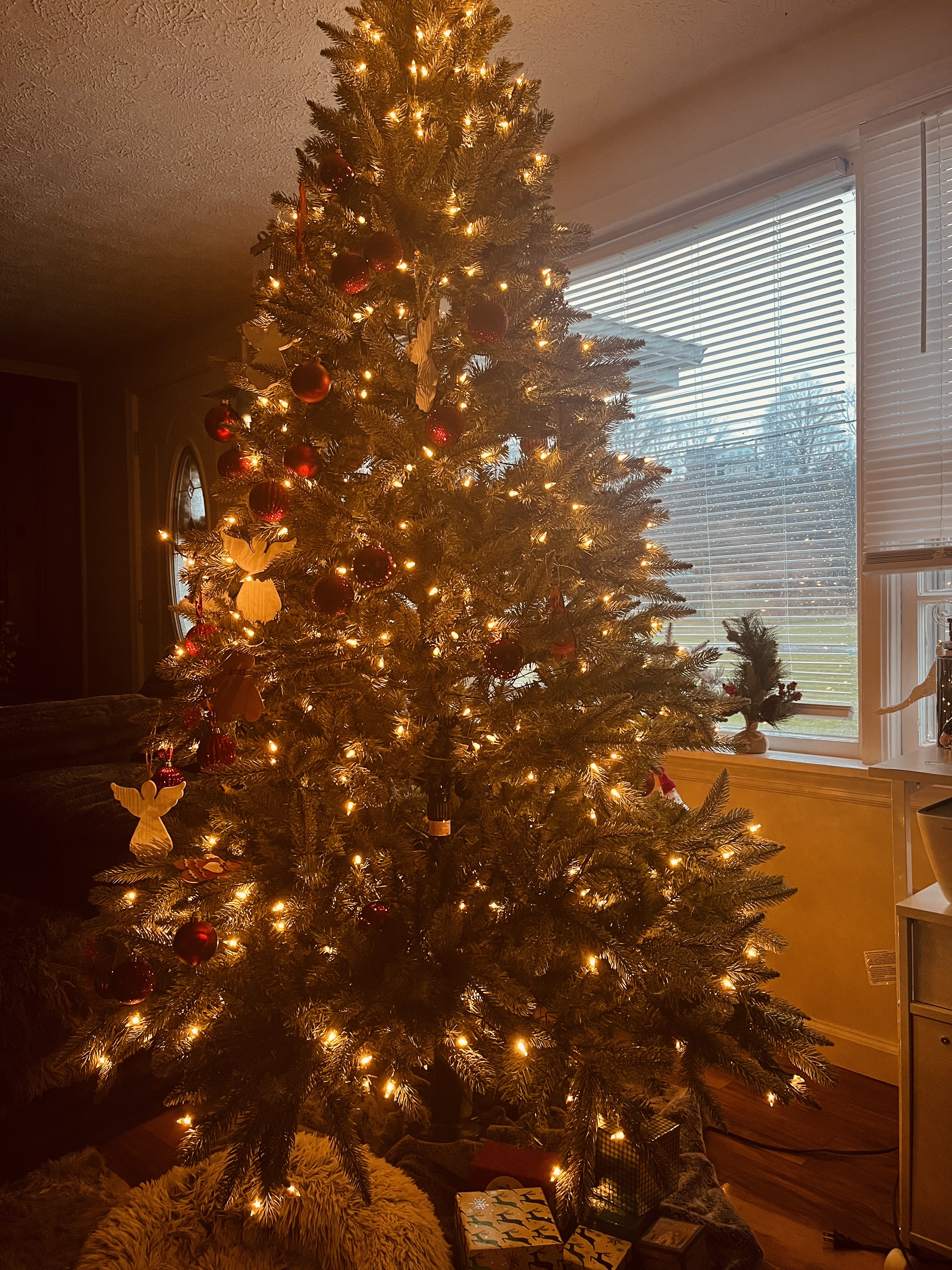
Hi, Readers. I'm working on book 5, Embracing Hope, of the Cowboys of Sagebrush Rose series. I wanted to show you my view: the Christmas Tree and rain. Ohio has always been known for temperamental Mother Nature, but she's wreaking havoc in December. I wonder if she's teaching us all a lesson to be patient and understanding or just wants to watch us dress in layers only to remove them. We've been through freezing temps, ice, snow, rain, sunshine, dreariness, and all over again. How's the weather where you are?

Would you like your name to be featured in my newest book? 

I need a villain's name. Please post your name (or suggestions) in the comments. I'll announce which name I'm using on my Author Facebook Page and the winner will receive a $5 Amazon GC.

Author Rhonda Lee Carver


Title Loving Justice (Cowboys of Sagebrush Rose Book 4)
Author Rhonda Lee Carver
Genre Contemporary Western Romance
Facebook account handle or link
Book Blurb
The tangled web of sisters, love and the greed for land continues at Sagebrush Rose Ranch. The land holds secrets and desires, and soon everything will be unearthed.
Sam Rose, the patriarch, may wield his authority like a branding iron, but Justice Rose won’t be branded. She’s the wildflower that refuses to be tamed, even if it means risking her inheritance—her home. Yet, someone from her past is out to stir up trouble for his own greedy needs and she might be forced into following her daddy's ridiculous rules.
An arranged marriage with a forbidden lover might be her only choice.
Jinx Weathersby was shaped by hardship, his hands calloused from years of labor and putting everyone before himself, especially his little sister who he's been raising since their parents died tragically. His focus...work hard and earn a living, but when he's hired to trail Justice, there's just something about her that softens him. And opens a door to having a family again.
Jinx, with his rugged charm, becomes more than a hired hand. He becomes a part of Justice’s life that she can’t turn away from. It's possible they can strike up a deal that'll benefit both and awaken silent hearts. But one mistake might ruin any chance he had to win her heart. One BIG mistake--or make that two.
A story of betrayal, lust, forbidden romance, and a family that will do anything and everything to save Sagebrush Rose Ranch.
Excerpt
“Are you even listening to me?” Hope clicked her fingers in front of Justice’s face. “Earth to Justice. Are you in there?”
With a sigh, Justice removed her gaze from the cowboy and onto her annoying sister. “I was watching the line dancers.”
“I bet you were,” Hope said in an irritated voice.
“What?”
“I don’t think I realized until this very minute that someone has a crush on you. And maybe it’s reciprocated.” Hope pretended to pluck a piece of lint off her shirt.
“What are you talking about?”
“Him.” Hope unashamedly pointed at Jinx.
Justice turned to look subtly in Jinx’s direction, but he wasn’t there any longer.
Where did he go?
She scanned the crowd, but she couldn’t find him.
Hope cleared her throat and tapped Justice on the shoulder. “Two o’clock, Sis, and moving.”
Justice should have been warned sooner that Jinx was headed their way because she almost fell off her stool. As he passed, he touched the brim of his hat and said in the warmest, husky voice she’d ever heard, “Evenin’, ladies.”
“Evening, Jinx,” Hope responded happily.
Justice was too busy checking out the wide, fringed pockets that cupped his firm ass to greet him. She swallowed hard and forced her attention off his bottom.
“Yep, I was right, as always.” Hope beamed.
“Don't go there.”
“Don’t go where? That you two have noticed one another? You two are hot for each other? No, I won’t point out that you have saliva dripping down your chin either.” Hope held out a napkin which Justice didn’t accept.
"Your imagination is out of control," Justice said, averting her gaze so Hope wouldn't see straight through her.
“He’s a good marriage of convenience material,” Hope said in a sing-song voice.
“Then why don’t you grab him?” Justice ordered a drink and planted her attention on nothing really. The most excitement just strolled toward the table where all the crew sat. She couldn’t stare without Hope seeing. However, through the large mirror behind the bar she could see Jinx clearly. He’d taken his hat off and had hooked it on his bent knee. She wondered if his hair was as thick as it appeared.
As if he felt the draw too, his gaze lifted.
“It’s not me he’s eyeing, honey.” Hope snickered.
Buy Links
Why should readers read this book?
They should read Loving Justice because it’s a warming romance with all the feels.
Author Biography
Rhonda Lee Carver is a bestselling author of contemporary western and romantic suspense, but she loves to write other genres too. She's known for writing stories that keep readers laughing, crying, gripping the edge of their seats, and screaming all in one book...like riding a virtual roller coaster. Whether she's creating sexy cowboys or tough guys, or sassy, independent heroines, readers are sure to find strong, powerful, memorable characters that are relatable.
Writing for Rhonda is like falling in love and finding a new best friend over and over again. Her characters will find a place inside your heart too.