Showing posts with label mines. Show all posts

Tuesday, October 27, 2020

Legends of the Old West... the Lost Cement Mine


Legendary Mines….

There are many legends about the old west. Some have been solved. Some have not. One of the top ten unsolved mysteries comes from Bodie, California.

It revolves around a gold mine that is said to lie in the eastern Sierra Nevada of California around the town known as Brodie. According to the accounts, this mind was the site of a gold deposit that totaled more than  28,000 kilograms or 60,000 pounds.

According to one story, the mine was found by a pair of men who had become separated from a group. They wandered through the mountainous area coming across the headwaters of the Owens River. There they found some unique red indigenous rock that contained a large amount of gold.

The red rock was called Cement rock by the men who mined the area in the 1860’s and  from that the mine received it’s name.

One of the miners contracted the dreaded disease Tuberculosis and in order to be seen by the doctor traded his lump of cement to a Dr. Randall for payment of his services. When the ‘good doctor’ realized the wealth of his payment, he and his assistant, Gid Whiteman went in search of more. They traversed the hills to the south and west of a place called Deadman’s Summit. Of course, news of their search soon reached the ears of local newspapers. James Write wrote articles about the search in 1879. He even claimed they mine had been worked in secret for years.

Another story says that it was discovered by two men who broke away from a wagon train headed for California. They sat down by a stream because they were so weary and low and behold they caught sight of a huge amount of gold. Again, one of them took the gold and by the time he got to California he was sick and had to again, use the gold to pay for treatment.

Even Mark Twain got in on the story. He placed it in his book, Roughing It. His version had three German brothers hiding in the mountains to escape an attack on their wagon train. Hiding, they found the gold and took it back with them.

In 1869 the story takes a twist. Two men arrived in Stockton, They replenished their supplies, didn’t stay long before they headed out again. Between the years 1869 and 1877, they returned with a good amount of the ore. Their story goes that they met a priest who was ill and before he died, he and his companions had been mining near Mammoth Peak in a place called Pumice Mountain. There they found gold, a lot of it. Their haul amounted to $400,000 dollars.

But with each story, the site of the mine was covered up or destroyed to keep others from finding it. Today, people are still looking for this legendary Bonanza.


If you’d like to read more about the top unsolved mysteries from the wild west. Use the link below.

Unsolved Mysteries of the West


Happy Halloween

Nan

Monday, March 4, 2019

Old Spanish Mines

By Kristy McCaffrey

Long before the westward expansion of the United States, the Spanish were present. Markings on a canyon wall in central Utah consisting of a cross symbol bear the date ‘1667’. Hieroglyphics and pictographs originally thought to be placed by Native Americans are actually markers along the Spanish Trail, which led from Mexico to the Uinta Mountains (in Utah) and beyond. This trail was the main link between Mexican and Spanish outposts, and it’s posited that they were religious outposts. The Spanish presence lasted well into the 1800’s, when packs of Mexicans were reportedly leaving the Uinta Mountains laden with gold.

The Uinta Mountains of Utah.

Until the 1800’s, the tales of the Spanish gold mines were the subject of Native American history, with few white men knowing of the mines. The Spaniards used the Native Americans as slave labor, and after many years of oppression it’s believed that they revolted and killed most of their Spanish captors. Supposedly the Native Americans returned the gold bullion to the earth and sealed it in the very mines from which it had come.

Thomas Rhoades

Thomas Rhoades, a close assistant to Mormon Church leader Brigham Young, was one of the first white men to fully understand the implications of the Spanish mines. Young had become a religious mentor to a Ute Indian named Chief Walkara, who spoke of a secret cache of gold in the Uinta Mountains. The chief agreed to give the gold to the church, and Rhoades was selected to transport it to Salt Lake City.

Unfortunately, the Indians refused to remove the gold, believing it to be cursed. But it was easy for Rhoades to transport since it was already mined and left in bullion form. His first trip was said to have lasted two weeks, yielding more than sixty pounds of pure gold. For several years, Rhoades continued to transfer gold until, in 1887, he discovered additional mines located off Indian ground. This spurred interest in the lost Spanish gold mines, since it appeared there wasn’t just one mine to be found but many.


Searching for the mines could be deadly. In the early years, stories circulated of prospectors being shot and killed, often by Native Americans protecting the sacred mines. Even as recently as 1990 there have been reports of modern-day prospectors being fired upon as a warning by Native Americans who protect the land near historic mining operations.

Old-timers in the Uinta Mountains have claimed there are seven mines lined with pure gold that supplied the Aztecs, serving as the basis for the seven golden cities of Cibola sought by early Spanish explorers.


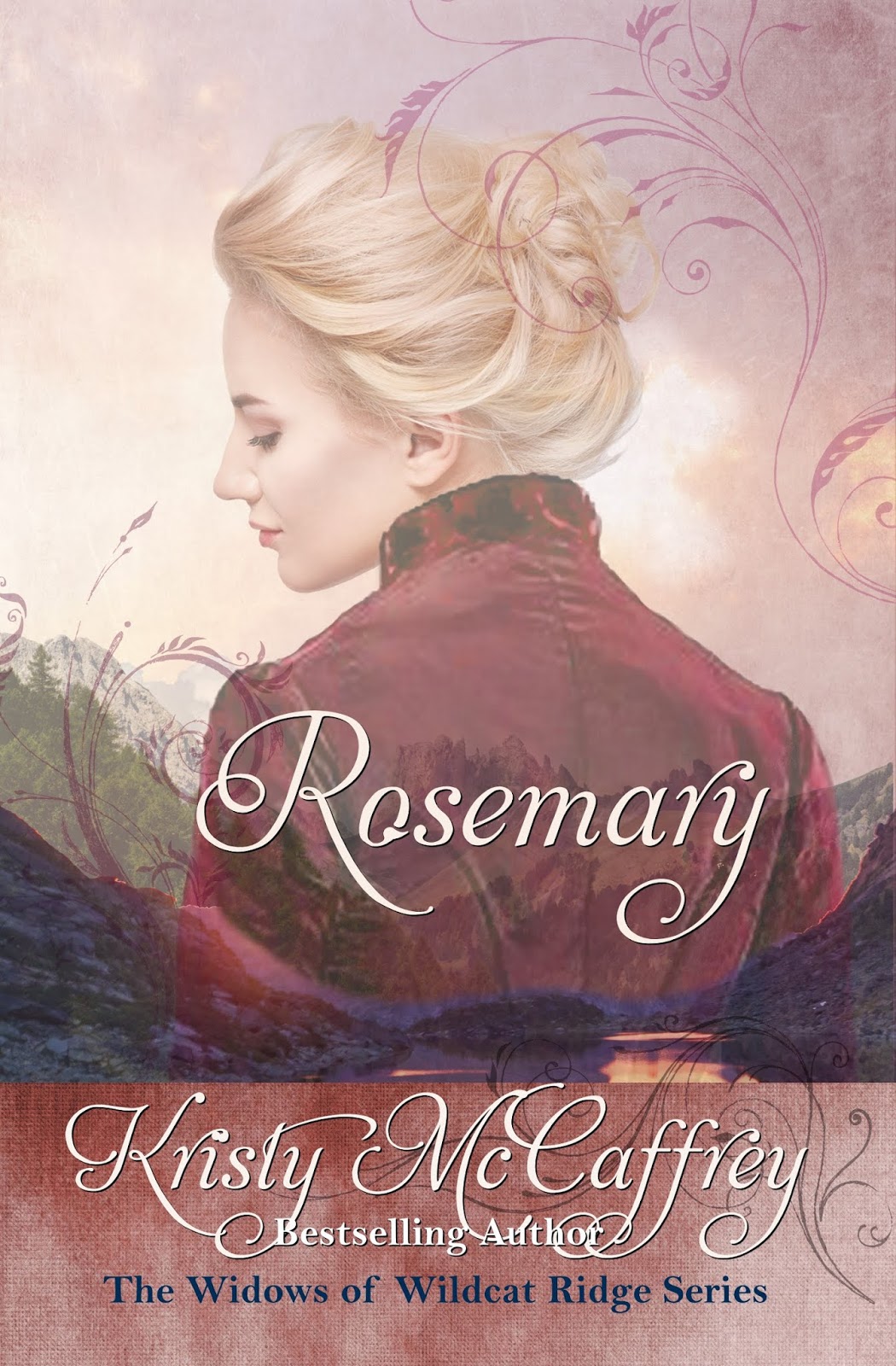
In ROSEMARY, Book 11 of the Widows of Wildcat Ridge Series, Rosemary goes in search of the fabled Floriana mine in the wilderness of the Utah Territory in 1884. While The Floriana is a fictitious mine, I based it on tales of the time.


Rosemary Brennan is recovering from the loss of her husband five months prior in a devastating mine accident that took the lives of nearly all the men in Wildcat Ridge. The mine owner, Mortimer Crane, has given the widows an ultimatum—find husbands or he will evict them from their homes and businesses. Desperate to keep the assay office that her deceased husband had managed, she heads into the hills in search of an old Spanish mine called The Floriana in the hope she can lay claim to a bonanza of gold.

Ex-U.S. Deputy Marshal Miles McGinty arrives in Wildcat Ridge to pay his respects to Jack Brennan’s widow. He and Jack had a history, and Miles is heartsick over the loss of the young man he had come to think of as a brother. When he learns of Rosemary’s problems with the piggish Crane, he will do anything to help her—even offering marriage. But when it becomes clear that Crane knew of Jack’s criminal past and was blackmailing him over it, Miles must decide whether to tell Rosemary the truth, because doing so may drive her away. And to his surprise, Miles has fallen in love with his new wife.

A sweet romance set in 1884 Utah Territory.

Available at Amazon and in Kindle Unlimited.


Connect with Kristy


Wednesday, May 7, 2014

Virginia City, Nevada


Comstock Lode

Virginia City, Nevada is likely familiar with people because of the television show, Bonanza, or the Comstock Lode. As men made their way across the United States to San Francisco’s gold rush, many traipsed over Nevada’s mountains. Feint strains of gold were seen, but most men didn’t put much faith into the strains containing valuable ore and pressed on to California. But the boom of San Francisco’s gold rush fizzled in 1859 when Pat McLaughlin and Peter O’Reilly discovered gold at the head of Six-Mile Canyon in Nevada. Henry Comstock was a fellow prospector in the area and convinced the men the gold was on his property. McLaughlin and O’Reilly believed Comstock and assured him he would earn a place in history when the giant lode was named; hence the vein becoming known as the Comstock Lode. The gold was followed up the canyon where an outcropping of gold in quartz was found by another miner, James Finney, saddled with the nickname ‘Old Virginny’. It is believed Finney honored himself by christening a new town at the top of the gulch, Old Virginny Town, during a drunken celebration.

Early on the miners faced a problem when panning for the newly discovered gold. A sticky blue-grey mud clung to axes and shovels. The mud was assayed and found to be silver of exceptional purity, worth over $2,000 per ton. Miners swarmed the area and Nevada became a territory in 1861. Within two years, the population of Virginny Town soared from 4,000 to 25,000, as saloon, hotels and various businesses sprang quickly into existence. Miners struck it rich and built their own mansions, importing furniture and fashion from Europe and the Orient. In the mix of this, Virginny Town was renamed Virginia City and became as important as Denver and San Francisco, with a reputation similar to modern day New York City. It was the town that never slept. Morning, noon and night, something was always going on above and below ground.

Comstock Minors
The rapid growth spurt of Virginia City produced the building of the Virginia-Truckee Railroad, which shuttled folks from Reno to Carson City to Virginia City. Investments made in the Comstock ignited the building of San Francisco. Among those striking it rich were Ralston and Crocker, founders of the Bank of California, Leland Stanford and George Hearst. Eventually, the gold mixed with the high quality of silver caught President Lincoln’s interest. He needed both to keep the Union solvent and made Nevada a state even though the population wasn’t enough for the land to qualify as a state. By the 1870’s, the Comstock Lode had produced enough money to help finance the Civil War and bolster the value of the Union’s greenbacks.  

The MacKay--Present Day
Virginia City’s population began to decline in 1877. In 1930, about 500 people remained. The city remains in existence today and is one of the largest federally designated historical sites in America. Many of the original buildings and homes are intact, most notably the Castle, the MacKay and the Savage. The Virginia-Truckee Railroad once again runs from Virginia City to Gold Hill.


****While my teachers briefly touched on the Comstock Lode in history classes, I gained a better knowledge for the silver mines in Nevada while researching Lady Luck. William Larsen is the villain in Lady Luck. Having grown up in poverty, William is now a prominent San Francisco banker, having gained his riches by stealing from his late boss and from the customers at his bank. But the wealth and power he’s accumulated isn’t enough to satisfy the memory of his cruel beginnings. He wants more and hopes to gain it by joining forces with those backing the Comstock Lode. However, he needs more cash than he has on hand to throw in with them, hence his quest to take possession of Lady Luck, the notorious gaming ship permanently dry-docked along the Barbary Coast.