Showing posts with label outlaw. Show all posts

Thursday, July 17, 2025

Lawman Turned Outlaw....Or Was He?


Henry Plummer remains one of the most enigmatic and debated figures in Old West history. Born in Maine in 1832, Plummer headed west during the California Gold Rush, where he quickly made a name for himself--first as a lawman, then as a man with a darker edge. By the early 1860s, Plummer found himself in the lawless gold camps of Montana Territory, where he was appointed sheriff of Bannack. Tall, well-dressed, and well-spoken, he seemed the very image of frontier justice. Yet whiskers began to spread that the lawman might also be running with--or even--leading the very outlaws he was sworn to stop.

Those whispers soon turned into accusations. Locals claimed Plummer was the head of a ruthless gang known as the "Innocents," responsible for dozens of stagecoach and gold shipment robberies, as well as cold-blooded killings. Tensions ran high, and with no formal justice system in place, vigilante committees took matters into their own hands. In January of 1864, without a formal trial, Plummer and two of his deputies were hanged by the Vigilantes of Montana. According to some reports, Plummer pleaded for time, promising to whistle in the rest of his gang if they spared him--but it fell on deaf ears.


 To this day, debate rages over whether Henry Plummer was truly an outlaw kingpin or simply the victim of frontier paranoia and mob justice. Some historians argue that evidence linking him to the Innocents is thin and largely circumstantial, while others believe he played both sides of the badge to enrich himself. Whatever the truth, his story captures the raw tension of the Old West--where the line between lawman and outlaw could be no thicker than a drawn gun.


 Amazon


Wednesday, June 4, 2025

Outlaw John Wesley Hardin ~ Julie Lence


 Hubby & I married when he was an airman in the Air Force, assigned to Scott AFB in Illinois. Just before the wedding, he secured an apartment for us off base. Two doors down was another young, married couple. They were the 1st people we met, and the husband introduced himself as, ‘John Wesley Hardin, like the outlaw’. I had never heard of John Wesley Hardin, but Wes and Sonya were wonderful neighbors, so nice and always willing to help. I wish we had kept in touch with them, but through military moves, we lost contact. I always remembered Wes’ introduction of himself and because of that, I introduce you to the John Wesley Hardin, the outlaw.

Born on May 26, 1853 in Bonham, Texas to Methodist preacher James Gibson Hardin and Mary Elizabeth Dixson, John Wesley was named after the founder of the Methodist denomination of the Christian Church. His childhood years, his father traveled the preaching circuit through central Texas before moving the family to Sumpter, where he established and taught school. John Wesley and his siblings attended, and in 1867, John Wesley and another boy engaged in a knife fight. The boy accused Hardin of scrawling a poem on the outside of the schoolhouse about a female classmate. Hardin denied the accusation and the two went at it, resulting in Hardin being expelled from school for having nearly killed the other boy.      

At age 15, John Wesley challenged his uncle’s former slave, Maje, to a wrestling match, which John Wesley won. According to his biography, the following day, Maje (Major Holshousen) ambushed him, to which Hardin shot him five times. He rode for help, hoping to save Maje, but Maje died three days later. With Texas now a Union occupied state, Hardin’s father was of the notion Hardin wouldn’t get a fair trial and told Hardin to go into hiding. He did, and weeks later, lawmen discovered his hiding place. Union soldiers were dispatched to arrest him, and Hardin killed them.

Knowing he would be arrested if he went home, he fell in with outlaw Frank Polk. Polk had killed Tom Brady, and soldiers from Corsicana, Texas were in pursuit of the duo. Polk was captured. Hardin escaped and went on to teach school for a short time in Pisgah, where he claims to have shot out man’s eye to win a bottle of whiskey. Through his own words, the next few years he recounts shooting others, but January 1870, there were plenty of witnesses to a duel between him and Benjamin Bradley. The two were playing cards and Bradley wasn’t happy that Hardin was winning and went looking for Hardin later that night. He drew first and missed. Hardin’s shots hit Bradley in the head and chest.    

January 1871, at 17, Hardin was arrested for the murder of Waco marshal Laban John Hoffman, which he denies doing. While in jail, he states he bought a gun from another prisoner. Later, two Texas lawmen were escorting him back to Waco when he claims he was able to overpower one of them and escape on the lawman’s horse. On the run, Hardin stated three lawmen, Smith, Jones and Davis, caught up with him and arrested him. In Bell County, he killed the trio when they imbibed too much alcohol.  

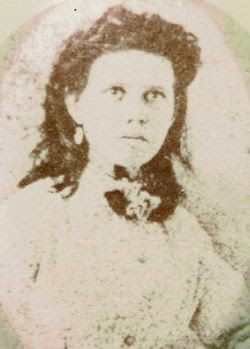
Jane Bowen Hardin
After these shootings, Hardin moved on to Pilgrim, Texas where he met up with his cousins, the Clements. They talked him into saddling up for a cattle drive to Kansas, convincing him he could make some money. Liking the idea, plus the fact a cattle drive was a good way to escape those pursuing him, he saddled up… and met with more scuffles and killings on the trail to Abilene and afterward. While in Abilene, it’s noted he met up with Wild Bill Hickock and took on the alias Wesley Clemons. By 1872, he was back in central Texas and married Jane Bowen. Jane’s brother, Robert, was a cattle rustler. Hardin moseyed around with him, as well as meeting up with his cousins. August of the same year, John Wesley was wounded in a gambling dispute at Gates Saloon in Trinity. Two buck shots sank into his kidneys and for a long time he thought he wouldn’t live. It was then he decided to settle down and surrendered to Sheriff Reagan from his bed, asking to be tried for his crimes to clear his slate. But Reagan was going to charge him for more crimes than he committed and Hardin escaped from his jail cell, a reward of $100 offered for his capture.

Caught up in a feud between the Suttons and Taylors, thanks in part to his cousins alliance with the Taylors, Hardin admitted to an involvement to the gunning down of two Suttons. He fled to Florida for a spell, then found his way back to his wife and daughter under the name of Swain. Shortly after, he met with his own gang in Comanche, Texas to celebrate his 21st birthday. While at the saloon, he met up with Sheriff Charles Webb, who, when asked, assured Hardin he was not there to arrest Hardin. Accounts of the meeting between the two suggest that Webb was indeed there to arrest Hardin, that he was reaching in his pocket for the warrant. Hardin’s friends shouted a warning and Hardin killed Webb, with the help of his cousin Bud Dixon and Jim Taylor. Hardin fled. His parents and wife were taken into protective custody, and his brother, Joe, and two cousins were arrested. Later, all three were killed in jail. Hardin parted ways with Taylor, but in 1875, the leader of the Suttons, marshal Rueben Brown, was killed. Historians do not know if Hardin was involved in this, as his bio only mentions Brown twice.  January 20, Governor Richard Hubbard offered a $4,000 reward for Hardin’s arrest.     

Hardin again went to Florida.  From there he was involved in other scuffles until August 24, 1877 when Rangers and local lawmen caught up with him on a train in Pensacola. He was found guilty of killing Webb on June 5, 1878 and sentenced to 25 years in Huntsville Prison. While there, he attempted an unsuccessful escape, was found guilty of other crimes, settled into prison life and became the superintendent of prison Sunday School. He studied law, and became bedridden for two years when an old wound became infected. (In 1892, he was described as 5.9 foot and 160 lbs, with hazel eyes, dark hair, and several scars.) His wife died while he was incarcerated, and Hardin went on to write his autobiography, of which some is overly exaggerated; he liked to fabricate details of his life and the people he shot, of which a lot cannot be proven.

John Selman, Sr. 
At the age of 40, John Wesley was released from prison on February 17, 1894 after serving 17 of his 25 years. He went back to Texas and was pardoned that same year on March 16 and went to live with his children. July 21 he passed the bar and began practicing law. He had a brief marriage to a 15 year old in 1895 then moved to El Paso where lawman John Selman arrested him for brandishing a gun in public. The two engaged in an argument, with Selman’s father, also a gunman, approaching Hardin the afternoon of August 19, 1895. Hardin had words with him, and that night, in the Acme Saloon, while Hardin played dice, the elder Selman entered and shot Hardin in the back of the head, killing him instantly.             

Hardin’s last words were reported to be, ‘Four Sixes to Beat’.


August 27, 1995, a confrontation took place at Hardin’s gravesite. Several of his great-grandchildren wanted him relocated to Nixon, Texas, to be interred next to Jane. The other group, locals from El Paso county, moved to prevent this. Both groups had their own legal support, resulting in a lawsuit ruling in favor of El Paso county.   

Wednesday, April 1, 2020

Outlaw Bill Tibbetts

Bill in his 20's courtesy of Canyon County Zephyr 
Outlaw Trail wasn’t exactly a trail, but a string of hideouts stretching from Montana through Wyoming, Colorado, Utah, New Mexico, Arizona, Texas and into Mexico. Robber’s Roost is probably the most well-known of the hideouts, and less famous outlaw Bill Tibbetts knew that part of Utah well.  
James William (Bill) Tibbets was born on March 23, 1898 on the south side of the Utah’s La Sal Mountains. His parents, Bill and Amy, were ranchers, and as luck would have it, Amy went into early labor while Bill was out on the range. Amy’s brother, Ephraim, rode to a neighboring ranch to fetch a female cook to help with the birth, but the woman was gone and wouldn’t return for a few days, thus Ephraim delivered his nephew. 
La Sal Mtns Wikipedia 
Bill Sr. filed for the homestead where Bill Jr. was born in the 1880’s. He picked a prime piece of land and hired Amy Moore from Moab to cook for him. She was 20 years his senior, something that wasn’t uncommon in those day. They fell in love, married and started a family. Bill Sr. was known to help his neighbors, including a woman whose husband repeatedly beat her, but the last time Bill intervened, the woman’s husband killed Bill that night. Amy wanted to keep the ranch, but with two small sons and debts she didn’t know Bill had, she was forced to sell and move back to her family home in Moab, where she remarried. Bill Jr. grew up missing his father and hating his stepfather, who was strict and didn’t’ hesitate to whup Bill for his disobedience.  
During his younger years, Bill earned a reputation of the toughest kid in school. Fighting and intimidation became the norm for him, as well as working his grandparents’ farm. There he became an accomplished horseman and hired on with Moab based Murphy Cattle Company at a young age. Through working on the range for the cattle company, Bill learned how to dig out water holes in the desert and how to make small earth dams to catch runoff water for the cows, the layout of the land and how to live off of it, all of which proved beneficial in his late teens when he and some friends decided to round up horses left behind in the Robbers Roost area. Rumors abounded the outlaws were gone and the teens made money selling the mounts to settlements in Iron County. Later, he enlisted in the Army, returned after the war and partnered with his mother and uncle in the cow business.
Bill tried to run his cattle in the canyon lands. They were open lands for anyone to use, but bigger outfits running their own herds on the open land didn’t welcome Bill, or any other newcomers. Bill spent many years waging war with these outfits and running from the law when framed for crimes and atrocities he didn’t commit. Sometimes, he was successful and out maneuvered the bigger outfits. Other times he lost, and through it all he earned himself a notorious reputation.
Utah's Canyonlands 
Later in life, the law finally caught up to him and he was thrown in the Moab jail alongside his friend Tom on a series of charges, some legit and some not. The two had their say in court and lost, and were sent back to jail where they escaped into the canyon lands of the Colorado River from the help of friends and Bill’s brother. With supplies left at various locations, they drifted along the Colorado to the Green River, but the sheriff and small posse caught up to them. They were able to take cover in Standing Rock Canyon and held off the sheriff in a round of gun fire. Under the cover of darkness, they stole the posse’s supplies and the next day Bill convinced the lawmen that the heat and mosquitos wasn’t worth them staying and trying to arrest him and Tom. For whatever reason, they agreed and left.      
Tibbett's Arch courtesy of Canyon County Zephyr 
Bill and Tom enjoyed a few days as free men before the posse returned. Low on supplies and food, forced to eat grasshoppers, Bill and Tom were able to lead the posse on a merry chase through desert and canyon land, with Bill knowing every crook and crevice. They made it to Elaterite Basin and found the supplies uncle Ephraim was known to keep hidden. Since the lawmen didn’t know this particular area of Robbers Roost, Bill and Tom were able to escape to a cave, where they spent the winter. (It’s this cave that hikers accidentally happened upon years later and found Tibbett’s carved name.)
Bill & Jewel courtesy of Canyon County Zephyr
Bill eventually left Utah and married Jewel Agens. They moved to Santa Fe, along with Tom, and both mend found work with the New Mexico State Police breaking horses. No one with the police department suspected they were fugitives. Eventually the Statue of Limitations attached to their names expired, and Bill and Jewel moved back to Moab with their sons. Tom opted to stay in New Mexico. So much in love, Bill and Jewel bought the Horsethief Ranch in 1959, which was special to Bill because he and a friend had been the first to discover a spring on the property back in 1924. Sadly, Bill and Jewel were killed by a drunk driver south of Moab in 1969.
I’ve only scratched the surface of Bill Tibbett’s life and the canyonlands of Moab and Robbers Roost. To learn more, read Last Of The Robbers Roost Outlaws by Tom McCourt. Bill’s was a fascinating life and something everyone who adores the old west should know.

Mr. McCourt’s book is available at Amazon.
www.amazon.com/dp/0937407151
Bill's name in the cave courtesy of C.C. Zephyr

Wednesday, July 5, 2017

Character Interview with Roth Beaumont


Lydia’s Gunslinger is the 2nd book in my Revolving Point, Texas Series. Roth was such a fun hero to write. He has his own sense of humor, is tough on the outside and a big, ole teddy bear on the inside. A while back, Roth was interviewed on the Wild Women Authors blog. He proved such a charming scamp, I thought I’d share with you here:  


Where are you from? St. Louis

Tell us a bit about Lydia’s Gunslinger: I grew up in an orphanage. The headmaster enjoyed tormenting boys, and whipped me on a few occasions. When I was old enough, I ran away, leaving my sister behind. I had no money, so I fell in with a band of outlaws. Made a name for myself robbing banks and payrolls. Outlaws don’t really have friends, but there was one person I could somewhat trust, Gage Cantrell. He helped me steal my sister away from the orphanage. I left her in Tucson after Gage and me pulled another heist and then split up, because a posse was after us. That’s when I met up with Percy, a miserable lout, and rode with him to Revolving Point. Situated on the Rio Grande, that town has a reputation worse than any outlaw. Rumors along the trail said Revolving Point nearly burned down, and the worst of the outlaws now made it his home. Percy had to find out for sure, and as luck would have it, Buck Grayson was there. Bastard that he is, Grayson forced me to pin on a badge and help him keep law and order. If I didn’t, he promised to send me to The Walls. His method for keeping me in line is my sister. Debra was injured and Grayson brought her to Revolving Point to heal. Now, he’s forced me to greet the orphanage lady, Lydia Tyler.

(Ryland Park.org) Lydia's orphanage
Lydia took me to task the moment we met. Trouble is, I like that. And the spark of defiance in her eyes. But Lydia’s a society lady and has troubles of her own, namely in the form of the man her pa hired as headmaster of her orphanage. A woman like her probably doesn’t want anything to do with me, or my guns, which she detests. But she keeps company with me, hints at a bit of larceny in her bones. With or without her say-so, I’m gonna rid her of her troubles.  
    
What did you think the first time you saw Lydia? That she’s a pretty, little spitfire, with hair as black as coal, eyes like a cat, and a temper to match mine.  

What was your second thought? That I was gonna get even with Grayson for setting her in my path. 
 

Did you feel it was love at first sight? Lust is more like it. Love didn’t come along until a few days later. 

What do you like most about Lydia? Her sass, the way she fusses over me and how she doesn’t try to change me. 

How would you describe Lydia? Lydia is pretty inside and out. She has a good heart and protects her orphans as fiercely as a mama bear guards her cubs. She’s loyal, outspoken and generous to a fault.  

How would Lydia describe you? Over-bearing, temperamental, crude, crazy, a menace… and those are my good qualities. 

What made you choose outlawing as a career? Didn’t have a choice, seeing how I had no skills or money. It was either steal and eat or starve and die.

What is your biggest fear? Losing Lydia, in any way. 
   
How do you relax? I don’t. If you had enemies like mine, you wouldn’t, either. 

Who is your favorite fictional character and why? I don’t have one. I’m not one for reading, unless it’s a Wanted poster. 

What is the best piece of advice you ever received? Don’t wear spurs. They make too much noise.

Lydia’s Gunslinger is available here:

Revolving Point, Texas Series: (Available only at Amazon; www.amazon.com/author/julielence)
Zanna’s Outlaw
Lydia’s Gunslinger
Debra’s Bandit


Be Mine, Valentine (short story)


Monday, July 16, 2012

Jesse James by Lauri Robinson


Depending on who you talk to, or where you research, Jesse James may be known as a hero or one of America’s first “most wanted” criminals. I’m not saying he was one or the other, but here are a few facts and/or tales as reported by others.

Born in Clay County, Missouri on September 5, 1847, Jesse Woodson James was one of three children born to Robert S. and Zerelda James. He had an older brother, Alexander Franklin (Frank) and a younger sister, Susan Lavenia James.  Jesse was three when his father, a Baptist Minister, died in California while ministering to gold rush miners.  His mother (who’d remained in Missouri when Robert went to California) remarried twice, first to Benjamin Simms who died within a year, and then to Dr. Reuben Samuel. Zerelda and Reuben had four children, all born on the farm in Missouri.  

Jesse’s connection with Quantrill’s Raiders came about when he was 15. Kansas became a state in 1854, and Congress decided to let the residents of the state decide on the slavery issue. This created a border war between the ‘free’ state of Kansas and the ‘slave’ state of Missouri. Cole Younger, the son of a prosperous business owner, was known as a bright student and very well behaved. The border battles caused many problems for the Youngers. At a dance in December of 1861 a Union Captain ‘crashed the dance’ and insisted the girls dance with him. When the young ladies all refused, he grabbed Cole’s younger sister and forced her to accompany him. Cole stepped in and knocked the Captain out. Knowing trouble was sure to follow, Cole fled the area. When his father was brutally murdered and his family home burned, Cole joined the Confederate Army. After a couple of years he became part of Quantrill’s Battalion. Another one of Quantrill’s Raiders was Frank James, who’d joined the Confederacy in 1861. After several successful battles with his Guard, Frank fell ill and was left behind. Upon recuperating he joined the guerrilla band. Both Frank and Cole rode with Quantrill on the raid of Lawrence, Kansas.

Shortly after the massacre on Lawrence, and because of Frank’s involvement, the Samuel (James) farm was attacked by Union soldiers. They repeatedly tortured Samuel, left him hanging in a tree, and then found 14 year-old Jesse plowing the field. After brutally beating the young boy they left him for dead. Jesse, barely alive, crawled back to the house, where he found his mother and younger siblings trying to revive his step-father. Samuel survived, but suffered severe brain injuries and later died. The Union army returned a short time later and Zerelda, pregnant at the time, and her 12 year-old daughter Susan, were arrested for not providing information about Frank’s whereabouts. A year later, at 15, Jesse James joined the Confederate cause and rode beside his older brother Frank.

After the war, the James brothers attempted to live peacefully, but time after the war was tough, and it’s said the brothers (as well as the Youngers) decided if the banks wouldn’t loan them the money they needed to start farming again, they’d take it. Some claim the James/Younger Gang formed in retaliation to the Republican reconstruction after the war that temporarily excluded former Confederates from voting, serving on juries, owning businesses, or preaching from pulpits. It’s also said that Jesse insisted the gang only rob banks whose major shareholders were Unionists, only steal strong boxes off trains and stagecoaches which held federal money, and never steal from passengers, customers, or common businesses.  

Most of what I’ve mentioned here is from two books written by John Koblas, a Minnesota based author known for his knowledge on the outlaw genre. His book, The Jesse James Northfield Raid, Confessions of the Ninth Man, was filmed as a documentary.  I’ve had the pleasure of visiting with John several times, and his knowledge on Jesse is utterly fascinating. We met for lunch one day, and didn’t leave the restaurant until they were posting the evening specials.  

The escapes of the James-Younger Gangs are almost unending. The controversy of Jesse’s bandit/hero lifestyle has been the basis of many novels, movies, and festivals. Whether he was one of America’s worst criminals, or a Robin Hood hero, when the word outlaw is mentioned, most everyone thinks of Jesse James.    

www.laurirobinson.blogspot.com