Showing posts with label legend. Show all posts

Wednesday, June 4, 2025

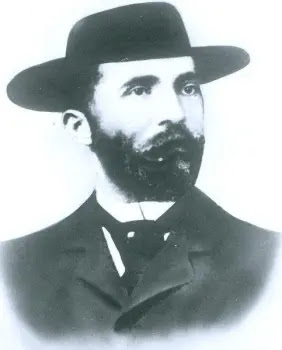
Outlaw John Wesley Hardin ~ Julie Lence


 Hubby & I married when he was an airman in the Air Force, assigned to Scott AFB in Illinois. Just before the wedding, he secured an apartment for us off base. Two doors down was another young, married couple. They were the 1st people we met, and the husband introduced himself as, ‘John Wesley Hardin, like the outlaw’. I had never heard of John Wesley Hardin, but Wes and Sonya were wonderful neighbors, so nice and always willing to help. I wish we had kept in touch with them, but through military moves, we lost contact. I always remembered Wes’ introduction of himself and because of that, I introduce you to the John Wesley Hardin, the outlaw.

Born on May 26, 1853 in Bonham, Texas to Methodist preacher James Gibson Hardin and Mary Elizabeth Dixson, John Wesley was named after the founder of the Methodist denomination of the Christian Church. His childhood years, his father traveled the preaching circuit through central Texas before moving the family to Sumpter, where he established and taught school. John Wesley and his siblings attended, and in 1867, John Wesley and another boy engaged in a knife fight. The boy accused Hardin of scrawling a poem on the outside of the schoolhouse about a female classmate. Hardin denied the accusation and the two went at it, resulting in Hardin being expelled from school for having nearly killed the other boy.      

At age 15, John Wesley challenged his uncle’s former slave, Maje, to a wrestling match, which John Wesley won. According to his biography, the following day, Maje (Major Holshousen) ambushed him, to which Hardin shot him five times. He rode for help, hoping to save Maje, but Maje died three days later. With Texas now a Union occupied state, Hardin’s father was of the notion Hardin wouldn’t get a fair trial and told Hardin to go into hiding. He did, and weeks later, lawmen discovered his hiding place. Union soldiers were dispatched to arrest him, and Hardin killed them.

Knowing he would be arrested if he went home, he fell in with outlaw Frank Polk. Polk had killed Tom Brady, and soldiers from Corsicana, Texas were in pursuit of the duo. Polk was captured. Hardin escaped and went on to teach school for a short time in Pisgah, where he claims to have shot out man’s eye to win a bottle of whiskey. Through his own words, the next few years he recounts shooting others, but January 1870, there were plenty of witnesses to a duel between him and Benjamin Bradley. The two were playing cards and Bradley wasn’t happy that Hardin was winning and went looking for Hardin later that night. He drew first and missed. Hardin’s shots hit Bradley in the head and chest.    

January 1871, at 17, Hardin was arrested for the murder of Waco marshal Laban John Hoffman, which he denies doing. While in jail, he states he bought a gun from another prisoner. Later, two Texas lawmen were escorting him back to Waco when he claims he was able to overpower one of them and escape on the lawman’s horse. On the run, Hardin stated three lawmen, Smith, Jones and Davis, caught up with him and arrested him. In Bell County, he killed the trio when they imbibed too much alcohol.  

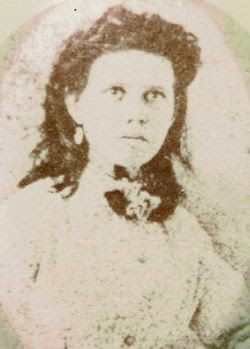
Jane Bowen Hardin
After these shootings, Hardin moved on to Pilgrim, Texas where he met up with his cousins, the Clements. They talked him into saddling up for a cattle drive to Kansas, convincing him he could make some money. Liking the idea, plus the fact a cattle drive was a good way to escape those pursuing him, he saddled up… and met with more scuffles and killings on the trail to Abilene and afterward. While in Abilene, it’s noted he met up with Wild Bill Hickock and took on the alias Wesley Clemons. By 1872, he was back in central Texas and married Jane Bowen. Jane’s brother, Robert, was a cattle rustler. Hardin moseyed around with him, as well as meeting up with his cousins. August of the same year, John Wesley was wounded in a gambling dispute at Gates Saloon in Trinity. Two buck shots sank into his kidneys and for a long time he thought he wouldn’t live. It was then he decided to settle down and surrendered to Sheriff Reagan from his bed, asking to be tried for his crimes to clear his slate. But Reagan was going to charge him for more crimes than he committed and Hardin escaped from his jail cell, a reward of $100 offered for his capture.
Caught up in a feud between the Suttons and Taylors, thanks in part to his cousins alliance with the Taylors, Hardin admitted to an involvement to the gunning down of two Suttons. He fled to Florida for a spell, then found his way back to his wife and daughter under the name of Swain. Shortly after, he met with his own gang in Comanche, Texas to celebrate his 21st birthday. While at the saloon, he met up with Sheriff Charles Webb, who, when asked, assured Hardin he was not there to arrest Hardin. Accounts of the meeting between the two suggest that Webb was indeed there to arrest Hardin, that he was reaching in his pocket for the warrant. Hardin’s friends shouted a warning and Hardin killed Webb, with the help of his cousin Bud Dixon and Jim Taylor. Hardin fled. His parents and wife were taken into protective custody, and his brother, Joe, and two cousins were arrested. Later, all three were killed in jail. Hardin parted ways with Taylor, but in 1875, the leader of the Suttons, marshal Rueben Brown, was killed. Historians do not know if Hardin was involved in this, as his bio only mentions Brown twice.  January 20, Governor Richard Hubbard offered a $4,000 reward for Hardin’s arrest.     

Hardin again went to Florida.  From there he was involved in other scuffles until August 24, 1877 when Rangers and local lawmen caught up with him on a train in Pensacola. He was found guilty of killing Webb on June 5, 1878 and sentenced to 25 years in Huntsville Prison. While there, he attempted an unsuccessful escape, was found guilty of other crimes, settled into prison life and became the superintendent of prison Sunday School. He studied law, and became bedridden for two years when an old wound became infected. (In 1892, he was described as 5.9 foot and 160 lbs, with hazel eyes, dark hair, and several scars.) His wife died while he was incarcerated, and Hardin went on to write his autobiography, of which some is overly exaggerated; he liked to fabricate details of his life and the people he shot, of which a lot cannot be proven.

John Selman, Sr. 
At the age of 40, John Wesley was released from prison on February 17, 1894 after serving 17 of his 25 years. He went back to Texas and was pardoned that same year on March 16 and went to live with his children. July 21 he passed the bar and began practicing law. He had a brief marriage to a 15 year old in 1895 then moved to El Paso where lawman John Selman arrested him for brandishing a gun in public. The two engaged in an argument, with Selman’s father, also a gunman, approaching Hardin the afternoon of August 19, 1895. Hardin had words with him, and that night, in the Acme Saloon, while Hardin played dice, the elder Selman entered and shot Hardin in the back of the head, killing him instantly.             

Hardin’s last words were reported to be, ‘Four Sixes to Beat’.


August 27, 1995, a confrontation took place at Hardin’s gravesite. Several of his great-grandchildren wanted him relocated to Nixon, Texas, to be interred next to Jane. The other group, locals from El Paso county, moved to prevent this. Both groups had their own legal support, resulting in a lawsuit ruling in favor of El Paso county.   

Wednesday, June 5, 2024

Con Man & Gambler Jefferson R. 'Soapy' Smith ~ Julie Lence

courtesy Denver Post
 Jefferson R. Smith was born into a wealthy Georgia family in 1860. By the end of the Civil War, his family was in financial ruin and moved to Texas, where Jefferson received a good education, due in part to his father’s position as a lawyer, and became an eloquent speaker. But proficient in speech didn’t net him a job, so he hired on with a cattle drive to Abilene, Kansas. He made good money, but while in Abilene, Jefferson’s attention was snagged by a con man and the ‘what walnut shell is the pea hidden beneath?’ game. Jefferson lost the money he made on the cattle drive, and found his calling in life as a gambler and con man.

       Having the gift of gab, he spent the next decade roaming the west and perfecting his skills, determined to be the best poker player. He made his way to Leadville, Colorado in 1885 and met up with Old Man Taylor, whose reputation pegged him the King of the Shell Game. The two joined forces and set up a con involving bars of soap. Taylor would blend in with the crowd while Jefferson, using a tripod and suitcase, would set out several bars of soap and invite people to play a game, hooking their interest with the line, ‘Cleanliness is next to godliness, friends, so step right up and watch me very carefully’. Players were to find the greenbacks he’d hidden within the bars of soap. Taylor would volunteer to be the first plyer and find the $100 bill, giving others the incentive to try their luck, but most only 5 cents, while Jefferson and Taylor raked in the cash, though Jefferson didn’t always keep the money for himself. He gave substantially to churches, widows, the poor, and often paid for the funerals of the girls from the red-light district, and never would he con the townsfolk. His games were strictly for unsuspecting tourists.

         Jefferson eventually left Leadville for Denver, where he added singing and joke telling to his routine. A complaint was filed against him and the sheriff, when filling out the paperwork, couldn’t remember Jefferson’s name but remembered the complaint had something to do with soap, so he wrote Soapy Smith and the nickname ‘Soapy’ stuck.

Soapy went on to become a successful gambler in Denver and opened his own saloon, Tivoli Saloon and Gambling Hall, with the Latin inscription Caveat Emptor (Let the Buyer Beware) above the door. He also formed a gang and a bond with the police department, which benefited both sides. Soapy helped the poor, especially at Thanksgiving by giving out turkeys so none were stolen, and by donating to churches. He even rescued an innocent girl from a detective agency trying to force a confession from her. Eventually, he learned of the silver boom in Creede, Colorado and left Denver for more riches.

In Creede, he formed another gang and put into motion taking control of the town, much to the dislike of rival Bob Ford, better known as the man who killed Jesse James. Ford wanted in on the controlling of Creede, and a third party arranged a meeting between them before bloodshed broke out. The two agreed to keep out of each other’s way, but Soapy went on to build the New Orleans Club with his longtime pal, Joe Simmons. From there, Soapy and his gang did take control of Creede, with Soapy still helping the poor. But the townsfolk tired of Soapy’s control and he went back to Denver and opened a ticket office, where he advertised tickets to Chicago for $5. Another scam, as when people tried to buy these tickets, he told them they were only sold on certain days, of which the present day was not one of them. With Colorado’s governor looking to clean up the lawlessness in Denver, he called in the militia to run Soapy out of town, but Soapy hunkered down in city hall with dynamite, threatening to bomb the building if the militia fired at him. Federal troops from Fort Logan were brought in to keep the peace. The governor withdrew the militia and finally ran Soapy out of town.

Making his way to Mexico, Soapy joined forces with Mexican president, Porfirio Diaz and set up other scams. But when he tried to convince Diaz that Mexico needed a foreign legion and set up a recruiting office for a hefty price, his scam was discovered and the deal broken.

1897 found Soapy heading to Skagway, Alaska when news of the Gold Rush broke. There he built another saloon/casino under the name Jeff’s Place, assembled another gang and used his winnings to open a phony telegraph office; the wires were under water and folks ‘often’ received word from back home to send money, of which Soapy kept. Eventually he stole $3,000 from a miner and a vigilante group demanded he pay it back. Hearing about the meeting the vigilantes were holding on the docks, Soapy armed himself and went, only to meet up with Frank Reid, a foe of Soapy’s. Soapy struck Reid with the butt of his rifle. Reid fired at Soapy and missed. The two got into a scuffle, with guns firing again. Soapy was killed and Reid died almost 2 weeks later from his injuries.

Soapy is buried on the outskirts of Skagway’s cemetery. A plain marker gives the dates of his birth and death. He was 38 and left behind an estate of $250.

Sunday, April 10, 2022

American Cowboy, the Legend by Jan Scarbrough


Why do we love the legendary American cowboy?

Answer: Because he (or she) is who we want to be

Real cowboys (and cowgirls like Annie Oakley) became romanticized in the nineteenth and twentieth centuries, because the public admired the qualities they represented.

Duncan Emrich in a book entitled Folklore in the American Land claims that America has two original legends: Santa Claus and the cowboy.


In his book, Emrich lists these common attributes of an American cowboy.


Individualism
Independence
Freedom
Not given to bragging (I’ll insert “humble” here)
Courage
Cheerfulness
Pride
Loyalty
True to his word
Generosity
Kindness
Unbeatable

Women readers love a good cowboy tale because a true cowboy esteems women. Emrich writes, “One of the strictest code of the West was to respect women. No other class of men looked upon women with greater reverence.”

So when you see the hunky cowboys on the covers of modern romance novels, remember they represent the real men who embodied an American ideal.

***

In my latest book Ben: Dawsons of Montana, my hero Ben and the heroine Leigh are on the dance floor when her ex-husband shows up.

The other couple twirled around so Leigh could see them. Bill and Kiley!

“Just saying hello,” Bill slurred. “We wondered where you disappeared to.”

Leigh turned her head away. What was Bill doing here? He was obviously drunk. Was he following them?

“You two look mighty cozy. Leigh, I see you’ve got a new thing going.”

Kiley grabbed Bill’s arm and tried to pull him away. He was having none of it.

By now, the slow dance music had ended, and the DJ spun a faster song. Slow dance couples left the floor, and the line dancers were back. Frozen in Ben’s arms, Leigh forced herself to step away from their safety.

Ben turned and placed a hand on Leigh’s back to usher her off the floor. “Pull in your horns, Weston,” he said over his shoulder.

“Just so you know, she’s pretty good in bed. I’ve had better, but she’ll do.”

Ben stiffened at Bill’s crude remark. He hauled around, his expression dark, putting himself between Leigh and her ex-husband. “Take that back.”

“Why would I lie to you, bro?”

Leigh’s heart raced. No, they couldn’t fight. Bill was much bigger than Ben. Taller. Heavier. “Ben, it’s okay. Let’s go.”

Ben shook off her restraining hand. Making a fist, he moved back on his right foot and threw a hard right punch toward Bill’s jaw. The mayor stepped forward toward the oncoming fist and blocked the strike with his arm. But he still stumbled backwards. Regaining his balance, Bill came at Ben fists flying. Ben went down. In a second, he was back on his feet.

Someone in the crowd shouted, “Fight!”

The two men pummeled each other like an old-time movie saloon fight. Finally knocking each other down, they rolled around on the floor, grappling with each other. A crowd gathered, circled them, and yelled encouragement to both. Hands dangling limply by her side, Leigh held her breath. What a nightmare. What could she do to stop this?

And then the bouncer showed up and pulled them apart. “You two, out!” The brawl was over in seconds.


Wednesday, October 7, 2020

Female Outlaw Pearl Hart By: Julie Lence

Pearl Hart was born in 1871 in Canada, with the birth name of Pearl Taylor. One of several children, and her parents of French descent, she was raised in a middle class home and sent to boarding school when she was 16. While at school, she met smooth talker Frank Hart, who filled her head with romantic tales of an exciting life in the wild west. In reality, he was nothing more than an abusive drunk, but Pearl fell in love with him and married him. The two left Canada and eventually landed in Chicago.
Women's Bldg at the Fair, Pinterest
Chicago was a changing point for Pearl. She attended the 1893 World’s Fair, featuring a Women’s Pavilion. A large array of females spoke on the Women’s Suffrage topic and Pearl took to heart that she could be more than just a wife, as her upbringing taught her. She also attended a Wild West show featuring Annie Oakley. Pearl was in awe of Annie’s shooting skills, and accompanied with the what she learned at the fair, she got up the gumption and left her abusive, unable-to-hold-a-job husband. She landed in Trinidad, Colorado, but soon found out she was pregnant and went back to Canada. After giving birth, she realized the lure of the west still beckoned and lit out for the states, leaving her son with her parents.
Pearl met up with her husband again and took him back on his promise that he was a changed man and capable of holding a job. For a while he held a maintained the positions of bartender and manager at a hotel, but all too soon, he and Pearl began partying, with Pearl learning to drink and smoke and use drugs. Problems arose between them again, and Frank left shortly after she gave birth to their daughter and joined Roosevelt’s Rough Riders, stating home life wasn’t for him. Pearl traveled back to Canada again and left her second child with her parents.
Courtesy of American Cowboy 
She found her way to Arizona and worked the mining camps as a cook, taking up drinking and opium use and not finding the romance and excitement of the west she longed for. Rumors suggested she tried to commit suicide several times, but was always saved by the miners, one of whom she formed a partnership with. Joe Boot was from German descent and he and Pearl began working their own claim when Pearl received a letter that her mother was gravely ill and needed money for the doctor’s bills. To acquire the money, Pearl and Joe thought to rob a train but decided to rob a stagecoach instead. Pearl cut her hair, dressed in Joe’s clothes, and together, they held up a stage. They came away with over $400 and the guard’s revolver and took off on their horses. But not knowing the land, they rode for two days then made camp and fell asleep, and woke to a posse surrounding them.
Courtesy of Pinterest
In Jail, Pearl became an instant celebrity. A lady bandit was rare. Remembering everything she learned from the Women’s Suffragette talks in Chicago, she began spouting she wouldn’t be tried in a court of law under rules men made and not women. Signing autographs and posing for pictures from her cell, the press loved her, and so did civilians. Ed Hogan was so smitten with her, he helped break her out of jail. She was found and brought back, and eventually went to trail. The jury found her innocent, especially after her defense lawyer brought into play she’d never been in trouble in the past and the only reason she robbed the stage was because of her mother’s health. The judge was furious with the decision and tried her on charges of stealing the guard’s gun and unlawfully carrying of a weapon. She was found guilty and sentenced to 5 years in Yuma. Joe received a 30 year sentence to Yuma.
Pearl became an even bigger celebrity and legend while in Yuma, earning the nickname Lady Bandit. The warden liked her and gave her a larger cell, and she again posed for pictures and signed autographs. She was released after serving 18 months and moved to Kansas City. Her sister wrote a production based on Pearl’s ‘Lady Bandit’ persona of which Pearl was to star in, but it never really caught on and Pearl disappeared from the public eye. A few years later, she was arrested for purchasing a stolen can of food. After that, she disappeared again and surfaced in 1924 at the Arizona courthouse she was tried in. She remarked to the attendant that nothing had changed since her last visit. He asked who she was and she replied, Pearl Hart, the lady bandit.
Rumors have abounded as to what happened to Pearl after this. Some say she died in Kansas City after operating a cigar shop. Others hint she lived in San Francisco until her death in 1952. A third suggests she married a rancher in Arizona and died under the name Pearl Bywater in 1956. She is wrongly credited with being the last person to rob a stage. The last stagecoach robbery was in 1916 in Jarbridge, Nevada. She is also not the only woman to ever rob a stage. Jane Kirkham was killed robbing a stage between Leadville and Buena Vista, Colorado in March 1879.
Such and interesting woman, and such a hard life Pearl led. 

Wednesday, September 4, 2019

Delia Haskett--1st Female Wells Fargo Driver


Delia Haskett was born on December 7, 1861 in Ukiah, California. Her mother, Miranda, was a schoolteacher and father, Samuel, owned a hotel and a blacksmith plus drove for Wells Fargo. As a young girl, Delia was fascinated with the stagecoach. Her father took her with him on several of his trips, with Delia begging to take a turn at the reins. Samuel indulged her when it was safe to do so, and as the years passed, Delia became proficient in driving a stagecoach. By the time she turned 14, she was making short runs by herself. When one of her father’s employees fell ill, Delia was trusted with his route to deliver the mail, beginning her career as a part-time Wells Fargo driver.        
Delia’s first 8-hour trip delivering the mail to Lakeport came with a list of hazards to watch for. Known to be in the area, notorious stagecoach robber Black Bart made the top of that list, followed by lesser know highwaymen and safely passing through the treacherous Blue Lakes area. (The Blue Lakes were so deep and dark that the Pomo Indians wouldn’t go near them. They claimed a monster lurked beneath the water.) Delia left late afternoon, the stage void of passengers, and met her first scare before midnight. Having pulled off the road to water the horses, she suddenly heard horses’ hooves and men’s voices approaching. Fearing Black Bart was upon her, she waged an inner battle of should she run or should she stay. She chose the latter and was rewarded moments later when the band of men proved to be singers returning home from a religious meeting. Delia pressed on and arrived in Lakeport around 3 a.m. in the morning, tired and free of harm.
Over the next 9 years, Delia drove the stage as needed, becoming the first female driver for Wells Fargo. When she wasn’t on a run, she honed her skills with a long-barreled pistol to become a crack shot. She also became an expert with a whip and rode in horse shows where she performed trick riding and won prizes for her shooting skills. One such skill was hitting a nickel in mid-air.
Delia gave up driving the stage when she married in 1885 and became Mrs. Delia Rawson. She moved to southern California with her husband and bore two sons and one daughter. Alongside her husband, she became part owner in a mine, a lady rancher and successful businesswoman. In 1934, the Pioneer Stage Drivers of California Association was founded, with Delia being the only female member and elected Vice President. She spent her final years living and working on a 10-acre orange grove in San Dimas, California with her daughter. In May 1949, at the age of 87, Delia was laid to rest at Forest Lawn in Glendale.      


Wednesday, November 7, 2018

Poker Alice

Alice fashionably dressed
Born in Sudbury, England in 1853, Alice Ivers is best known as the highly skilled female poker player and faro dealer who loved cigars. The only daughter of a school teacher, Alice’s childhood consisted of the best education and moral values. When she was twelve, her family immigrated to the United States and settled in Virginia, but with the Civil War raging and gold being discovered in the West, she and her family eventually moved to Lake City, Colorado.
As a young woman, with exceptional breeding, class and beauty, Alice was sought after by many men. The first man she favored was Frank Duffield, a mining engineer and gambler. It is believed that throughout her life Duffield was Alice’s one true love and she soon married him. Duffield’s job took the couple from one mining camp to another before they settled back in Lake City. There they enjoyed social parties and Alice loved the attention lavished upon her. She began joining her husband at the poker tables, where Duffield taught her everything he knew about the game. Some nights she sat in for him while he was at work. Because of her fine education, her math skills were exceptional and it wasn’t long before she was more adept at the game than her husband and gaining a bit of notoriety; females rarely ventured into a saloon and were never expected to be good poker players.
A few years into married life, Duffield was killed in a mine explosion. Alice quickly came to the conclusion she would now have to make her own way in the world and turned to gambling full time as a means to support herself. Shortly after she hit the tables, she earned the nickname ‘Poker Alice’.       
Leadville, Colorado
Finding work wasn’t difficult for Alice. She held many jobs in gaming houses throughout Colorado, to include Leadville and Alamosa. She kept her appearance neat, dressed in fashion, carried a .38 caliber revolver, and somewhere along the way, acquired a love for cigars. Often seen puffing on a stogie, if anyone rudely commented on her smoking habit, she’d pull out her gun and effectively put an end to their ribbing.
Alice found her way to Oklahoma and her fame spread there, too. She continued to win substantial amounts and made her way to New Mexico before moving to New York City. There she treated herself to new clothes and enjoyed the nightlife. With her funds nearly depleted, she left New York and headed back west, to the new mining town of Creede, Colorado. At forty years old, she took a job working eight hour shifts at the tables at Bob Ford’s Exchange. Bob’s claim to fame was having killed Jesse James. Many folks disliked his bragging, because at that time, Jesse James was still considered more of a hero than an outlaw. Eventually, Ed Kelly killed Ford in 1892. Alice witnessed the shooting and moved to Deadwood soon after.
Deadwood, South Dakota
In Deadwood, Alice took another job dealing stud. She met fellow dealer, Warren Tubbs, and the two struck up a friendship. Tubbs hailed from Sturgis, worked as a house painter by day and dealt at night, though his skills weren’t good. Alice saved Tubbs’ life when a drunk miner came into the saloon and tried to stab Tubbs. She shot the miner in the arm, and soon after Tubbs fell in love with Alice. They married, with the agreement Tubbs would stick to painting and Alice would continue with gambling. The couple had seven children, whom Alice kept away from the tables as she continued winning large sums of money to provide for her family. Once their children grew up and moved away, the couple retired to a chicken ranch north of Deadwood. Tubbs contracted pneumonia in 1910. He died on a cold winter’s night with a wish to be buried back in Sturgis. Alice drove his body back to Sturgis through a blizzard and pawned her wedding ring for payment for his burial.
Playing cards, circa 1800's
Alice remained in Deadwood and took another job dealing poker. At this time in her life, she changed her clothing from fashionable to plain attire and continued with her cigar smoking ways. She hired George Huckert to take care of her farm and when she owed him wages of more than one thousand dollars, she married him, reasoning it was cheaper to marry him than pay him what she owed him. Huckert was a loafer and spent most of time in the bars. Upon his passing, Alice was relieved and took back her name of Tubbs.
Life became tougher for Alice as she aged. Most of her money was gone and reform was fast becoming the rage in Deadwood and Sturgis. She opened her own gambling hall and catered to the soldiers at Ft. Meade. Several times she was arrested on gambling, prostitution, and alcohol charges. Each time, she beat the charges and was set free. She was also charged with killing a soldier and beat this rap as the jury agreed she killed the man in self-defense. Past the age of 70, Alice began having gall bladder troubles. With medicine reaching new heights, doctors convinced her to undergo a relatively new surgical procedure. She readily agreed, mostly due to the fact a fortune teller had told her she would live to one hundred. Sadly, Alice died during the operation. She is buried at St. Aloysius Cemetery located in the Black Hills. Ted Walker saved her home in Sturgis from demolition and had it moved to Junction Avenue. To this day, Alice remains a poker legend in Colorado and South Dakota.                


Wednesday, November 1, 2017

Silver Heels

Buckskin Joe, CO
Back in the day, jobs were scarce for women. Positions that are mostly filled by a woman in modern times, such as a secretary or a school teacher, were usually filled by a man. Respectable positions for women included a seamstress, nanny, and maid, but most homes couldn’t afford to pay for even one of these positions. Single women who’d fallen on hard times and had no family to turn to for help were often forced into prostitution as a means of survival. While the profession is degrading to women by today’s standards, back in the day, prostitution served a role in the expansion of the west. 
The Gold rush saw thousands of men pull up stakes and head west in the hopes of striking it rich. Some brought their families. Oftentimes, a man struck out on his own. Tent camps, small towns and cities sprang up throughout the west, and where men gathered, one need was shared by all; a woman. Females desperate for income or looking to escape a bad situation followed the men to provide a service. But whether working in a lavish parlor house, crib, or an in-between establishment, most didn’t get rich. And most never left the life of a soiled dove. A few women rose to wealth and fame, and some had a heart of gold. One such woman destined to help others now bears two legends—Silver Heels. 
Dance Hall Girls
Silver Heels’ first legend states she was a parlor house girl and a dance hall girl at Buckskin Joe, a mining town north Fairplay, Colorado. Many claimed she had a beautiful face and could dance faster and more gracefully than the other girls. She also wore glittering silver slippers, hence her nickname. It was said children adored her because she sent to Denver for candy to give to them.
Legend has it Silver fell in love with one of the miners and was engaged to be married to him. Before the two wed, smallpox struck the Buckskin Joe area and the town closed. Women went back to Fairplay, except for Silver. She stayed to help her fiancée. Sadly, he was one of the first to die from the disease. Silver remained in Buckskin Joe and moved from cabin to cabin to help the other miners stricken with the disease. She kept their houses clean, cooked meals and washed clothes all the while tending their illness. Once the epidemic broke, the town returned to life. Those grateful to Silver collected money to give to her to thank her for her help, but she couldn’t be found. She had secretly left town. Still wanting to acknowledge her good deeds, the miners named the highest mountain in the area after her.
Some years later, a woman wearing heavy black veils visited the cemetery beneath Mt. Silver Heels. The miners believed the woman was Silver Heels, returning to pay respect to her fiancée’s grave. 
Buckskin Joe, CO
Silver Heels’ second legend is more detailed and takes place in Dudley, which is stated to be near Fairplay and Buckskin Joe. A young woman of great beauty arrived in the mining camp, fresh off the stage from Denver. The crowd waiting for the mail noticed she seemed lost and confused. Jack Herndon, owner of Dudley’s main saloon and gambling hall, helped the woman. He took her to Mr. And Mrs. Mack’s home, where she could rest and gather her wits. It’s said during her stay with the Mack’s, the woman confided her past to Mrs. Mack, which Mrs. Mack kept secret. Later, Jack learned the woman’s name was Josie Dillon.   
Josie stayed with the Macks and helped in their kitchen. She also sent to Denver for candy to give to the children, often inviting them to the Macks’ home where she told them stories. During this time, she took a liking to Jack and the two fell in love.   
News of the great Chicago fire spread to the area. As a community, the townsfolk wanted to do something to raise money to help the people in Chicago. Several ideas were suggested, but it was Josie who came up with the idea she would sing and dance and if folks liked what they saw, they could leave a donation in a box. Jack closed his saloon for this meeting and for two-day event featuring Josie. She appeared on stage in a short, glittery dress most thought were diamonds outfitted around the neck and edge of the dress. But it was her slippers that earned her the nickname ‘Silver Heels’. Except for toes shining in gold, her slippers were all silver.
Silver Heels Mountain CO
The citizens loved Josie’s singing and dancing so much that they donated over seventeen hundred dollars to give to the people of Chicago. After that, Jack sold his saloon and went into mining, and he and Josie continued to see each other. Then two sheepherders came to town. Two of them came down with smallpox and were the first to die. Josie, Jack and the Macks took care of those stricken with the disease. Jack fell ill but did not die. During the epidemic, it is said the miners remembered Josie’s performance and took to calling her Silver Heels. Jack didn’t care for the nickname, but Josie allowed it, and shortly after the crisis passed, Jack and Josie went to Denver, married and returned, only to leave for Kentucky after Jack’s father died and his mother needed help. After they left the area, legend states a survey crew came to the area. They needed a name for one of the larger mountains. The miners suggested Silver Heels and that’s how the mountain got its name.

Personally, I like the first version of Silver Heels the best, but then, a little bit of romance mixed with heartache and mystery is a fondness of mine.

Wednesday, December 2, 2015

The Poinsettia


courtesy of www.bloom.uk.com

The Poinsettia is a native Mexican plant. Its origins trace back to present day Taxco. The poinsettia, Euphorbia pulcherrima, Willd, is a member of the Euphorbiaceae family and is defined as a female flower, without petals and usually without sepals, surrounded by individual male flowers enclosed in a cup-shaped structure called a cyathium. The Euphorbia genus contains 700-1000 species. The Aztecs in central Mexico cultivated the plant and used the colorful leaves, known as bracts, to make a reddish-purple dye for clothes and makeup. The Poinsettia’s milky sap was made into a medicine to treat fevers. 


Joel Roberts Poinsettcourtesy of http://www.apsnet.org

Joel Roberts Poinsett is credited as the first American to bring the plant to the United States. A botanist from Greenville, South Carolina, Poinsett was also the first United States Ambassador to Mexico. Best remembered as the founder of the Smithsonian Institute, Poinsett traveled to the Taxco area, discovered the colorful plants growing on adjacent hillsides and had some of them shipped to his home, where he grew them in his greenhouse. From there, he gifted some of the plants to his friends and also sent some to botanical gardens and to fellow botanist John Bartram in Philadelphia. Bartram sent the plant to his friend Robert Buist. Buist was a plants-man from Pennsylvania and thought to be the first person to sell the Poinsettia under its original name. Legend has it the Euphorbia pulcherrima, Willd, became known as the Poinsettia in the 1830’s, after Joel Robert Poinsett. 


courtesy of www.orthodoxytoday.org

How did the Poinsettia become known as the Christmas plant? The Aztecs prized the poinsettia and believed it to be a symbol of purity. In the 17th century, Franciscan monks in Mexico incorporated the flower into their Fiesta of Santa Pesbre; a nativity procession. This is the first time the Poinsettia was associated with Christmas, leading Mexico’s Christians to adopt the plant as their Christmas Eve flower. The star-shaped bracts symbolize the Star of Bethlehem. The red leaves represent Christ’s blood and the white leaves symbolize his purity. 


courtesy of www.distinctive-decor.com

Once the monks included the Poinsettia in their nativity procession, a few legends sprang up as to why and how the plant became associated with Christmas. One is the tale of poor, young Pepita who was upset because she did not have a gift to give to the baby Jesus at Christmas Eve mass. As she made her way to the church, her cousin tried to cheer her up. Pedro told Pepita that even the smallest gift presented to Jesus in love would make the Christ child happy. Pepita picked some weeds and placed them beside the manger. Before everyone’s eyes, the weeds magically transformed into beautiful red flowers. Another tale says it was an angel who told Pepita to pick the weeds and bring them to the church. Regardless, the parishioners swore they’d witnessed a miracle, and from that evening on, the flowers became known as Flores de Noche Buena; Flowers of the Holy Night. 


Merry Christmas Everyone! I wish you and your family a joyous holiday season. Julie