Friday, June 11, 2021

My Story Inspiration for Rescuing Raven

 My Story Inspiration for Rescuing Raven

By Jacqui Nelson

What inspires a short story? And can an author (who loves history) fit another iconic history-infused setting (Deadwood, South Dakota, during the gold rush) into a 6,000-word story that's also filled with romance and adventure? It was a challenge, believe me, but it was the best kind of challenge!

During my March, April, and May monthly blogs with Cowboys Kisses, I shared my Story Inspiration pages (the page I've included in the back of all of my books) for Between Heaven & Hell, Following Faith, and Choosing Bravery. 

Now it's time to share the Story Inspiration page for the story that chronologically follows those three, but this story was designed to be enjoyed at any time (including before reading the others)...

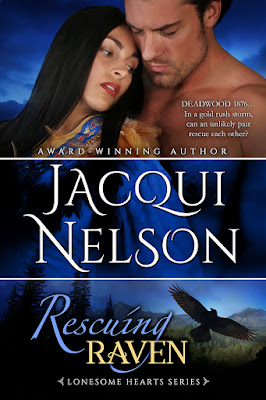
Rescuing Raven's Book Cover


RESCUING RAVEN 


Story Inspiration page ~ from the back of the book

Being an avid fan of the Dances with Wolves movie (starring Kevin Costner and Graham Greene) and the Deadwood TV series (starring Ian McShane and Timothy Olyphant), I’d always wanted to write a story set in South Dakota or the town of Deadwood. After registering for the 2018 Wild Deadwood Reads (WDR) author-reader event, an intriguing opportunity arose—join 16 authors (who would also be attending the event) in writing a new story for a limited-edition anthology called Wild Deadwood Tales. The anthology would be available for 2018 only, it would be showcased at WDR and Deadwood’s annual Professional Bull Riders (PBR) event, and all proceeds would go to the Western Sports Foundation (WSF).


The WSF and the PBR connections had many of the anthology authors choosing to write stories about modern-day bull riders, but I’m a historical fiction author—who now had her chance to write about Deadwood in 1876! 


Why 1876? That’s the year the town of Deadwood was born. Prior to 1876, the site was a gulch with dead trees. Then gold was found in the Black Hills and white settlers flooded in—illegally taking permanent residence on the Lakota’s sacred land that had been forbidden to whites by the U.S. government’s 1868 Fort Laramie Treaty. 


1876 is also the year of the Battle of the Little Big Horn—which was followed by General Crook’s march (from Montana Territory into the Dakota Territory) in pursuit of the Lakota Sioux. But General Crook only took enough rations for a few days—which resulted in the Horsemeat March (also known as the Starvation March) when his men had to eat their horses to survive. Near Deadwood, General Crook and his men fought the Battle of Slim Buttes and stole not only the Lakota’s winter food preserves but their horses (to replace the ones they’d eaten). 


Al Swearengen arrived in Deadwood early in 1876 and opened the Cricket Saloon, a barebones establishment that he built before his fancier and much more well-known Gem Theater. Not long after his arrival, his relationship with his first wife, Nettie, became extra complicated when a very attractive saloon girl named Kitty Austen came to town and became Al’s employee and more. 


All of this history created many complications for Raven (a Lakota woman born in the Black Hills) and Charlie Jennings (a white man from Oregon) who were perfect for each other even if their two worlds were not.

The reward is worth risk. Read Rescuing Raven for free on my website www.JacquiNelson.com


RESCUING RAVEN

Deadwood, Dakota Territory – 1876

Raven wants to save one person. Charlie wants to save the world. Their warring nations thrust them together but duty pulled them apart—until their paths crossed again in Deadwood for a fight for love.

In a gold rush storm, can an unlikely pair rescue each other?

Rescuing Raven features a grown-up Charlie Jennings who was a young boy in my Oregon Trail story, Between Heaven & Hell (set in 1850). You’ll also get to meet real-life (and really complicated) Al Swearengen—one of the first men to set up a business in Deadwood. Al’s most well-known saloon was The Gem Theater, but his first Deadwood saloon (the one shown in my story) was The Cricket. 

Click here to read an excerpt on my website.

Book review "grabbed my interest from the first page and did not let go until the end."


THE LONESOME HEARTS SERIES 


Resuing Raven is part of my Lonesome Hearts series, which follows the frontiersmen and women who meet on the Oregon Trail and afterward. Each story includes one or more of the characters from the other books but is also a standalone read.


Hope you enjoyed my writing inspiration and that your Friday and your weekend are filled with sunny summer inspiration ☀️❤️

~ * ~

Jacqui's author photo

Join me on 

Follow me on 

Wednesday, June 9, 2021

Creating Heroes by Rhonda Frankhouser

When people find out I'm a romance writer, this question always seems to arise. How do I create my sexy heroes? Are they modeled after someone I know? A complete figment of my imagination or a fantasy lover, perhaps? 

The question always strikes me odd. I honestly don't know what kind of man I'll create for my heroine until my fingers sculpt him with the keys. I'm a pantser even with my characters. At least I thought I was.

My first sexy hero was Billy MacCallister. Son of a rival rancher. Younger brother of a childhood friend. He first came alive when Ruby rolled up the driveway of her grandmother's ranch, in Return to Ruby's Ranch. I felt his dedication and honesty before I ever pictured his face in my mind. He was good with the animals, an ace cowboy, and had the respect of his men. 

Ruby needed someone steady, and patient. She's was a hot mess, as they say. For someone to earn her trust, he had to be ever loyal to her and her plight to find the answers to her many questions about her family, yet he could not be a pushover. Ruby would never fall for a man who was too perfect. She needed someone real and flawed, who could love her for who she was. 

And so Billy evolved - the picture of him came clearly to mind. Stubborn waves of chestnut hair tucked behind his ears; bright green eyes that betray his secret childhood crush; a muscular body formed from hard work and the scent of sweaty horses on his sun-tanned skin. His slightly crooked smile, always with a secret to tell.   

Ruby couldn't deny her growing affection for Billy MacCallister, even though love was the last thing she was looking for on her journey home. She had to find out what really happened to her mother who had disappeared from the ranch two decades before. She needed to understand why her grandmother had lost her mind. She had to learn the ranching ropes and win the respect of the ranch hands or risk losing the ranch her grandmother had spent her whole life building. She couldn't let anything or anyone stand in the way of her goals.

So, back to the question at hand ~ Where do we come up with men who complicate our heroines lives? In this particular case, it turns out that Billy was also the man of my own dreams. I met and married my own Billy some twenty years after I had written his character out in this story. I'm not going to say that I'm clairvoyant, but I must have put in my order with a higher power. My creation's accuracy was right down to the green eyes and chestnut hair, strong and honest and dedicated to me like no one ever before. I'm one of the lucky ones - living out my own fantasies.

How do you come up with your heroes? I'd love to hear about your process? What kinds of heroes make you want to read on?

Ruby Lattrell spends her days caring for her ailing father and younger brother. When they no longer need her, her life lacks purpose. Then she inherits Ruby’s Ranch – the only real home she ever knew – the place where her mother mysteriously vanished. The smell of fresh cut hay and the most handsome cowboy she’s ever seen, Billy MacCallister, greet Ruby when she arrives at the ranch.

Billy MacCallister always dreamed Ruby would return home. When he finally sees her standing on Granny’s porch, now a mix of that sassy young girl he once knew and the reassured, sensual woman she is today, he knows his heart hasn’t misled him.  Before she can fall into the timeless love that Billy offers, they must solve the mysteries that haunt Ruby’s Ranch. Will digging up the past hurt more people than it helps? Will the truth they discover tear Ruby and Billy apart?

Thanks for listening!

Rhonda Frankhouser

Follow me @ www.rhondafrankhouserbooks.com 

Follow me @ Amazon


Tuesday, June 8, 2021

Noodles - Memories

 Post by Doris McCraw

writing as Angela Raines

Inside of Hornbeck's 1880s kitchen
photo property of the author

In the town I grew up in, there was a woman who made homemade noodles. They were the best I tasted then, or since. Now that I no longer can eat gluten I do miss them. 

Before I left for college, she imparted the secret to making this wonderful food. It was the basis for heavenly beef and noodles to say nothing equally tasty chicken and noodles. She would make a large batch, probably due to her cooking for the farmhands in her early married life. Born in 1893, she lived a long life, passing in 1982. She'd painted the outside of her two-story house when she was in her seventies and was active her whole life. Perhaps it was something in her noodles. Probably not, but who knows?

Courthouse near where I grew up.
Yes, Abraham Lincoln spoke there.

Since I loved them, I thought I'd share the 'secret' with you. Of course, there are probably many who know this same recipe but just in case, here it is.  

Eggs, milk, flour, and salt. So simple, and easy to make.

Crack the eggs into a bowl. Usually, two make a nice batch. Fill half an eggshell with milk. One half eggshell per egg. Add a pinch of salt to taste. Usually one cup of flour per egg, more or less. Mix all the ingredients into a sticky ball. Place additional flour on a pastry board then knead the noodle mixture to a smooth ball. 

Roll the ball to desired thickness, 1/8 to 1/4. Cut the rolled batter to the desired width. 

At this point, I would usually put the noodles into the broth to cook, but she would set them aside to dry. Either works.

So the next time you would like an old-fashioned meal, you might try this lovely lady's noodles.

Although she didn't make noodles, Clara in my novella, "Home for His Heart" used food to catch the heart of the man she loved and the rest of the town where she had a restaurant.

Clara hummed as she put the finishing touches on the meal. 

Every year since she had arrived in Agate Gulch she prepared

a special meal for friends. The past year had been especially

wonderful. Even the gingham curtains on the restaurant 

windows seemed to smile with her tune.

Amazon


Doris Gardner-McCraw -

Author, Speaker, Historian-specializing in
Colorado and Women's History

Author of the 'Agate Gulch' novellas and the 'Kiowa Wells' novels

Angela Raines - author: Telling Stories Where Love & History Meet


(c) Doris McCraw 2021 All Rights Reserved.

Monday, June 7, 2021

A Navajo Hex

By Kristy McCaffrey

When I was nine years old, I lived on the Navajo Indian Reservation. My dad, who has long had a deep and abiding respect for Native Americans, saw this as a chance to give back with his life, so he took a job as an accountant with an arts and crafts store in Window Rock, Arizona—capital of the Navajo Nation. We obtained a house just across the border in New Mexico, in a small town aptly called “Navajo,” supported by a local sawmill. It was 1975.

Navajo, New Mexico (photo taken by author)

One day at one of the stores that employed my father a worker found a Styrofoam cup tucked away on a shelf. Inside were various items that included a torn corner of a $5, $10 and $20 bill. It was immediately clear to those who discovered it that a hex had been placed. Soon thereafter, a medicine man was called. Since it involved all the employees, my dad was allowed, despite being a white man, to participate in the ceremonies conducted.

Window Rock, Arizona (photo courtesy of Shutterstock)

At the first ritual, the medicine man found a buried pot outside the building at the base of the famous local landmark, the window rock. This was accomplished when his hand trembled over the exact location. On the outside of the pot, stick figures represented the employees, and lightning bolts painted above indicated death by lightning strike. At the time, we were having terrible storms every day. Inside were pieces of coral, turquoise, and silver, and a section of human skull.

At the second ceremony, a bowl filled with some type of tea was passed around to ingest, and then each employee was asked to look into a crystal to identify who had placed the hex. My dad says he saw nothing, but it was generally agreed that the perpetrator was a former employee who had been fired. She was part of a major Navajo clan, and her dismissal had possibly angered the wrong people. But the curse spoke of deeper problems within the Navajo and their way of life. The crafts people—those who made Indian jewelry and the iconic Navajo weavings—were at odds with the administration, which included my dad. There were those who wanted progress, and those who didn’t. At the conclusion of the ceremony, after a sand painting was created, the piece of skull inside the pot was burned. Two female employees reported instant relief from a terrible headache that had plagued them all evening. Back at home, at the same time, my mother said I’d been distraught and crying for hours from pains in my head, which immediately stopped when the bone was destroyed. It seemed family members had also been included in the hex.

My dad never attended the third, and final, observance—the Blessing Way—because we had moved back to Phoenix. He has always joked that the hex was never fully removed. As evidence, he cites various mishaps that occur whenever he and my mother return to the Navajo Reservation: car breakdowns, money stolen, and in one instance missing a critical turnoff because five Indians stood in front of a directional sign.

In my recently re-released standalone historical western novel INTO THE LAND OF SHADOWS, I included the hex in the story. 

Digital copies are on sale this week for 99 cents.

It’s been five years since a woman came between Ethan Barstow and his brother, Charley, and it’s high time they buried the hatchet. When Ethan travels to Arizona Territory to make amends, he learns that Charley has abruptly disappeared after breaking more than one heart in town. And an indignant fiancée is hot on his trail.

When Charley Barstow abandons a local girl after getting her pregnant, Kate Kinsella pursues him without a second thought. She’s determined he set things right, and even more determined to end her own engagement to him, a sham from the beginning. But an ill-timed encounter with a group of ruffians lands her in the company of Charley’s brother, Ethan, who suggests they search together.

As Ethan and Kate move deeper INTO THE LAND OF SHADOWS, family tensions and past tragedies threaten to destroy a love neither of them expected.

A sensuous historical western romance set in 1893 Arizona Territory. Into The Land Of Shadows is a stand-alone, full-length novel with paranormal elements.

This book was previously published in 2013 under the same title. While the text and cover have been updated, the story remains the same.

Click to read Chapter One and find buy links.

Wednesday, June 2, 2021

Glen Eyrie Castle & General William Jackson Palmer ~ Julie Lence


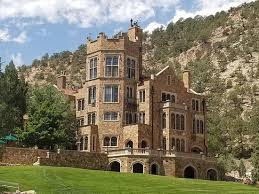
Original Glen Eyrie Castle


Last month, I wrote about General William Jackson Palmer and how he founded Colorado Springs. There is so much General Palmer did for Colorado Springs and Colorado that one blog would go on for pages, so I condensed that blog and I return today with another of the General’s accomplishments.

William Jackson Palmer
Military Wiki 

While living in Colorado Springs, Palmer built a grand home for himself and his wife (nicknamed Queen) in the 1870’s. Situated just north of Garden of the Gods at the mouth of a canyon, Glen Eyrie was originally a clapboard home of twenty rooms. While in residence, Palmer’s wife taught school at Colorado Springs’ first school, but more often than not, the Palmers were not in residence; she because of her health and he because of his work. Suffering a heart attack wile pregnant with their second child, Mrs. Palmer gave birth at the home then spent most of her time on the East Coast or in England. She permanently left Glen Eyrie and Colorado Springs in 1885 and passed away 1894.    

Queen Palmer
Pinterest

With his daughters coming to live with him after his wife’s passing, Palmer sold his Denver & Rio Grande Western Railroad in 1901 for 6 million and retired in Colorado Springs, where he donated several plots of land to the city while forging ahead with plans to renovate Glen Eyrie. He hired architect Frederick J. Sterner and engineer Edmond Van Dienst to help with the project, which took near two years to quarry stone from the estate’s lands and transform the clapboard house into a stone castle. With 67 rooms and 20 fireplaces, the interior was paneled in oak, with the main floor boasting several parlors, a solarium, a dining room, and a kitchen that had ice storage and a walk-in refrigerator. Bedroom suites for Palmer and his daughters occupied the second level, as well as guest suites and servants quarters. The third floor held more bedrooms, a sitting room, and access to the tower, but the belle of the castle was Book Hall. Large enough to hold 300 people, Book Hall boasted a large fireplace and a balcony where an orchestra could perform. Beneath the hall were billiards rooms and a bowling alley.      

Renovated Glen Eyrie 
PBS.org

Sadly, Palmer only enjoyed his renovated home for a handful of years. Paralyzed from a horse riding accident in 1906, he passed away 3 years later. His daughters wanted to donate the castle to the city, but city leaders declined because they feared the cost to maintain the property and home would be too high. For the next 40 years, Glen Eyrie saw many owners, though the house was rarely occupied, to include a group of businessmen who wanted to turn the property into a golf resort, complete with a tavern and luxury houses. World War 1 saw them changing their plans and operating the castle as a tea room. Alexander S. Cochran bought the property in 1918, closed the castle because of the high expense to maintain and let it go to ruin. He did build a ‘pink home’ on the property for a vacation house, and passed away at the start of the Great Depression. The property sat on the market until Texas oilman George W. Strake bought it in 1938.  He expanded the pink house, opened the castle for parties and used some of the land for ranching, and in 1953 listed Glen Eyrie for sale at a price of $500,000, which caught Dawson Trotman’s attention.

Dawson Trotman
Find a Grave

A Christian evangelist and founder of the Navigators ministry, Trotman was planning to move from Los Angeles to Colorado and hoped to split the cost of Glen Eyrie with fellow evangelist Billy Graham. Discovering Christians were interested in the property, Strake lowered the sale price. With Graham backing out of the deal, Trotman quickly raised the down payment with the help of his Navigators ministry and Glen Eyrie became their home in September 1953, and remains so today. The Navigators use the property as a home for their publishing firm, NavPress and as a Christian conference center. The property came with a lake in the Rampart Range area and now houses the Eagle Lake Camps, a Christian summer program. With the exception of the kitchen and the removal of the bowling alley to incorporate a dining area, the main part of the castle is unaltered. The castle and grounds are open to visitors for afternoon tea (reservations required) a tour of the castle, and an overnight stay within the castle, the pink house or the lodges the Navigators built.       


Throughout Colorado Springs and Colorado, General Palmer isn’t just known for Glen Eyrie Castle and the high school named after him. Palmer was responsible for bring the narrow gauge railroads to Colorado’s Rocky Mountain, for providing land and funding for Colorado College, for forming Colorado Coal and Iron Company’s steel mill in south Pueblo and laying out a second town, Bessemer, which is now incorporated into Pueblo. He also founded the General Palmer Hotel in 1898 in Durango, Colorado. Originally named the Palace Hotel, the hotel is still in use today, and in 1962 he was inducted into the Hall of Great Westerners of the National Cowboy & Western Heritage Museum.  

Glen Eyrie Castle
Trip Advisor
Glen Eyrie Castle East View
Trip Advisor

Tuesday, June 1, 2021

Distracting the Deputy


I'm so excited to share about my upcoming release with you!

Distracting the Deputy is a sweet contemporary romance full of small-town charm, quirky characters, and cowboys that releases June 22! It also has a loony goat named Ethel, derelict old buildings getting a facelift, and a swoon-worthy romance between a deputy and a woman with a hidden past.

I had such a grand time writing about Knox Strickland (our upstanding, salt-of-the-earth deputy) and Zadie Redmond, an outdoor adventure guide who teaches ballet and music lessons on the side.


Trouble is coming, but for whom?


When he’s not evading grabby-handed octogenarians, mentoring troubled teens, or rescuing rascally youngsters from disaster, Deputy Knox Strickland can be found upholding the law in the eastern Oregon region he patrols. He avoids making plans for tomorrow, focusing instead on doing his best today. Then one chance encounter with a beautiful woman in a wheat field turns his world upside down. Knox is left questioning what secrets she’s hiding, and how hard he’ll have to work to scale the fortress she’s built around her heart.

Zadie Redmond isn’t like most women. A life spent looking over her shoulder has destroyed the promising future she’d once envisioned. Her days are spent leading hunting and fishing adventures or teaching tiny ballerinas the proper way to plié. She fills her evenings with do-it-yourself projects while worrying about the day her past catches up with her. In an unexpected moment, the local deputy swoops into her world like a storybook hero and she knows nothing will ever be the same. Zadie will do anything to keep Knox safe from the danger lurking in the shadows, even if it destroys her chance at love.

Will Knox convince Zadie she can trust him with her secrets and her heart?


“You mean you willingly got in a car with Mrs. Dunigan?”

“Reluctantly is a better word. And I made Mrs. Finley promise she wouldn’t let Mrs. Dunigan sit in the front seat. The old flirt sat behind me and kept running her fingers across my neck and squeezing my shoulders the whole time I was driving. That woman is a menace. She’s lucky I don’t file a restraining order against her. The way she was touching me, freaking me out, it’s a good thing I didn’t run Mrs. Finley’s car into a snowbank.”

“Oh, you’d be dead if you did that. Mrs. Finley and her friends would clobber you to death with those fifty-pound handbags they carry, or, at the very least, pool their funds to hire a hit man to take you out for committing such an atrocious crime.”


The book includes a Reader’s Guide, perfect for book club discussions.

For a limited time, the eBook pre-order is available at the discounted price of just $2.99.

Purchase today on:


Add to Goodreads


Everyone who pre-orders the book can claim a special Bonus Bundle. Just go to this link, enter your info, and you'll receive an email with bonus content that includes a short story about Knox, a special Zadie-approved recipe, and some other fun goodies! Enjoy!


USA Today Bestselling Author Shanna Hatfield writes character-driven romances with relatable heroes and heroines. Her historical westerns have been described as “reminiscent of the era captured by Bonanza and The Virginian” while her contemporary works have been called “laugh-out-loud funny, and a little heart-pumping sexy without being explicit in any way.”

Convinced everyone deserves a happy ending, this hopeless romantic is out to make it happen, one story at a time. When she isn’t writing or indulging in chocolate (dark and decadent, please), Shanna hangs out with her husband, lovingly known as Captain Cavedweller.


Friday, May 28, 2021

Texas Jack--Scout, Cowboy, and Actor

John Baker Omohundro, also known by some as John Burwell Omohundro, was born July 26, 1846 in Palmyra on the Pleasure Hill farm in Fluvanna County, Virginia, to John Burwell and Catherine Baker Omohundro of Anglo-American ancestry. He attended grammar school in Fluvanna. At an early age, he demonstrated a strong skill in hunting and fishing.

Also known as "Texas Jack", he was an American frontier scout, actor, and cowboy. He served in the Confederacy during the American Civil War and, later, as a civilian scout for the US Army during the Indian Wars. Before his untimely death, Texas Jack became a legendary figure in the American Old West as a Western showman performing dramas on the stage throughout the country. He became a world-renowned hero in dime novels published around the world.

At the start of the American Civil War, Omohundro attempted to join his older brother, Orville, in the Confederate Army. He was twice refused for his age, but was allowed to serve as a courier at the headquarters of the Virginia Militia under Major General John B. Floyd. Because of his youth and knowledge of the countryside, he became known as the "Boy Scout of the Confederacy". In February 1864, at the age of 17, he successfully enlisted as a private in Company G of the 5th Virginia Cavalry, part of the Army of Northern Virginia. He soon served directly in General J.E.B. Stuart's command as a courier and scout. At the Battle of Yellow Tavern, he delivered a scouting report to Stuart only minutes before the general was killed in battle. During the Battle of Trevilian Station, Omohundro was wounded and admitted to the Confederate States General Hospital in Charlottesville on June 20, 1864. After recovering from his injuries, and a short leave home, he returned to his company and scouted under the command of General Lunsford L. Lomax. Following the Third Battle of Winchester,  the 5th Virginia Cavalry was consolidated with the 15th Virginia Cavalry, where Omohundro scouted under General Fitzhugh Lee during the last months of the war.

After the Civil War, Omohundro left Virginia at age 19 for Florida. After a short time, he moved on to Texas, arriving at the Taylor Ranch near Brazos, where he began working as a cowboy participating in cattle drives, notably on the Chisholm Trail, driving herds north to railheads in Kansas. After one drive across Arkansas to a meat-poor Tennessee, he was given nickname "Texas Jack" by the locals.

On another drive, Omohundro found a five-year-old boy orphaned after a Native American raid killed his family. He took the boy to safety in Fort Worth, and the boy later took the name Texas Jack Jr. in homage, going on to run the Texas Jack's Wild West Show and Circus in 1903 in South Africa.

It may have been on one of those drives that he made the decision to relocate once again, moving first to Fort Hays, Kansas, and then to the North Platte, Nebraska, area. Drawing on his past experience, including time spent as a scout during the Civil War, Omohundro picked up odd jobs scouting, hunting and guiding.

In 1869, Texas Jack moved to Fort Hays, Kansas, where he met California Joe Milner and Wild Bill Hickok, the latter being sheriff of Ellis County at the time. Later that year, Jack met and befriended William F. "Buffalo Bill" Cody, who was working with the 5th U.S. Cavalry at Fort McPherson. Jack was hired as a scout and trail guide during the Indian Wars. Special permission had to be obtained since the U.S. government did not generally permit the employment of ex-Confederate soldiers. During the Battle of Summit Springs, Texas Jack captured his well-known white horse from Indian Chief Tall Bull. Texas Jack moved to Cottonwood Springs, Nebraska, where he continued to work as a scout for the government.

In 1869, Texas Jack met William F. "Buffalo Bill" Cody, who was also scratching out a living scouting, hunting and guiding. They became fast friends, scouting together for the Army and engaging in hunts. Texas Jack made a lucrative living leading hunting expeditions for American and foreign parties, which were popular at the time. 

Custer, Grand Duke Alexei, and Cody

Together with Cody, Texas Jack led the highly publicized royal hunt of 1872 with Grand Duke Alexei of Russia and several American military figures, including General Philip Sheridan, General George Armstrong Custer, and Colonel James W. Forsyth. Later in 1874, Texas Jack guided the Earl of Dunraven though Yellowstone and Geyserland. In 1876, Texas Jack led Sir John Rea Reid and his party on a hunt around the Bighorn Mountains and Sweetwater country. 

Texas Jack points at Cody, who reclines in front of Buntline

In December 1872, Omohundro and Cody debuted the first Wild West show, Scouts of the Prairie, written and produced by Ned Buntline. Dime novelist, Ned Buntline, wrote the play in four hours. It debuted in Chicago.

Texas Jack's performance was well-received by critics and featured the first rope act performed on the American stage.

Ned Buntline, Buffalo Bill Cody, Giuseppina Morlacchi, Texas Jack Omohundro

The show starred Giuseppina Morlacchi, a dancer and actress from Milan, Italy. She was the same age as Texas Jack and Buffalo Bill. She became a classically trained dancer, traveling throughout Europe. She moved to the United States at age 21 to perform in the theater circuit with her Morlacchi Ballet Troupe, making her American ballet debut in 1867. She introduced the can-can to the country the following year. A fine actress as well, she was soon appearing in the major cities of the American Northeast. Just weeks before his buffalo hunting expedition with Buffalo Bill and Texas Jack, the Grand Duke Alexis saw Morlacchi on stage. Buntline also saw her and recruited her to join his new play, Scouts of the Prairie.

Giuseppina did not come alone to the United States. She was accompanied by her manager of five years, John Burke, who was smitten by her. He had presented her with rings and was planning on settling down with her in a house in Lowell, Massachusetts. Those dreams ended when she met Texas Jack. For the Virginian and the Italian, it was love at first sight. She returned the rings to John Burke and pledged herself to John Omohundro. Heartbroken, Burke wore the rings and never married. Instead of devoting his life to her or to any another woman, he spent it instead promoting his new friend Buffalo Bill. It was a task he pursued until Cody's death.

With Scouts of the Prairie's combination of the two well-known scouts with the lovely and talented Morlacchi, the 1872-73 season of the road show was a resounding success. 

The relationship between Morlacchi and Omohundro was also a success; Texas Jack and she fell in love and were married on August 31, 1873, at St. Mary's Catholic Church in Rochester, New York.
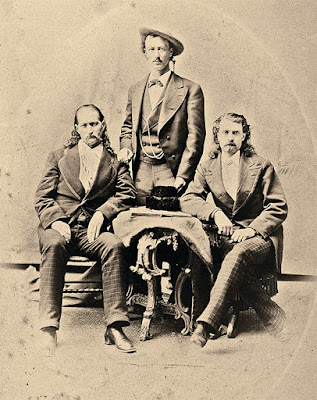
Bill Hickok, Texas Jack, Bill Cody

Texas Jack and Buffalo Bill pose with their friend "Wild Bill" Hickok. Hickok joined them onstage in the play Scouts of the Plains in 1873-74.

The following year Texas Jack, Morlacchi and Buffalo Bill struck out on their own with a new play, Scouts of the Plains, and a new co-star, their friend Wild Bill Hickok.

In 1873, Buntline left, and Texas Jack's friend, Wild Bill Hickok, joined the group to headline in a new play called Scouts of the Plains. Hickok did not enjoy acting, often hiding behind scenery, and in one show, he shot the spotlight when it focused on him. He decided he preferred gambling. He was the first to leave the show mid-season.

Desiring a lighter tour schedule, the Omohundros parted amicably with Buffalo Bill Cody in 1876 to create their own troupe, re-enacting scenes from the West on stage. In 1877, he formed his own acting troupe in St. Louis, known as the Texas Jack Combination featuring Morlacchi, Arizona John Burke, Modoc War scout Donald McKay, trick-shot Maud Oswald, and several Sweetwater and Warm Spring Indians. In May of that year, he debuted Texas Jack in the Black Hills, written by Harry Seymour, to rave reviews. Other plays the combination performed included The Trappers Daughter, Life on the Border, and The French Spy.

Texas Jack & Guiseppina 
 

The Texas Jack Combination was successful for Giuseppina Morlacchi and Texas Jack. They happily toured together for the next several years, with periods of relaxation at the Massachusetts home once desired by John Burke. They continued to perform separately as well.

In 1878, Texas Jack appeared with Dr. W. F. "Doc" Carver, a dentist turned exhibition shooter who he met several years earlier in North Platte, Nebraska. Five years later Carver joined forces with Buffalo Bill to create Buffalo Bill's Wild West.

Beadles Dime Novel

Texas Jack became a popular subject of the dime novels of the late 19th century. One of the first in which he was featured was the 1872 title, Texas Jack; or The White King of the Pawnees, written by Ned Buntline. Texas Jack's popularity grew as he was featured on covers by publishers including Beadle's New York Dime Library, the Nickle Library, Log Cabin Library, DeWitt's Ten Cent, Street and Smith, and others. Many of these stories were written by the prolific author Prentiss Ingraham. Omohundro wrote articles in newspapers across the country recalling his hunting and scouting stories, and is credited as having authored one dime novel for Beadle and Adams in 1876 titled Ned Wylde, the Boy Scout.

Texas Jack and Morlacchi settled in Massachusetts with a home in downtown Lowell and a small farm in Billerica. In the spring of 1880, after several performances in the region, the couple decided to take their show business career to the silver-mining town of Leadville, Colorado, for a series of performances. There, Omohundro became acquainted with Horace Tabor and briefly joined Tabor's Light Cavalry, a local militia formed to keep order in the newly founded town. The couple decided to stay in the Rocky Mountain West rather than return to Massachusetts.

A few months after arriving, Texas Jack contracted a cold, which developed into pneumonia, and he died weeks later on June 28, 1880. The funeral was well-attended, and he was given full military honors, with several military companies in attendance firing a three-volley salute as his flag-draped coffin was lowered into the ground. His final resting place is Evergreen Cemetery in Leadville.
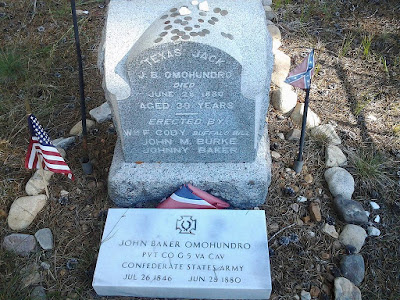
The grave of Texas Jack in Evergreen Cemetery

Shortly after Texas Jack's death, grief stricken Giuseppina Morlacchi departed for their Massachusetts home in Lowell. She never returned to the stage. She died of cancer six years later.

After several years, the grave fell into disrepair, and a traveling group of comedians raised funds to provide for its upkeep. In 1908, while passing through Leadville, Cody visited the cemetery and commissioned a granite grave marker for his old friend, mistakenly listing Texas Jack's age as 39 years.

In 1980, the Texas Jack Association was formed to preserve and promote Texas Jack's memory.

In 1994, Texas Jack Omohundro was inducted into the National Cowboy & Western Heritage Museum in the Hall of Great Western Performers.

-=-=-=-=-

In only one source did I find reference to another incident in Texas Jack's life. Evidently, during his 1878 exhibition tour with "Doc" Carver, he ended up in Rawlins, Wyoming. He was there at the same time that Thomas Edison and a slew of astronomers,. scientists, and newsmen descended on the small railroad town in mid-July to prepare for the upcoming total solar eclipse expected to take place July 29, 1878.

The following was how Thomas A. Edison described his stay:

"There were astronomers from nearly every nation. We had a special car. The country at that time was rather new; game was in great abundance, and could be seen all day long from the car window, especially antelope. We arrived at Rawlins about 4 P.M. It had a small machine shop, and was the point where locomotives were changed for the next section. The hotel was a very small one, and by doubling up we were barely accommodated. My room-mate was Fox, the correspondent of the New York Herald.

"After we retired and were asleep a thundering knock on the door awakened us. Upon opening the door a tall, handsome man with flowing hair dressed in western style entered the room. His eyes were bloodshot, and he was somewhat inebriated. He introduced himself as `Texas Jack'--Joe Chromondo--[sic] and said he wanted to see Edison, as he had read about me in the newspapers. Both Fox and I were rather scared, and didn't know what was to be the result of the interview. The landlord requested him not to make so much noise, and was thrown out into the hall. Jack explained that he had just come in with a party which had been hunting, and that he felt fine. He explained, also, that he was the boss pistol-shot of the West; that it was he who taught the celebrated Doctor Carver how to shoot. Then suddenly pointing to a weather-vane on the freight depot, he pulled out a Colt revolver and fired through the window, hitting the vane. The shot awakened all the people, and they rushed in to see who was killed. It was only after I told him I was tired and would see him in the morning that he left. Both Fox and I were so nervous we didn't sleep any that night.

"We were told in the morning that Jack was a pretty good fellow, and was not one of the `bad men,' of whom they had a good supply…."

-=-=-=-=-

Although it did not move my plot along, I thought this scene was too good to pass up. I included a fictionalized version in my book, Mail Order Blythe. Blythe and her roommate view this scene from the top of the stairs that led to their attic room.


To find the book description and purchase link for Mail Order Blythe, please CLICK HERE.


Sources:

https://truewestmagazine.com/the-tragedy-of-texas-jack/

https://en.wikipedia.org/wiki/Texas_Jack_Omohundro

https://en.wikipedia.org/wiki/Texas_Jack_Omohundro#/media/File:Texas_Jack_Grave_Tight.jpg

https://www.texasjack.org/

http://www.wyomingtalesandtrails.com/rawlins2.html