Showing posts with label #WildBillHickok. Show all posts

Friday, November 3, 2017

Putting it all together

The Badlands

The plane begins its descent. The dun-colored ground below is dotted with little, black holes. As we get closer, little animals can be seen scurrying around the holes. "Ground hogs," says the passenger behind me to his wife. For the first time since leaving Chicago the handsome man wearing cowboy boots and a Stetson who is sitting next to me speaks. "No, those are prairie dogs. " (I knew that).

After we land and collect our luggage my husband and I make our way to the rental car lot. Posted on the automatic doors is a sign warning us about rattlesnakes. I start to get excited. West, here we come. When we step outside we are bowled over by the big, blue sky above and the endless fields of golden grassland stretching out before us. The sight sparks a debate between us about which great plains state boasts it's Big Sky Country. Is it South Dakota, where we landed or Montana? We waste some time running around the parking lot looking at car license plates to find said motto (all the while being mindful of rattlesnakes) trying to settle this dispute to no avail. It's Montana, by the way.

Big Sky over Little Bighorn Battlefield, Montana


I'm just a girl with long Midwestern roots, but I've always had a fascination for all things western. I've written both historical and contemporary westerns, relying on images from my computer to create my settings. I have made a number of trips to the southwest, which I love, but never to the other parts west. Writing this blog has sent me on further online excursions. I don't think I knew how much I've really learned until plopping down in South Dakota, jumping up to Montana, and finally ending up in Wyoming.

All during the trip I had the odd sensation of having islands of information in my head, but I couldn't piece them all together. It was overwhelming! As we traveled on, I likened the feeling to quilting in that I not only had pieces to stitch together but layers of time to go through as well. I pictured stitching the top of the quilt to the bottom and connecting it to the layers in between: the history, the personalities, the pivotal moments, not to mention current events such as the Dakota pipeline protests.

This may be a sneaky way of showing you my vacation pictures, but here we go!

Sometime ago I wrote a blog post about sod houses. http://cowboykisses.blogspot.com/2017/03/the-ould-sodhouse.html so when I heard the oldest, intact sod house in existence was on route, I had to see it. We were told it had already closed for the season, but when we got there it was open! The Prairie Homestead sits outside the Badlands of South Dakota. It was a beautiful, sunny day and walking around the homestead, surrounded by fields of grass with the Badlands in the distance, I got some sense of what it would have been like to be one of the early families trying to carve out an existence. When I stepped inside the low, dark house I think what surprised me was how solid it felt. The sod dried like blocks of cement so it wasn't as crumbly or dirty as I imagined, though I shudder to think about spending a cold, rainy day in there.

Inside a sod house, Prairie Homestead, South Dakota

While visiting the Badlands, we stayed in Wall, S.D., home of the famous Wall Drug, which to me previously was just a place where bumper stickers are born. You drive into town and there is billboard after billboard advertising Wall Drug promising free ice water, 5 cent coffee, and if you're on your honeymoon, free donuts. There's not much in Wall besides Wall Drug, which covers almost an entire block, and we were thinking we were not going to be lured into the tourist trap. Well, we actually made two trips there before we left, because it was fun! The stores within one big store were  a blast. We did get free ice water.
Delighted to find free ice water in South Dakota
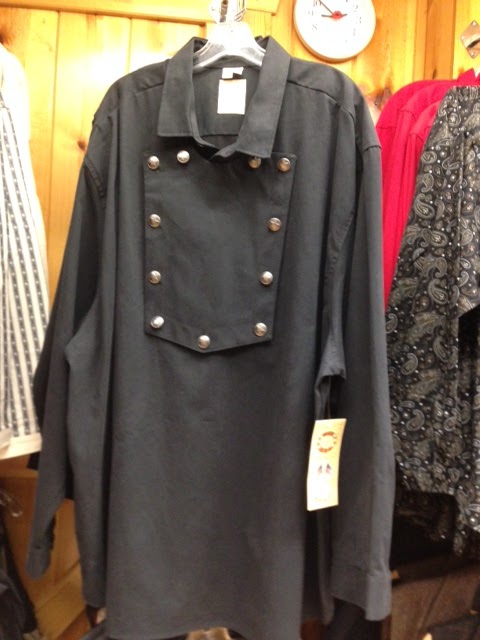
But somehow along the way to get the free ice water, our baskets got filled with shot glasses, salt and pepper shakers, and playing cards--basically anything with a jackalope printed on it (kids, it's going to be a jackalope themed Xmas this year). My husband even left with a lariat coiled around his shoulder. Typically, we don't have to rustle cattle in the suburbs of Chicago, but the longer the time spent in Wall Drug, the more he needed a lariat. I was excited to find so many items of western wear I'd written about. There were western wear shirts with snaps and yokes and even the shield fronted shirt. And walls and walls of cowboy boots and hats. http://cowboykisses.blogspot.com/2017/09/dress-like-cowboy.html?spref=pi

shield or bib front western shirt at Wall Drug
Next we headed up to Deadwood. The image of Wild Bill Hickok is plastered everywhere.

Wall O'Bill

 You'd think he founded the town. In reality, he was shot and killed on his one and only visit to Deadwood--where he'd only been about two weeks. To add insult to injury, the man has to spend eternity in boot hill next to Calamity Jane, who had a crush on the recently married Bill and requested she be buried next to him. Some reports say he barely knew her and found the whole thing embarrassing.
Mount Moriah Cemetery, Deadwood, S.D. Buffalo Bill wasn't in Deadwood a hot minute before he was shot in the back. Now he is forever associated with the town and doomed to spend eternity next to Calamity Jane.

But one person Wild Bill did know was Buffalo Bill Cody. He even performed in the latter Bill's Wild West Show. http://cowboykisses.blogspot.com/2017/07/the-wild-west-show-shaping-legend.html?spref=pi

Next, on to a place that has acted as a siren call for me for as long as I can remember: Little Bighorn Battlefield. Let me just say it did not disappoint. We spent all day there and it warrants a post all to itself, so I won't go into it too much here. I did a piece for this blog on the evolution of the place over time from a battlefield to a monument and the changes along the way. http://cowboykisses.blogspot.com/2017/08/little-bighorn-national-monument.html?spref=pi

Where they fell 

We left Montana and headed down to Wyoming. First stop Cody! There we meandered the boardwalks of Old Trail Town where buildings of historic note have been moved like the cabin of Jeremiah Johnson and the saloon the Hole in the Wall Gang hung out complete with bullet holes in the swinging doors. When I wrote Margarita and the Hired Gun, I set part of the story in an outlaw hideout, so I was especially excited to see the actual cabin Butch Cassidy and the Sundance Kid lived while hiding out in Hole in the Wall. A number of impenetrable hideouts were spaced along the Outlaw Trail, Hole in the Wall being one of them. http://sweetheartsofthewest.blogspot.com/2016/04/outlaw-hideouts-and-book-giveaway-by.html (note the book giveaway mentioned in the blog is no longer running).

Old Trail Town, Cody, WY

For me, on this trip the main course was Little Bighorn Battlefield. All stops leading up to that day were appetizers. Now time for dessert! We drove through Yellowstone (in a blizzard) and went to visit fellow author Andrea Downing in Jackson Hole and the Grand Tetons! It was so much fun to meet Andi in person. She, in fact, mapped out the route of our journey for us. 

Two authors cutting up under the antlers

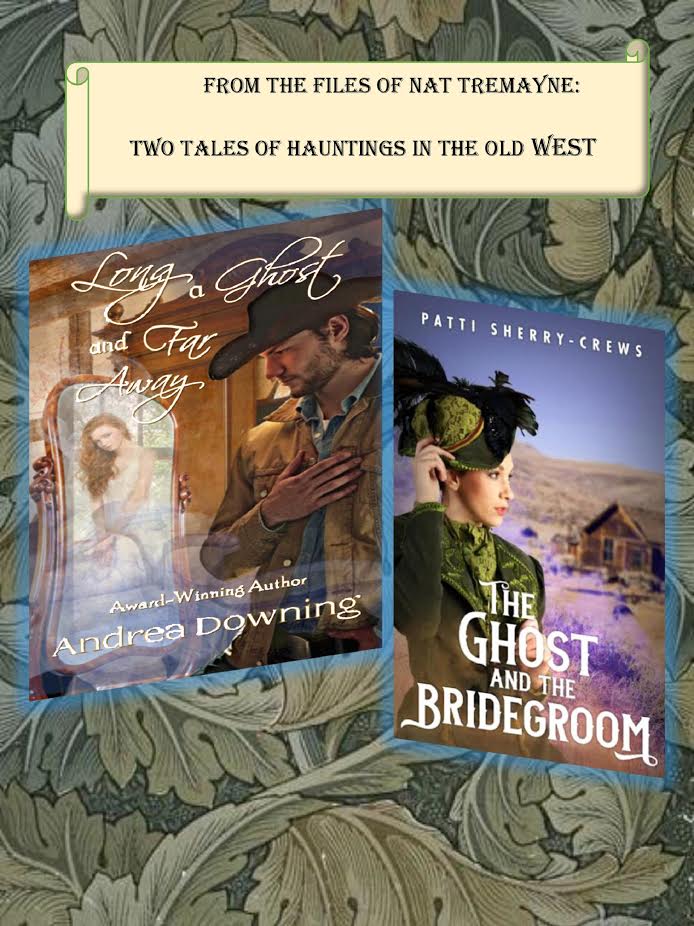
It wasn't all fun and games in Jackson Hole. Andi and I were able to finalize a joint project. We re-released our stories that were in the anthology The Good, the Bad, and the Ghostly under the title From the Files of Nat Tremayne: Two Tales of Hauntings in the Old West. The eight stories in the original anthology were all connected by a detective agency specializing in paranormal events. It was a fun project to work on, and I'm happy to see our work live again. This week the book is on sale for $0.99. Get it. It's a good one: spooky, funny, and above all--romantic.


All images courtesy of  me!

Friday, July 7, 2017

The Wild West Show: Shaping a Legend


My last two posts about Comanche captives were based largely on the book by Scott Zesch, The Captured. I found everything about his account of the lives of the captives he followed fascinating, but perhaps the last chapter made me sit back and say "wow." The dust had barely settled on the plains after the brutal conflicts of the Indian Wars, and next we find many of the participants together again performing in the Wild West Show. It put me in mind of the television series Westworld, with characters being swapped in and out for the entertainment of a paying audience. Except the players were real characters from history: Sitting Bull, Anne Oakley, Chief Joseph, Calamity Jane, Wild Bill Hickok, and even whites who'd been taken captive as children.


Whether you were an Indian, a captive, or a Texas Ranger a person has to eat and joining the show put money in pockets. This was the new west.

There's a scene in Zesch's book I found poignant. Gathered together after one show, former captive, Herman Lehmann, was reminiscing with a former Texas Ranger. Both men fell silent when it dawned on them the event each described was one and the same--only they were on different sides of the conflict. Herman, then a white Indian, was in a raiding party attacked by the Rangers. Herman narrowly escaped with his life when he was injured and trapped under his fallen horse. He watched as the Rangers chased down and decapitated his best friend. Decades later he came face to face on neutral ground with one of the murders.

How strange it all must have been. A way of life for all the participants was coming to an end at the same time they were active players in creating the myth of the American west.

I have a personal interest in the Wild West Show. I had a great aunt, Louise, who was a wild one (probably a soiled dove, to be honest). She and her best friend, Ethyl, cut a wide swath through the 1920's claiming to have been at virtually every important event at the time. St. Valentine's Day Massacre? They just happened to be vacationing with Al Capone at his Florida home when that happened.

When they were elderly, Louise invited Ethyl to live with them. What I remember from my visits is a large framed, photograph of Ethyl in costume posing next to a horse. She said she'd been a bareback rider in Buffalo Bill's Wild West Show. So she said. Anyway, that was my introduction to that bit of history.

It was a tamer west when Wild Bill Hickok introduced his Border Dramas in 1872. These dramas, featuring authentic Indians and frontiersmen, reenacted such real events as buffalo hunts on a small scale.

In 1883 Buffalo Bill Cody, true promoter that he was, took the wild west show to the next level. In its heyday he had over 1,000 performers traveling by train around the country. Custer's Last Stand was a popular reenactment along with stagecoach attacks, and women being taken captive by Indians. Other entertainments included races, shooting and roping competitions, trick riders, and music.

The Death of Custer

The Wild West Show was a thriving industry until just before WWI when other forms of recreation took it's place. Hollywood cashed in on the public's interest by making westerns and later TV series. Baseball and football caught on as the national pastime. And rodeos which were cheaper to attend, stole another segment of the Wild West Show's audience.

But, the Wild West Show did leave a legacy. The show helped define the legend of the west as we see it today, selling this image worldwide. It became the springboard for how the west was portrayed in popular culture for decades.

Buffalo Bill Saluting Queen Victoria

But was it accurate? Not entirely....

The grand concept behind the show was man's conquest of the wild. It depicted a glorified white dominated experience. The Native Americans were the villains in the piece, while the Black Americans were almost entirely left out.

Blacks were very much a part of the western landscape as settlers, soldiers, and cowboys. They were originally represented in the shows, most famously by black cowboy, Bill Picket. But when they proved less popular with the audience, blacks were taken out of the show, helping the part they played in taming the west to almost fade into history.


For the Native Americans the Wild West Show was a mixed blessing. One upside was that all performers received the same pay whether woman, Indian, or black, which was certainly different than the rest of America at the time. Indians could make more money than they could on the reservation, and they could take their families with them on the road with three square meals provided.

On the other hand, I can't imagine the effect it had on them to relive their demise over and over again. Not to mention being drawn as the bad guys who deserved what they got. The warrior Rain-in-the-Face who may or may not have been the man to dispatch General Custer (it was a confusing battle) also performed in the Wild West Show. Whether he got to repeatedly deliver the final blow to Custer in the show, I don't know. Custer's widow, Libby, watched the reenactment of the Battle of Little Big Horn and declared it "realistic." (In fact modern evidence gathered imply the battle was less of a heroic stand than a chaotic rout where scattered pockets of soldiers were mowed down by the overwhelming Indian forces.)

Rain-in-the-Face, the man who claimed to have killed Custer.
The west as portrayed in the Wild West Show continued to hold sway until the 1960's and 70's when the revisionist westerns started to appear. Films such as Little, Big Man, McCabe and Mrs. Miller, and Butch Cassidy and the Sundance Kid were set in a grittier west. All players in the drama were painted with the same brush, where the line between good and bad was blurred. Indians had their own point of view. Outlaws were also likable fellows. And heroes didn't always behave heroically.

The old west is an uniquely American experience, and I'm sure future generations will continue to draw inspiration from this era. It will be interesting to see how the story evolves. So many stories, so many points of view to explore!

Do you have a favorite western? What do you think of the most current westerns?


Wednesday, June 14, 2017

Deadwood

I just returned from a reader/author event in Deadwood, SD. If you’re an author, this is the event for you. If you’re a reader, this is definitely the event for you. If you want to visit the Black Hills and wonder what else there is to do, check out Wild Deadwood Reads. I’m really hoping that this event will be scheduled for next year.

As a history buff, Deadwood is a dream. History oozes from the bricks, whispers through the pines, and stares you in the face. Other than Bill Hickok meeting his untimely end in Deadwood and a few tidbits about Calamity Jane, I really didn’t know a lot about Deadwood’s history before I left for this event. So, being the curious type, I started searching on the Internet. (All the subsequent information is gleaned from the official site of the town of Deadwood.)


In 1875, a miner named John B. Pearson found gold in a narrow canyon in the Northern Black Hills. This canyon became known as "Deadwood Gulch," because of the many dead trees that lined the canyon walls at the time. The name stuck and Deadwood was born…kinda. It wasn’t until the gold rush into the Black Hills in 1876 that the town was established.
Deadwood circa 1876


Deadwood’s early history matches that of most frontier gold towns—wild, fairly lawless, and with a male population that vastly outnumbered that of the “fairer sex.” Saloons, gambling establishments, dance halls, and brothels were all considered legitimate businesses and were well known throughout the area. However, by 1877, Deadwood was evolving from a primitive mining camp to a community with a sense of order. The community organized a government, hired a sheriff to keep law and order, and began the transition from frontier to civilization. That transition almost came to an abrupt end when a fire on September 26, 1879 burned most of the business district. Rather than quit, the community set about to rebuild and passed laws requiring only certain building materials to be used for all construction. (Most of Deadwood’s historical district is constructed of brick and mortar for this reason.)

In 1890, the Fremont, Elkhorn, and Missouri Valley Railroad connected Deadwood to the outside world. Prior to that, in March 1878, Paul Rewman established Western South Dakota's first telephone exchange in Deadwood. Yes, you read that right—the telephone was in Deadwood. A flood in 1883 almost destroyed the town and another fire in 1894 took out a lot of the older timber constructed buildings, yet Deadwood continued on. Today, it is a tourist destination, a gambler’s paradise (perhaps harkening back to its much earlier days), and a gem of a city set in the stunning beauty of the Black Hills.