One of the highlights of my cross-country road trip back in 2015
was Estes Park, gateway to Rocky Mountain National Park. And how could it not
be a highlight? Here is scenery that both inspires and excites in a corner of
Colorado once called the ‘Switzerland of America.’ One of several wide valleys
at around 8,000 feet, which include North Park, Middle Park, South Park, and
Winter Park, Estes Park itself was renowned for its beauty. But for
the long line of British aristocrats that visited the area from the early
1800s, it held a hint of their own landscaped reserves surrounding country
estates, yet was a formidable hunting ground, brimming with wildlife they would
not encounter back home. No wonder then, given the immense wealth of these
visitors, they would want to have it for their own. And one man set out to do
just that.
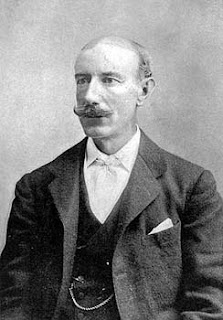
Windham
Thomas Wyndham-Quin, 4th Earl of Dunraven and Mount-Earl, an Anglo-Irish peer,
first viewed the Rockies in 1869, aged twenty-eight and on his honeymoon. He had
gone to Oxford and served in the Queen’s Life Guards. Best known for being a
journalist, writing articles on travel and hunting, he was generally considered
an enlightened and rather progressive man for his background, and mixed
socially with writers, actors and musicians. His boyhood had been spent reading
the western novels of Mayne Reid and Fenimore Cooper so that, despite having a
young bride in tow, he now aimed to travel west and hunt.
Circumstances
conspired against him that year, however, and his party reached only as far as
Denver. The dramatic backdrop to this burgeoning town was enough to enthrall
him. In the next sixteen years, Dunraven was to travel annually to the west,
sometimes more than once a year. After all, Denver was ‘only’ seventeen days
from Liverpool.
Estes Park had been home to Arapaho and Ute and occasional
Apaches. Trappers had passed through, and Missourian Joel Estes came in 1859 to
try his hand at ranching there. Griff Evans arrived in 1867 and built cabins to
accommodate tourists and lead hunting trips. In 1872, Dunraven finally set eyes
on the area for the first time.
He had inherited title just a year earlier, and
now commanded his family’s extensive fortune, including banks, railroads,
shipping and coal, as well as four mansions scattered throughout the British
Isles. Having hunted throughout the west on visits over the last three
years—including one hunt led by William Cody and his pal, Texas Jack— Dunraven
now stayed at one of Evans’ cabins for three weeks and subsequently set his
heart on having the park for his private hunting ground. The earl had caught
‘prairie fever’ as Mayne Reid had called it.
Why Dunraven favored Estes Park came down to several details, as
varied as the beautiful sunsets, the dry air, and the fact nearby Denver was a
station for no less than five railroad lines. He loved the area so much that he
paid Albert Bierstadt $15,000 for a painting of Estes Park, the first of many
he would take home to remind him of his place in Colorado. The way Dunraven set
about obtaining ownership to six thousand acres was a modus operandi that would
be employed by numerous ranchers throughout the west in the coming years.
Exercising his vast resources, he had his agents bribe various American
citizens to make use of both the Pre-emption Act and Homestead Act to either
buy or prove up 160 acres each. By choosing the sites wisely, Dunraven enclosed
more acreage without access to water. Thirty-one claims were filed for his use.

But such a land grab could not go unnoticed. Squatters moved in,
and a grand jury was set to investigate his claims. While none of this came to
anything, and Dunraven kept his land titles, the harassment showed him the
writing on the wall. He had the roads improved and built a hotel as well as a
sawmill. Back home in Britain, he was increasingly involved in politics, and
would later serve in Her Majesty Queen Victoria’s government under Lord
Salisbury, as well as in the Senate of the Irish Free State. The Earl made his
last visit to Estes Park in 1882, but it was not until 1908 that he sold his
land to F.O. Stanley and B. D. Sanborn. Stanley, of course, built the
now-historic Stanley Hotel. Rocky Mountain National Park was signed into being
in 1915.
It is a strange anomaly that a man who wrote approvingly about the
preservation of Yellowstone as a national park for the enjoyment of the general
public, and later would be instrumental in passing the Irish Land Purchase Act
of 1903 (permitting tenants to purchase land with favorable terms from their
landlords), should want to illegally secure such a large swathe of American
countryside for his own use. But Dunraven was very much a product of his background, if an
enlightened one, and only the first of many Brits who would seek to use the
west for their own profit and enjoyment.
An earlier version of this appeared 2015 at http://andreadowning.com
Photo of Lord Dunraven public domain; all other photos author's own


