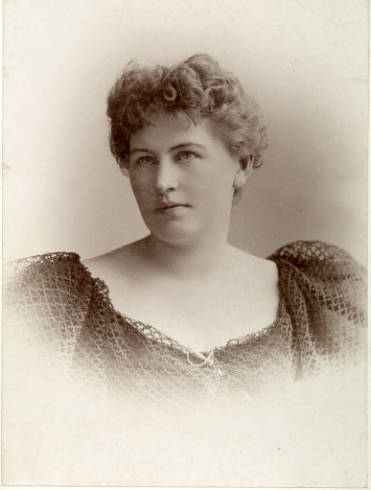
Showing posts with label Nellie Bly. Show all posts

Tuesday, March 8, 2022

Those Intrepid Reporters

Post by Doris McCraw

writing as Angela Raines

Photo property of the Author

March is National Women's History Month. In honor of the month, I thought a brief look at some of the early women reporters might be fun. 

Most have heard of Nellie Bly. This reporter went undercover in an insane asylum to report on the conditions in those institutions.


Nellie Bly
photo from Wikipedia

Bly was born Elizabeth Cochran in 1864. It was a dare from the editor of the New York World that sent Bly into that asylum. What many may not know, Bly took up the challenge to circumvent the world in 80 days. The Jules Verne book was very popular during that time, so it was another way to make headlines. She did and succeeded in her quest by making the trip in 72 days.  For those who might like to read her work, you can search it out on the web. 

The success of Ms. Bly offered other women a role model for investigative reporting. One such was Polly Pry in Colorado. Polly, born Leonel Ross Campbell in 1857, also worked for the New York World and was sent by the paper to Panama to ferret out the rumor about the US building a canal there. When her parents moved to Denver in the 1890s, Nell, as she was known in the family,  started up a conversation with a man on the train. The man, Fredrick Bonfils of the Denver Post. He offered her a job. She eventually took up the case of Alfred Packer, and then went after the corrupt labor unions. 

Polly Pry
photo from Wikipedia

When fired from the Post, she started her own publication "Polly Pry", but after almost being killed when an angry man knocked on her door at night, she eventually sold the publication and returned to New York. New York didn't make up for her missing Colorado. When she returned, the Denver Times offered her a job. They sent her to Mexico to interview Pancho Villa. Polly continued her life as a reporter, including covering WWI. She died at the age of eighty-one. 

There were more such reporters, and worth studying. 

Have a productive month and remember to celebrate those women who paved the way for those who followed. Until next time. 

Link to Ten Days in a Mad-House, Nellie Bly: https://gutenberg.org/ebooks/59899

Link to Polly Pry's article on the Colorado World Fair Commission: https://www.coloradohistoricnewspapers.org/?a=d&d=CTR19030514.2.9&e=-------en-20--1--img-txIN%7ctxCO%7ctxTA--------0------

Doris McCraw


Friday, February 8, 2019

Wild Women Reporters who Broke Boundaries

Historic Boundary Breakers Wild Women Reporters

By Jacqui Nelson

Life is an adventure to explore and investigate--and change. Here are two Wild Women Reporters who tested their worlds and reported on them in the hopes of making the world a better place for everyone...

Winifred Sweet Black Bonfils 

~ aka Annie Laurie ~ 

( born 1863 in Chilton, Wisconsin )

In 1890 (after writing for the Chicago Tribune as Winifred Black), she found work at William Randolph Hearst's San Francisco Examiner as Annie Laurie. The name Annie Laurie was a reference to her mother's favorite lullaby and a tribute to her contemporary Nellie Bly.

In 1900, she dressed as a boy and was the first reporter at the Galveston Hurricane. She delivered an exclusive and Hearst sent relief supplies by train.

In 1906, she covered the 1906 San Francisco earthquake.

In 1907, she had a front-row seat at the murder trial of Harry Thaw. Her coverage of the trial and descriptions of Thaw's wife, Evelyn Nesbit, earned her the label of “sob sister” (a label given to female reporters who wrote human interest stories).

In addition to being a reporter, Winifred was a telegraph editor, biography writer, columnist, fundraiser, relief work organizer, and the author of two books (written under the name Annie Laurie) The Little Boy Who Lived on the Hill (a children’s book) and Roses and Rain.

Elizabeth Cochrane Seaman 

~ aka Nellie Bly ~ 

born 1864 in Cochran's Mills, Pennsylvania )

In 1880, Elizabeth moved with her family to Pittsburgh where she read a newspaper column titled What Girls Are Good For that said girls were principally for birthing children and keeping house—which prompted her to write a response under the pseudonym "Lonely Orphan Girl." Impressed with her passionate response, the editor of the newspaper ran an advertisement asking the author to identify herself. When she did, he hired her to write as "Nellie Bly," a pen name chosen from the title character in the song Nelly Bly by Stephen Foster.

In 1887 in New York City, she took an undercover assignment feigning insanity to investigate reports of brutality and neglect at the Women's Lunatic Asylum on Blackwell's Island. After ten days of experiencing the deplorable conditions firsthand, she was released at her newspaper’s behest and her report (later published in book form as Ten Days in a Mad-House), prompted the asylum to implement reforms and brought her lasting fame

In 1888, she suggested to her editor that she take a trip around the world, attempting to turn the fictional Around the World in Eighty Days into fact for the first time. On November 14, 1889 (with two days' notice and carrying only a small travel bag with a few essentials) she boarded a steamer and began her 24,898-mile (40,070-kilometer) journey. Just over seventy-two days later, she’d circumnavigated the globe and was back in New York.

During World War I, she reported stories on Europe's Eastern Front. She was the first woman and one of the first foreigners to visit the war zone between Serbia and Austria. She was even arrested when she was mistaken for a British spy.

In addition to being a reporter, Elizabeth was an activist, industrialist, inventor (with patents for a novel milk can and a stacking garbage can) and a charity worker.
~ * ~ 

I haven't written a story about a Wild Women reporter but...once again, after reading about these ladies I'm eager to. Unfortunately (once again) there are so many stories and not enough time to write them all :) 

Do you have a favorite story about a boundary-breaking 19th-century reporter? 


~ * ~

CLICK HERE to read more Cowboy Kisses Wild Women blog posts *

Read about my stories on my 

Hope you'll join me on… 
Or follow me on… 

Don't forget to download my FREE story with my Newsletter

Fall in love with a new Old West...
where the men are steadfast & the women are adventurous.

Monday, February 23, 2015

GIVE A GIRL A KISS?


This post is not about a cowboy, but someone who is truly remarkable. In fact, I'm sure any red-blooded cowboy would have happily kissed her. As a former newspaper reporter, I cannot help being an admirer of Nelly Bly. She made history not only as a reporter, but in a second career as an inventor.

Nellie Bly/Elizabeth Cochran

Nellie Bly was the pen name of American journalist Elizabeth Jane Cochrane. She was a ground-breaking reporter known for a record-breaking trip around the world in 72 days, in emulation of Jules Verne's fictional character Phileas Fogg, and an exposé in which she faked insanity to study a mental institution from within. She was a pioneer in her field, and launched a new kind of investigative journalism. In addition to her writing, she also was an industrialist, inventor, and charity worker.

At birth she was named Elizabeth Jane Cochran. She was born in Cochran Mills, which today is part of the Pittsburgh suburb of Burrell Township, Armstrong County, Pennsylvania. She was the daughter of Mary Jane and Michael Cochran. Her father was a modest laborer and mill worker who taught his young children about the virtues of hard work and determination by buying the local mill and most of the land surrounding his family farmhouse. As a young girl, Elizabeth often was called "Pinky" because she so frequently wore the color. As she became a teenager she wanted to portray herself as more sophisticated, and so dropped the nickname and changed her surname to Cochrane.

She attended boarding school for one term, but was forced to drop out due to her family’s lack of funds. In 1880, Cochrane and her family moved to Pittsburgh. An aggressively misogynistic column entitled "What Girls Are Good For" in The Pittsburgh Dispatch prompted her to write a fiery rebuttal to the editor under the pseudonym "Lonely Orphan Girl". The editor, George Madden, was impressed with her passion and ran an advertisement asking the author to identify herself.

When Cochrane introduced herself to the editor, he offered her the opportunity to write a piece for the newspaper, again under the pseudonym "Lonely Orphan Girl". After her first article for the Dispatch, entitled "The Girl Puzzle", Madden was impressed again and offered her a full-time job. Women who were newspaper writers at that time customarily used pen names. The editor chose "Nellie Bly" for Cochrane, adopted from the title character in the popular song "Nelly Bly" by Stephen Foster.

As a writer, Bly focused her early work for the Dispatch on the plight of working women, writing a series of investigative articles on women who were factory workers, but editorial pressure pushed her to the so-called women's pages to cover fashion, society, and gardening, which were the usual role for women journalists of the day. Dissatisfied with these duties, she took the initiative and traveled to Mexico to serve as a foreign correspondent. Still only 21, she spent nearly half a year reporting the lives and customs of the Mexican people. Her dispatches later were published in book form as SIX MONTHS IN MEXICO.


In one report, she protested the imprisonment of a local journalist for criticizing the Mexican government, then a dictatorship under Porfirio Díaz. When Mexican authorities learned of Bly's report, they threatened her with arrest, prompting her to leave the country. Safely home, she denounced Díaz as a tyrannical czar suppressing the Mexican people and controlling the press.

Burdened again with theater and arts reporting, Bly left The Pittsburgh Dispatch in 1887 for New York City. Penniless after four months, she talked her way into the offices of Joseph Pulitzer's newspaper, the New York World, and took an undercover assignment for which she agreed to feign insanity to investigate reports of brutality and neglect at the Women's Lunatic Asylum on Blackwell's Island.

After a night of practicing deranged expressions in front of a mirror, she checked into a boardinghouse. She refused to go to bed, telling the boarders that she was afraid of them and that they looked crazy. They soon decided that she was crazy, and the next morning summoned the police. Taken to a courtroom, she pretended to have amnesia. The judge concluded she had been drugged.

She was then examined by several doctors, all of whom declared her to be insane. "Positively demented," said one, "I consider it a hopeless case. She needs to be put where someone will take care of her." The head of the insane pavilion at Bellevue Hospital pronounced her "undoubtedly insane". The case of the pretty crazy girl attracted media attention.

"Who Is This Insane Girl?" asked the New York Sun. The New York Times wrote of the "mysterious waif" with the "wild, hunted look in her eyes", and her desperate cry: "I can't remember I can't remember."


Committed to the asylum, Bly experienced its conditions firsthand. The food consisted of gruel broth, spoiled beef, bread that was little more than dried dough, and dirty undrinkable water. The dangerous patients were tied together with ropes. The patients were made to sit for much of each day on hard benches with scant protection from the cold. Waste was all around the eating places. Rats crawled all around the hospital. The bathwater was frigid, and buckets of it were poured over their heads. The nurses were obnoxious and abusive, telling the patients to shut up, and beating them if they did not. Speaking with her fellow patients, Bly was convinced that some were as sane as she was.

On the effect of her experiences, she wrote: "What, excepting torture, would produce insanity quicker than this treatment? Here is a class of women sent to be cured. I would like the expert physicians who are condemning me for my action, which has proven their ability, to take a perfectly sane and healthy woman, shut her up and make her sit from 6 a.m. until 8 p.m. on straight-back benches, do not allow her to talk or move during these hours, give her no reading and let her know nothing of the world or its doings, give her bad food and harsh treatment, and see how long it will take to make her insane. Two months would make her a mental and physical wreck."

…My teeth chattered and my limbs were …numb with cold. Suddenly, I got three buckets of ice-cold water…one in my eyes, nose and mouth.

After ten days, Bly was released from the asylum at The New York World's behest. Her report, later published in book form as Ten Days in a Mad-House, caused a sensation and brought her lasting fame. While embarrassed physicians and staff fumbled to explain how so many professionals had been fooled, a grand jury launched its own investigation into conditions at the asylum, inviting Bly to assist. The jury's report recommended the changes she had proposed, and its call for increased funds for care of the insane prompted an $850,000 increase in the budget of the Department of Public Charities and Corrections. They also made sure that future examinations were more thorough so that only the seriously ill went to the asylum.

In 1888, Bly suggested to her editor at the New York World that she take a trip around the world, attempting to turn the fictional AROUND THE WORLD IN EIGHTY DAYS into fact for the first time. A year later, at 9:40 a.m. on November 14, 1889, and with two days' notice, she boarded the Augusta Victoria, a steamer of the Hamburg America Line, and began her 24,899-mile journey.

She brought with her the dress she was wearing, a sturdy overcoat, several changes of underwear, and a small travel bag carrying her toiletry essentials. She carried most of her money (£200 in English bank notes and gold in total, as well as some American currency) in a bag tied around her neck.

The New York newspaper Cosmopolitan sponsored its own reporter, Elizabeth Bisland, to beat the time of both Phileas Fogg and Bly. Bisland would travel the opposite way around the world. To sustain interest in the story, the World organized a “Nellie Bly Guessing Match” in which readers were asked to estimate Bly’s arrival time to the second, with the Grand Prize consisting at first of a free trip to Europe and, later on, spending money for the trip.


During her travels around the world, Bly went through England, France (where she met Jules Verne in Amiens), Brindisi, the Suez Canal, Colombo (Ceylon), the Straits Settlements of Penang and Singapore, Hong Kong, and Japan. The development of efficient submarine cable networks and the electric telegraph allowed Bly to send short progress reports, although longer dispatches had to travel by regular post and thus, often were delayed by several weeks.

Bly travelled using steamships and the existing railroad systems, which caused occasional setbacks, particularly on the Asian leg of her race. During these stops, she visited a leper colony in China. In Singapore, she bought a monkey.

As a result of rough weather on her Pacific crossing, she arrived in San Francisco on the White Star Line ship Oceanic on January 21, two days behind schedule. New York World owner Pulitzer chartered a private train to bring her home. She arrived back in New Jersey on January 25, 1890, at 3:51 p.m.


Just over seventy-two days after her departure from Hoboken, Bly was back in New York. She had circumnavigated the globe, traveling alone for almost the entire journey. Bisland was, at the time, still crossing the Atlantic, only to arrive in New York four and a half days later. Bisland also had missed a connection and had to board a slow, old ship (the Bothina) in the place of a fast ship (Etruria). Bly's journey was a world record, although it was bettered a few months later by George Francis Train, who completed the journey in 67 days. By 1913, Andre Jaeger-Schmidt, Henry Frederick, and John Henry Mears had improved on the record, the latter completing the journey in fewer than 36 days.


In 1895 Nellie Bly married millionaire manufacturer Robert Seaman. Bly was 31 and Seaman was 73 when they married. She retired from journalism, and became the president of the Iron Clad Manufacturing Co., which made steel containers such as milk cans and boilers. In 1904, her husband died. In the same year, Iron Clad began manufacturing the steel barrel that was the model for the 55-gallon oil drum still in widespread use in the United States. Although there have been claims that Nellie Bly invented the barrel, the inventor is believed to have been Henry Wehrhahn, who likely assigned his invention to her. Nellie Bly was, however, an inventor in her own right, receiving US patent 697,553 for a novel milk can and US patent 703,711 for a stacking garbage can, both under her married name of Elizabeth Cochrane Seaman.


For a time she was one of the leading women industrialists in the United States, but embezzlement by employees led her into bankruptcy. Back in reporting, she wrote stories on Europe's Eastern Front during World War I and notably covered the Woman Suffrage Parade of 1913. Her headline for the Parade story was “Suffragists Are Men's Superiors”, but she also "with uncanny prescience" predicted in the story that it would be 1920 before women would win the vote.


The remarkable Nellie Bly died of pneumonia at St. Mark's Hospital in New York City in 1922, at age 57. She was interred in a modest grave at Woodlawn Cemetery in the Bronx.

Source: Wikipedia

Monday, January 26, 2015

NELLIE BLY, PIONEER OF A DIFFERENT TYPE


No, she's not a cowgirl or a rancher. This woman was a pioneer of a different type, one who made history for women and the world.

Nellie Bly was the pen name of American journalist Elizabeth Jane Cochrane. She was a ground-breaking reporter known for a record-breaking trip around the world in 72 days, in emulation of Jules Verne's fictional character Phileas Fogg, and an exposé in which she faked insanity to study a mental institution from within. She was a pioneer in her field, and launched a new kind of investigative journalism. In addition to her writing, she also was an industrialist, inventor, and charity worker.

At birth she was named Elizabeth Jane Cochran. She was born in "Cochran Mills", today part of the Pittsburgh suburb of Burrell Township, Armstrong County, Pennsylvania, the daughter of Mary Jane and Michael Cochran. Her father was a modest laborer and mill worker who taught his young children a cogent lesson about the virtues of hard work and determination, buying the local mill and most of the land surrounding his family farmhouse. As a young girl Elizabeth often was called "Pinky" because she so frequently wore the color. As she became a teenager she wanted to portray herself as more sophisticated, and so dropped the nickname and changed her surname to Cochrane.

She attended boarding school for one term, but was forced to drop out due to lack of funds. In 1880, Cochrane and her family moved to Pittsburgh. An aggressively misogynistic column entitled "What Girls Are Good For" in the Pittsburgh Dispatch prompted her to write a fiery rebuttal to the editor under the pseudonym "Lonely Orphan Girl". The editor, George Madden, was impressed with her passion and ran an advertisement asking the author to identify herself.

When Cochrane introduced herself to the editor, he offered her the opportunity to write a piece for the newspaper, again under the pseudonym "Lonely Orphan Girl". After her first article for the Dispatch, entitled "The Girl Puzzle", Madden was impressed again and offered her a full-time job. Women who were newspaper writers at that time customarily used pen names, and for Cochrane the editor chose "Nellie Bly", adopted from the title character in the popular song "Nelly Bly" by Stephen Foster. She originally intended for her pseudonym to be "Nelly Bly," but her editor wrote "Nellie" by mistake, and the error stuck.

Nellie Bly

As a writer, Bly focused her early work for the Dispatch on the plight of working women, writing a series of investigative articles on women who were factory workers, but editorial pressure pushed her to the so-called "women's pages" to cover fashion, society, and gardening, the usual role for women journalists of the day. Dissatisfied with these duties, she took the initiative and traveled to Mexico to serve as a foreign correspondent. Still only 21, she spent nearly half a year reporting the lives and customs of the Mexican people. Her dispatches later were published in book form as Six Months in Mexico. In one report, she protested the imprisonment of a local journalist for criticizing the Mexican government, then a dictatorship under Porfirio Díaz. When Mexican authorities learned of Bly's report, they threatened her with arrest, prompting her to leave the country. Safely home, she denounced Díaz as a tyrannical czar suppressing the Mexican people and controlling the press.


Burdened again with theater and arts reporting, Bly left the Pittsburgh Dispatch in 1887 for New York City. Penniless after four months, she talked her way into the offices of Joseph Pulitzer's newspaper, the New York World, and took an undercover assignment for which she agreed to feign insanity to investigate reports of brutality and neglect at the Women's Lunatic Asylum on Blackwell's Island.

After a night of practicing deranged expressions in front of a mirror, she checked into a boardinghouse. She refused to go to bed, telling the boarders that she was afraid of them and that they looked crazy. They soon decided that she was crazy, and the next morning summoned the police. Taken to a courtroom, she pretended to have amnesia. The judge concluded she had been drugged.

She was then examined by several doctors, all of whom declared her to be insane. "Positively demented," said one, "I consider it a hopeless case. She needs to be put where someone will take care of her." The head of the insane pavilion at Bellevue Hospital pronounced her "undoubtedly insane". The case of the pretty crazy girl attracted media attention.

"Who Is This Insane Girl?" asked the New York Sun. The New York Times wrote of the "mysterious waif" with the "wild, hunted look in her eyes", and her desperate cry: "I can't remember I can't remember."

Committed to the asylum, Bly experienced its conditions firsthand. The food consisted of gruel broth, spoiled beef, bread that was little more than dried dough, and dirty undrinkable water. The dangerous patients were tied together with ropes. The patients were made to sit for much of each day on hard benches with scant protection from the cold. Waste was all around the eating places. Rats crawled all around the hospital. The bathwater was frigid, and buckets of it were poured over their heads. The nurses were obnoxious and abusive, telling the patients to shut up, and beating them if they did not. Speaking with her fellow patients, Bly was convinced that some were as sane as she was.

On the effect of her experiences, she wrote: "What, excepting torture, would produce insanity quicker than this treatment? Here is a class of women sent to be cured. I would like the expert physicians who are condemning me for my action, which has proven their ability, to take a perfectly sane and healthy woman, shut her up and make her sit from 6 a.m. until 8 p.m. on straight-back benches, do not allow her to talk or move during these hours, give her no reading and let her know nothing of the world or its doings, give her bad food and harsh treatment, and see how long it will take to make her insane. Two months would make her a mental and physical wreck."

…My teeth chattered and my limbs were …numb with cold. Suddenly, I got three buckets of ice-cold water…one in my eyes, nose and mouth.

After ten days, Bly was released from the asylum at the New York World's behest. Her report, later published in book form as Ten Days in a Mad-House, caused a sensation and brought her lasting fame. While embarrassed physicians and staff fumbled to explain how so many professionals had been fooled, a grand jury launched its own investigation into conditions at the asylum, inviting Bly to assist. The jury's report recommended the changes she had proposed, and its call for increased funds for care of the insane prompted an $850,000 increase in the budget of the Department of Public Charities and Corrections. They also made sure that future examinations were more thorough so that only the seriously ill went to the asylum.


In 1888, Bly suggested to her editor at the New York World that she take a trip around the world, attempting to turn Jules Verne's fictional Around the World in Eighty Days into fact for the first time. A year later, at 9:40 a.m. on November 14, 1889, and with two days' notice, she boarded the Augusta Victoria, a steamer of the Hamburg America Line, and began her 24,899-mile journey.

She brought with her the dress she was wearing, a sturdy overcoat, several changes of underwear, and a small travel bag carrying her toiletry essentials. She carried most of her money (£200 in English bank notes and gold in total, as well as some American currency) in a bag tied around her neck.

The New York newspaper Cosmopolitan sponsored its own reporter, Elizabeth Bisland, to beat the time of both Phileas Fogg and Bly. Bisland would travel the opposite way around the world. To sustain interest in the story, the World organized a “Nellie Bly Guessing Match” in which readers were asked to estimate Bly’s arrival time to the second, with the Grand Prize consisting at first of a free trip to Europe and, later on, spending money for the trip.

During her travels around the world, Bly went through England, France (where she met Jules Verne in Amiens), Brindisi, the Suez Canal, Colombo (Ceylon), the Straits Settlements of Penang and Singapore, Hong Kong, and Japan. The development of efficient submarine cable networks and the electric telegraph allowed Bly to send short progress reports, although longer dispatches had to travel by regular post and thus, often were delayed by several weeks.

Bly travelled using steamships and the existing railroad systems, which caused occasional setbacks, particularly on the Asian leg of her race. During these stops, she visited a leper colony in China. In Singapore, she bought a monkey.

As a result of rough weather on her Pacific crossing, she arrived in San Francisco on the White Star Line ship Oceanic on January 21, two days behind schedule. New York World owner Pulitzer chartered a private train to bring her home. She arrived back in New Jersey on January 25, 1890, at 3:51 p.m.


Just over seventy-two days after her departure from Hoboken, Bly was back in New York. She had circumnavigated the globe, traveling alone for almost the entire journey. Bisland was, at the time, still crossing the Atlantic, only to arrive in New York four and a half days later. Bisland also had missed a connection and had to board a slow, old ship (the Bothina) in the place of a fast ship (Etruria). Bly's journey was a world record, although it was bettered a few months later by George Francis Train, who completed the journey in 67 days.

Nellie about the time of her marriage
In 1895 Nellie Bly married millionaire manufacturer Robert Seaman. Bly was 31 and Seaman was 73 when they married. She retired from journalism, and became the president of the Iron Clad Manufacturing Co., which made steel containers such as milk cans and boilers. In 1904, her husband died. In the same year, Iron Clad began manufacturing the steel barrel that was the model for the 55-gallon oil drum still in widespread use in the United States. Although there have been claims that Nellie Bly invented the barrel, the inventor is believed to have been Henry Wehrhahn, who likely assigned his invention to her. Nellie Bly was, however, an inventor in her own right, receiving US patent 697,553 for a novel milk can and US patent 703,711 for a stacking garbage can, both under her married name of Elizabeth Cochrane Seaman.

Nellie near the time of her death
For a time she was one of the leading women industrialists in the United States, but embezzlement by employees led her into bankruptcy. How sad that such an innovative and intelligent woman was the victim of unscrupulous employees.

Back in reporting, she wrote stories on Europe's Eastern Front during World War I and notably covered the Woman Suffrage Parade of 1913. Her headline for the Parade story was “Suffragists Are Men's Superiors”, but she also "with uncanny prescience" predicted in the story that it would be 1920 before women would win the vote.

She was inducted into the National Women's Hall of Fame in 1898. The remarkable Nellie Bly died of pneumonia at St. Mark's Hospital in New York City in 1922, at age 57. She was interred in a modest grave at Woodlawn Cemetery in the Bronx.

Source: Wikipedia