Showing posts with label Old West History. Show all posts

Thursday, June 12, 2014

Great Links for Western Lovers - @JacquieRogers


I spent a lovely five days with a writer friend, Judith Laik, on the shores of Lake Chelan, Washington.  We plotted and brainstormed the whole time--at least, when we weren't partaking of fine wine.  Oh wait, it was that fine wine that helped with the brainstorming...  Ahem.  

Like most authors, I have several projects lined up waiting to be written.  Each of these stories requires a different knowledge set, and it's always necessary to do at least a little research for the next story.  Some people think this is work, but I call it fun, and in fact I have to limit myself.  Same with visiting museums.  Doncha just love museums! 

Anyway, take a look at some of the sites I visited this week:

Hungry Cowboys
Head on over to the Cowboy Showcase if you want to learn how to cook on the trail.  Dutch Oven Cooking with Floyd Crandall tells you how to heat, use, and clean a dutch oven.

Oregon Trail
At the Pathways of Pioneers site, historian Don Shannon tells about the tragic experience of a wagon train at Castle Butte, Idaho Territory, and their forty days of hell until 16 of 44 immigrants were finally rescued at what now is called Starvation Camp.

There's Gold In Them Thar Hills
Think the gold rush is over?  Someone forgot to tell that to about 367 members of the Idaho Gold Prospectors Association.  If you want to prospect for gold and have a little fun besides, check 'em out.
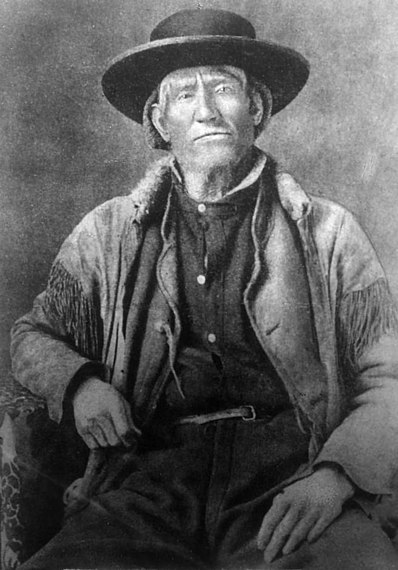
Gnarly Mountain Men
The first lucrative enterprise of the American West was fur trapping and trading.  John Jacob Astor made a pile of money from this business.  Jim Bridger (left) and his friends wanted in on the action and formed the Rocky Mountain Fur Company. 

Dressed in buckskins, wearing coonskin caps, and packing scalpin' knives, these men explored and trapped in every area of the West.  Some of the later "explorers" used these men's maps and lore.  Learn all about the trade, the men, and the business from Legends of America, Fur Trading in the American West.

Back East...
Another site that I frequent, especially when writing the Wolf Creek stories for Western Fictioneers, is the Kansapedia.  The cowtowns, several of the famous lawmen and outlaws, and lots of wheat aren't the only things you'll find in Kansas.  Besides, Matt and Miss Kitty were there... oh wait...

And Home Again
Since my stories are mostly set in Idaho, I do a lot of research there.  For a brief overview, go to the Visit Idaho Site.  For more in-depth information, go to Idaho State Historical Society Digital Collections, and here's an overview of Owyhee County history.  Of course, the best thing to do is ride a horse in the Owyhee Mountains and smell the sagebrush, but if that's not in the cards, a visit to the Idaho State Archives is in order.  They have a grant to digitize many of their newspapers, so that will be a boon to me since I live in Seattle now.


To be released Fall of 2014:
Much Ado About Mustangs


Tuesday, June 12, 2012

Cowboy Duds


"I see by your outfit that you are a cowboy." This line was forever stamped in our consciousness of the old west cowboy when it became a song lyric in The Streets of Laredo. But exactly what was it about those cowboy duds that made the man wearing them identifiable on sight?

Since the cowboy worked with cattle and horses in some of the wildest terrain in the west, by necessity his clothing had to be durable. A cowboy’s clothing could also tell a lot about where he hailed from and the job he performed.

Stetson Champie
Hats gave a big clue to a rider’s origin. In the north, the brims were narrow and the crowns low. But just like a jackrabbit’s ears, the farther south you went, the bigger they became to shade their owners from the sun. In a previous post, Lauri Robinson gave us some great information about the Stetson and the various ways they are creased and what the creases signify. Stetsons came in a variety of styles, including the Dakota, Calgary, Champie (my fave), and the Ten-gallon. A common misconception about the Ten-gallon hat is that it referred to liquid measure. It didn’t. In Spanish, the word "gallon" refers to the band on a hat. The more gallons it had, the more expensive it was. Cowboys eventually started calling any hat that was large and expensive a Ten-gallon. Besides protecting him from the sun and rain, a cowboy’s hat had other uses. He could carry water in it or use it to fan a fire to life. If need be, he could use it as a whip to urge his horse to a faster run. On occasion, he might even stuff the crown with dried grass and use it as a pillow.


A bandana, also known as a wipe or rag, was just as necessary as a hat. They usually came in blue or red and were worn loosely around the neck. When the weather turned frigid, a bandana could be pulled up over a cowboy’s nose to prevent frostbite. It also served as a mask when a man pulled drag duty and had to ride behind the dusty herd. A bandana was long enough to be draped over the crown of a cowboy’s hat and tied under his chin to prevent the hat flying off in a high wind. This also protected his ears from frostbite if he got caught out in a blue norther. And just like his hat, a cowboy’s bandana had other uses and was sometimes brought into service as a potholder, towel, or bandage. If the only available water was muddy, the bandana could be used to filter it for drinking. In a pinch, the bandana probably had a couple of other uses, too, but I’d rather not mention those and put you off your feed this early in the day.

Shirts were always long-sleeved and most often were the pullover type with a three or four button placket on the front opening. See the young cowboy in the photo; he’s wearing a pullover, probably made of wool. Fabrics used were some variety of cotton or wool, depending on the climate. Let’s not forget gloves and leather cuffs, which fastened around the lower arm and extended down to cover the wrists. These were necessary to protect against rope burns or injuries from barbed wire and sharp animal hoofs, plus they saved wear and tear on shirt sleeves.

Contrary to popular culture, the most common pants worn by cowboys in the old west were made of heavy wool, not denim. As I mentioned before, the clothing had to be durable and wool lasted longer than other materials. Levi Strauss didn’t perfect his denim jeans until 1873, and I imagine it took quite some time after that for them to become readily available in dry goods stores throughout the west. So if you have your cowboy set in any time period prior to that, he’d most likely have worn wool or some other material.


Can you imagine wearing that hot, scratchy wool from waist to ankle? I can’t. Which brings me to the reason most cowboys wore their unmentionables year round. Since the great westward migration began after the Civil War, that’s where I’ll begin—with the union suit. The first union suit was patented in 1868 as "emancipation union under flannel." Normally, they were red flannel with full-length arms and legs. The front buttoned up from groin to neck. There was a flap in back that unbuttoned for easy access in the outhouse. After a time (don’t have an exact date) the union suit gave way to long johns, which were very similar to the two-piece suit of long underwear we’re familiar with today. Just fyi, it wasn’t unusual for men who didn’t have an easy means of doing laundry to wear their long johns for an entire summer or winter between washings. How romantic is that!

Back side of Batwing Chaps

As if two layers of garments weren’t hot and sweaty enough for our cowboy, let’s add a pair of leather chaps to his outfit. Chaps were necessary to save wear and tear on precious clothing. Plus they offered some protection from cactus thickets, thorny bushes, barbed wire, and even an occasional love nip from his best friend, his horse. Chaps came in three basic styles: shotguns, batwings, and woolies. Shotgun chaps were slim and close fitting and had to be pulled up the legs, over the pants. Sometimes awkward because the boots and spurs had to be removed to get them on. Northern cowboys preferred woolies for extra warmth. They were most often made from sheep hide with the long wool left on. For pure comfort and convenience, most cowboys preferred batwing chaps. They were looser and fastened around the legs, which didn’t require removing footwear. They also allowed more air to flow in, which was essential on the sun-scorched ranges of the southwest.

Last, but not least, no cowboy would be caught dead without his boots. Back in our cowboy’s day, a pair of boots cost between $10 and $25, depending on how much fancy stitching he wanted and the quality of the leather. Most cowboys only owned one pair, and they held onto that one pair as long as possible and resisted buying new ones. If you’ve ever worn a new pair of cowboy boots, you can sympathize. When new boots were required, they sometimes soaked them in water before putting them on the first time so they would conform to the shape of their feet. Toes were pointed for ease in and out of the stirrups. The heels were high and slanted for gripping the stirrups. The slanted heels were also good for gripping the ground when a cowhand had a rank steer on the other end of his rope. The leather loops, called mule ears, at the tops of the shafts were used to pull the boots onto the feet. No pair of cowboy boots would be complete without spurs, and they came in too many shapes and sizes for me to elaborate on in this post. A cowboy who had a care for his horse filed down the tips of the spur rowels so they wouldn’t damage the animal’s skin. And if a cowboy wanted an extra jingle in his step when he went to town, he added a pair of jinglebobs to the end of the shank.

Ah, those cowpokes and their jinglebobs. Puts a smile on my face every time. :)

Happy reading and writing!
Devon


Resources for cowboy clothing in the Old West:

The Book of the American West –Section 6, Cowboys and Horses of the American West by Ramon F. Adams 
How the West Was Worn by Chris Enss 
Bandannas, Chaps, and Ten-Gallon Hats by Bobbie Kalman

Wednesday, December 14, 2011

I'll See Your Two Horses and Raise You One!

Today, we're all captivated by Sister Wives, a relatively new reality show on television, but Polygamy was commonplace long ago among some of the Native American plains tribes.  More than one wive sharing a husband isn't a new thing.  While there were some monogamous relationships, the danger involved with buffalo hunting, saw many braves die and left  women far out-numbering the men.  Plural marriages become commonplace. 

Besides, needing to re-populate the tribe, Indian women shouldered a good share of the work in camp.  A husband with two or three wives was more likely to have a large family and be looked upon with admiration.  Being part of a polygamous relationship also split the workload and made the burden less cumbersome for one wife.  Consider being responsible for motherhood, skinning and preparing all meat killed by the man of the house, tanning of those skins, beading, cooking, sewing, laundry, plus all the packing and unpacking when the camps relocated.  I'm sure I haven't listed everything an Indian wife did, but it's no wonder they welcomed other women into their lodges. 

In a courting ritual, it's told that young braves presented horses to the fathers of their intended. The rumor that these animals were to pay a purchase price is unfounded, instead the number given provided a method for the male parent to judge the depth of the suitors' desire for the young maidens and their ability to be good providers.  Many of the 'donated' animals were taken during raids on enemy encampments, and success in attaining the most demonstrated even further the ability of the brave to be a worthy mate.

Some variations existed among the tribes.  It's said that some courting was conducted inside a blanket.   When a young brave wanted to make known his intentions, he played a love song on his flute outside the young woman's tepee.  If she welcomed him, she wrapped in a blanket, joined him outside, and extended one arm to enfold him inside where they discussed their relationship and plans in private.

Marriage ceremonies were often simple.  In the Cheyenne tribe, it was customary for the bride to be toted atop a blanket and left outside the lodge of her young brave's father.  In the Sioux, custom shows that many brides were delivered on horseback to a rite conducted by the chief.  Dancing and feasting usually followed.

It's said when a man wished to divorce a wife, he simply pounded a drum and announced he was throwing her away.  Don't know the validity of this, but I do know that in most tribes the lodge was the property of the spouse, handed down from mother to daughter, and that the children stayed with the wife.  Sort of make sense to me.  Sure would end a lot of divorce battles these days.  :)  Life wasn't simple among our red brothers and sisters. Tomorrow, more about the Plains Indian Woman, motherhood, birthing and rituals.  

Again, I credit my favorite research book from Reader's Digest, America's Fascinating Indian Heritage, for teaching me so much about my passion for history set in the old west.