Showing posts with label early women doctors. Show all posts

Tuesday, April 11, 2023

Dr. Bates?


Post (c) Doris McCraw aka Angela Raines

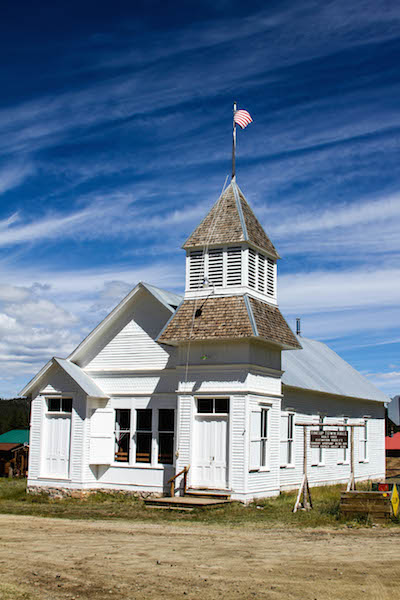
Photo (c) Doris McCraw

Before 1900 Denver had two women doctors with the same name: Dr. Mary Bates. Although there is still so much to learn about these two women, their stories so far are still the stuff of legends. The stories can and will lead to so much more.

Putting their stories into context, Colorado became a state in 1876. The early days of Colorado were filled with people seeking gold and other minerals to be found in the high mountains. If they weren’t searching for gold, remember the 1859 “Pikes Peak or Bust” slogan: they provided services and goods for the searchers. There also was an influx of people who found the Colorado climate beneficial for their health. This combination led many women to brave the new territory to practice their medical skills.

The first Dr. Bates arrived was Mary Helen Barker Bates (b.1845-d.1934). She was the daughter of Dr. Ezra Barker who had a practice in New York. This Mary graduated from the Woman’s Medical College in Philadelphia. Before she moved to Colorado she practiced in Salt Lake City, Utah, where some of her patients were the family of Mormon leader Brigham Young. (The family site said she was “Brigham Young's Family Physician”. There she met and married George Bates in 1876. Two years later in 1878, at the age of 33, she and George moved to the mining town of Leadville, Colorado, where George was an attorney and Mary practiced medicine.

Leadville, image from Wikiwand

Leadville for those who don’t know sits at 10,152 feet above sea level in the Colorado Rockies. During the 1870s-80s it was a booming town. It was here the Guggenheims, Horace Tabor and others made their fortunes in silver. Even Doc Holliday spent time there.

While there one source says Dr. Bates founded the Ladies Relief Hospital. In 1881 she and George moved to Denver for his health. When Colorado started licensing physicians in 1881, Mary was one of the first women licensed by the State. (Her license #271). She took a special interest in Woman’s Suffrage, children, and education. She introduced the Colorado Law for the Examination and Care of Public School Children which went into effect in 1910.

Our second Mary, Mary Elizabeth Bates (b.1851 d.1954) arrived in Denver in 1891. Prior to arriving in Colorado, she was the first woman intern (1882-1883) at Cook County Hospital in Chicago, Illinois, after a grueling exam in which she beat out a number of male candidates. She studied in Vienna from 1883-1884. Upon her return, she was a professor of anatomy at the Woman’s Medical College in Chicago from 1884-1889. After moving to Colorado she also was involved in the Woman’s Suffrage movement. She was part of the group that affected the passage of the 1893 referendum which gave Colorado women the right to vote. This Dr. Mary Bates also was a champion of the strict adherence to the liquor and gambling laws of the state. Her other passion was animal rights and prior to her death in 1954, she created the Mary Elizabeth Bates Foundation for animal care.

If anyone is interested you can also read or sign up for my weekly Thoughts and Tips newsletter: Thursday's Thoughts and Tips


Until Next Time: Stay safe, Stay happy, and Stay healthy.

Doris


Friday, April 10, 2020

Two Wild Women Doctors who Changed California


By Jacqui Nelson

The times they are a-changing, but the special place in our hearts, hopes, and memories for healthcare professionals is timeless. Calfornia was often called a land of gold and opportunity. Meet Mariana and Charlotte, two wild women doctors and reformers who helped the Golden State find something greater than gold for its people. 

Dr. Mariana Bertola
( born 1865 in Pacheco, California ) 


Mariana’s parents were Italian immigrants. In 1852, her father came to California as a miner but soon became a grocer and a vineyard operator. Mariana went to school in San Jose. She was a teacher first and then a school principal for seven years in Martinez, California. In 1899, she graduated from Cooper Medical College at Stanford University. 

As a doctor, Mariana supported the "California Plan" for every county hospital to offer a maternity ward and a children's ward. In 1903, she completed her obstetrics internship and became the college physician at Oakland’s Mills College. 

Mariana arranged for translators for Italian-speaking patients at San Francisco-area hospitals and gave lectures on health topics in the Italian community and to women's groups throughout the city. She was the president of San Francisco’s Travelers’ Aid Society and the Woman's Vigilant Committee (WVC). The WVC formed in 1921 to protect girls from criminal activity. 

In 1926 and 1927, Mariana was president of the California Federation of Women's Clubs and remained active with women's clubs well into her eighties.

Dr. Charlotte Johnson Baker 
( born 1855 in Newburyport, Massachusetts ) 


After graduating from Newburyport High School and teaching for a year, Charlotte attended Vassar College. In 1877, she graduated with a Bachelor of Arts. From 1879 to 1881, she attended the medical department of the University of Michigan and received her M.D.

In 1882, she married fellow doctor Frederick Baker and the couple practiced medicine in Ohio, New Mexico (where their two children were born), and then San Diego, California. In 1888, she received an A.M (or Master of Arts) from Vassar College for special work in optics and ophthalmology completed after graduation.

In 1898, Charlotte was the first woman president of the San Diego County Medical Society. In other years, she was vice president of the Southern California Medical Society, co-founder of the San Diego YWCA (and its president for three years), and president of the Equal Suffrage Association.

Charlotte spearheaded the San Diego Women's Vote Amendment campaign, worked to eliminate prostitution, and advocated a shorter workweek for laborers.

~ * ~

I love the notion that a doctor can not only mend our bodies but our societies. Because if either is broken, how can our futures be healthy? Thank goodness for all of the doctors (past, present, and future) who do so much for us ❤️ 


Read more of my Cowboy Kisses Wild Women blog posts 

Join me on… 
Follow me on… 

Don't forget to download my FREE story Rescuing Raven (Raven & Charlie's story in Deadwood 1876) 

Tuesday, March 12, 2019

WHAT IS YOUR INSPIRATION? #writing #creativity

Post by Doris McCraw
writing as Angela Raine

As I put the finishing touches to a first draft, I thought about what inspired me to write the story in the first place.

Wooden Headstone - SilveCliff Cemetery
photo copywriten and property of the author
First. I am a compulsive reader. I have been since a very early age. If it is printed, then I pretty much have to read it.

Second, I love history. This goes along with the compulsive reading. Add to that a ridiculous joy in digging through old books, researching ancestors, and the lives of people who lived way back when and you might get a small glimpse of what whirls around in this head of mine.

Third, I am an avid movie watcher, especially the old black and whites. Give me a film noir and I'm  a pretty happy camper. A good B-Western or early Western TV show can also be great fun. How many of you ever saw the short lived Tony Young 1961 TV western 'Gunslinger'? I used to stay up and watch that show. (I had very understanding parents.) Boy did that show fuel my imagination back then.

After moving west in my twenties, all things western history took over. My friends and I, in those early days, would take off in the truck and head into all parts of the state. One of my early trips was to the Taylor Park area and the ghost towns located there. Imagine doing the polka at 9,000+ feet in the town of Tin Cup. I later did research and found out that small little 'ghost' town at one time had the distinction of being one of the roughest towns in Colorado. The story is, seven marshals were killed there in just a few months time.
Stacks Image 36
Tin Cup town hall where the author went
to a dance. from TinCupCo.com
Now, I spend time reading books about the ghost towns of Colorado, both in the mountains and on the plains. I've researched early settlements, the fur trade forts, railroad history and the lives of some of the early residents.

Perhaps my greatest pleasure and constant source of research and fun is the story of early women, especially the women doctors who were practicing medicine prior to 1900. Theirs is a story that I will continue to research and write about until I can write no more.

All of these pieces come together in the stories I write and the non-fiction papers.

I've told you some of what inspires me. I can still enjoy 'The Cisco Kid', 'Have Gun Will Travel'. If an old Rocky Lane movie comes on I will try to catch it. Of the singing cowboys, I'll take Eddie Dean over any of the others. He may not have been a compelling actor, but his voice was pure gold.
Eddie Dean - Cool Water

I've re-read Louis L'Amour's "Flint" at least six times and Elmore Leonard's "Three-Ten to Yuma" story is a must.

What is your inspiration? What is your favorite TV show, favorite B-Western, or novel?

Watch for the latest Kiowa Wells story coming in April.


Doris Gardner-McCraw -
Author, Speaker, Historian-specializing in
Colorado and Women's History
Angela Raines - author: Where Love & History Meet
For a list of Angela Raines Books: Here 
Angela Raines FaceBook: Click Here

Wednesday, September 19, 2018

Before Her Time: Susan LaFlesche Picotte


I recently started research trying to find evidence of female doctors in the 1800s on the Indian Reservations and was fascinated to learn that the first Native American doctor on a reservation was a woman—Susan LaFlesche Picotte.
     Although of mixed race, Susan was born in a tepee, June, 1865, the youngest of four
girls, on the Omaha Reservation, Nebraska. Her father, Joseph LaFlesche, was chief of the tribe and known as Iron Eye. Her mother, Mary Gale, was the daughter of an Army surgeon and understood both English and French, yet she refused to speak anything other than Omaha. Iron Eye, on the other hand, saw the need for Indians to assimilate into the white man’s culture and encouraged his daughters in their education. Susan was therefore sent to the reservation mission school—a boarding school run by Presbyterians. She would never receive a native name nor the tattoos of her tribe.
As Susan grew up, she became aware of the white man’s treatment of her people. She saw a woman die despite four calls to the local doctor who never came. Her own father lost a leg because of an untreated infection, and her parents lost a son in infancy. These incidents no doubt encouraged her on her path. At age fourteen, she was sent to school in New Jersey, and from there went on to the Hampton Institute in Virginia, originally founded for the education of former slaves. By 1886, Susan had decided to go on to medical school and was accepted at the Woman’s Medical College of Pennsylvania.  Help in paying for her studies was organized by a family friend with connections to many reform organizations.  The Connecticut Indian Association would continue to support Susan in numerous ways throughout her career.
(2) First Woman's Medical College
At a time when it was believed women had smaller brains than men and were therefore unsuited to advanced studies, and that the stress of such studies would impair their ability to have children, Susan faced more hurdles as a female than she did as a Native American.  But at the WMCP, she graduated top of her class of thirty-six in 1889, and returned to the Omaha reservation.   There, unable to become the reservation doctor, she became the doctor for the Indian school. However, with the closest doctor some eighteen miles away, Susan inherited some twelve hundred patients in an area of about 1,350 square miles.
(3)Susan's graduating class from medical school--she is 2nd row down, 4th from right
In 1894, while caring for her mother and subsequently her sister’s husband, she met Henry Picotte, a Sioux, who came to help on his brother’s farm. The couple married in 1894 and eventually had two sons. While Henry had a happy and loving disposition, he was also an alcoholic and died in 1905, with complications of tuberculosis. 
Susan would go on to fight against alcoholism on the reservation as well as for the rights of Native Americans. When her sons inherited land they were unable to claim, she fought government agencies until the boys received their rightful inheritance. These battles, combined with her ten-hour workdays and travels through sub-zero weather to her patients, eventually took their toll on her health. She passed away aged just fifty in 1915.
Susan LaFlesche Picotte had become the first Native American doctor thirty-one years before women could vote and thirty-five years before Native Americans could become U.S. citizens.

Photos:
(1) courtesy Nebaska State Historical Soc'y--public domain
(2) courtesy Drexel University College of Medicine Archives and Special Collections--public domain
(3) courtesy Legacy Center, Drexel University College of Medicine