Wednesday, May 21, 2014

The Meaning of Trees as researched by Ginger Simpson

Cherry Tree
Now days most of us are only interested in trees if they fit into the scheme of  landscaping.  Some people don't like deciduous tree, others don't like pine needles, some branches don't bear wind well, others are too slow growing. Some want to grow their own fruit, while others want to grow wood to burn in their fireplaces in the wintertime. The list goes on and on when we consider planting.

I discovered more than I ever knew while researching my latest WIP, Yellow Moon, and thought it would make for an interesting blog.  I noticed our scheduled person didn't feel up to blogging today so I thought I'd step in and give you a lesson fit for an arborist. As well-intentioned as we to meet our schedules, sometimes life happens.  *smile*

Oh, by the way, a Cottonwood was the sacred tree used by the Lakota for their Sun Dance because of several reasons.  Known to withstand lightening and be strong, the tree has the same conical leaves after which tepees are shaped, and if you cut a larger limb crosswise, inside you'll find a perfect five-pointed star which represents the Great Spirit  Bet you didn't know that, did you?

Trees didn't only have a spiritual meaning for the Northern American tribes, most had a healing property of some sort.  Indians of the past didn't have doctors to run to, they counted on medicine women or men to gather healing herbs, berries and barks to ease various maladies. Here are a few I've read about.

Ash trees symbolize peace of mind and sacrifice.  Digestive system ailments are aided by the bark.

Aspen trees symbolize clarity of purpose, determining and aid in overcoming fears and doubts.  Those suffering from stress, allergies, eczema and neuralgia benefit from this tree.

Beech trees symbolize tolerance, past knowledge and softening criticism.  Here again is another tree that aids with the digestive system, and helps wounds, ulcers and sores to heal.

The Cedar symbolizes cleansing protection, prosperity and healing.  Those with respiratory problems find relief from the Cedar.

The Cherry tree symbolizes strong expression, rebirth, new awakenings and compassion.  Remedies made from the Cherry aids those who suffer from colds, flu, coughs, fever, headaches and indigestion.

The Elm is a symbol of wisdom, strength of will and intuition.  It provides healing salves for wounds.

The Oak symbolizes strength of character and courage, and helps blood problems, improves circulation and reduces fevers.

The Sycamore symbolizes ambition and acts as an astringent.

The Walnut tree symbolizes clarity and focus, the gathering of energy for starting new projects.  Skin problems, colds and flu are treated with medicines garnered from this tree.

This is but a few of the many named, and aside from the symbolization and healing properties, many trees
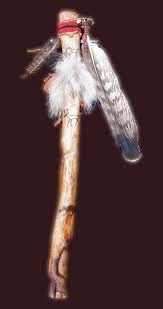
Lakota Talking Stick
were chosen  to provide the wood for prayer sticks, talking sticks, and other sacred items.  Each item was prepared with respect after asking permission from the tree spirit.  The Lakota as well as other tribes had a rich and abiding respect and belief in all things earthly. Until I started writing historical westerns, I never appreciated how easy I have it, nor did I realize how thankless I've been for all the riches the Great Spirit provides for us.

I hope you've found this as interesting as I did.

Monday, May 19, 2014

Bucket List


.www.laurirobinson.blogspot.com

Whether they are referred to as goals, dreams, aspirations, or just things we’d like to do someday, I believe most people have a bucket list—the term made popular by the movie titled such. I’m so excited to say an item will soon be crossed off my list. In two weeks I’ll be attending a taping of Antiques Roadshow! For any of you who enjoy that show, and want to know more about it, this post is for you.

My husband is the TV watcher in our family, but the Roadshow is the one show I tune into on a regular basis. A couple years ago, thinking it would be fun to see it in person, I checked into how to get tickets—which is through a lottery only. 

I put my name in the lottery last year, when filming was close to home, but didn’t win. This year, when I received the email inviting me to put my name in again, my state wasn’t included in the stops the show will make, but they will be in a neighboring one. (The show films in eight or so cities each year and creates three segments from each stop to air the following year.) I chose the closest city to me—about 400 miles away—subbed my information, and in all honesty, forgot about it. In mid-April I received an email telling me to check my ticket status, and to my dismay, I’d won two tickets!

Now I have the dilemma of what to take. I don’t believe I have anything that is a national treasure, but we do have several items we’d like to know more about. Like the old gun one of our grandparents found in a cave when he was a child. An art portfolio issued as a newspaper supplement in 1885. The tea set one of our grandmother’s received as a wedding present. A mountain man’s saddle, steel fishing poles, a child’s bullfighting suit each of my children wore for Halloween, a shoe shine box complete with all the tools, several Elvis collectables. With the passing of our parents and grandparents, we’ve inherited “things”, mainly with great sentimental value, and because I love browsing antique stores (I call it research), I’ve purchased several other unique things—like my 1906 cook stove and several Red Wing crocks I use for storage and end tables.

Roadshow instructions say I need to be able to carry whatever I bring and that I should be prepared to stand in line for extended amounts of time, so that eliminates plenty of items. My ticket provides me with an entrance time. Though the event will take place from 8:00 am to 5:00 pm, a specific number of people will be admitted each hour. Each participant is allowed to bring two items and every entrant is required to bring at least one. There will be approximately 70 appraisers covering about 20 different categories. The rules state entrants will be sent to category lines and if an initial appraiser believes an item is of special interest they will signal a producer who will guide the entrant into the ‘green room’ for a filmed appraisal. They see an average of 600 people per hour, so even if an appraisal is filmed, there is no guarantee it will be used in the final production.  There is a list of items, including coins, stamps, fossils, tools, cars, hazardous materials, and a few other things they will not provide appraisals for. They will only appraise items if the owner is present, and will not consider a person illegible for the green room if the owner already knows the current value of the item. Appraisers are not allowed to offer to purchase any items, however their contact information will be available at a table upon exiting the show if anyone is interested in contacting them at a later date. 

A friend will be attending the event with me—hubby has plans he can’t alter. We will travel on Friday, attend the show on Saturday, and return home on Sunday. I’ll update you on my adventure in my June post. Otherwise, feel free to friend me on facebook @ https://www.facebook.com/lauri.robinson1 for ongoing updates.

Monday, May 12, 2014

Divas in Pink Tights

by Lyn Horner

I’ve been reading The Gentle Tamers, Women of the Old Wild West by Dee Brown. It’s a marvelous testament to how women endured and flourished on the wThe Gentle Tamersestern frontier. Some of the accounts are grim, others inspiring, but one chapter is a bit lighter in tone. Titled “Pink Tights and Red Velvet Skirts,” it shines a spotlight on female entertainers who trod the boards in San Francisco, Virginia City, Denver and far flung mining camps.

The chapter opens with this quote from historian Hubert Howe Bancroft: “The mere appearance of a woman sufficed in early days to insure success.” Even if the performer was untrained, had a cracked voice and was far from beautiful, she could strut off the stage amid a shower of silver and gold.

During the decade between the first California gold strike and the Civil War, theaters flourished in San Francisco, but also in just about every mining town. They might be fancy playhouses or canvas tents. In a land where men far outnumbered women, it didn’t matter as long as a woman arrived to put on a show.

When an actress with real talent came along, she was idolized by her male audience. One such woman was Caroline Chapman. Born illegitimately into a famous theatrical family, Caroline performed with her father, William Chapman. After their first performance in San Francisco, the pair were showered with buckskin bags of gold dust. Dubbed “our Caroline” by her adoring audience, she drew mobs of followers. When she and her father arrived in Sonora to christen a new theater with She Stoops to Conquer, they were met and escorted by a thousand miners. The Chapmans would perform anywhere, even on the sawed off trunk of a huge tree in one case.

Lola Montez

The most glamorous, seductive and scandalous western diva was Lola Montez. More akin to a burlesque queen than an actress, according to Dee Brown, she “. . . burst upon San Francisco like a bombshell, making excellent copy for the newspapers with stories of her many marriages and her claim that she was the illegitimate daughter of Lord Byron.” She dressed like Byron in black jackets with big rolling collars, and strolled the streets with two leashed greyhounds and a parrot on her shoulder. Lola’s sensational and shocking spider dance made her famous. She purposely spread stories of her sinfulness, tales that have perpetuated her legend in western lore down the years.

 Lotta Crabtree

Petite, talented Lotta Crabtree took the stage as a shy little girl. A protégé of sorts of Lola Montez’s, she danced and sang her way through the mining camps with her mother and eventually landed on the San Francisco scene. She took the “West’s theatrical center” by storm. Headlines read: “Miss Lotta, the San Francisco Favorite,” “La Petite Lotta, the Celebrated Danseuse and Vocalist,” and “Miss Lotta the Unapproachable.” Brown attributes her lasting success to her innocence. She remained above scandal and suspicion, the perennial princess for thirty-five years, amassing a fortune, which her mother carefully hoarded. When Lotta died in 1924, she was worth over four million dollars. All of it went to charity since she never married and had no children. 

Dee Brown goes into much greater detail about performers and the history of theater in the West. And this is only one chapter in his amazing book.

http://lynhorner.com

Amazon Author Page

Barnes and Noble

Twitter

Facebook

Friday, May 9, 2014

Sparks Fly in the Old West by Jacquie Rogers


It's a Hot Topic

We see “Sparks fly when...” in just about every romance novel, either in a review or the back cover blurb. A lot of emotional sparks did fly in the Old West, romantic or otherwise. I’m going to talk about the “otherwise.”

Fire
We don’t worry too much about making fire these days. All we have to do is go to the store and buy matches or a lighter and we’re all set for our outdoor grilling. But what did the lawdogs use when they were hot on the trail? Or the outlaws who were making that trail? They had to fry bacon and boil coffee some way, and there weren’t a whole lot of Thermador stoves or Super 8s around.

Flint and Steel
The use of flint and steel is the percussion style of fire making. Hold the flint in one hand with the sharp side facing away from you, and strike the steel at an acute angle. That makes sparks fly but you won’t get a bonfire from it—you have to strike the steel (or iron pyrite) near a charcloth or tinder and just hope something catches even the tiniest flame. Then feed it more tinder while shielding it from the breeze until the flame grows large enough to light the kindling. Once the kindling catches, then larger fuel items—logs, buffalo chips, brush, prairie grass, or whatever is available—and tend until the flames are large enough to provide heat and light.

Here’s a quick demonstration:


Our hero wouldn’t always have the perfect materials, though. Charcloth could be hard to come by on the trail. I watched a park ranger demonstrate the use of a flint and steel kit (consists of flint, striker, and tinder box) with no charcloth, taking nearly 30 minutes to gather the materials and build a fire. Keep in mind he was in familiar territory and knew where to find what he needed for tinder and kindling.

Imagine that you’ve ridden hard all day with little to eat or drink, unpacked and unsaddled the horse, groomed and picketed the horse, and now that you’re dead-dog tired, you have to spend 30 minutes building a fire before you can eat or have a cup of Arbuckles. This is why, with the new invention, flint and steel was quickly replaced by...

Lucifers
The first friction matches were invented in 1827 by English pharmacist John Walker and called “Congreves.” He didn’t patent the matches, but Samuel Jones did. He designed a cardboard box, with the warning, “If possible, avoid inhaling gas that escapes from the combustion of the black composition. Persons whose lungs are delicate should by no means use the lucifers,” and an industry was born.

The need for fire was great but unfortunately the “strike anywhere” matches did strike anywhere, intentional or not, and they gave off a foul odor. Worse, the factory girls suffered from phossy jaw, cancer caused by phosphorous.

Safety Matches
By 1855, Johan Edvard Lundstrom had perfected the safety match, and from then on, not many who could somehow get their hands on matches bothered with flint and steel anymore. These safety matches were still called “lucifers,” though, and would be clear into the 20th Century.

Even with matches, our tall, dark, and handsome hero still has to use kindling, so he has to collect the perfect, dry grasses and bark shreds to make his fire, and he doesn't have any charcoal briquettes, either.

Oops - It Rained!
The weather isn't always perfect. Rainstorms make it danged hard to find dry burning material. This next video shows what to look for. Of course, if your characters are in the middle of the prairie with nary a tree in sight, it’s a whole different game.


Pull up a log and have a cup of Arbuckles!


Wednesday, May 7, 2014

Virginia City, Nevada


Comstock Lode

Virginia City, Nevada is likely familiar with people because of the television show, Bonanza, or the Comstock Lode. As men made their way across the United States to San Francisco’s gold rush, many traipsed over Nevada’s mountains. Feint strains of gold were seen, but most men didn’t put much faith into the strains containing valuable ore and pressed on to California. But the boom of San Francisco’s gold rush fizzled in 1859 when Pat McLaughlin and Peter O’Reilly discovered gold at the head of Six-Mile Canyon in Nevada. Henry Comstock was a fellow prospector in the area and convinced the men the gold was on his property. McLaughlin and O’Reilly believed Comstock and assured him he would earn a place in history when the giant lode was named; hence the vein becoming known as the Comstock Lode. The gold was followed up the canyon where an outcropping of gold in quartz was found by another miner, James Finney, saddled with the nickname ‘Old Virginny’. It is believed Finney honored himself by christening a new town at the top of the gulch, Old Virginny Town, during a drunken celebration.

Early on the miners faced a problem when panning for the newly discovered gold. A sticky blue-grey mud clung to axes and shovels. The mud was assayed and found to be silver of exceptional purity, worth over $2,000 per ton. Miners swarmed the area and Nevada became a territory in 1861. Within two years, the population of Virginny Town soared from 4,000 to 25,000, as saloon, hotels and various businesses sprang quickly into existence. Miners struck it rich and built their own mansions, importing furniture and fashion from Europe and the Orient. In the mix of this, Virginny Town was renamed Virginia City and became as important as Denver and San Francisco, with a reputation similar to modern day New York City. It was the town that never slept. Morning, noon and night, something was always going on above and below ground.

Comstock Minors
The rapid growth spurt of Virginia City produced the building of the Virginia-Truckee Railroad, which shuttled folks from Reno to Carson City to Virginia City. Investments made in the Comstock ignited the building of San Francisco. Among those striking it rich were Ralston and Crocker, founders of the Bank of California, Leland Stanford and George Hearst. Eventually, the gold mixed with the high quality of silver caught President Lincoln’s interest. He needed both to keep the Union solvent and made Nevada a state even though the population wasn’t enough for the land to qualify as a state. By the 1870’s, the Comstock Lode had produced enough money to help finance the Civil War and bolster the value of the Union’s greenbacks.  

The MacKay--Present Day
Virginia City’s population began to decline in 1877. In 1930, about 500 people remained. The city remains in existence today and is one of the largest federally designated historical sites in America. Many of the original buildings and homes are intact, most notably the Castle, the MacKay and the Savage. The Virginia-Truckee Railroad once again runs from Virginia City to Gold Hill.


****While my teachers briefly touched on the Comstock Lode in history classes, I gained a better knowledge for the silver mines in Nevada while researching Lady Luck. William Larsen is the villain in Lady Luck. Having grown up in poverty, William is now a prominent San Francisco banker, having gained his riches by stealing from his late boss and from the customers at his bank. But the wealth and power he’s accumulated isn’t enough to satisfy the memory of his cruel beginnings. He wants more and hopes to gain it by joining forces with those backing the Comstock Lode. However, he needs more cash than he has on hand to throw in with them, hence his quest to take possession of Lady Luck, the notorious gaming ship permanently dry-docked along the Barbary Coast.     

Monday, May 5, 2014

Ciara Gold's comments on Two-stepping


First, I confess this is a repeat post from another blog I'm on, but alas, this week is when my AP portfolios are due. Just got finished with a big art show this past weekend so... no time to research for a new post. I'd wanted to do something on Cinco de Mayo. I will give you this tidbit from Wikipedia, "Historian Justo Sierra has written in his Political Evolution of the Mexican People, that had Mexico not defeated the French in Puebla on May 5, 1862, France would have gone to the aid of the South in the U.S. Civil War and the United States' destiny could have been very different." It's because Mexico defeated the French in Puebla, Mexico that Mexico and now, many Texans celebrate Cinco De Mayo. Anyway, I promise to deliver something new next month. :-)

We used to go dancing at the local country western dance hall quite frequently, but since they tore down the hall to make way for a Super Walmart, we haven’t been in a while. Regardless, dancing was something that we both did well and enjoyed, so - I thought I'd comment on the art of Texas two-stepping.

Okay, first of all for those of you that don't dance country, with the two-step, you step twice slow, then twice fast, so - 1, 2 slow, 1, 2, fast. A really good two-stepper doesn't lift his feet, but slides. So perhaps, slide, slide slow, slide, slide fast. That's much better than the bunny hopper. Oh yeah, the hopper is hard to follow. Hop, hop, slow, hop hop fast. I had to dance with a hopper once and yep, only once. My husband, on the other hand, is a great slider.

Now then, there's the hitcher. This is a very uncomfortable move for me because I'm a slider, but heck, I've seen some great hitchers. So what's a hitcher? So glad you asked. A hitcher moves like this: 1, 2, slow, hitch. He hitches his hip up and holds his toe to the ground for the count of the fast 1, 2. It's kind fun to watch them hitch that hip.

I found this entry from a long ago post made about 6 years ago and thought I’d share. Evidently we had a grand ole time;

“Last night we saw it all; hitchers, sliders, two-steppers (thems that don't slide) and hoppers. We also saw an unusual combination that made us both smile a lot. An older couple, older meaning about 20 years older than us, danced almost every dance. They were having a grand time, but he was dancing and trying to lead with a two-step, while she waltzed most of the night and dang if they didn't manage to make it all the way around the floor without tripping. I love to see older folks having fun and dancing. I picture myself in their shoes when I'm their age.”

No one is quite sure when the two-step came into being but it is speculated that he derived from a variety of dances. The most likely dances being the Foxtrot and the One Step. In the 1800s, couples would dance the “valse a deux temps”, which was a two-beat waltz. Some speculate that the two step comes from this two-beat waltz. Whatever the situation, in 1847, writer Henri Cellarius declared that this particular dance be called the two step. Since then, many variations of this dance have come into play.


John Philip Sousa wrote the “Washington Post March” in 1891 and couples discovered this to be a great song to dance the two step to thus making the dance and the song grow in popularity. The advent of record albums and radio broadcastings of Country Western music made it easier for young couples to enjoy dancing. Dance Halls began to pop up in the late 1800s and gave young couples a fun “courting” activity. The term “honky tonk” first appeared in print in 1894 in the Daily Ardmoreite (Ardmore, Oklahoma) and referred to a bar that had a dance floor and a stage for musicians. “Taxi-dance” halls were places where men could pay a small fee to dance with a hostess.

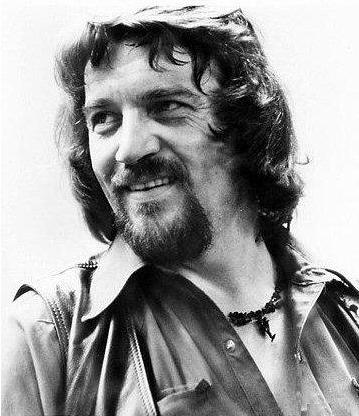
One of the most famous dancehalls in Texas got its start in the 1880s and was rebuilt in the 1920s. By 1967, Luckenbach, Texas was almost a ghost town until it was put on the market and sold to John Russell “Hondo” Crouch and partners, Kathy Morgan and Guich Koock.   John turned the small town into the place where “everybody is somebody.” In 1977, after Hondo had died, Waylon Jennings gave us a song that put Luckenbach on the map; “Luckenbach, Texas (Backto the Basics of Love)”. Even now my toes are tapping to the beat even if it is a waltz beat and not a two step. Maybe I can talk hubby into some dancing this weekend.

Friday, May 2, 2014

A Girl Ranger!


In 1872, Yellowstone became the nation’s – the world’s – first national park. The concept was so new, Congress had no idea what to do with the park once it was established. For twenty years, people continued to exploit and destroy the features that Washington tried to protect, because there was no one who would protect them. The army was finally called in in the 1880’s to protect the thermal features and the animals. In 1916, the National Park Service was established, and the army handed over control of the park in 1918.
Although women married to National Park Service personnel had assisted their husbands for years as unpaid help (like the military, it came with the territory), the first woman to be “officially” employed by a park was a California school teacher by the name of Claire Marie Hodges. She worked as a seasonal naturalist, and was soon followed by two more women, one of whom would make history in her own right.
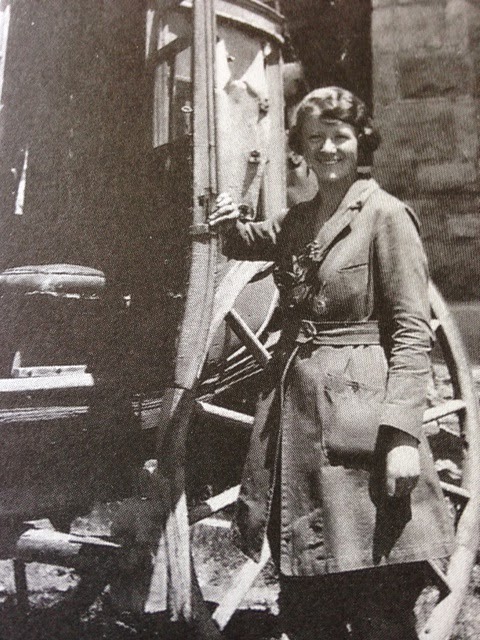
Born on October 2, 1901 at Mammoth Hot Springs in Yellowstone National Park, Jane Marguerite Lindsley was destined to help shape the park’s history. She grew up during Yellowstone’s “old army days,” to cannons booming at sunrise and sunset, and yellow stagecoaches pulled by teams of mules taking visitors along the bumpy roads in the park. Always adventurous and daring, Marguerite remembered that her most memorable escapade as a youngster was the thrill of trying to stay on a runaway Indian pony.
Because there was no school at Mammoth for the children of army officers and park employees, she was homeschooled by her mother though the eighth grade. At fourteen, she entered prep school at Montana State College, and finished high school in three years. She continued her studies there and she took four years of pre-med work, majoring in bacteriology.
Marguerite spent her school breaks in Yellowstone, but the summer between her junior and senior year in college was very different. She was going to work as a ranger and get paid for explaining the wonders of Yellowstone to park visitors. In June of 1921, newspapers around the country reported that Miss Marguerite Lindsley had been chosen to teach tourists about Yellowstone, but more importantly that she had been awarded the official title of National Park Ranger. Two other women had been awarded the title previously, but Marguerite would become the first woman, three years later, to attain a full-time ranger position in the park.
She was described as an “honest-to-goodness outdoor girl, and experienced horsewoman, and a master of the technique of camp life,” and did not fit the profile of the average American girl.  She herself once remarked that it must have been a mistake that she was not born a boy. “I love the work of the rangers, and if I were a boy, I would make the park service my life’s work. It was born in me, I know it.”
After graduating college, she applied unsuccessfully to medical school in Philadelphia, but was accepted into the Masters Program in Bacteriology. She accepted a position with a research Laboratory, but soon realized that she wanted to return to Yellowstone. “I could almost smell the melting snow and growing things, and feel the thrill of an early morning horseback ride.” So, she returned to Yellowstone, riding her Harley Davidson on a 2600 mile cross-country trip, which she described as “next to the greatest escapade of my life.”
From Harleys to horses, Marguerite made the park her permanent home. One summer, she accompanied “Uncle Howard” Eaton on a three week horseback trip through Yellowstone that included 200 horses and 125 people, 75 of which were tourists. She offered to guide tourists through the Gibbon Paint Pot (now called Artists Paint Pots) area, and broke through the crust of a thermal area where she found herself in boiling clay up to her knee. This experience not only gave her third degree burns, but also the nicknames “Geyser Peg” and “Paint Pot Peg.”
In late December of 1925, she was offered her dream job: the position of permanent ranger. She would assist the park service’s newly formed educational division.
In 1926, however, her dream was nearly shattered. Chief Inspector J.F. Garland, Assistant to the Secretary of the Interior visited the park . His report stated, “We do not believe that a woman is physically suited for the arduous duties of a ranger and that the service, which is already undermanned, suffers by the loss of what a qualified man in her place could perform. It is recommended that women rangers not be employed….”
 Lucky for her, Park Superintendent Horace Albright ignored the recommendation.
Ironically, among all this controversy of women rangers, an article was published about Marguerite in the Christian Science Monitor in 1927. “Lady Ranger ‘Makes Good’ in Yellowstone Park Post, Only Girl among 24 men…” While her position was stirring up Washington, her position as “full-fledged park ranger” was making her a celebrity in the news. Obviously impressed by her qualifications as a superb horsewoman, botanist, sometime attendant to orphan antelope, elk, and bear cubs, and all-around outdoor woman, reporters contended that she “fully deserved the commission which had been conferred to her.”
Marguerite was not only adventurous and educated, but she was attractive as well. She had many male admirers throughout the years, most of which she kept under her hat.  Literally. The inside of her wide-brimmed ranger hat held the signatures of at least a dozen hopeful suitors. A fellow ranger recalled that she “could marry anybody she wanted. She could marry any of us.” More than likely, all of her male suitors were well aware that marrying Marguerite also meant having the spirit and vitality to keep up with her.
On April 17, 1928, she did marry – Ranger Everett LeRoy (Ben Arnold), who was stationed at Mammoth. She defied the expected conventions of the traditional wedding day in her own signature style when she “dressed in a blue gown and wore a corsage of roses.”
Because she couldn’t keep her full-time position that would allow her to live in the same location in the park as her new husband, she resigned from her position in Mammoth and opted to work only seasonally.
For the next 25 years, the couple lived and worked in Yellowstone. Marguerite died on May 18, 1952. Throughout her more than fifty years of residency in the park, life in Yellowstone never left her at a loss for entertainment and she firmly believed that the park was the “country’s greatest wilderness playground.” For her, it was a place where a young girl’s as well as a woman’s heart, soul, and imagination could all take wing and soar above the conventions of the day.