Showing posts with label Soapy Smith. Show all posts

Wednesday, June 5, 2024

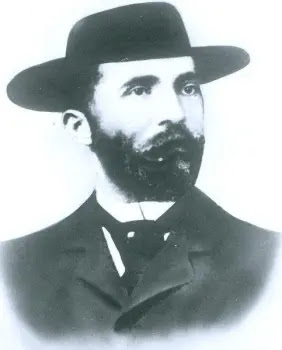
Con Man & Gambler Jefferson R. 'Soapy' Smith ~ Julie Lence

courtesy Denver Post
 Jefferson R. Smith was born into a wealthy Georgia family in 1860. By the end of the Civil War, his family was in financial ruin and moved to Texas, where Jefferson received a good education, due in part to his father’s position as a lawyer, and became an eloquent speaker. But proficient in speech didn’t net him a job, so he hired on with a cattle drive to Abilene, Kansas. He made good money, but while in Abilene, Jefferson’s attention was snagged by a con man and the ‘what walnut shell is the pea hidden beneath?’ game. Jefferson lost the money he made on the cattle drive, and found his calling in life as a gambler and con man.

       Having the gift of gab, he spent the next decade roaming the west and perfecting his skills, determined to be the best poker player. He made his way to Leadville, Colorado in 1885 and met up with Old Man Taylor, whose reputation pegged him the King of the Shell Game. The two joined forces and set up a con involving bars of soap. Taylor would blend in with the crowd while Jefferson, using a tripod and suitcase, would set out several bars of soap and invite people to play a game, hooking their interest with the line, ‘Cleanliness is next to godliness, friends, so step right up and watch me very carefully’. Players were to find the greenbacks he’d hidden within the bars of soap. Taylor would volunteer to be the first plyer and find the $100 bill, giving others the incentive to try their luck, but most only 5 cents, while Jefferson and Taylor raked in the cash, though Jefferson didn’t always keep the money for himself. He gave substantially to churches, widows, the poor, and often paid for the funerals of the girls from the red-light district, and never would he con the townsfolk. His games were strictly for unsuspecting tourists.

         Jefferson eventually left Leadville for Denver, where he added singing and joke telling to his routine. A complaint was filed against him and the sheriff, when filling out the paperwork, couldn’t remember Jefferson’s name but remembered the complaint had something to do with soap, so he wrote Soapy Smith and the nickname ‘Soapy’ stuck.

Soapy went on to become a successful gambler in Denver and opened his own saloon, Tivoli Saloon and Gambling Hall, with the Latin inscription Caveat Emptor (Let the Buyer Beware) above the door. He also formed a gang and a bond with the police department, which benefited both sides. Soapy helped the poor, especially at Thanksgiving by giving out turkeys so none were stolen, and by donating to churches. He even rescued an innocent girl from a detective agency trying to force a confession from her. Eventually, he learned of the silver boom in Creede, Colorado and left Denver for more riches.

In Creede, he formed another gang and put into motion taking control of the town, much to the dislike of rival Bob Ford, better known as the man who killed Jesse James. Ford wanted in on the controlling of Creede, and a third party arranged a meeting between them before bloodshed broke out. The two agreed to keep out of each other’s way, but Soapy went on to build the New Orleans Club with his longtime pal, Joe Simmons. From there, Soapy and his gang did take control of Creede, with Soapy still helping the poor. But the townsfolk tired of Soapy’s control and he went back to Denver and opened a ticket office, where he advertised tickets to Chicago for $5. Another scam, as when people tried to buy these tickets, he told them they were only sold on certain days, of which the present day was not one of them. With Colorado’s governor looking to clean up the lawlessness in Denver, he called in the militia to run Soapy out of town, but Soapy hunkered down in city hall with dynamite, threatening to bomb the building if the militia fired at him. Federal troops from Fort Logan were brought in to keep the peace. The governor withdrew the militia and finally ran Soapy out of town.

Making his way to Mexico, Soapy joined forces with Mexican president, Porfirio Diaz and set up other scams. But when he tried to convince Diaz that Mexico needed a foreign legion and set up a recruiting office for a hefty price, his scam was discovered and the deal broken.

1897 found Soapy heading to Skagway, Alaska when news of the Gold Rush broke. There he built another saloon/casino under the name Jeff’s Place, assembled another gang and used his winnings to open a phony telegraph office; the wires were under water and folks ‘often’ received word from back home to send money, of which Soapy kept. Eventually he stole $3,000 from a miner and a vigilante group demanded he pay it back. Hearing about the meeting the vigilantes were holding on the docks, Soapy armed himself and went, only to meet up with Frank Reid, a foe of Soapy’s. Soapy struck Reid with the butt of his rifle. Reid fired at Soapy and missed. The two got into a scuffle, with guns firing again. Soapy was killed and Reid died almost 2 weeks later from his injuries.

Soapy is buried on the outskirts of Skagway’s cemetery. A plain marker gives the dates of his birth and death. He was 38 and left behind an estate of $250.

Friday, May 23, 2014

The Death and Life of Soapy Smith

By Alison Bruce

"I beg to state that I am no gambler. A gambler takes chances with his money, I don't"

Jeff R. Smith, 1894

1896, George Carmack, Skookum Jim and Tagish Charlie discovered gold near Dawson Creek, Yukon. It took a year for the news (and gold) to reach San Francisco and Seattle. When it did, the last great gold rush was kicked off and Jefferson "Soapy" Smith headed north to take advantage of it.

Skagway was chief gateway to the Klondike.The port, formerly called Mooresville, became a tent city, unable to keep up with its sudden growth. Soapy Smith and his gang set up shop, going into business with a local saloon keeper. Soon he was taking over the town's underworld, just as he had in Denver and Creed. (See The Good, the Bad and the Soapy) With a corrupt Deputy Marshal in his pocket and miners blinded by gold fever, Soapy never had it so good.


In order to prevent starvation, the Canadian Government required prospectors to bring a year's worth of provisions with them. All those provisions, plus the horses or mules used to cart them, had to move through Skagway. While the Klondikers prepared to hit the arduous trail through the mountains, Soapy separated the fools from their money. Most of his victims were too intent on getting to the Klondike to stick around and press charges. The few that did, had to travel to neighboring Dyea to find an honest cop.

Soapy also contributed to the community. He gave generously to charity. When the town council was raising money to hire a night watchman, he gave enough to hire two. On the flip side of this, he ran a telegraph office so men could contact their families one last time before risking their lives of getting over the Chilkoot or White Pass. Miners could send a message anywhere in the world for $5. One problem. Skagway didn't have telegraph service at the time. The lines in the office went nowhere.

Perhaps his most ambitious project was raising a militia company after the sinking of the battleship Maine in Havana Harbor. Soapy offered his military services to President McKinley. The true purpose of his army, however, was to maintain absolute control over Skagway. With his Department of Defense sanctioned authority, he could declare martial law if he so chose.
Captain Smith's proudest moment in Skagway must have been leading his volunteer military army as grand marshal of the 4th of July parade. He obtained a captured bald eagle which was caged and placed on a red,white, and blue decorated horse wagon which followed behind Soapy in the parade. He was the hero of the day and everyone seemed to appreciate all he had done for the good of the town. However, some citizens did not appreciate the lawlessness and his rivals who sought his power capitalized on that feeling for their own ends. (http://www.soapysmith.net)
In the absence of real law enforcement, vigilante groups sprouted up in Skagway. At first they didn't have much support. Most of the legitimate merchants liked Soapy and benefited from his business. When word of Skagway's lawlessness began to spread, the public's attitude started to change. Miners might stay away from their city and go through Dyea instead. A vigilance committee calling themselves The 101 petitioned the federal government to intervene. Smith retaliated by forming his own law and order committee.He printed handbills warning the vigilantes to cease taking the law into their own hands.

Soapy was in his establishment, Jeff Smith's Parlour, when he was told that The 101 were meeting. Rounding up his men, he went to put a stop to it. 
At the first meeting of the Citizens Committee, Thomas Whitten of the Golden North hotel had been elected chairman. He appointed four men “to guard the approach to the dock in order that no objectionable characters might be admitted to disturb the deliberations of the meeting.” (Wikipedia)
Soapy's Saloon: The Jeff Smith Parlour, Skagway
I think it can be said that Soapy Smith, so far as The 101 were concerned, was an objectionable character. Yet, none of the four guards tried to stop him. Soapy ordered the first two off the wharf and they jumped off, onto the beach below. The second two turned a blind eye to Soapy. Further on, standing alone, Frank Reid stood his ground.

As he walked, Soapy's rifle was shouldered. When he closed in on Reid, he brought his rifle down, either to club or threaten Reid. Reid parried with his arm, grabbed the rifle and drew his revolver. Soapy yanked back as Reid shot him in the leg and shoulder. Finally getting control of his weapon, Soapy pressed the rifle barrel into Reid's belly and shot.

Seconds later, the Soap Gang rushed in. Murphy, one of the guards that had ignored Soapy, got to him first and wrested the rifle out of his hands.

Witnesses report that Soapy cried out: "Oh my God, don't shoot!" But Murphy did shoot and then he aimed Soapy's rifle at the Soap Gang.

It might have ended badly for Murphy but he got lucky twice. First, the members of The 101 came out at the sound of gunfire. They out numbered the Soap Gang, who backed off. Second, the community decided to credit Reid with killing Soapy. Self defense. Heat of battle. And Reid was dead. It was only recently that Soapy's descendant and biography, Jeff Smith, brought to light the documents that state that Murphy killed the wounded and unarmed Soapy.
The funeral services for Soapy Smith were held in a Skagway church he had donated funds to help build. The minister chose as the text for his sermon a line from Proverbs XIII: "The way of transgressors is hard." (http://www.history.com/this-day-in-history/soapy-smith-killed-in-skagway-alaska)
Soapy's criminal empire died with him. The vigilantes took over Skagway and rounded up the Soap Gang. Their reign was short, broken up when the US Army stationed in Dyea threatened martial law if authority wasn't returned to the town council.

Soapy, on the other hand, was never forgotten. Loyal friends toasted Soapy's Ghost then, and his descendants continue to make that toast now. Since the 1974, Soapy's Wake has been held annually at Eagles Hall, Skagway; Alaska, Magic Castle, Hollywood, California; and The Tivoli Club (a reproduction of Soapy's saloon in Denver, Colorado), Whitehorse Ranch movie lot, Yucca Valley, California.

Jefferson "Soapy" Smith, born November 2, 1860. Died July 8, 1898. Lived on in legend ever since.

For a more extensive biography of Soapy Smith, check out www.soapysmith.net. You can also find Jefferson Randolph Smith II on Facebook care of his descendent Jeff Smith.

Friday, April 25, 2014

The Good the Bad and the Soapy

By Alison Bruce
He was the very model of a modern major criminal.

Jefferson Randolf Smith II, Jeff to his friends, Soapy to his enemies, came from a family of wealth and privilege. His grandfather was a Georgian plantation owner. His father was a lawyer. Until the Civil War, they had everything. By the end, they had lost it all.

The family moved to Round Rock, Texas in 1876 to start anew. Two years later, Smith was in Fort Worth to see Sam Bass, the infamous train robber, hang. By family accounts, this was a pivotal moment for Smith. When his mother died shortly after, Smith left home to return to Fort Worth and the start of his life of crime. Starting out with the basics - Three Card Monte and the ever popular shell game, soon he was known as the "king of the frontier con men".

Soapy sells in front of the Union Depot 
The con that gave him his nickname was dubbed "The Prize Soap Racket".
Piling ordinary soap cakes onto the keister* top, he began expounding on their wonders. As he spoke to the growing crowd of curious onlookers, he would pull out his wallet and begin wrapping paper money, ranging from one dollar up to one hundred dollars, around a select few of the bars. He then finished each bar by wrapping plain paper around it to hide the money.

He mixed the money-wrapped packages in with wrapped bars containing no money. He then sold the soap to the crowd for one dollar a cake. A shill planted in the crowd would buy a bar, tear it open, and loudly proclaim that he had won some money, waving it around for all to see. This performance had the desired effect of enticing the sale of the packages. More often than not, victims bought several bars before the sale was completed. Midway through the sale, Smith would announce that the hundred-dollar bill yet remained in the pile, unpurchased. He then would auction off the remaining soap bars to the highest bidders. (http://en.wikipedia.org/wiki/Soapy_Smith)
 [* keister: a suitcase, bag, or box for carrying possessions or merchandise. "Tripe and keister", aka tripod and suitcase, were the basic tools of con men and salesmen (sometimes both in the same person). Later the keister came to mean buttocks when "move your keister" and "fell on his keister" shifted into less literal usage.]


Soapy Smith, 1898
Smith had a gift for organization. In Fort Worth, he started gathering his team of bunco artists, each with their own specialties in the art of separating the mark from his money. In Denver, he combined their assets and parlayed them into a criminal empire that included bribed policemen, suborned judges and the best lawyers money could buy. He owned The Trivoli Club, where porters and guides were paid to steer newcomers so they could be fleeced.
As a legal loop-hole for the crooked gambling in the Tivoli Club Soapy placed a sign at the entrance that read CAVEAT EMPTOR, Latin for "Let the buyer beware." It is probable that few of his victims heeded the warning and fewer still could actually read Latin. (http://www.soapysmith.net)
Bribes and legal loopholes weren't the only thing that kept Jefferson Smith going. He might never have earned an honest buck, but he earned the loyalty of his gang and, to a certain extent, the community.
When a member of the Soap Gang needed help Jefferson was always ready to lend a hand, whether it be money or legal aid. The men in the gang grew extremely loyal to their boss. At times the policemen on the beat also sought his aid, in help with situations where they had little power. This often occurred in hard economic times when the poor population grew too large. The police called on the gambler's of Denver to help with feeding the poor and Soapy's name was always at the top of the list and rarely did he let them down. Jefferson had become so well known as a charitable man in Denver that Parson Tom Uzzell of the People's Tabernacle church often sought Jefferson's assistance, even knowing of Soapy's criminal occupation. While giving a tour of the city one day, the parson and his entourage came across Soapy. The good parson introduced Soapy as "The most infamous confidence man in American...and my friend." (http://www.soapysmith.net)

Smith's built three criminal empires. The first was in Denver, Colorado. When he and the Soap Gang were kicked out of Denver, they set up in the mining town of Creede, Colorado, which Smith pretty much took over. Once again, Soapy Smith's influence wasn't all bad.
There was plenty of wild life, hell raising, and general disorder at first glance. Yet there was little violent crime relative to other similar boom-towns of the era. Some historians state that it was Soapy's control over the underworld that helped keep the peace. Trouble makers were sent packing. Even Bob Ford (killer of outlaw Jesse James) and soap gang member Joe Palmer were banned from the town for going on a drinking binge and shooting up the town. After a short period, Soapy had a hand in allowing them to return to the town. (http://www.soapysmith.net)

With the Klondike Gold Rush, Smith and company moved to Skagway where he set up his last, and possibly most colorful criminal empire. This is where I learn of Soapy Smith, first while touring the sites and later in connection with Vicki Delany's historical crime novel Gold Mountain (no relation to my short story of the same name).

Next month: The Slippery Slope of Soap


Friday, April 12, 2013

The Motherlode: Mining the Miners by @JacquieRogers #western


Gold Fever

In the 1800s, people traveled west in droves, but not all those who went west were immigrants. The Forty-Niners were obsessed with finding a mountain of gold, then there came the Pike’s Peakers, and prospectors flocked to numerous gold and silver strikes all over the Western territories from Arizona to the Klondike. And right behind all of them were entrepreneurs whose sole agenda was mining the miners—making it rich. And quite a few of them did.

Who were these people? Levi Strauss and John Nordstrom made their fortunes in clothing and retail, as did many others. Many hoteliers, newspaper publishers, and freighters did well. Early on, lots of money went toward the gambling and (ahem) other social activities. Let’s talk about gambling.

Gambling
People who went west risked everything they owned as well as their lives to get there, so it’s only reasonable to expect that these risk-takers would be gamblers as well. Nearly everyone, male or female, of any age, would place a wager now and again.

Westerners bet on everything that moved—dogs, frogs, hogs—you name it. They made book on foot races with various handicaps, boat races (even a stick boat on a puddle on Main Street), sack races at the Sunday social, greased pig races, wild horse races . . . whatever they could think of, they did. They also bet on base-ball games (yes, it was hyphenated then), and nearly every other game you can think of.

Horseracing
In 1857, my g-g-grandfather (not sure on the number of greats), Moses Lock Alsup, took a string of racehorses and a small herd of cattle to California, near present day Santa Rosa. He sold his cattle for $40/head ($1,600 total), and raced his horses for a tidy payoff. He then sold all but his breeding stock, took his money, and went back to Missouri and bought most of the county. He made more money from the miners in one trip than most of the miners ever made.

Horseracing was one of the most popular sports. Nearly every festival or celebration featured a race. In the July 9, 1870, issue of The Owyhee Avalanche (Silver City, Idaho Territory), they reported:
THE FOURTH AT WAGONTOWN
A number of our citizens attended the races at Wagontown last Monday. Everything passed off in the most satisfactory manner. There were four races of a quarter of a mile each, as follows: LW Walker's chestnut horse and Jno Catalows's sorrel mare, for $50 a side, won by the latter. Second, Tim Shay's sorrel horse and Frenchman's roan filly, for $40 a side, won by Shay's horse. Third, Catalow's sorrel mare and Frenchman's sorrel horse, for $50 a side, Catalow's mare winner. Fourth, Jordan's black mare and Tom Walls' gray horse, for $45 a side, Jordan's mare winner.
That's pretty good money for 140 years ago, but a pittance compared to what went on in San Francisco, CA.
Gradually, as wealthy men made a hobby or a sideline of breeding horses, Western races became more carefully orchestrated, the crowds grew and betting flourished. Indeed, gambling and a day at the races became a virtually synonymous. And when Westerners got around to staging formal stakes races the prizes were sometimes much richer than those back East. In 1873 what was billed as "the richest race in the world" was run at Ocean View Park in San Francisco. The winner's purse was $20,000 paid in gold. In the same year New York's famous Belmont was worth only $5,200 and Maryland's Preakness a mere $1,800. ~ From: Gamblers of the Old West, p.200
Jefferson R. Smith II,
aka Soapy Smith
Then there were the gamblers and the bunco men, such as Jefferson Randolph Smith II, better known as Soapy Smith. He organized bunco gangs and worked confidence games all over the West, from Texas to Skagway, where he met his untimely end. He was most famous for his soap scam, where he would entice people to buy bars of soap by telling them there was money inside the wrapper. To get a better idea of how this works, check out the excellent website that’s run by his family where you can learn all about Soapy’s adventures. His great grandson, Jeff Smith, is a knowledgeable resource (a nice guy, too), and wrote the definitive biography on Soapy using primary sources. 

Poker Alice, Wyatt Earp, and nearly every other famous person from the Old West made money from the miners. Most were gamblers, but lawmen and cowhands were required to keep order in mining camps and to bring in beef to feed the men.

A name that’s not so famous but just as intriguing is Malinda Jenkins. This woman led quite a life, and most of her money was made from the profits of boom towns. She was born in Kentucky in 1848 and married young to a handsome man but ended up working her fingers to the bone to support him. Two husbands later, she’d traveled all over the West, including the Klondike, and finally settled in Idaho at the turn of the 20th Century. If you want to read about the opportunities for women in the West, her biography is an excellent source. Mrs. Jenkins had nothing to start with but a keen mind and a willingness to work hard, and ended up a prosperous businesswoman and landowner. At 80, she still played the ponies every day.

Gold and silver turned the American West into an enticement too strong to resist, but the real money came from the businesses that catered to these hearty souls’ needs.

Where the Old West really happened!
Much Ado About Marshals
Much Ado About Madams
Much Ado About Mavericks