Showing posts with label Spencer Penrose. Show all posts

Wednesday, July 6, 2022

History of the Pikes Peak or Bust Rodeo ~ Julie Lence

courtesy of Pinterest

 Last month, I introduced you to Spencer Penrose, a successful businessman in the mining industry who helped to shape Colorado Springs as a town and community. Besides erecting a road to the top of Pikes Peak, building the world famous Broadmoor Hotel, and the first hospital in Colorado Springs, Spencer Penrose was detrimental in bringing the rodeo to town.  


Will Roger Stadium

The history of the rodeo in Colorado Springs dates back to 1911 when rodeo events took place in Sportsman Park located between North Nevada Avenue and North Cascade Avenue, but by the late 1920’s, the rodeo had died out. Penrose brought back the excitement, the skill, and the fun in 1937 by developing and building the Will Rogers Stadium at the Broadmoor Hotel and founding the Pikes Peak or Bust Rodeo. The 1st Pikes Peak or Bust Rodeo was held in 1938 and continues today in mid-July. To promote the rodeo, Penrose enlisted the help of his longtime business partner and friend Charles L. Tutt and Jasper Ackerman, also a friend. The stadium at the Broadmoor was home to the rodeo for many years, and after World War ll was dedicated to the men and women of the military who sacrificed their lives for our country. (This tradition continues today, with one night of the weekend-long rodeo dedicated to military members. The Ft. Carson Color Guard is also present at the rodeo. They ride in the parades hosted by Colorado Springs, with their horses stabled on Ft. Carson and their army job titles reflecting their equestrian work.)               


Norris-Penrose Event Center
El Pomar Foundation

During the 1970’s, the Broadmoor needed the land the stadium sat on for expansion. With parking also a growing problem during rodeo week, then Mayor Eugene McCleary joined forces with William T. Tutt, Russell Tutt, and rancher Robert Norris to build a new stadium on Lower Gold Camp Road. Bearing the name, Norris-Penrose Event center, one of Spencer Penrose’s foundations, El Pomar, donated $1.25 million to help reduce contractors’ cost in the building of the stadium. Today, the Norris-Penrose Event center is still home to the Pikes Peak or Bust Rodeo. As for the Will Rogers Stadium,  it was cut into sections and moved to the new stadium one piece at a time. The land on which it sat currently houses boarding barns. The horseshoe opening was enclosed to make a new entryway and renamed the Spencer Penrose Stadium.  

Spencer Penrose at the rodeo
El Pomar Foundation


Wednesday, June 1, 2022

Businessman Spencer Penrose ~ Julie Lence


Spencer Penrose
courtesy of Wikipedia

One of the most notable buildings in Colorado Springs is the Broadmoor Hotel, a 5 Star resort that sits below Pikes Peak. Complete with its own pond and golf course, the hotel has hosted major golf tournaments as well as local banquets thanks to its founder, Spencer Penrose. The 5th of seven sons, Penrose was born November 2, 1865 in Philadelphia. His father, Richard Alexander Fullerton Penrose was a doctor and founded Children’s Hospital of Philadelphia. His mother, Sarah Hannah Boies, favored the simple life. Spencer and his siblings attended Harvard, but unlike his brothers who graduated with high honors, Spencer graduated at the bottom of his class. He didn’t have the academic drive to become doctors or lawyers that brothers did. Rather, the west and frontier life beckoned him and after graduating, he made his way to Las Cruces, New Mexico where he opened several business and sold them for just enough to cut his losses and move on to something else. In 1892, his brother, Richard and childhood friend, Charles L. Tutt (who was a real estate developer in Colorado Springs), informed him of a potential gold rush in Cripple Creek, Colorado. Penrose made his way to Colorado, where Tutt loaned him the money to buy a ½ stake in Tutt’s Cripple Creek real estate business, to include the Cash on Delivery Mine. The mine was one of the most successful in Cripple Creek, thus solidifying Penrose and Tutt’s partnership that took them to a new business of ore processing in Old Colorado City.     


courtesy Colorado Springs 
Gazette

To become successful in ore processing, Penrose and Tutt sold their Cash on Delivery Mine, formed a new company, Colorado-Philadelphia Reduction Company, and brought in partner Charles Mather MacNeill. MacNeill was considered an expert in ore processing and in 1899, the three met with success; their plant was treating over 3 million worth of ore from Cripple Creek annually. The trio’s partnership continued (and enabled them to create a mining, milling, and real estate empire) and took them to Bingham Canyon, Utah where they followed the advice of Daniel C. Jackling regarding success in mining copper deposit. A survey of the canyon’s ore deposit revealed the deposit contained 2 percent of copper that could efficiently be extracted from the ore. Penrose formed the Utah Copper Company in 1903 and worked with a new team to design a mill to extract the copper at a rate that was considered extremely fast, but the gamble paid off and Penrose and his team mined and milled more copper than imaginable. His success in Utah led him to invest in copper mining in Arizona, New Mexico and Nevada.


Julie Penrose
El Pomar Foundation

Having made a sizeable fortune in the mining industry, Penrose returned to Colorado Springs. It was here that he met widow Julie Villiers McMillan. The two became friends and later married April 1906 in London, England, despite Penrose claiming he would always remain a bachelor. Spencer and Julie honeymooned throughout Europe. Their stay in grand hotels inspired Spencer to build his own in Colorado Springs. Before that occurred, Spencer and Julie bought and renovated a home near a close friend, to include adding two stories, marble tiles, carved wood panels and crystal chandeliers, and hiring the Olmsted Brothers to design the grounds around the home. (Today, the home is known as the Penrose House, is on the National Register of Historic Places and free for conferences and other such gatherings.)           
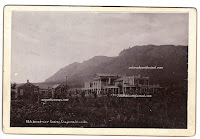
 

Broadmoor Hotel
Colorado Artifctual

Penrose again partnered with Tutt and the two came up with a plan to build a road to the top of Pikes Peak in an effort to promote tourism. The road cost $283,000 and was completed in August of 1916. That same year Penrose organized the first car race to the top of the peak. (The Broadmoor Pike’s Peak International Hill Climb still runs today, on the last Sunday in June, and competitors are by invitation only). While working on the road to the top of the peak, Penrose also wanted to build his hotel, or rather, purchase the Antler’s Hotel from Colorado Springs founder William Jackson Palmer and rebuild it. But Palmer wouldn’t sell and Penrose ended up buying a site outside city boundaries for $90,000. He hired several architects to design the hotel of his dreams, and after careful consideration, went on to choose a design from the Warren and Wetmore Firm, who are known for their work on Grand Central terminal in New York City. Ground was broken in April 1917 and in June 1918, the Broadmoor hosted its opening ceremony.      

Will Rogers Shrine
Pinterest

 The Broadmoor hotel wasn’t Spencer’s only claim to fame for Colorado Springs. He and Julie were avid supporters to several civic events, including the Cheyenne Mountain Zoo, the Will Rogers Shrine and the Colorado Springs Fine Arts Center, not to mention the Glockner-Penrose Hospital, which was the 1st hospital in Colorado Springs and is now known as Penrose-St. Francis Health Services. Spencer and Julie also founded the El Pomar Foundation to promote the current and future well-being of the people of Colorado. The organization is still in existence today, supporting the Penrose-St. Francis Health Services and operating The Will Rogers Shrine of the Sun and the Penrose Heritage Museum. Spencer Penrose passed two years after founding the El Pomar Foundation. Julie served as president of the organization until her passing in 1956. Both are entombed at the Will Rogers Shrine of the sun. Spencer was inducted into the Hall of Great Westerners and the National Cowboy & Western Heritage Museum in 2001.     


Penrose House
El Pomar Foundation 

Bingham Canyon Copper Pit
SAH Archipedia


Wednesday, September 3, 2014

Pikes Peak Rangerettes

Spencer Penrose
Spencer Penrose is synonymous with Colorado Springs. A man of great insight, he was valuable in shaping the city and building it up for tourism. Among his many accomplishments was his teaming with Charles Leaming Tutt and Jasper Ackerman to found three organizations: the Colorado Rodeo Associations (CSRA), the Professional Rodeo Cowboys Association (PRCA), and Norris-Penrose Event Center. Penrose is also credited with bringing the first rodeo to Colorado Springs after the city enjoyed much success in 1936 with its Pikes Peak or Bust Days.

The first rodeo was held in July 1937 at the Cheyenne Mountain Polo Field. The stadium could only seat 500 people, so Penrose built the Will Rogers Memorial Stadium to house 10,000 people on the west side of the Broadmoor Hotel. In August of 1938, the stadium was dedicated and hosted the Pikes Peak or Bust Rodeo. Tutt and Ackerman helped to promote the rodeo, and after World War 11, the rodeo was dedicated to the men and women who gave their lives during the War. The tradition of honoring and supporting the military continues to this day, with the rodeo now being held at the Norris-Penrose Event Center. 


Pikes Peak Rangerettes
Of the many acts designed to entertain the crowd while the cowboys prepare for their events is the Pikes Peak Rangerettes. The Rangerettes were founded in 1957 to promote the rodeo. They are an all-girl precision riding team (think the Radio City Music Hall Rockettes on horseback), and a spectacular sight to see. Ranging in age from 12-20, the girls gallop and canter around the arena in groups of two or four, weaving in and out of each other in intricate steps meant to dazzle and delight the crowd. The Rangerettes also ride in the Pikes Peak or Bust Parade and perform at other local rodeos and county fairs, encouraging unity, responsibility, self-improvement and enjoyment of horse-related activities. 

The Rangerettes standing at attention as the rodeo begins
To become a Rangerette, the girls must meet several criteria. The first is she must own or have access to one specific horse. She is also responsible for the care and transportation of her horse to and from events. Besides practicing several hours per week with the team, each girl must also practice at home. Members of the Rangerettes are required to pay dues, provide her own saddle and tack, boots, belt and hat, and must take exceptional care of the uniforms provided. Personality traits include good attitude, commitment and responsibility to herself and to the group and each must prove efficient in horsemanship.

The Rangerettes are a group of 20. Should they have more young ladies trying out, there is a waiting list. This summer alone the girls have given their time to help out with local charity events, such as the National Western Stock Show where they gave inner city kids with good grade rides on their horses. These young women are true ambassadors to the west and will take your breath away when you watch them perform.
Rangerettes at the PPOB Rodeo July 2014