Showing posts with label The Sparrow. Show all posts

Monday, February 1, 2021

The Psychology Behind the Wings of the West Series by Kristy McCaffrey


By Kristy McCaffrey

When I began developing characters and ideas for my historical western romance Wings series, the titles intuitively came to me—The WrenThe DoveThe SparrowThe Blackbird, and The Bluebird. How I would tie the birds into the storylines was a great unknown as I began each tale, but one thing emerged rather quickly—an underlying psychological theme of the journey of the feminine psyche.

In The Wren (Book One), the heroine Molly has been abducted by Comanche when she is nine years old. At nineteen, she finally finds the means to return home to Texas, to search for the life she’d lost so abruptly. We must all leave the safety of “home” at some point in our lives to grow, whether physically or metaphorically, and the lesson is always that home isn’t a place outside of us but an internal sanctuary that we must nurture within ourselves. Molly’s journey comes full circle when she makes a home with the hero, Matt.

In The Dove (Book Two), Claire lives in a saloon run by her mama. Claire isn't a soiled dove, but she still grapples with themes of “prostitution,” although not necessarily of the sexual kind. She doesn’t feel worthy to be a doctor and mutes her own ambitions. This story addresses the desire of the psyche to be healed and whole, but doing so through outside, external means is only effective up to a point. This leads to the next book.

In The Sparrow (Book Three), Emma undergoes a shamanic journey of initiation while in the Grand Canyon. During this process, she is helped by her power animal, Sparrow. Life causes wounds—we all have them—and while mending these are often sought through medicine, at some point an internal journey will be required. It’s the only way to truly heal the soul. While today we might seek the counsel of a trained psychologist, many indigenous people used the medicine man or shaman. The techniques of both are strikingly similar.

In The Blackbird (Book Four), Tess is a storyteller, A Keeper of the Old Ways; this is, and always has been, connected with imparting wisdom and magic to listeners through the telling of tales. She meets a hero who nurtures and protects this side of her, as any true life-partner should. Stories have the power to heal. It is yet the next step in mending the heart and the soul.
In The Bluebird (Book Five), the heroine Molly Rose (niece to the Molly in the first book) yearns to travel and see the world. She connects with a man who can help her achieve these goals. The final step in the psychological journey—once healing has been undertaken and a new, better version of oneself is achieved—is to take all that’s been learned and go forth in the world. Life is an adventure and is meant to be experienced as such.


Learn more about the Wings series at Kristy's website.


Monday, January 4, 2021

Lees Ferry, Arizona


By Kristy McCaffrey

Lees Ferry is located on the Colorado River near the Utah-Arizona border. As the only place for hundreds of miles that allows access on both sides of the river, the location was used as a ferry site beginning in the mid-19th century. The original operator was John Doyle Lee, a Mormon for whom the site is named.

Lees Ferry Fort

Lees Ferry is located at the confluence of the Paria River and the Colorado, just downstream from Glen Canyon and above Marble Canyon. Boat trips into the Grand Canyon launch from here.

Lees Ferry

John Doyle Lee—who was escaping the law after taking part in the Mountain Meadows Massacre—brought two of his wives and several children and created a small settlement called Lonely Dell in 1870. By 1873 he had formally established the ferry. In 1877, Lee was arrested for his participation in the massacre, found guilty, and was executed by firing squad that same year.

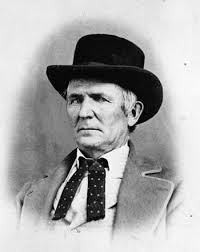
John Doyle Lee

After Lee’s death, his wife Emma operated the ferry for two years until the LDS Church (Church of Latter-Day Saints) transferred operation to Warren Marshall Johnson and his family.

In 1929, the ferry ceased operation when the Navajo Bridge was constructed.

My historical western romance, THE SPARROW, opens with a scene set at Lees Ferry.

In 1877, Emma Hart comes to Grand Canyon—a wild, rugged, and, until recently, undiscovered area. Plagued by visions and gifted with a second sight, she searches for answers about the tragedy of her past, the betrayal of her present, and an elusive future that echoes through her very soul. Joined by her power animal Sparrow, she ventures into the depths of Hopi folklore, forced to confront an evil that has lived through the ages.

Texas Ranger Nathan Blackmore tracks Emma Hart to the Colorado River, stunned by her determination to ride a wooden dory along its course. But in a place where the ripples of time run deep, he’ll be faced with a choice. He must accept the unseen realm, the world beside this world, that he turned away from years ago, or risk losing the woman he has come to love more than life itself.

2012 Winter Rose Winner ~ Excellence in Romantic Fiction, Historical Division

Excerpt from The Sparrow

Arizona Territory
Lees Ferry Fort
August 23rd, 1877 

Women lied so easily.

Permelia and Samantha Johnson, wives of the ferry operator Warren Johnson, handed the photograph back to Nathan Blackmore and shook their heads, denying knowledge of the whereabouts of Emma Hart, the young woman pictured.

He knew they deceived him. Summoning patience, he tried to think of a different tactic to use on the Mormon women. He was tired, grimy, and he’d come a hell of a long way, accompanied finally to this remote location by a Navajo guide. He’d exchanged one sweltering hellhole for another—Texas wasn’t much different than this God-forsaken country, except here there was water.

Exalted water.

The Colorado River.

Glimpsing it on the trek in, a dark blue ribbon in the distance, he felt a strong, soul-deep pull within to stand beside it, to feel the power of it. He silently vowed to see it before leaving—a part of him would always be a river man. And if he was lucky, he’d also have Miss Hart with him.

Perhaps prayers would turn the pious women to his side.

But Nathan had never been that lucky, nor was he of the religious sort. His ma had soured him on that front.

He decided intimidation wouldn’t work with the two females either, despite the undisguised fear in their eyes. Was he really that menacing? He hadn’t shaved in several days, he was taller than most men, and a glance back at his horse—a magnificent piece of midnight-colored stallion—confirmed that together they must appear threatening.

Well, shit, I don’t have time for this. Black needed rest and so did Nathan. His buddy Matt was gonna owe him big time.

The commotion of youngsters inside the small cabin told him he’d probably not get any more information out of the ladies. He didn’t need to scare children and turn Mister Johnson on him, wherever Mister Johnson might be. Nathan didn’t attack innocents.

Innocents. What if the Johnson’s were hiding the location of Emma Hart because of a darker motive? They were Mormon—purveyors of faith, family, and multiple wives—but that didn’t put them above criminal activity. And a well-placed lead three days ago had led Nathan here, to the only crossing of the Colorado River in these parts. The Mormons used this route regularly to traverse between Utah and Arizona Territory using a flat bottom barge. Apparently, Miss Hart had been headed this way. 

A gunshot cracked in the distance.

The two Misses Johnsons jumped and stared wide-eyed at him.

Bullseye.

Where women lied, trouble followed.

 The Sparrow is Book 3 in the Wings of the West series, but it can be read as a standalone.

Learn more at Kristy's website.


The first three books in the series are now available in German!

 Learn more here.


Monday, January 2, 2017

John Wesley Powell

By Kristy McCaffrey

John Wesley Powell with a Paiute Indian
in the Grand Canyon.
“It is a region more difficult to traverse than the Alps or the Himalayas, but if strength and courage are sufficient for the task, by a year’s toil a concept of sublimity can be obtained never again to be equaled on the hither side of Paradise.”
~ John Wesley Powell, referring to Grand Canyon

In May of 1869, Powell led a 10-man expedition along the Green River in Wyoming to the Colorado River, becoming the first group to navigate the Grand Canyon. A second expedition in 1871-72 yielded a plethora of data and images and Powell published his findings in 1875 in a book originally titled Report of the Exploration of the Columbia River of the West and Its Tributaries.

Born in 1834 in Mount Morris, New York, and the son of a New England abolitionist preacher, Powell lost most of his right arm serving under Ulysses S. Grant at the battle of Shiloh when he was struck by a miniƩ ball (a muzzle-loading rifle bullet) while giving an order to fire. This wound would continue to cause him pain for the remainder of his life.

Powell had long held a deep interest in natural phenomena. Early on, he set out on trips of exploration and studied botany, zoology, and geology without the aid of a teacher. Throughout the late 1850’s, he undertook several self-financed expeditions along the Mississippi and Ohio rivers, where he collected fossils and studied the natural history and geology of the regions.
Illustration of Powell's wooden
dories used on his Grand Canyon
expeditions.

Powell was a great believer in land preservation and conservation. He created Illinois State University’s first Museum of Anthropology—called the finest in all of North America at the time.

He died in 1902 at his family’s vacation cottage in Maine and was buried with full military honors at Arlington National Cemetery. Powell Plateau—a butte in Grand Canyon National Park—is named after him, along with Lake Powell, a huge lake that formed on the Colorado River behind Glen Canyon Dam after its completion in 1963. Powell Mountain in Kings Canyon National Park in California also bears the explorer’s name.

“The wonders of the Grand Canyon cannot be adequately represented in symbols of speech, nor by speech itself. The resources of the graphic art are taxed beyond their powers in attempting to portray its features. Language and illustration combined must fail.”

                                    ~ John Wesley Powell

Grand Canyon

John Wesley Powell

*****
In THE SPARROW, my heroine Emma attempts to follow in the path of John Wesley Powell.


In 1877, Emma Hart comes to Grand Canyon—a wild, rugged, and, until recently, undiscovered area. Plagued by visions and gifted with a second sight, she searches for answers about the tragedy of her past, the betrayal of her present, and an elusive future that echoes through her very soul. Joined by her power animal Sparrow, she ventures into the depths of Hopi folklore, forced to confront an evil that has lived through the ages.

Texas Ranger Nathan Blackmore tracks Emma Hart to the Colorado River, stunned by her determination to ride a wooden dory along its course. But in a place where the ripples of time run deep, he’ll be faced with a choice. He must accept the unseen realm, the world beside this world, that he turned away from years ago, or risk losing the woman he has come to love more than life itself.

2012 Winter Rose WINNER ~ Excellence in Romantic Fiction, Historical Division

“Readers will love the story…” ~ RT Book Reviews

“Ancient Hopi and Havasupai legends have a new voice in McCaffrey. Her inspired writing made her main character’s mystical journey into another realm entirely believable and kept the pages turning long into the night.” ~ Melanie Tighe, City Sun Times (Arizona)

Available at Amazon in digital and print and FREE in Kindle Unlimited for one more week.

Connect with Kristy


Monday, May 2, 2016

Shamanism

By Kristy McCaffrey

Shamanism is a term for a range of beliefs and practices related to communication with the spirit world. Shamans—sometimes referred to as “medicine men” or “witch doctors”—are the keepers of ancient techniques used to achieve and maintain well-being and healing for themselves and members of their communities. They are considered intermediaries between the human world and the spirit worlds, entering a trance-like state during a ritual to practice divination and healing. A shaman moves between an ordinary state of consciousness and a non-ordinary state of consciousness. Shamanic methods are strikingly similar all over the world and are believed to have been in use for tens of thousands of years.

A rite of passage commonly initiates the training of a shaman. This could include a physical illness or a psychological crisis, pushing them to the brink of death. This prompts a crossing over into the underworld and a deep understanding of sickness, which can then be used to heal others suffering the same maladies. Shamans can also be called by dreams or signs.

Shamans frequently work with spirit guides while in the spirit world. They help the practitioner navigate the non-ordinary realms. Shamans glean information through dreams and visions, and through direct dialogue with spirits of all kinds: human, animal, and inanimate (such as rocks, trees, and plants). Spirits help to remove excess negative energies, often from sources beyond the injured person.

Shamanite (Black Calcite) is a high vibration stone of the ancients.
Native American tribes considered it a powerful protective talisman.
Shamans engage in soul retrieval, returning lost parts of the human soul from wherever they may have gone. A portion of the soul is free to leave the body and will often do so when dreaming; soul pieces will also flee during traumatic events as a way of protection. In this instance, the soul piece will not return of its own accord and a shaman must intervene to assist in the recovery.

Rock carvings would often mark places of power.
This symbol signified a shamanic portal.

All forms of shamanism share several common beliefs: spirits exist and play important roles in individual lives and human society; shamans can communicate with the spirit world; spirits can be benevolent or malevolent; shamans can treat sickness caused by malevolent spirits; the shaman can employ trance-inducing techniques to incite visionary ecstasy and go on vision quests; the shaman’s spirit can leave the body to enter the supernatural world to search for answers; the shaman evokes animal images as spirit guides, omens, and message-bearers; the shaman can tell the future, scry, throw bones/runes, and perform other varied forms of divination.

Mongolian Shaman wearing a ritual gown and holding
a drum with the image of a spirit helper.
Photo courtesy of National Museum of Finland, circa 1909.

A shaman enters a supernatural realm to bring guidance to misguided souls and to alleviate illnesses frequently caused by foreign elements in a person’s spirit.

Shaman with spirit helpers.

* * * *
In my book THE SPARROW, Emma Hart undergoes a shamanic initiation within the Grand Canyon.


In 1877, Emma Hart comes to Grand Canyon—a wild, rugged, and, until recently, undiscovered area. Plagued by visions and gifted with a second sight, she searches for answers about the tragedy of her past, the betrayal of her present, and an elusive future that echoes through her very soul. Joined by her power animal Sparrow, she ventures into the depths of Hopi folklore, forced to confront an evil that has lived through the ages.

Texas Ranger Nathan Blackmore tracks Emma Hart to the Colorado River, stunned by her determination to ride a wooden dory along its course. But in a place where the ripples of time run deep, he’ll be faced with a choice. He must accept the unseen realm, the world beside this world, that he turned away from years ago, or risk losing the woman he has come to love more than life itself.

A steamy historical western romance set in 1877 Arizona Territory.

2012 Winter Rose WINNER ~ Excellence in Romantic Fiction, Historical Division

“Readers will love the story…” ~ RT Book Reviews

* * * *
Available in Digital
Kindle | iBooks | Kobo | Nook | Smashwords

* * * *
Kristy McCaffrey has been writing since she was very young, but it wasn’t until she was a stay-at-home mom that she considered becoming published. She’s the author of several historical western romances, all set in the American southwest. She lives in the Arizona desert with her husband, two chocolate labs, and whichever of their four teenage children happen to be in residence.

Connect with Kristy


Monday, January 4, 2016

The Wave

By Kristy McCaffrey

The Wave
In 2012, I had the opportunity to hike to the Wave—an iconic and well-photographed sandstone alcove, located along the Arizona/Utah border. To enter the area where the Wave is located, you must have a permit. Only 20 people per day are allowed—10 through a lottery system and 10 for walk-in permits submitted the previous day. It took my dad two tries to gain two permits and to my great fortune he invited me along.

We arrived the preceding day in Page, Arizona and stayed the night in a hotel. Arising early the next morning, we found a Denny’s open at 6 a.m. and ate a hearty breakfast since our day packs weren’t filled with anything hot and tasty. The drive to the Wire Pass parking lot—the start of the trailhead—was about 43 miles from Page. The last 8 miles were on a dirt road that is impassable when wet, the red clay turning into a slippery muck. With the day overcast and the air a bit misty, the fact that we threw a few sleeping bags into the back of my dad’s truck at the last minute suddenly seemed like a good idea.
Me signing the hiking register.

The parking lot housed a restroom and a sign-in—we’re here in December but there have been deaths of people trekking to the Wave during the hot summer months. Keeping track of hikers is a must for the local rangers.

We made sure we were as prepared as possible with a detailed map provided by the Bureau of Land Management, a compass, and a GPS (courtesy of my smartphone). But that confidence soon wavered—the start of the trailhead led to a non-trail and we didn’t pay close enough attention to the landmarks provided on the map. We spent the first hour in the wrong direction. The GPS did indicate that we were moving farther away from our target, but it was the first time I’d used the GPS app on my smartphone and I figured we were taking a circuitous route that would eventually bring us to where we needed to be. Our detour did lead to an awesome slot canyon, however. After backtracking, we were soon headed in the right direction. We made certain we nailed every landmark thereafter.

My dad and I were lost the first hour and ended up in this
slot canyon.

The 5.5 mile hike, scrambling over sandy hills and red rock, took about 2 hours. The terrain offered sweeping views of sandstone pillars and red rock buttes, tiny cacti growing in crevices, and giant juniper trees standing vigil. It’s a desolate and quiet place, far from civilization.


At last, we climbed a hill just below a prominent landmark called “the Black Crack” and entered the alcove known as the Wave. The undulating swells of sandstone greeted us and we were awed, but admittedly slightly confused. Is this all there is? We both thought it would be more like a bowl viewed from above.


Another hiker arrived and, having been here before, explained the layout. We needed to climb above the alcove to find the picture-perfect spot, the one that he staked out with his tripod and camera for the next several hours.


We took awesome and surreal pictures, the rock flowing like water around us, and found the Second Wave and Hamburger Rock (per the hiker’s directions).

The Second Wave
Hamburger Rock

There were dinosaur tracks in the area, but we couldn’t muster enough enthusiasm to begin the search. Instead, we dropped into a small canyon below and explored the narrow curves of the walls as they closed in on us. We ate lunch there, since it sheltered us from the wind, then decided to begin the return hike.

The way back wasn’t difficult but the landmarks weren’t easily discernible, blending into one another in a blur of red rock upon red rock. We referenced the map and GPS frequently. My dad attempted a few compass readings, but the simple device was deceptive. In our weary state, we realized neither of us really knew how to use it. Luckily, my phone battery was still above fifty percent so we relied on the GPS. We were quite happy when we finally made it back to the car.

My dad and I at the Wave.

* * * *
Connect with Kristy

* * * *


The Wren (Wings of the West Book 1)

Captured by Comanche as a child, Molly Hart was assumed dead. Ten years later, Texas Ranger Matt Ryan finds a woman with the same blue eyes.


The Dove (Wings of the West Book 2)

Reunited with Logan Ryan on the steps of the White Dove Saloon, Claire Waters hides under the guise of a fancy girl...and lets the ex-deputy believe the worst.


The Sparrow (Wings of the West Book 3)

In Grand Canyon, Emma Hart braves the unknown and the sudden appearance of Texas Ranger Nathan Blackmore.


The Blackbird (Wings of the West Book 4)

Haunted by a deadly attack, Tess turns to bounty hunter Cale Walker to find her missing padre. But in the land of the Apache, can he free her heart?


Into the Land of Shadows

In the land of the Navajo, spirits and desire draw Ethan and Kate close, leading them deeper into the shadows and to each other.