Showing posts with label Wagon train. Show all posts

Wednesday, July 6, 2016

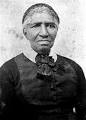
Clara Brown


Life was often hard and unfair for women in the 1800’s. Cooking, cleaning, the loss of a child; women overcame much and kept on going. In thumbing through a collection of works I stumbled across one woman who led a long life and triumphed through patience and hard work. Meet Clara Brown:    
Clara Brown was born a slave in 1803 Tennessee. At the age of 3, she and her mother were sold to another slave owner. Clara remained with this owner for twenty years. During this time, she married and had four children, but when her owner passed, she and her family were sold at auction. Clara was bought by a George Brown and taken to his home in Kentucky. Unable to read and write, Clara lost contact with her husband and children.  
George Brown was a Kentucky planter, whose last name Clara adopted. He was a kind man who helped Clara gain her freedom in 1859 and move to Missouri where former slaves were protected by law. Clara went to work for a St. Louis merchant and moved with his family to Leavenworth, Kansas, where the merchant helped er establish a laundry. While in Kansas, Clara heard about the gold rush and joined a wagon train to Colorado. With no money to pay her way, she earned her passage by cooking, taking in laundry and nursing. She arrived in Denver in 1859 and was the first African-American woman in the gold fields.
While in Denver, Clara heard about George Jackson’s huge gold strike in Central City. She moved to the mining town, opened a laundry and invested in the mines and real estate. Being a devout Christian, she also organized a church complete with Sunday school. Little by little, her income and investments grew to where she could deposit money in the bank and helped other newly freed African-Americans come to Colorado to make a living. By 1866, she had saved an unheard amount of $10,000 and began searching for her family. Two of her children had died and she couldn’t find anything pertaining to her son or her husband.
Clara left Colorado for a spell to search for her daughter, Eliza Jane, in Kentucky. Like her son and husband, Clara couldn’t find any trace of her daughter and eventually returned to Colorado. In 1882, at the age of 79, Clara finally found Eliza Jane and her granddaughter, Cindy. They were living in Iowa. She enjoyed a few years with her daughter and was made a member of the Society of Colorado Pioneers for her role in the Colorado gold rush before passing away in 1885. Clara is buried in Riverside Cemetery, Denver.  
        

Tuesday, May 19, 2015

PIONEERING GRIEF - Susan Horsnell


Wow, I cannot believe how fast the past month has gone.
Unfortunately it has not been a good one for my husband and myself. First we lost my dear father-in-law, then my mum and dad’s beautiful Jack Russell passed away and in the last couple of days we lost my father. It started me thinking about family and the devastation of loss, especially for the Western Pioneers in the United States.

 
How did the women cope with the loss of their husband?
In these days the husband was often the sole provider. Research shows they turned to Prostitution, hurriedly married again – often to someone many years older who was willing to take on a widow and another man’s children or, the lucky ones turned to family who were willing to help. Times were hard though, and often parents were unwilling to accept the burden of a widowed daughter and her children. She was often turned away to fend for herself. I cannot imagine the sadness these women would have felt at such rejection.


How did parents cope with the death of a child?
It is a well-known fact, the mortality rate of children during these harsh times was so much higher than today. There were none of the medications we take for granted, infection was rampant and being the “Wild West” – accidents happened on a regular basis. Some women literally ‘pined’ themselves to death, men either broke down in unimaginable despair or chose to deny the child had ever been born. The more ‘stoic’ couples, looked to each other for the strength to push through such tragedy. I often wonder, how many small crosses were erected along these treacherous trails? Do we really have any idea?


How did survivors cope with the rest of their family falling victim to Disease?
During their travels west, Pioneers were affected by weather, famine and disease. Whole families could be struck down with Yellow Fever, Influenza or some other rampant and highly contagious disease but sometimes there could be a lone survivor. How would this survivor feel? Many questioned why they had been spared when the rest of their family had been taken. Young men who survived such tragedy would often turn to alcohol or crime and within a few years many ended up dead themselves. Young children who weren’t taken in by other pioneer families, would be dropped off at orphanages in the next town they arrived at. At this time, the cruel and desperate conditions in some orphanages, would have been likened to a ‘fate worse than death.” Their futures would have been dismal thanks to the attitudes of the day – most orphans were considered worse than street waifs. These poor little mites really had their chance of a successful life, reduced.
 
 
Do I wish I had been alive during such harsh times? Definitely not. I have the utmost admiration for pioneers in any country. They knew what it was to ‘do it tough’ and often did it without complaint. These days if our computer doesn’t boot up fast enough, we think we’re hard done by. We have a lot to learn about strength of character from these people, about conquering hardships and accepting what we cannot change. About accepting death and moving on.

We also need to learn to be thankful. In times of death we need to remember the deceased’s’ contribution to this world. We should celebrate their lives and try not to grieve and mourn our losses too badly. In both my father’s and father-in-laws’ cases, it was a privilege to have been related to men of such standing. They each loved their families dearly, worked hard to provide for their wives and their children and a rarity in this day and age – they each honoured their marriage vows for more than 60 years. Will they be missed? Deeply. But, I will smile when I recall the good times along with the things they did and said.

I am grateful for the fact that these days, people can pass away quietly, without pain, thanks to modern medicine.  How gut wrenching it must have been for some of the pioneering families to watch loved ones die in such agony.

So, next time you feel like complaining about a computer that won’t start, a car in front that is moving too slowly or the rain that bucketed down after you just finished washing your car – think of your forebears.

Until next month, God Bless and take care.
Sue
Susan Horsnell 
Western Romance Author
Blog:          http://susanhorsnell.com/


Monday, January 27, 2014

MOVING AGAIN? HOW ABOUT THIS FOR A MOVE?


*Pardon me for posting an article I used some time ago on another blog. I couldn't help thinking of this article and the book from which it's taken during our recent move. Again today my family and I were discussing the difficulty of our move. I recall being grateful we had moving vans and neatly staking boxes for our things. Here's the article:

Linda Hubalek has graciously allowed me to quote from her book TRAIL OF THREAD, in which Dorothy Pieratt describes preparing for the trip West from Kentucky to Kansas:

We debated, but finally packed two wagons for each family. We felt it was better for the animals’ sake to limit the weight on each wagon to around 2000 pounds instead of overloading one wagon....Since we need six oxen per wagon, we bought extra animals a few weeks ago. John decided to use oxen instead of mules because the oxen are easily managed, patient, and gentle--even with the children--and not easily driven off or prone to stampeding like mules and horses...After much discussion, John agreed to hitch a cage of chickens on the back of the wagon.

Yesterday we sold everything that wouldn’t fit in the wagons at a public auction on our farm. The strain of the day is still on my mind. This morning I’ve been ready to fetch something and then I stop in midstep, wondering if it’s tucked in the wagon or was sold yesterday. It was hard to see most of the animals and all but a few chickens leave the place. But we can’t take everything along, and we need the money. [*My family members are holding a giant garage/moving sale this spring.]


New wagon beds were built using seasoned oak boards. Sides were jointed together. No nails were used that could work out along the bumpy road and spell disaster. Along the inside of the three-foot-high sides, John built long boxes running the length of the wagon for storage. These boxes will serve as seats during the day if the children want to ride inside. We just add boards cut to fit across the storage boxes, put bedding on top, and the wagon is outfitted for sleeping. The boards fit in a wooden holder that runs along the outside of the wagon. They can also be used to make a bench or table when laid across stumps, or, heaven forbid, as lumber for a coffin.

I had a big hand in preparing the wagons, too. The wagon beds were fitted with a framework of hickory bows high enough to give head clearance, and I hand-sewed long pieces of cloth together for coverings. It was quite an undertaking. It had to be tight, strong enough to withstand heavy winds, and rainproof so things inside don’t get soaked. Even though it was extra work, I ended up making them a double thickness to keep out the cold. A dark muslin went over the framework first, then a heavy white linen. The dark cloth cuts down on the brightness of the reflection as we walk beside the wagon. I coated the outside material with a mixture of hot beeswax and linseed oil for waterproofing. It turned the material a sand color, which should help the reflection, too. The covering is drawn together on the ends by a strong cord to form tight circles. End flaps an be buttoned on to completely seal the wagon top. My stitches and buttonholes will be tested by the first storm we run into. I even stitched pockets on the inside covering to hold little things like our comb, sunbonnets, and other personal things I didn’t want out of reach.

John borrowed a guidebook to Oregon and California from a neighbor, which suggested that for each adult going to California, a party should carry 200 pounds of flour, 30 of hardtack, 75 of bacon, 10 of rice, 5 of coffee, 2 of tea, 25 of sugar, 2 of saleratus, 10 of salt, a half-bushel each of cornmeal, parched, and ground corn, and a small keg of vinegar. We’re not going to California (unless the men change their minds), so we shouldn’t need that much per person, but we’ll need supplies until we get crops and garden planted and harvested. Who knows how long it will be until towns with stores get established in the new territory?


I’ll take one barrel of pickled cucumbers along to prevent scurvy...the decision of what kind and quality of item to trade for had to be made...The mill sells different grades of flour. I wish I could have bought the superfine flour, sifted several times...I bought the next grade, middlings, for our cooking. It’s much more coarse and granular, but it serves the purpose...The mill’s shorts, a cross between wheat bran and coarse whole wheat flour, looked clean, so I also bought 125-pound sack of it... [* My husband loves pickles with a sandwich and now usually says, "Have to keep from getting scurvy" when he eats a pickle.]

We can’t afford to carry the flour in heavy barrels, so it is mostly stacked in fifty-pound cotton cloth to cut down on weight. Because the flour is not kiln-dried, we double-sacked it in a leather bag. If the flower absorbs too much moisture, I’ll end up with a heavy loaf and will have to add more flour to my baking.

Sorghum molasses, our main sweetener, will make the trip in small wooden kegs...For special occasions, I bought three cones of white sugar. The New Orleans sugar we buy reasonably in the stores her may fo for top dollar on the frontier. The cones resemble pointed hats. They are molded atthe factory, and wrapped in blue paper. Usually I leave the cones whole and use sugar snippers, a cross between scissors and pliers, to break off lumps as I need them. To save space on the trip, I ground up the cones and divided the two types of sugar (the white sugar on the top gradually changes to brown sugar on the bottom), then sifted to remove the impurities. The storekeeper said I should pack it in India rubber sacks to keep it dry, but I decided not to add that extra expense. I tucked the cone papers in the wagon because I can extract the indigo dye from it to color yarn and material blue.

I also bought a small quantity of low grade brown sugar since it is ten cents cheaper than the cones. It’s dark, smelly, sticky, and sometimes dirty, but it still gives sweet taste to cooking.

Parched corn is another sacked commodity in the wagon. The kernels were sun dried last fall and I’ll grind them into meal with the mortar when I need it.

Smoked bacon was double-wrapped in cloth, put in wooden boxes, and covered with bran to prevent the fat from melting during the trip. I cooked the crocks of cut meat I had left into a thick jelly. After it set up in pans and dried, we broke it into pieces and packed it in tins. If I add boiling water to some, we’ll have portable soup on the trail.


Smaller sacks of beans, rice, salt, saleratus, and coffee are wedged around the whiskey jugs underneath the wagon seat. The medicine box, filled with tiny cloth sachets holding dried medicinal herbs and little medicine bottles, is wedged on top, ready for an emergency.

I put the sacks of yeast cakes, dried bead, and hardtack inside one of the long boxes, along with the box of homemade soap bars. I’ll have small sacks of each staple in the back box and refill them from the bigger sacks when I need to.

The back end of the wagon drops down partway on chains and will serve as a preparation table for food or for other jobs. The provision box faces the back so it can be opened up without hauling the box out of the wagon every time. It has my tinware, cooking utensils and small sacks of necessities for cooking everyday.
Wish I could have brought all my kitchen utensils, but I settled for two spider skillets, three Dutch ovens of various sizes, the reflector for baking, the coffee pot, the coffee mill, the mortar and pestle, a few baking pans, knives, and my rolling pin.

Walking out to the wagons for the umpteenth time, it struck me that they are starting to look like a peddler’s caravan. They are overflowing with items attached to the sides. The wooden washtubs and zinc washboard are fastened to one side of the wagon. The walking plow is lashed to the other side. Small kegs of water, vinegar, and molasses fit in where needed to balance the wagon. Everybody can see what we own because it’s hanging in plain sight.

The second wagon is packed even tighter than the first with household and farming tools we’ll need after we get to our new land. All the boxes are packed tight so they won’t slide around, rattle, or spill. I hope we won’t have to unpack it until we reach our destination.

You can learn more about Linda Hubalek’s TRAIL OF THREAD at www.lindahubalek.com


 Caroline Clemmons' latest release is THE MOST UNSUITABLE COURTSHIP, Kincaids, book 3, and is available in print and e-download from most online stores. 

Sunday, February 5, 2012

I Love Historical Westerns


I write western historical novels because I love that time period. The old west was raw, hard, and character building.  To survive, the people had to have exemplary strength and determination.  But, my fascination doesn’t end with the pioneers; I’ve always had an unexplained interest in the history of American Indians, so much so that I wonder if I lived a previous life as one.  By writing about them, I can help alter the perception that TV westerns have fostered—that the red man was always the bad guy.  In two previous novels, I focused on the customs and traditions of the Lakota Sioux.  I tried to portray them as the proud people they were.

Do readers realize that writing an historical novel is much more time consuming than say writing a contemporary or suspense?  Although my stories are fictional, the facts to support history have to be accurate and true.  The language has to fit the period as does the dress, and the gadgets available at the time.  Back in the 1800s, which is the era of my choice, kids were goats, mothers were Ma, not Mom, and fathers were Pa, not Dad.  The idea is not to overwhelm the reader with a history lesson, but pepper the story with facts that relate to the scenes and characters. 

In writing my first novel, I had my hero delivering his bride to in a shack in the middle of the prairie.  I described her reaction to a rundown house, grass growing through the wooden shutters, a few pieces of splintered furniture.  When I described the rooms, I also described a heavy iron stove.  My editor was quick to point out that a deserted shack was more likely to have a fireplace and hearth where cooking was performed, and that the abode wasn’t likely to be more than one big room.  Thank God, for editors who help us learn our craft.   Now, when I write about a room, I put myself back in the time period and see through the hero or heroines eyes what should be there.  If there is a question in my mind, I research the object and see exactly when it was invented. 

 There’s no faster way to lose your credibility as an historical author than to yank your reader out of the story by having written about something that doesn’t fit the time.  Imagine my Sarah, dressed in gingham, with her bonnet securely tied under her chin, coming in from the barn, carrying a pail of fresh milk.  She sets the heavy container on the floor, and deciding to have some more coffee, pops a cup in the microwave to heat it.  WAIT a minute.  Something is wrong with this picture, and although I’ve used a very obvious discrepancy in time, you’d be surprised how quickly some historical readers are to pick up on even the slightest faux pas. 

Still, despite the extra time and effort required, historical writing is my preference.  My heroine in Sarah’s Journey is the kind of person I strive to be.  I want her survival strength, determination, and her ability to stand up to people when others are mistreated.  I want to right the wrongs of humanity, and if only through becoming Sarah for a brief time, I can show my readers how badly people of half blood were treated and how hard life was in the old west.  I can hold up my head, trudge along the Oregon Trail and wonder what looms over the next horizon.  Sarah’s Journey is a historical fiction but more so a story about a woman’s struggle to find a new life, deal with disappointment, and handle the realization that she loves a man that no one in the world but her is ready to accept.  I hope people enjoy reading it as much as I loved writing it.  It doesn’t have a “traditional ending” but that’s all I’m going to say. You either GET it or you don't. 

I asked a fellow author at Eternal Press to do a review of Sarah's Journey for me.  He said the only western-type book he'd read was Shane, but he would give it a try.  I picked this part from his lovely summary to share with you.  Robert Appleton made my day when he posted:

I thoroughly enjoyed Ms. Simpson’s recreation of Western life. The word that kept coming to mind as I read this story was uncompromising. Little is omitted, whether it be gruesome wounds, the preparation of herbs and food, Sarah’s body language, or the precise terms for the different noises made by a horse. I loved seeing all this research come to life. The author’s passion for the period and particularly for her characters shone throughout. This was clearly a labour of love.

And he's right.  Every book I've written is a favorite for different reasons, but I have a very soft spot in my heart for Sarah and Wolf and I think it showed.  *smile*