Showing posts with label Children. Show all posts

Wednesday, July 6, 2016

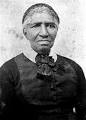
Clara Brown


Life was often hard and unfair for women in the 1800’s. Cooking, cleaning, the loss of a child; women overcame much and kept on going. In thumbing through a collection of works I stumbled across one woman who led a long life and triumphed through patience and hard work. Meet Clara Brown:    
Clara Brown was born a slave in 1803 Tennessee. At the age of 3, she and her mother were sold to another slave owner. Clara remained with this owner for twenty years. During this time, she married and had four children, but when her owner passed, she and her family were sold at auction. Clara was bought by a George Brown and taken to his home in Kentucky. Unable to read and write, Clara lost contact with her husband and children.  
George Brown was a Kentucky planter, whose last name Clara adopted. He was a kind man who helped Clara gain her freedom in 1859 and move to Missouri where former slaves were protected by law. Clara went to work for a St. Louis merchant and moved with his family to Leavenworth, Kansas, where the merchant helped er establish a laundry. While in Kansas, Clara heard about the gold rush and joined a wagon train to Colorado. With no money to pay her way, she earned her passage by cooking, taking in laundry and nursing. She arrived in Denver in 1859 and was the first African-American woman in the gold fields.
While in Denver, Clara heard about George Jackson’s huge gold strike in Central City. She moved to the mining town, opened a laundry and invested in the mines and real estate. Being a devout Christian, she also organized a church complete with Sunday school. Little by little, her income and investments grew to where she could deposit money in the bank and helped other newly freed African-Americans come to Colorado to make a living. By 1866, she had saved an unheard amount of $10,000 and began searching for her family. Two of her children had died and she couldn’t find anything pertaining to her son or her husband.
Clara left Colorado for a spell to search for her daughter, Eliza Jane, in Kentucky. Like her son and husband, Clara couldn’t find any trace of her daughter and eventually returned to Colorado. In 1882, at the age of 79, Clara finally found Eliza Jane and her granddaughter, Cindy. They were living in Iowa. She enjoyed a few years with her daughter and was made a member of the Society of Colorado Pioneers for her role in the Colorado gold rush before passing away in 1885. Clara is buried in Riverside Cemetery, Denver.  
        

Friday, September 20, 2013

A Woman's Work Is Never Done - Meg Mims


My mother always said this, while raising six kids in the 1950-1960s. She chose to leave a bank clerk job and be a housewife. My grandmother, raised on a farm, worked in an office as a typist before getting married and staying home to raise her family. That trend went back to the 1800s, when girls were raised to marry and have children. Many chose to work first at a job before settling down with a husband. Many didn't have a prospective suitor. Or didn't want one.

But there wasn't much to choose from in terms of paid employment at the upper level of salary choices. Men dominated the professions such as being a physician, a lawyer, owning a business, etc. Of course, there were exceptions - but for the most part, women worked as domestics (maids, laundresses, cooks) or in factories or at home, often paid by the piece, either stripping tobacco, picking nuts, producing silk flowers or sewing, making lace, etc. They sometimes worked in millinery and dressmaker shops, or ... as teachers. It seems fitting, being September, to talk about women working as teachers.

Harriet Beecher Stowe's sister, Catherine Beecher, born in 1800 in a prominent family of social reformers, was self-taught and believed that women were natural teachers. Catherine became one in 1821 and was a co-founder of the Hartford Female Seminary - where women were trained  to be mothers and teachers. She also believed that teaching was far more important than the work of a doctor or lawyer - something I agree with - although she never supported suffrage. Still, for the early 1800s, she spurred progress for women to further their education and then pass that knowledge to children.

It seems many people agreed with Beecher. "God seems to have made woman peculiarly suited to guide and develop the infant mind, and it seems... very poor policy to pay a man 20 or 22 dollars a month, for teaching children the ABCs, when a female could do the work more successfully at one third of the price." -- Littleton School Committee, Littleton, Massachusetts, 1849

In urban schools, women taught and men were superintendents or principals. In western rural areas, men might have taken the lower pay of a teaching position if they had no other choice. School districts might have hired a man to teach the older children and a woman to handle the younger ones. If they could afford both, that is, depending on the school and settlement. And most schools were one-room, handling up to sixty children. Often there was little extra money for slates, books or even coal or wood for the stoves to heat the small schoolhouses in poorer settlements. 

Reading - utilizing the Bible, early primers or later MacGuffey's Reader - and grammar, arithmetic, geography and history were taught in schools, sometimes by teachers who had barely learned the same lessons. But while many consider the quality of lessons as basic or primitive, consider today's trend to skip spelling and grammar lessons (disappearing unfortunately). The extensive "figuring" lessons in measures and weights, basic accounting and other necessary math was vital to running a farm or a keeping a business afloat.

Women in the field appreciated the chance to live an independent life, and to earn wages - even if on a  temporary basis before marriage. By the turn of the century, 75% of teachers were women. My husband's aunt worked in a one-room schoolhouse with children ranging from kindergarten to eighth grade. She swept the steps and classroom every day, fetched coal for the heating stove, brought extra food for kids going without breakfast/lunch (during late Depression) and handled discipline - but the children loved her since she made it fun to learn.
 
Rural North Dakota - above

To the right, a class of thirty children, possibly the same age (easier than thirty all at different grade levels), and their female teacher - at the Watkins School, Nashville, Tennessee, late 1800s.

Today, women still dominate the teaching profession. They do have the advantage of earning pensions, benefits and fairly decent wages - although for the work involved, they are still not paid enough (in my opinion.) We all have memories of our favorite teachers. God bless them all.

Sources: http://www.pbs.org/onlyateacher/beecher.html, http://www.nwhm.org/online-exhibits/industry/4.htm


Meg Mims is an award-winning author with two western mysteries under her Eastern belt. She lives in Michigan, where the hills are like driveway slopes and trees block any type of prairie winds. LIKE her on Facebook, follow her on Twitter or check out her books on her website. Double Crossing won the 2012 Spur Award for Best First Novel and Double or Nothing is the exciting sequel.


Wednesday, September 4, 2013

Garden of the Gods

Before the white man settled at the base of Pikes Peak, the area was home to several American Indian tribes, such as the Cheyenne. In August of 1859, two Denver surveyors scouting the area for a new town site, to be named Colorado City, happened upon acreage consisting of sandstone rock formations. One of the surveyors thought the area would be perfect for a beer garden in generations to come. The other believed the land was a better fit for the Gods to assemble, and the name, 'Garden of the Gods' was born. Later, General William Jackson Palmer, founder of Colorado Springs, urged his friend and railroad builder Charles Elliott Perkins to move to the Garden of the Gods area, build himself a home and erect a railroad from Colorado Springs to Chicago. Perkins did come to Colorado Springs. He purchased some of the land and bought more later, but he never built a home amidst the red rocks. He admired the beauty of the land as it was and hoped to arrange for the land to become a public park, but he died before he saw this happen. His children honored his wishes in 1909, and Garden of the Gods became a public park, with no admission fee for entry, no alcohol served and no buildings allowed to be erected.    


Balanced Rock
The park doesn't just consist of red rocks. There are plenty of native plants, bushes and trees to provide shade from the sun. As far back as the late 1800's, folks toured the park in their buggies. And as cameras became more popular and cheaper, they took photos, too. One of the more interesting spots folks visited and still do is Balanced Rock. The name speaks for itself; a large boulder precariously situated on a thin base. Years ago, from fear the rock would topple and roll downhill, the base was filled with cement, though an exact date of when this was done is unknown.
Steamboat Rock
Steamboat Rock is right next to Balanced Rock. A road separates the two. The top of Steamboat resembles a ship deck. Early on, people were allowed to climb to the top of Steamboat. (With the road, people walking by and snapping pictures or enjoying the view, folks aren't allowed to climb to the top any longer.) Steamboat is also unique with the story behind it. It's said that back in the day, the owner of the land encompassing Steamboat and Balanced rock had a son who charged a fee to take photos of the tourists. Once the camera became popular, folks stopped paying the fee. The owner, Goerke, built a tall, wooden fence and charged a 25 cent admission fee so folks could continue to admire and photograph the rocks. People complained and Goerke soon found himself in a dispute with the city of Manitou Springs over who owned the road rights to the rocks. Goerke lost the initial battle but later won in appeals court.  Afterward, it's said that he granted a public right-of-way to the city of Manitou Springs when he was in the process of divorcing his wife so she couldn't claim the property.    
Another such popular attraction is Kissing Camels (left). From the photo, one can see the top of the rocks have formed together to resemble two camels kissing. Thousands of photos of the camels have been taken by locals and by tourists. From the modern day parking lot, a sidewalk leads down the front side of the camels, loops around and comes up the back side. Rock climbing near the camels is allowed, with a permit and proper rock climbing gear.

Today the park is open year-round and receives thousands of guests. A newly built visitor's center showcases a small theatre where one can learn how the rocks were formed billions of years ago, a gift shop and an eatery. At the south end of the park is garden of the Gods Trading Post--a must stop place for those who love all things western and Native American.  One of the oldest trading posts in the west, I speak from experience when I say they have the most beautiful pottery.


Deer are abundant in the park, as are picnic areas and breathtaking views of Pikes Peak, downtown Colorado Springs and Cheyenne Mountain. And best of all, it is still free to the public.


Wednesday, April 17, 2013

Sioux Children #historical #western #American Indians

The following three major bands comprises the Great Sioux Nation:

Lakota - (Seven bands)
Oglala
Sicangu
Hunkpapa
Miniconjous
Sihasapa
Itazipacola

Dakota or Santee - (Four Bands)
Mdeakantonwon
Wahpeton
Wahpekute
Sisseton

Nakota or Yankton - (Three Bands)
Yankton
Upper Yankton
Lower Yankton

I've long had a fascination for the Sioux, specially the Lakota, and I've enjoyed learning how ritualistic the tribes are/were. In today's post, I'm going to share some facts concerning their children.:

BIRTH:
A time of celebration and showing thankfulness to the family.  Based upon the legend of the White Buffalo Woman, once a Sioux woman gave birth, she fulfilled her role to be fruitful and multiply.  At sometime during a woman's pregnancy, usually a grandmother or the mother, created twin turtle or lizard pouches, one to hold the baby's umbilical cord and the other to serve as a decoy.  Since both animals were considered "hardy, it stood to reason that using their image would serve to protect the child.  The true pouch was hidden in the child's cradleboard until the little one grew old enough to walk, and then worn around the neck.  At a certain point possession of the pouch reverted to the mother.

Winkte
Four days after birth, everyone in the village was invited to a feast to celebrate naming of the baby.  Contrary to rumors I've heard (mainly in a joke), children were usually named after their oldest living grandparent or a deceased grandparent held in high esteem.  Additional children were usually named by the father to herald a specific deed he had accomplished or maybe a dream he'd had.  In the case of boys, they were usually two names, one which was never spoken aloud.  The "secret" name was acquired from a "winkte" which surprisingly to me, was a male Indian who dressed like and possessed all the quilling and sewing skills of a woman.  If Lesbianism existed, it was less obvious than the role the transvestite played, and being a "winkte" was considered God-Like and thusly a name offered by that person would protect the child from harm.

Modern-day babies benefit from the colostrum from their mother's breasts, but in the case of the Sioux, and old woman called, sucking woman, or a ten-year-old girl was summoned to remove the first milk for three or four days in order to prevent the infant from having diarrhea.  Instead, babies were fed berry juices and soups through a nipple fashioned from an animal bladder.

Sioux mother and child
A child's first year was mainly spent bundled in a cradleboard.  Cattail down or buffalo chips (depending upon the season) were packed in the bundle to absorb the urine.  Feces were removed, but the bundling not necessary changed each time.  The mother assumed the care of the child, often assisted by another female member of the tribe (grandmother, sister, older sibling), and if the infant as female, the old sibling assumed responsibility from the beginning.  If the child was a male, her participation was limited to feeding and watching over the baby.

Although children remained securely confined for the majority of their infant-time, from the ages of four to seven, they were naked most of the time.  By the age of seven, more modesty was required, but the children were asked, not told what to do and physical violence was never used.

Setting up Camp
As the child grew, he/she received instructions from many of the family oriented Sioux tribe and were rarely disciplined and the Sioux revered their children.  Games played by the boy children were extremely physical and geared toward preparing the child for battle, and when a boy was old enough to sit a horse, he was given his own colt and instructions on the care of the animal by his father.  Girls talents, on the other hand, were not fostered by the father-son type relationship, rather gathered  from rules of conduct demanded of female Sioux.  Cooking, washing clothing, gathering wood, berry picking and keeping the home straightened were primary tasks, but later, young women were taught the art of quilling, scraping and drying hides and learned how to construct and relocate tepees.


Women were required to show kindness to all men and animals, be loving, achieving, and eat apart from the men.   The left side of the lodge was designated as the female's side, and she was required to speak only in the female language which consisted of words not much unlike Spanish where ending letters signify gender.  (Example:  hermano/hermana = brother/sister).  Most importantly, female children were geared to behave modestly and care for themselves and their family.

Next month:  More on tribal behavior.

Facts presented here were garned from reading "the Sioux" by Royal B. Hassrick and America's Fascinating Indian Heritage by Reader's Digest.  All images were secured from bing.com

Destiny's Bride, my latest release from Books We Love, in which I show the heroine's experience at witnessing the birth of a child as directed by Rainwoman, the old medicine woman:
Here's an excerpt from


The area inside was large and spacious. Cecile stood riveted against the wall and watched with eyes wide. To see a group of women assisting in the birth made the experience impersonal…and a tad intimidating.  Maybe she hadn’t become as immodest as she thought.  Her thoughts were drawn to the expectant mother by a low moan.
Raven Wing squatted over a small trough lined with a square of deerskin and grasped a stick driven into the ground to help maintain her balance while she gave in to the bearing down pains. With each contraction, one of the women pushed on Raven Wing’s abdomen to hasten the baby’s arrival.
Cecile wondered how long the woman had been in labor. Raven Wing’s face contorted with pain yet she never yelled or cried out despite her apparent anguish.  Having never witnessed a child’s birth before, Cecile became frightened and inched toward the door.
Rain Woman noticed and waggled a winger at her. “You must stay and watch so when your time comes you know what to expect.”
“Okay, Old Mother,” Cecile relented. “I will stay.” But she thought of a thousand things she’d rather be doing.
Finally, after lots of pushing and straining, Raven Wing’s blood-covered baby slipped out into the trough. The new mother fell back onto a bed of buffalo robes, totally spent and panting for breath. Rain Woman stepped in and cut and tied the umbilical cord then cleared the baby’s nose and mouth. The newborn boy immediately cried, flailing tiny arms in the air.

All my books are available at http://www.amazon.com/author/gingersimpson