Showing posts with label narrow gauge railroad. Show all posts

Sunday, November 24, 2024

Gauging the Railroad Tracks by Zina Abbott


Originally, various railroad track gauges were used in the United States. Some railways, primarily in the northeast, used was called standard gauge, which was a span of four feet, eight and one-half inches (1,435 mm). Other railways used gauges ranging from two feet (610 mm) to six feet (1,829 mm). The Pacific Railroad Acts of 1863 specified standard gauge was to be used throughout the United States.


Where did this unusual width for parallel railroad tracks come from? Train technology was developed in Britain in about 1825. The new technology came to the United States the following year. Britain based the distance between the rails on the standard width of wagon ruts worn in the roads all over Europe, including the British Isles.


The reason these ruts tended to be uniform in distance from each other dates back to the time of the roads built by the Romans. Their chariots were built to be compatible with the width of a pair of warhorses. Since wagons ran into difficulty if their wheels did not fit inside existing ruts, that same gauge became the standard for wagons. Axles were built to accommodate the hubs of wheels so the rims would be four feet and eight and one-half inches.
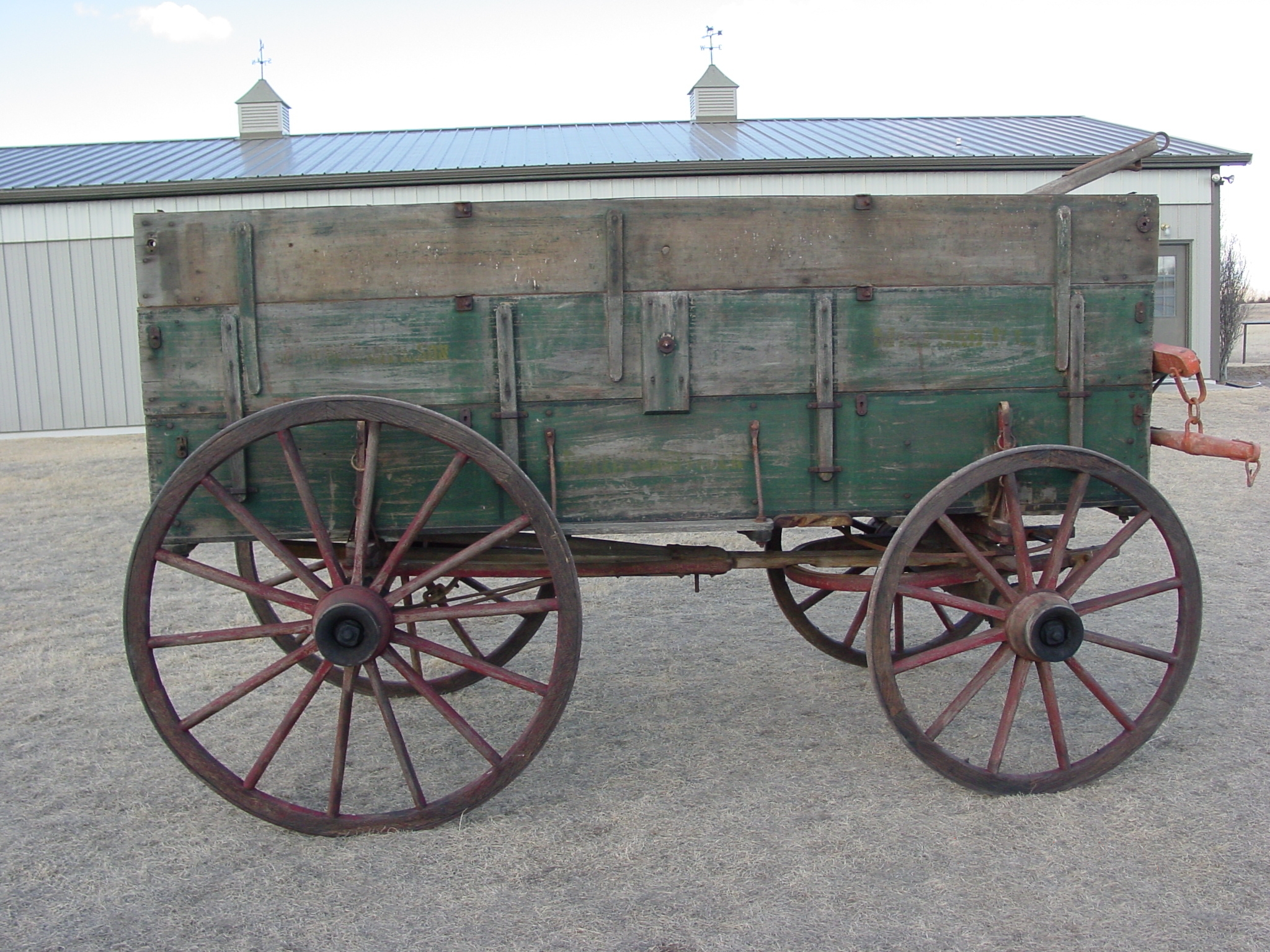
 

During the Colonial period in North America, wagon sizes and widths followed the same standards as found in Europe—wherever the Roman roads and accompanying ruts played a role in transportation. Like Britain, the railroads followed the same pattern, including using what is known as standard gauge to determine the width between a pair of train rails.

There is a notable exception: Narrow gauge railroads built to allow trains to travel the windy mountain areas.


The Denver and Rio Grande Railway, which opened the mining and lumber operations of the Rocky Mountains to the rest of the country, was one such railroad. Later, much of the track was converted to standard gauge.


Narrow gauge railroads were used throughout the Sierra-Nevada Mountains, particularly for logging operations. The history of the Heisler #2 locomotive gives a picture of a narrow gauge locomotive used. From 1900-03, it was used by the Hetch Hetchy and Yosemite Valley Railroad, mainly to transport logs to be cut into lumber. Then, from 1904-1960, the railroad’s name was changed to the West Side Flume and Lumber Company. There the locomotive played a vital role in timber production by working both the woods and the lumber company switchyard. This little workhorse was also used to push a wedge plow to keep the tracks clear of snow.


The narrow gauge Denver & Rio Grande Railway, where my heroine's father and the hero work, was mentioned in my recent Christmas romance, Lemon Cookies by Lisbeth, part of the Old Timey Holiday Kitchen series. To find the book description and purchase options, please CLICK HERE


In Phoebe, my Christmas romance in the Christmas Quilt Brides series, my hero—a proponent of the brand new automobile industry—compared the potential of motorcars to the progress of railroads from when they were first brought to the United States. He described a picture similar to the one above as compared to the Atchison, Topeka, and Santa Fe standard gauge railroad in Oklahoma Territory. To find the book description and purchase options for Phoebe, please CLICK HERE


In my next publication, A Surprise for Christmas, part of the Confederate Widows, Spinsters and Proxy Brides series, my proxy bride travels by train shortly after the end of the American Civil War. She arrived in Topeka, Kansas, on the Kansas Pacific Railway, which used standard gauge tracks. This book is currently on pre-order and scheduled for release on December 9th. To find the book description and pre-order link, please CLICK HERE


Sources:

https://truewestmagazine.com/steam-engines/

https://en.wikipedia.org/wiki/Track_gauge_in_the_United_States

Tuolumne City Park Heisler #2 display, Tuolumne, California

Wednesday, May 5, 2021

Colorado Springs & William Jackson Palmer ~ Julie Lence


William Jackson Palmer
Colorado Springs Gazette

Being an east coast girl from upstate New York, one would think hubby and I would’ve retired to our hometown to be close to our families, but we didn’t. Hubby spent twenty years in the Air Force and one of his assignments was Cheyenne Mountain in Colorado Springs. We fell in love with the area and decided to make it home when he retired. In the past 18 years, Colorado Springs has boomed in population and business, and every day, weather permitting, I get to see America’s Mountain.


Pikes Peak
Pinterest

Long before Army lieutenant and explorer Zebulon Pike traveled through the area and discovered the mountain that is now his namesake, Pike’s Peak, the Ute, Cheyenne and Arapaho tribes called the area at the bottom of what is now Ute Pass home. It was Pike’s wish to summit the peak to map out rivers and the landscape, but feet of snow prevented him from doing so. He published an account of his travels in 1810 naming the mountain, Grand Peak, thus putting it on the map. Fast forward a few years to when gold was discovered in the area and folks rushed to the region, where businessmen established Colorado Springs’ first settlement, Colorado City, at the base of the peak. (Situated west of where Colorado Springs currently sits and Manitou Springs, Colorado City is now known as Old Colorado City.) Colorado City became the hub for selling mining equipment and supplies to those headed up Ute Pass to pan for gold. For a short time, Colorado City was also a territorial capital.

Those looking to strike it rich in the mines weren’t the only people coming west to Colorado Spring’s first settlement. Many came for health reasons, hoping the fresh air and sunshine would cure tuberculosis, and others came for business opportunities, including Colorado Springs’ founding father, William Jackson Palmer. Born in Delaware on September 17, 1836 to a Quaker family, Palmer had a fascination with trains at a young age. He eventually hired on with the Pennsylvania railroad and learned everything he could about the railroad industry and engineering and was the first person to suggest trains should burn coal and not wood, since wood was fast becoming short in supply. Because of his teachings, the Pennsylvania Railroad was the first to use coal.

Vintage Map
Walmart

A man who loathed slavery, Palmer served as a general in the Civil War and won a Medal of Honor for heroic efforts. After the war, he financially supported education efforts for the freed slaves and ventured to the Kansas Railroad and helped lay the tracks all the way to Denver. He and his friend, Dr. William Bell, founded their own railroad company, the Denver & Rio Grande Western Railroad. The first tracks went to the Pikes Peak. The area struck a chord deep inside Palmer and he predicted the foothills would become a booming resort town. Purchasing 10,000 acres of land along the train route, Palmer laid out streets, hauled in thousands of trees to make the city lush and green, and erected lavish buildings resembling European style, to include the Antler’s Hotel. In 1871, his Victorian resort town was born. From the start, Colorado Springs wasn’t a boom town. Palmer used the breathtaking scenery to lure the rich to the area, along with capitalists, artists and intellectuals. Gold was discovered to the west of the peak in Cripple Creek in 1891. More of the wealthy flocked to Colorado Springs and for a spell, the city had more millionaires per capita than any other location in the United States. 

Durango & Silverton RR
ASCE Library

In 1870, Palmer married Mary Lincoln (Queen) and the two enjoyed a honeymoon in the British Isles. It was there he saw and learned about the narrow gauge railroad. The narrow gauge was cheaper to build, could make sharper turns and climb steeper slopes, making it the perfect type of railroad for Palmer to incorporate throughout the state of Colorado to make travel through the Rocky Mountains easier. To date, two of his tracks remain in place; the 45 mile trek between Durango and Silverton in the southwest corner of Colorado, and the Cumbres and Toltec 63 mile trek between Chama, NM and Antonito, CO.    

Colorado Springs today
4word

Palmer went on to bring the railroad to Pueblo. He co-founded the Colorado Fuel and Iron company, and drove the ‘golden spike’ at the Promontory Summit in Utah to finishing America’s Transcontinental Railroad. He eventually retired to Colorado Springs where he helped to establish the Colorado School for the Deaf and the Blind, and the University of Colorado at Colorado Springs, before passing away March 1, 1909. A statue of him riding his favorite his horse,  Diablo, sits in the intersection of Nevada and Platte Avenue in Colorado Springs across from Palmer High School, which is named after him. 

General Palmer Statue
and high school