Friday, May 23, 2025

Ancestors and Author's Notes by Zina Abbott


One reason I love writing for the Prairie Roses Collection series is that it is about wagon trains, and I have ancestors who crossed the country on wagon trains. All of my ancestors who came to the United States did so from northern Europe. All arrived between 1850 and the mid-1880s. Not all were members of the Church of Jesus Christ of Latter-day Saints when they journeyed in covered wagons along the Mormon Trail or came partway by rail. However, all of them had the Great Salt Lake Valley and surrounding regions as their destinations.


Although I do not write about my ancestors or focus on Mormons in my books, they were on the Great Plains from 1847 on, and many others came across them. I did throw in a few tidbits in some of my covered wagon books, and the latest was no exception. It started with my dedication:


This book is dedicated to my great-great grandparents, William England and Eliza Seamons England, two of my pioneer ancestors, both of whom were raised in England. They left Florence, Nebraska on July 1, 1861 and arrived in the Great Salt Lake Valley on September 13, 1861 in the Joseph Horne and Homer Duncan wagon train company.

None of the written histories of this couple indicate they traveled on a down-and-back church train—one of the first operated under the direction of the president of the Church of Jesus Christ of Latter-day Saints. However, from a recent lesson book made available by the International Society Daughters of Utah Pioneers, I learned that the first down-and-back church trains left Florence, Nebraska, on July 1, 1861. The last of twelve left on July 17, 1861, four days before the first major battle of the American Civil War. These trains were mostly filled by church members who were recent immigrants from many nations in Europe who arrived on three ships that sailed from England in the spring of 1861. Others, like my England ancestors, who had been in the United States longer (William four years, Eliza one year), or who traveled to Florence from the East that year, also joined these first trains.

Both Joseph Horne and Homer Duncan were among the first men called by the church to organize, outfit, and captain a down-and-back wagon train from Florence, Nebraska, to Great Salt Lake City, Utah Territory in 1861.

 What prompted me to choose this particular couple for the dedication in Sue?

As a member of International Society Daughters of Utah Pioneers, I taught a lesson last year about down-and-back wagon trains. In all my years of learning about the history of the Church of Jesus Christ of Latter-day Saints, to the best of my recollection, I had never heard of them. I decided to check the histories I have on file of my ancestors to see if any traveled in such a wagon train. None of them specifically stated they did. However, there were enough clues in the histories of William and Eliza Seamons to indicate they crossed the Great Plains in a down-and-back wagon train.


Laramie Plains in late June

For Sue, which is set in 1867-68, the group she travels with are able to journey part of the way on the Union Pacific Railroad. I set the story so they arrived in Laramie City in June 1868, which made it an end-of-track station. From there, they must travel the Overland Stage Route to Fort Bridger. Since there were seven people and four freight wagons, for safety, the leader wanted to travel with another wagon train. The only one the Laramie City station manager knew of was the Mormon Train—wagons and drivers from the Salt Lake Valley area who arrived several days earlier and waited for the new immigrants from Europe to arrive on the train. They had a head start over the group with which Sue traveled by almost two days.

And thus, the plot moves forward from there.

This from my author’s notes at the back of my book (Keep in mind, because of the way Amazon works Kindle Unlimited, many readers never see a book dedication unless they scroll back from the opening page to find it):

Between 1861 to 1866, the Church of Jesus Christ of Latter-day Saints operated down-and-back wagon trains, which included food, to help church members complete the journey from eastern Nebraska to Great Salt Lake City, especially those who arrived impoverished because they had sold everything in Europe to migrate to the United States. Members from all over Utah Territory were called and tasked with driving church-owned wagons and livestock, along with necessary supplies, east along the Mormon Trail. Once these immigrants reached Florence, Nebraska—now a suburb of Omaha—they were connected with a church-operated wagon train for the balance of their journey. Not long after the Union Pacific Railroad laid its first forty miles of track from Omaha, Nebraska, west by the end of 1865, the down-and-back wagon trains ended. The church continued to assist immigrants who had joined the church to travel from the end-of-track stations to where they were requested to settle.

I extended the years the down-and-back church wagon trains were in operation for the purpose of my story.


Sue, Book 55 in the Prairie Roses Collection, is now available for sale as an ebook and with a Kindle Unlimited subscription. To find the book description and purchase options,

Please CLICK HERE

Wednesday, May 21, 2025

Small Town Festivals by Rhonda Lee Carver


As spring arrives, the season brings with it a sense of renewal and growth...


There's something nostalgic about small-town festivals.  Every town has one, or two, that townsfolk can't wait to attend.

In my small town, we have a festival, the Feast of the Flowering Moon. Held on Memorial Day weekend, the event features Native American music, dancing, rows of crafters, exhibits, and demonstrations by mountain men and women showcasing their skills. It was created to celebrate the rich Native American heritage of the area.

As kids, my friends and I would gather on the streets where the festival was in full swing. If you've ever heard the term "cruising", well, we cruised the festival on foot. From start to finish, we'd hang out, meet old friends and new friends, and catch up on teenage drama. One of my favorite things was the lemonade shake-ups. Not dissing those delicious concoctions in any way, but they were a mix of fresh-squeezed lemons, sugar, and a bit of water, served ice cold because it was always scorching hot on the streets. Where can a person go wrong? And the food... there's nothing quite like eating everything in sight--more sugar--and not having a single thought for calorie intake. Those were the days!

Although becoming an adult brings about changes, the demonstrations, dancing, and music remain highlights for many. Finding myself back on the streets alongside a lively crowd, it feels a lot like stepping into a time machine and going back to the days of being a carefree kid, hanging out with friends, and simply being.


I have a release coming up, May 27. Check it out, and Pre-Order! Click here to Pre-Order!


He’s a protector. She’s anything but a damsel in distress. Together, they are fire on fire.
Mercy Sams is a career-focused ethical hacker with a five-year plan, but she has one weakness. Jag. He turns her logical brain into mush.
She made a little oopsy and ticked off the wrong person--only to end up nearly getting herself killed. Jag comes to the rescue, and they must face the history they have together.
She threatens to crack the code to his heart, while he struggles with internal demons.
Jag, a retired SEAL, is starting a new chapter in Shades Cove. He looks forward to a peaceful life working on a ranch and the security company his buddy started. When he takes feisty Mercy under his wing, the universe shows him no mercy. She has a hair stuck where it doesn’t belong, and Jag becomes the target of her distress. But then the connection becomes strong, and emotions begin to simmer.
It turns out that Shades Cove isn’t safe for Mercy. Danger finds her in the small town. Can Jag protect her? The journey from the ranch to the bedroom is paved with good intentions.
Revisit all the characters you love from Book 1, Shades of Steel.


Book 2, Shades of Mercy.
There will be no mercy for Jag.
Sneak Peek:
She was supposed to be focusing on what the men were saying, after all, it dealt with her. Yet, she had brain fog. Jag fog. She pressed her hand against her belly and tried to calm the butterflies there.
How was it possible that Jag looked better with age?
And that she could still want him when she hated him just as much?
It would be foolish to allow her fantasies to become reality for a second time.
Jag was not the man for her. He was nothing but an anti-committal, egotistical player.
The last thing she needed, or wanted, was a man who loved his job and nothing else. Hell, he is his job.
Yet, he was undeniably gorgeous. Sexy. And any time he was near, she wanted to peel away his layers and get to the good stuff.
She could want him for another thirteen years, and he’d still never give her the things she wanted from a man: stability and affection.
She wanted to be someone’s all.
“Mercy?”
She pulled herself out of her thoughts and narrowed her gaze to her brother. “What?”
“I said, do you agree to the terms?” he asked.
She wanted to be stubborn and demand that he take her home, but they were past that point. So, she gave a curt, “Sure.”
“Great. Don’t worry, Mateo. She’ll be fine. I’ll guard her with my life.” Jag said, meeting Mercy’s gaze for a mere fleeting moment.
How would this work? How could she be near him? She was a pathetic, crushing thirty-two-year-old. She didn’t want to make a fool of herself, but it always seemed like she made a fumbling mess when he looked at her with the most amazing green eyes.


It's countdown to party time! Love giveaways? Games? Cowboys?
https://www.facebook.com/groups/471259293018665


ONLY 99 cents! Book 1, Shades of Steel!


But here for 99 cents!

Sunday, May 18, 2025

Buffalo Bill Center of the West


 Buffalo Bill Center of the West

Buffalo Bill Cody is a name that is synonymous with the image of the Wild West. Cody preserved the west and took it out into the world. His Wild West Show visited all over America and Europe. Traveling with cowboys, Native Americans, sharpshooters, and even buffalo, he told the stories of the frontier way of life. Ever the showman, much of it was embellished but entertaining non the less.

I’ve visited many Buffalo Bill museums over the years, but I have to say my favorite is the Buffalo Bill Center in Cody. I’ve enjoyed seeing it change and evolve over the years. Grandma took me there for the first time back in the late eighties and it’s grown so much since then.


The museum is located in the heart of Cody, Wyoming, the Buffalo Bill Center of the West is a museum complex that offers an extraordinary look at the history, art, cultures, and nature of the American West. Established in 1917 to honor the life and legacy of William F. “Buffalo Bill” Cody, it has grown into a sprawling, state-of-the-art facility comprising five interconnected museums and a research library, all under one roof.


1. Buffalo Bill Museum

This museum tells the life story of Buffalo Bill Cody—the showman, scout, soldier, and entrepreneur who became a global symbol of the American frontier. Here you’ll find:

  • Artifacts from his Wild West shows
  • Original posters, photographs, and costumes
  • Personal belongings and letters
  • Exhibits exploring myth vs. reality in his legendary persona

It also dives into the founding of Cody, Wyoming, and how Buffalo Bill helped bring irrigation, the railroad, and tourism to the region.

Living in Wyoming my entire life, I still learn a lot I never knew about each time I visit the museum.


2. Whitney Western Art Museum

This museum features one of the most significant collections of Western art in the U.S., including works by:

  • Frederic Remington
  • Charles M. Russell
  • Albert Bierstadt
  • Thomas Moran

The collection spans historic and contemporary works, showcasing the evolution of how the West has been represented in visual art.

A side suggestion, visit the Charles M. Russell Museum in Great Falls, Montanna. It's a great museum dedicated to the man and his work.


3. Plains Indian Museum

This deeply moving and beautifully curated museum honors the cultures, histories, and contemporary lives of Plains Indian peoples. Notable features include:

  • Traditional regalia and beadwork
  • Oral history listening stations
  • Interactive displays and contemporary Native art
  • Thoughtful insights into spirituality, warfare, family life, and resistance

It is created in collaboration with Native advisors and communities, offering an authentic, respectful representation.

The Native American's was a huge part of the Wild West shows. Even Sitting Bull toured with Cody for a while.


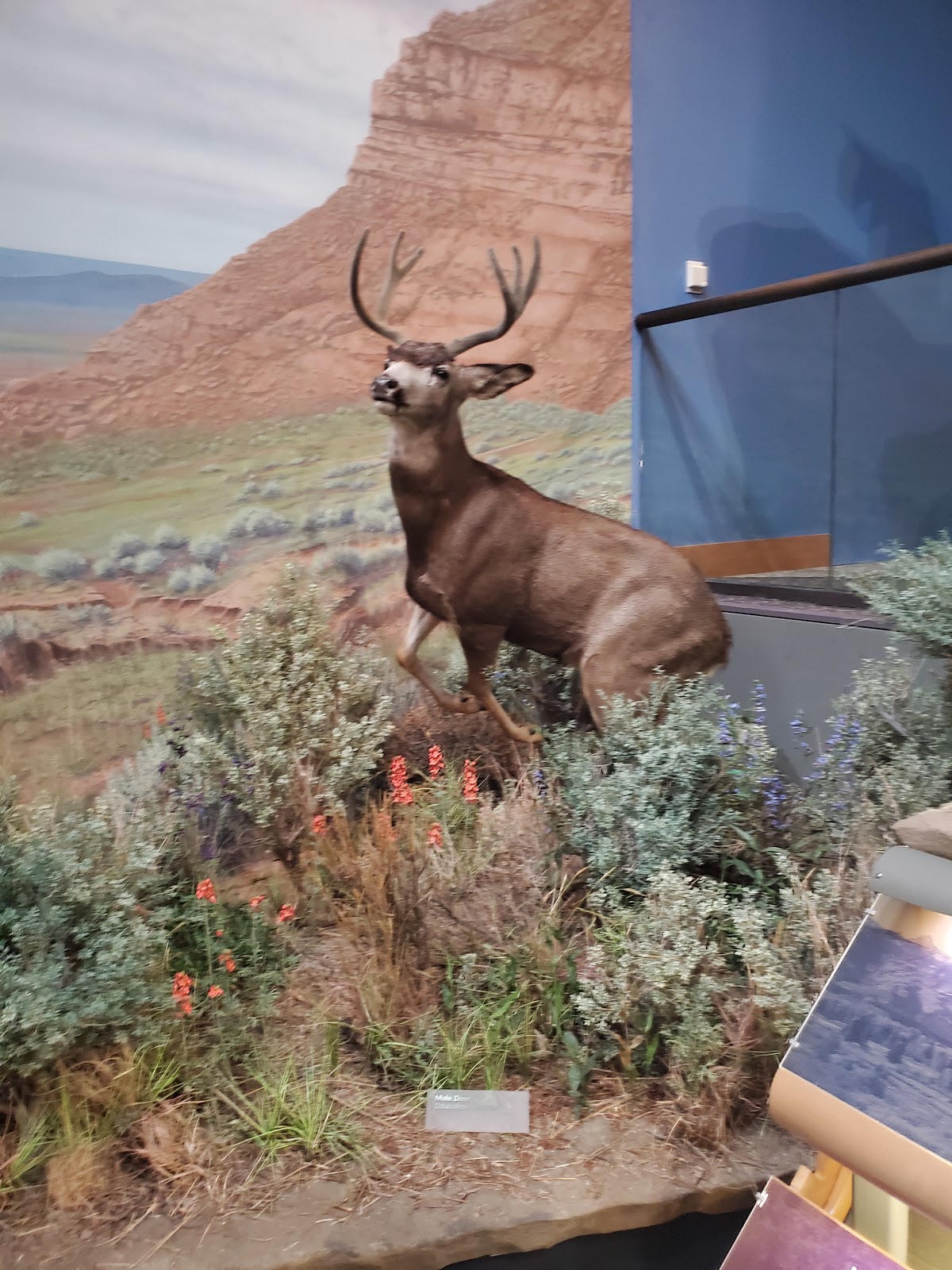
4. Draper Natural History Museum

Unlike traditional natural history museums, Draper presents an immersive, multi-sensory experience focused on the Greater Yellowstone ecosystem. You’ll walk a spiraling trail from alpine peaks to the plains, learning about:


  • Wildlife and geology of the region
  • Realistic dioramas and animal soundscapes
  • Conservation efforts and human impact on the environment

It’s an excellent choice for nature lovers and young learners alike.


5. Cody Firearms Museum

Home to over 10,000 firearms, this is the largest collection of its kind in the Western Hemisphere. Highlights include:


  • Historic guns from the American Revolution to modern-day
  • Firearms used in Hollywood Westerns
  • Weapons of war, hunting, and sport
  • Gun-making technology and craftsmanship displays

The museum doesn’t just celebrate firearms—it also addresses their cultural impact, legal context, and technological evolution.

The firearm section is HUGE!!! It takes a long time to get through, but it's interesting to see how they have evolved through the years.


McCracken Research Library

For scholars and serious researchers, the McCracken Library offers a vast collection of rare books, manuscripts, photographs, and archives focused on the American West, Buffalo Bill, and Native history.


Location:
720 Sheridan Ave, Cody, WY 82414

centerofthewest.org

 Open all year long.

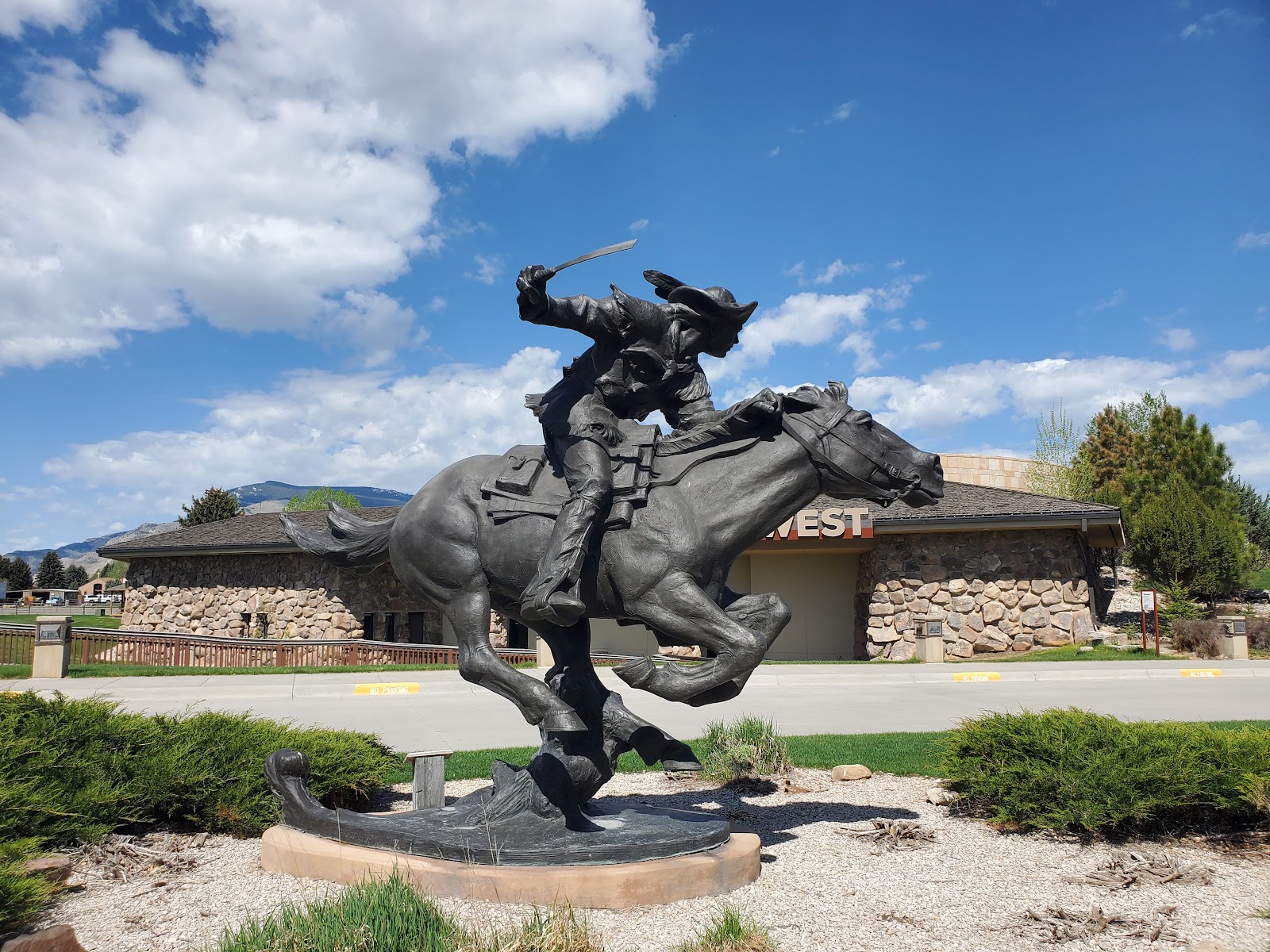
Though the iconic Pony Express rider is said to not be a specific rider, many believe it was molded after William F. Cody.


A visit to the Buffalo Bill Center of the West is more than a walk through history. The museum is a deep dive into the spirit, struggle, and artistry that shaped the American frontier. Whether you're retracing the footsteps of Buffalo Bill, admiring masterful Western paintings, you’ll come away with a richer understanding of the West.

It is a fascinating place and I can't recommend it enough. Plan on spending a full day there. Maybe even two days. 

Of course, a stop at the Irma hotel for dinner is a must as well.


Thursday, May 15, 2025

George Story's Interview with Reuben Hayes


INTERVIEW WITH REUBEN HAYES,

As Written Word for Word by George Story, Independent Reporter


So, Mr. Hayes, is it true you’ve killed over a dozen men?

I’ve never killed anyone that didn’t need it, and don’t rightly see as how it’s any of your dadblamed business.

Okay, we’ll table that for now.

We’ll table it period.

About Miss Baylor, the senator’s daughter—

We aren’t discussing Miss Baylor. Not now, not ever.

I hear she’s a guest of yours.

Sonny, unless you want that pretty face rearranged, I suggest you drop it.

Got it.

How about telling me about your ranch. I hear you are starting a new breed of cattle. Care to tell me about that?

Oh, I’m not starting it. Brandon Wade of Silverhills’ Ranch has started the new herehorn breed. I just plan on using his cattle to improve my herd.

Herehorn?

Yeah, it’s a cross between a Hereford and a longhorn.

And what makes them so special?

They taste better than longhorn beef and they’re stronger and more resilient than Herefords.

Now, Mr. Hayes, I don’t want my face rearranged but I hear Miss Baylor has a way with horses.

That she does. Took after her ma in that respect.

And that would be—

That’s enough about Miss Baylor and her ma.

Alright, what about this Hawk character, that’s working for you?

What about him?

I hear he’s a gunslinger.

I don’t set much store by rumor and innuendo. He’s saved Sage—er Miss Baylor —on more than one occasion from grievous harm. That’s good enough for me.

And what grievous harm was that?

I suggest you worry about your own grievous harm instead of Miss Baylor’s.

Okay. Okay. I’d appreciate it if you’d remove your fist from my shirt collar. Thank you. I just have one more question about your house guest.

You don’t listen very well, do you?

It’s a hazard of being a reporter. What is the daughter of a famous senator doing at your ranch?

This interview is over.

And that gentle reader was the end of my interview. Mr. Hayes jumped up so fast, he knocked over his chair. When he made a fist, I was seriously concerned about my face getting rearranged, but he just shook it at me and strode through the door. There’s a mystery here and I have every intention of getting to the bottom of it. Watch for my next column.


The crusty, middle-aged rancher had only ever loved one woman. And now her daughter stood on his doorstep.

 Available at Amazon