Showing posts with label Historical. Show all posts

Thursday, January 18, 2024

New Release: SHERIFF TYREE, second in the Keeper series


Blurb:

Keeper Tyree has a reputation of being the toughest, most fearsome bounty hunter in Kansas. Now he’s sheriff of El Dorado.


Description:

There’s a new sheriff in town.

Instead of chasing bounties all over the state, Keeper Tyree has taken the job of sheriff of El Dorado.

Everything is going well. He’s tamed the town and now he doesn’t have to knock more than a few heads together a day, and has no more than one or two occupants in the calaboose at a time. Then a stranger comes to town. A stranger bent on vengeance and the man he wants to bring down is Keeper.

Mitchell Jordan holds Keeper personally responsible for his daddy being hung. He believes in an eye for an eye and he’s out to even the score. A family member for a family member.

Keeper is fearless, except where his loved ones are concerned. They’re his one weakness and there’s nothing he won’t do to keep them safe. No matter which side of the law he has to come down on. There’s no right or wrong, there’s just taking care of his own. And now they’ve been threatened.

Jordan leads Keeper out of El Dorado down a winding trail of danger and deceit, and that trail won’t end till one of them is lying boots up six feet under.


Keeper surely does enjoy a good cup of coffee.


Dora, one of Maybell’s girls, is always flirting with him, but he only has eyes for his new bride.


When Keeper married Cathleen, he had the exact same ring he gave her made for her young daughter so Aislinn would know there was room in his heart for her too.


Bio:

Sandra, who writes as both Sandra Cox and S. Cox, is an animal lover and avid gardener. She spent a number of years in the Midwest chasing down good Southern BBQ. By the time she moved to North Carolina where Southern BBQ is practically a staple, she’d become a vegetarian.

She and her husband are ruled by a dog and several cats. An award-winning author, her stories consist of all things Western and more.

Sandra can be found at http://www.sandracoxwriter.com

OR http://www.cowboytrivia.blogspot.com

OR https://sandracox.blogspot.com 


Buy Link:

https://www.amazon.com/Sheriff-Tyree-Keeper-Book-2-ebook/dp/B0CN3S271W


Tuesday, December 21, 2021

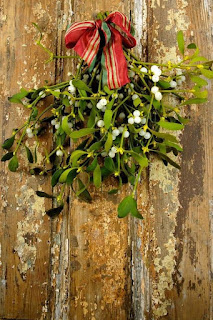
KISSING UNDER THE MISTLETOE By Kathleen Lawless @Kathleenlawless


           Mrs. B bustled in carrying a bowl full of punch.  “Look at you two under the mistletoe.”

          Noelle looked up in dismay.  Grant’s lips quirked in amusement.  “So we are.  Merry Christmas, my dear.”  He placed a finger under her chin and held it still for his kiss.  “May tonight mark the first of many joyous celebrations.”  His lips settled over hers, warm and full and sweetly familiar.  She started to melt into his embrace, parted her lips slightly, ready for more, when the door knocker banged loudly. 

          Grant pulled back, and stroked her full bottom lip with the tip of his finger.  “We’ll get back to this later.”  And tucking her arm through his, he flung open the door to admit the first of their guests.  From Mail Order Noelle. https://www.amazon.com/dp/B09GNYZD23


          Mistletoe history dates back thousands of years as a healing herb and romantic overtones likely began with the Celtic Druids.  Because mistletoe blossomed even during the frozen winter, Druids administered it to humans and animals in hopes of restoring fertility.  This association continued through the Middle Ages, and by the 18th century was incorporated into Christmas celebrations where the kissing tradition first caught on among the servants before spreading to the middle class.  Men were allowed to steal a kiss from any woman standing beneath it.  To refuse was considered bad luck.

          I particularly like the tradition where the kissing couple is to pluck a single berry from the mistletoe with each kiss, and stop once the berries are all gone.  I haven’t used that yet in a Christmas romance, but as you can see from the above excerpt, mistletoe is a useful prop. especially if either of the smitten couple is shy about making the first move. 

Mail Order Noelle is part of the Impostor for Christmas series.  You can see the series here.  https://www.amazon.com/dp/B09KRGTCZX

USA Today Bestselling author Kathleen Lawless blames a misspent youth watching Rawhide, Maverick and Bonanza for her fascination with cowboys, which doesn’t stop her from creating a wide variety of interests and occupations for her many alpha male heroes.   

Her hero, Steele, in HER UNDERCOVER COWBOY, is a modern-day cowboy, so when she was wooed by a man called Steel— while he’s not a cowboy, he is an alpha male and her forever hero.  Which is why all of her stories end Happily Ever After.

Sign up for Kathleen’s VIP Reader Newsletter to receive a free book, updates, special giveaways and fan-priced offers.    http://eepurl.com/bV0sb1


AMAZON | WEBSITE | FACEBOOK | TWITTER | BOOKBUB


Wednesday, May 27, 2015

A Big Difference in Books and Movies by Ginger Simpson

Just as we take creative license with our books, I believe movies and TV programs do the same, although editors and publishers always stress how important, as authors, our historical facts must be true and accurate.  The same doesn't seem to apply to movies.

Borrowed from Wikipedia
For example:  I watched one of my old favorite westerns while camping, Buffalo Girls.  In the movie, Wild Bill is played by Sam Elliott. (Yum...or used to be yum)  He and Calamity Jane Canary had a brief fling which resulted in the birth of a baby girl.  However, they weren't married in the movie and there is no historical mention of a marriage between the two, but in researching Wild Bill, I discovered  Jane Canary claims to have married and divorced Bill Hickok so he could wed Agnes Lake.  However, as I mentioned, there are no records to support Jane's marriage claim, but Bill did marry Agnes Thather Lake.  I found no record of offspring which makes sense since they married in March 1876 and Hickok died August 2, 1876.

Wild Bill had a colorful background.  A notable marksman at a young age, he meandered in and out of positions upholding the law.  Tall and thin, he earned derisive (according to Wikipedia) nicknames such as "Duck Bill" and "Shanghai Bill," and it wasn't until he grew a moustache in 1861 that he began calling himself "Wild Bill."  It's no wonder.  *smile*

During the Indian wars, he scouted for Custer's 7th Calvary, but then moved to Niagara Falls to try his hand at acting.  After he should no talent in that area, he return to what he knew best....being a lawman.  However, in one of his many shootouts, he accidentally shot and killed a deputy who was coming to his aid and was relieved of his duties in Abilene.

Wild Bill's colorful life came to an end in a saloon Deadwood in the Black Hills of Dakota.  He made it a habit to sit with his back to the wall while gambling, but this particular time, arrived late for the game and his seat was already taken by someone who refused to relinquish it.  A former buffalo hunter named, Jack McCall (AKA Crooked Nose Jack), entered unnoticed by Hickok, drew his pistol and shot Wild Bill in the back of the head, killing him instantly.  Another player was struck in the wrist by the bullet as it exited Hickok's right cheek.  The hand he was holding was sure to be a winner, two aces and two eights of spades;  now known as the "Dead Man's Hand."  The fifth card had yet to be revealed.

By the time of his death, Hickok had killed thirty-six men.  The motive for his own murder remains a mystery.  Some claim the shooter might have been paid to do the deed, other's claim it was payback for the way Wild Bill had embarrassed him the previous day, after McCall had lost all his money, Hickok gave him money for breakfast.  The most logical is the shooting was in retribution for the killing of McCall's brother, although there is really nothing to prove he was related to "Lew McCall," who was reportedly killed by the law in Abilene.

Taken From Google Images
McCall was acquitted (HUH?) and left for Wyoming, where he bragged about what he'd done and was rearrested and tried again.  This time, he was hung (March 1877.)

Times have really changed.  Double Jeopardy didn't exist in that time period because Wyoming was not yet recognized by the U.S. In the movie, Buffalo Gals, Calamity, along with her new baby and an old Indian, came to the Abilene where Wild Bill was killed and found they had just hanged someone.  Guess Who?  That's not true to history.

 Although some allege Calamity tried to organize a mob and threatened McCall with hanging, historical records reveal she was actually being held by the military at the time.  So much for historical accuracy in movies.  You can bet if we write about a novel about Wild Bill, it will be historically correct.

No baby, no marriage, no divorce, just the facts we can find that are historically accurate.  I guess the romantic part of Jane giving up her child because the father was dead and she couldn't care for the little girl, given the mother's lifestyle, just added appeal to being a Buffalo Gal.

If you would like to know more about the story of Wild Bill Hickok.  I just watched Legends and Lies based on Bill O'Reilly's book.  I enjoyed finding out the TRUE story, and those wanting to know more about Hickok's years enforcing the law and his shootouts...visit Wikipedia's page on Wild Bill.
BTW...O'Reilly's book was written by David Fisher, the author of more than a dozen bestsellers.  He has also written extensively for national magzines and newspapers.   Bill likes to brag about his books...you'd think he wrote them.  *lol*
Wikipedia Picture


Wednesday, September 24, 2014

It's Important for Author's To Read by Ginger Simpson #reading #writingtips

I have the benefit of sharing my daily blog with a very smart lady, Rita Karnopp, and her blogs give me fodder to share with you.  I was particularly impressed with her post yesterday in which she emphasized how important it is for us as authors to continue to read, thus learning and honing our craft.  I'm an avid reader, and until she mentioned how we often read something and either consider it an amateur mistake or something crafty we might try in an upcoming work-in-progress, I hadn't considered how often I'm stunned by content.  Since we are constantly under going the "red pencil" phase, I believe most of us read with an editorial eye, and that can be as helpful as it is annoying.

In her post, Rita mentioned that dancers are sure to study the style and movements of their peers, just as artists eye the creations of their competition.  Reading allows us to not only absorb a good story, but learn which pitfalls to avoid. I'm pretty sure if you read page after page of needless tags, that problem is going to stick in your head and remind you to avoid repeating the same error in your writing.  The same with the use of repetitive words in the same paragraph that show a lack of imagination or indicate a lazy writer.

The one thing I often hear from my peers, "I don't have time to read," is a farce.  There is always time to read, whether it be while sitting in the doctor's reception area, waiting for a bus, standing in a long grocery line or just taking a break from writing. How about in the bathroom?  One should always have a book or e-reader in hand because you never know what you will learn, and it sure helps to pass the time in a constructive way.

Thanks to my pal, Rita for always being a source of great information, and to her credit, I happily share the cover and blurb of one of her finest works...in my opinion.  If there are problems in this book, I was so engrossed in the story, I didn't even notice.  This is a mixture of history, futuristic, and is a real thriller to boot.

White Berry on the Red Willow 

As predicted in the Ghost Dance Vision, life has come full circle in 2054. The Blackfeet now control Yellowstone National Park, where the buffalo have multiplied, as have the people themselves. 

Outside the Indian lands thousands are dying of Quake Fever every day. Doctor Alcina Hancock struggles to find a cure before her mother dies. Thrust into the world of the Indians, she not only discovers what it will take to save her people, but also herself. 

Ekuskini, son of the Blackfeet chief, revels in the demise of the non-Indian. Then he meets Alcina and finds himself searching the old ones for the answers. Together Alcina and Ekuskini realize they must learn from the past and use it to make things better for the future of all people.

You can find your copy on Amazon.

.  

Wednesday, October 2, 2013

The Mercantile

When I began creating the Revolving Point, Texas series, I actually wanted the series set in a different town and state. I had read an article several years before about a nowhere town tucked away in Oklahoma. Outlaws hid there, providing the perfect setting for my outlaws to be outlaws, to win the hearts of the women they love and to redeem themselves at the end of each story. I had planned to begin with Buck and have him become sheriff of this town, but this place wasn't in existence during the timeframe of my story. So, I went back to fictional Revolving Point, which I had created in Luck of the Draw, the notorious town along the Rio Grande known for its lawlessness, card sharps and soiled doves. To make the series more interesting, I destroyed most of the town with a fire and conveyed through the three books the rebuilding of Revolving Point. The businesses I chose to keep were the jail, the boardinghouse, the telegraph and mail and Miller's saloon. All played important roles throughout the series, but it was the rebirth and further usage of the mercantile that gave me the most trouble.    

Zanna's Outlaw is the first book in the series. As the story opens, a newcomer has arrived and builds a new mercantile with his own money. For reasons I won't spoil, Buck runs this person out of town and Debra takes over managing the store. I didn't have a problem with her acting as proprietor in the second book, but when it came to the third book, Debra's Bandit, with Debra as the heroine, I found myself aggravated with Debra and the mercantile. I knew who she was, but I couldn't quite translate onto paper her true character and mannerisms. And then, it hit me as to why. Where I could move her hero around town and showcase his personality to readers through his actions, I couldn't with Debra. She was stuck inside that store.
 
I thought long and hard about Debra and the mercantile, on how to make both shine. I came up with the idea of giving Debra a helper, enabling her to leave the store and interact with other characters in different locales. But something else kept nagging at me. Finally, I realized the scenes with Debra inside the mercantile were wrong, even boring, because I wasn't using both properly. 
 
When I think of a mercantile, shelves of canned goods, sacks of flour and sugar and a back wall housing tools, guns and bullets come to mind. There's a counter with an old-fashioned cash register, maybe a glass jar with peppermint sticks and a potbellied stove in the corner. But the mercantile wasn't just a place to purchase dry goods. It was also a place where townsfolk and neighboring farmers and ranchers gathered to hear the latest news pertaining to the goings-on in town and cities both near and far. In essence, it was today's internet and telephone.
 
Once I was able to wrap my mind around the importance of the mercantile, I was able to make the store and my heroine shine. At heart, Debra is kind and caring. She's also the mom-and-pop business of yesterday. Her customers' needs for flour and coffee are important to her, but more important are the people themselves. Her eagerness to help others shines in the way she greets her customers, in how she takes the time to inquire after them and their families, in how she strives to ensure that everyone who walks through her door feels special and appreciated, which is true of today's mom-and-pop businesses. Now when I think of a mercantile, I imagine people who, like Debra, provided the community with more than just a hammer. I see a building and the person giving the townsfolk what they needed most--communication and a sense of belonging.    


Wednesday, April 17, 2013

Sioux Children #historical #western #American Indians

The following three major bands comprises the Great Sioux Nation:

Lakota - (Seven bands)
Oglala
Sicangu
Hunkpapa
Miniconjous
Sihasapa
Itazipacola

Dakota or Santee - (Four Bands)
Mdeakantonwon
Wahpeton
Wahpekute
Sisseton

Nakota or Yankton - (Three Bands)
Yankton
Upper Yankton
Lower Yankton

I've long had a fascination for the Sioux, specially the Lakota, and I've enjoyed learning how ritualistic the tribes are/were. In today's post, I'm going to share some facts concerning their children.:

BIRTH:
A time of celebration and showing thankfulness to the family.  Based upon the legend of the White Buffalo Woman, once a Sioux woman gave birth, she fulfilled her role to be fruitful and multiply.  At sometime during a woman's pregnancy, usually a grandmother or the mother, created twin turtle or lizard pouches, one to hold the baby's umbilical cord and the other to serve as a decoy.  Since both animals were considered "hardy, it stood to reason that using their image would serve to protect the child.  The true pouch was hidden in the child's cradleboard until the little one grew old enough to walk, and then worn around the neck.  At a certain point possession of the pouch reverted to the mother.

Winkte
Four days after birth, everyone in the village was invited to a feast to celebrate naming of the baby.  Contrary to rumors I've heard (mainly in a joke), children were usually named after their oldest living grandparent or a deceased grandparent held in high esteem.  Additional children were usually named by the father to herald a specific deed he had accomplished or maybe a dream he'd had.  In the case of boys, they were usually two names, one which was never spoken aloud.  The "secret" name was acquired from a "winkte" which surprisingly to me, was a male Indian who dressed like and possessed all the quilling and sewing skills of a woman.  If Lesbianism existed, it was less obvious than the role the transvestite played, and being a "winkte" was considered God-Like and thusly a name offered by that person would protect the child from harm.

Modern-day babies benefit from the colostrum from their mother's breasts, but in the case of the Sioux, and old woman called, sucking woman, or a ten-year-old girl was summoned to remove the first milk for three or four days in order to prevent the infant from having diarrhea.  Instead, babies were fed berry juices and soups through a nipple fashioned from an animal bladder.

Sioux mother and child
A child's first year was mainly spent bundled in a cradleboard.  Cattail down or buffalo chips (depending upon the season) were packed in the bundle to absorb the urine.  Feces were removed, but the bundling not necessary changed each time.  The mother assumed the care of the child, often assisted by another female member of the tribe (grandmother, sister, older sibling), and if the infant as female, the old sibling assumed responsibility from the beginning.  If the child was a male, her participation was limited to feeding and watching over the baby.

Although children remained securely confined for the majority of their infant-time, from the ages of four to seven, they were naked most of the time.  By the age of seven, more modesty was required, but the children were asked, not told what to do and physical violence was never used.

Setting up Camp
As the child grew, he/she received instructions from many of the family oriented Sioux tribe and were rarely disciplined and the Sioux revered their children.  Games played by the boy children were extremely physical and geared toward preparing the child for battle, and when a boy was old enough to sit a horse, he was given his own colt and instructions on the care of the animal by his father.  Girls talents, on the other hand, were not fostered by the father-son type relationship, rather gathered  from rules of conduct demanded of female Sioux.  Cooking, washing clothing, gathering wood, berry picking and keeping the home straightened were primary tasks, but later, young women were taught the art of quilling, scraping and drying hides and learned how to construct and relocate tepees.


Women were required to show kindness to all men and animals, be loving, achieving, and eat apart from the men.   The left side of the lodge was designated as the female's side, and she was required to speak only in the female language which consisted of words not much unlike Spanish where ending letters signify gender.  (Example:  hermano/hermana = brother/sister).  Most importantly, female children were geared to behave modestly and care for themselves and their family.

Next month:  More on tribal behavior.

Facts presented here were garned from reading "the Sioux" by Royal B. Hassrick and America's Fascinating Indian Heritage by Reader's Digest.  All images were secured from bing.com

Destiny's Bride, my latest release from Books We Love, in which I show the heroine's experience at witnessing the birth of a child as directed by Rainwoman, the old medicine woman:
Here's an excerpt from


The area inside was large and spacious. Cecile stood riveted against the wall and watched with eyes wide. To see a group of women assisting in the birth made the experience impersonal…and a tad intimidating.  Maybe she hadn’t become as immodest as she thought.  Her thoughts were drawn to the expectant mother by a low moan.
Raven Wing squatted over a small trough lined with a square of deerskin and grasped a stick driven into the ground to help maintain her balance while she gave in to the bearing down pains. With each contraction, one of the women pushed on Raven Wing’s abdomen to hasten the baby’s arrival.
Cecile wondered how long the woman had been in labor. Raven Wing’s face contorted with pain yet she never yelled or cried out despite her apparent anguish.  Having never witnessed a child’s birth before, Cecile became frightened and inched toward the door.
Rain Woman noticed and waggled a winger at her. “You must stay and watch so when your time comes you know what to expect.”
“Okay, Old Mother,” Cecile relented. “I will stay.” But she thought of a thousand things she’d rather be doing.
Finally, after lots of pushing and straining, Raven Wing’s blood-covered baby slipped out into the trough. The new mother fell back onto a bed of buffalo robes, totally spent and panting for breath. Rain Woman stepped in and cut and tied the umbilical cord then cleared the baby’s nose and mouth. The newborn boy immediately cried, flailing tiny arms in the air.

All my books are available at http://www.amazon.com/author/gingersimpson


Friday, March 15, 2013

Great Caesar's Ghost - the Ides of March!


GREAT CAESAR'S GHOST!!

DOUBLE OR NOTHING, Book 2 of the Double Series,
is releasing today!


How wonderful that today, March 15th, also known as the Ides of March, and my usual day to post something on Cowboy Kisses, happens to be the day my sequel to Double Crossing is being released! It's also my husband's birthday. Watch out, Caesar -- there's a knife in my new book, too.


Here's some of the research details I discovered about the Bowie knife. My hero Ace Diamond uses one, since he's from Texas.


Rezin Bowie, Jim Bowie's brother, created a single edged knife after a bull attack, which he survived (obviously!), and fitted it with a wood handle. The  nine inch long blade resembled a butcher knife, and he gave it or a similar knife to his brother. In fact, the brothers gave many knives out to friends, which is why it's so difficult to pin down the exact one.


After getting shot by the local sheriff, Jim swore he'd always have a knife on hand. So he used the one his brother gave him in what was famously termed the 'sandbar fight' on the Mississippi at Vidalia, Louisana, in September of 1827. Despite being stabbed and shot, he disemboweled one attacker, wounded another and chased off a third. 

The local newspaper spread his fame. He was also renowned for surviving an Indian raiding party with a small band of colleagues -- they'd been outnumbered 15 to 1, but only lost one man compared to 40 Indian dead and 30 wounded. More fame to claim, yet he rarely spoke of his adventurous exploits.


Sometime around 1829 or 1830, Jim Bowie had  asked blacksmith James Black to improve on his brother's design. He modified it to include a clipped point which was double-edged and added to its lethal power.


And of course, Bowie ended up at the Alamo in 1836 -- which really pushed the legend. Despite being ill in bed, he managed to use his knife, a gun and his fists to escort many Mexican soldiers with him to the pearly gates. 

Here's what a present day Bowie knife looks like, to the right.


I'm not a weapons expert, and I've been known to cut myself with a cheap Dollar Store paring knife. Give me those safety blades to carve pumpkins. Now those are safe! Here's an example of the other weapon my hero Ace Diamond uses in both books -- a stiletto. Minus the hand guard, I'm sure.


Ace kept the stiletto in his boot. Whether or not that's actually possible--well, the reader has to give an author a little slack! It is fiction, after all.

And now I come to sharing about my new release! Today I'm hosting a FB event, so come join the fun! I'll share more details about how writing this book almost disemboweled me (just kidding, of course, but close to it!)

Here's the dynamic cover -- the pocket watch is Lily's father's, the photograph could be of her parents, and the cards are from Ace's poker hand. 


A mysterious explosion. A man framed for murder. A strong woman determined to prove his innocence.
October, 1869: Lily Granville, now heiress to a considerable fortune, rebels against her uncle’s strict rules in Sacramento, California. Ace Diamond, determined to win Lily, invests in a dynamite factory for a quick “killing,” but his status as a successful businessman fails to impress her guardian.

An explosion in San Francisco, mere hours before Lily elopes with Ace to avoid a forced marriage, sets off a chain of unforeseen consequences.
Despite Lily’s protests that her new husband has been framed, Ace is dragged off to jail as the culprit. 

Evidence mounts against him. Lily must learn who was actually behind the diabolical plan… and save Ace from the hangman’s noose.
Will she become a widow before a true wife?

Here's the BOOK TRAILER!!! YEEEHAW!

BUY LINKS -- Amazon for Kindle, B&N for Nook, Smashwords for other ereader devices! Print edition coming coming later!