Showing posts with label Kansas. Show all posts

Friday, August 13, 2021

My Story Inspiration for Between Love & Lies

  My Story Inspiration
By Jacqui Nelson

What inspires a story? For me, it's often reading about history and then saying, "What if...?" 

That's what happened when I read about Dodge City, the Queen of Cattle Towns, and the damage something as tiny as a tick could do—and might do in my story. 

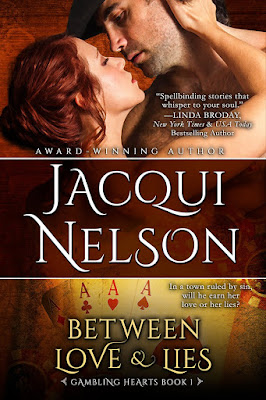
Below is the Story Inspiration page (a page I've included in the back of all of my books) for Between Love and Lies (book 1 in my Gambling Hearts series)...

Between Love and Lies book cover


BETWEEN LOVE & LIES 


Story Inspiration page ~ from the back of the book

The spark for Between Love & Lies came from the letter below and my collection of Time-Life Old West books containing these lines: “The longhorns were carriers of a microscopic tick. The Texas animals were immune to the parasite, but the same tick produced deadly splenic fever in local cattle.”

I imagined a small farm, held together only by the grit and hard work of its owner, might not survive such an event. I wondered what might happen next, both on that unlucky farm and in the nearest town: Dodge City, the Queen of Cattle Towns—where life would be challenging for a woman who luck had deserted.


January 1, 1878 - Letter in the Washington, D. C. Evening Star


“Dodge City is a wicked little town. Here those nomads in regions remote from the restraints of moral, civil, social, and law enforcing life, the Texas cattle drovers, from the very tendencies of their situation the embodiment of waywardness and wantonness, end the journey with their herds, and here they loiter and dissipate, sometimes for months, and share the boughten dalliances of fallen women.”

Welcome to Dodge City, the Sin City of the 1870s. Secrets, lies, and danger lurk around every corner.


BETWEEN LOVE & LIES

Gambling Hearts Series, Book 1

Dodge City, Kansas – 1877

Sadie Sullivan lost everything when a herd of longhorn cattle bound for Dodge City destroyed her farm. Now she works in Dodge—one of the most wicked and lawless towns in the West—at the Northern Star Saloon. But her survival in this new world of sin and violence depends on maintaining a lie so deadly it could end her life before the town of Dodge can.

The one man capable of unraveling Sadie’s secrets is Noah Ballantyne, the Texan rancher whose herd destroyed her home. Back in town and taking up the role of deputy alongside legendary lawman Bat Masterson, Noah vows he won’t leave until he’s made things right. But with the saloon’s madam unwilling to release Sadie and a rich cattle baron wanting her as well, the odds aren’t in favor of finding love…or leaving town alive.

In a town ruled by sin, will he earn her love or her lies?


Book review "I loved all the action in addition to the romance of the story."


THE GAMBLING HEARTS SERIES 

Between Love & Lies, book 1
Between Home & Heartbreak, book 2

The Gambling Hearts series. Love is a gamble, especially if you're holding a losing hand.


Hope you enjoyed my writing inspiration and that your Friday and your August are...filled with many relaxing moments enjoying the summerand lots of good books too! ❤️📚

~ * ~

Jacqui's author photo

Join me on 

Follow me on 

Friday, July 9, 2021

My Story Inspiration for Adella's Enemy

  My Story Inspiration

By Jacqui Nelson

What inspires a story and an author to finally publish that story? How many stories does an author write before joining the publishing world...just that one or many more? 

Last month, I shared my Story Inspiration page (the page I've included in the back of all of my books) for Rescuing Raven, the free read for my newsletter subscribers

Now I'm excited to share the Story Inspiration page for the first book I published! 

Adella's Enemy wasn't the 1st book I wrote (it was the 4th), but it was the one that launched me into the self-publishing world -- with the help of two writing friends who invited me to join their group project. 

Adella's Enemy book cover

ADELLA'S ENEMY 


Story Inspiration page ~ from the back of the book

Have you watched the TV series Hell on Wheels? Would you like to write a railroad romance with a race for riches? Those were the questions asked by Elisabeth Burke and Jennifer Jakes. Without them, Adella’s Enemy would never have been written.

Post-Civil War America was a time of great tension and transition but also incredible opportunities for prosperity—if you played your cards right. Instead of weeks or months to cross America, when its transcontinental railroad was completed in May 1869, the journey was reduced to less than a week. The railroad builders’ and camp followers’ journeys (and fates and fortunes) made Hell on Wheels.

Time is money for travelers and builders—from the worker laying track to the smooth-talking promoter overseeing construction and the proposed route. The proximity of a railroad could make or break a town’s future and a speculator’s fortune. The entire endeavor often became a cutthroat race for riches. 

In Adella and Cormac’s story, I like to think their race for revenge, forgiveness and, above all, love provided the greatest riches of all.

Can the pursuit of an old enemy lead to a new love?


ADELLA'S ENEMY

The Katy Railroad, Kansas
 – 1870

The War Between the States ended five years ago, but she still pursues her enemy…

Rebel spy turned government rabble-rouser Adella Willows receives her mission straight from a Washington senator—play havoc with the Katy Railroad and derail its bid to win the race. The senator craves wealth. Adella craves revenge against the man responsible for her brother’s death. But her plans crumble into chaos when she enters a battle of wits with the railroad’s foreman.

An ocean separates him from his failures in Ireland, but he’s still haunted by those who died…

Seasoned railroad foreman Cormac McGrady’s sole desire is keeping his workmen safe and employed, which means keeping the Katy ahead of its rivals. But the beautiful spy bedeviling his railroad needs protecting as well. Cormac must choose between winning the race and winning Adella’s heart, while Adella must choose whether she lives for revenge or dies for love.

Click here to read an excerpt on my website.


What readers are saying about Adella...


Book review "Adella is feisty, funny and truly kick-ass."

What readers are saying about Cormac...


Book Review "Sexy Celtic hero in the Wild West - can't get much better than that."


Hope you enjoyed my writing inspiration and that your Friday and your July are...filled with your favorite things ❤️

~ * ~

Jacqui's author photo

Join me on 

Follow me on 

Wednesday, April 15, 2020

THE WOMAN WARRIOR FROM WICHITA


by Andrea Downing
Mary Elizabeth Clyens Lease is usually associated with Kansas, but that was not her home state. She was born in 1850 (she later claimed 1853) in  PA to parents of Irish origin, and educated at St. Elizabeth’s Academy in Allegheny, NY.  The school was basically a finishing school run by Franciscan nuns, but they also had a diploma and college preparatory course which Mary may have taken part in. When her father, a Union soldier, died in Andersonville Prison during the Civil War, the family struggled financially.  In 1870, Mary’s mother sent her to teach at St. Ann’s Academy at the Osage Mission in St. Paul, KS.
In 1873, Mary married a local pharmacist’s clerk, Charles Lease. The economic panic of that year left Charles jobless and over the next few years, he shifted from job to job, and the couple lost their farm in Kingman County.  Now with four children, the Leases eventually moved to Denison, TX, where Charles took a job at Acheson’s Drugstore. This proved to be a lucky association for Mary who became friendly with Mrs. Sarah Acheson. Acheson encouraged her to become involved with the temperance movement, thereby lighting the spark in Mary for political agitation. While she took in washing, she also studied law, pinning her class notes above the washtub. A gifted speaker, Mary made her first speech to the Women’s Christian Temperance Union, and thereby started her career as a political firebrand. Meanwhile, Charles had been attempting to improve their financial status by buying and selling lots along the new railroad.
Now with six children in tow, the Leases moved back to Wichita, KS, in 1883, and Mary was admitted to the KS Bar in 1885, the first woman to do so.  In 1888, she became active in the Labor Union Party—you might say she was the Bernie Sanders of her time, with strong beliefs against monopolies and big business, and an even stronger Georgist stance. Georgism is difficult for me to understand, I admit, but basically it holds that people should be taxed on the value of their land and the wealth from it—I think!  Strongly pro-farmers and against the railroads’ high fees, and mortgage rates, the common man found Mary’s fervent speeches inspirational, while politicians and businessmen and newspapers sought to bring her down and criticize everything from her
Cooper Union
appearance on. By 1890, she was a founding member of the People’s Party, or Populist Party. To give you a sample of one of her speeches, in 1896 she was at Cooper Union in NY under the auspices of the Social Reform Club.  In a speech sprinkled with derisiveness against the names of Rothschild, Whitney, and Vanderbilt, she proclaimed, “…
here in this country we find in place of an aristocracy of royalty an aristocracy of wealth. Far more dangerous to the race is it than the aristocracy of royalty. It is the aristocracy of gold that disintegrates society, destroys individuals and has ruined the proudest nations.”

When the Populists made to form an association with the Democrats, Mary parted with them. She believed the Democrats had been responsible for the Civil War which, with the loss of her father and brother, she thought had been brought about by businessmen who profited from it.  While she was the first woman to be appointed as State Superintendent of Charities, Mary continued her socialist career.  In 1895, she wrote The Problem of Civilisation Solved, a book that infuriated the anti-Imperialists as it advocated US take-over of Latin America. While declaring herself a socialist, she campaigned for William Jennings Bryan, a foremost Democrat. Naturally, she also advocated for women’s rights, but mostly she had set her sights on Wall St. and the wealthy. In a speech entitled, ‘Wall Street Owns the Country,’ she proclaimed, “We fought England for our liberty and put chains on four million of blacks. We wiped out slavery and our tariff laws and national banks began a system of white wage slavery worse than the first…We want money, land and transportation. We want the abolition of the National Banks, and we want the power to make loans direct from the government. We want the foreclosure system wiped out... We will stand by our homes and stay by our fireside by force if necessary, and we will not pay our debts to the loan-shark companies until the government pays its debts to us…”
Mary Elizabeth Lease divorced her husband in 1902 and continued to be active on several fronts for many years. She was a member of the Daughters of Isabella, the female charitable, social and spiritual twin to the Knights of Columbus; a member of the Knights of Labor, which rose up against the railroads in 1884/85; an associate of the Prohibition Lecture Bureau; and a member of the Citizens’ Alliance which sought to strengthen the rights of working people.  She also relinquished her Catholic upbringing in favor of Christian Scientists.
State of Mary Elizabeth Lease in Wichita, KS, by Sculptor Babs Mellor
In her later years, Mary Elizabeth Lease lived with one or other of her four surviving children and wrote for Joseph Pulitzer’s publication, the New York World. By 1918, she had faded from the political scene and was lecturing for the NY Board of Education. She lived to see many of the treatises in which she believed come to fruition, including women’s suffrage and Prohibition, and was a strong admirer of Theodore Roosevelt whose Progressive Party, she believed, had taken up all the precepts of her Populist Party.
Mary Elizabeth Lease died in Callicoon, NY, in 1933.


There are no political firebrands in my book, Always on My Mind, although it certainly portrays a time—the seventies—when politics were to the forefront.  Here’s a bit about it:
1972 - Vietnam, the pill, upheaval, hippies.
Wyoming rancher Cooper Byrnes, deeply attached to the land and his way of life, surprises everyone when he falls for vagabond hippie Cassie Halliday. Fascinated and baffled, he cannot comprehend his attraction—or say the words she wants to hear.

Cassie finds Coop intriguingly different. As she keeps house for him and warms his bed at night, she admits to herself she loves him but she misinterprets Coop's inability to express his feelings.

Parted, each continues to think of the other, but how can either of them reach out to say, "You were 'always on my mind'?"

And it’s available from:


All photos believed public domain.  No copyright infringement is intended.


Friday, March 27, 2020

Kansas Forts Along the Smoky Hill Trail-FORT RILEY by Zina Abbott


For my next four books, my writing has taken me to frontier Kansas. In particular, I have researched the primary trails and frontier forts along those trails. For the next several months, I will be sharing with you regarding the Kansas Forts along the Smoky Hill Trail.

Today I am starting from the eastern part of Kansas with Fort Riley. Even though by the time the American Civil War ended, this part of Kansas was no longer on the frontier, it was a primary supply center for the forts in western Kansas. Situated along the Smoky Hill Trail in eastern Kansas, goods traveled by military mule teams, or, more commonly, by contract freight trains comprised by oxen-pulled wagons to their destinations in the west.

In the early 1850s the army needed a site west of Fort Leavenworth to cope with the inevitable clashes between emigrant tribes, long-established tribes, and Americans who were arriving in greater numbers. Military officials decided that necessary repairs to Fort Leavenworth, along the Missouri River in Kansas, would be a waste because it was too far to the east to enforce boundaries and policies. A more strategically sensible position was desired. 

In 1852, a troop of the First Dragoons escorted Major E.A. Ogden went on a reconnaissance mission to find a site for a new post. Major Odgen found the most promising terrain near the juncture of the Smoky Hill and Republican rivers, a long-established crossroads of Indian activity. It was first known as Camp Center, because of its proximity to the geographical center of the United States.

Plan for Fort Riley
Fort Riley is located on the north bank of the Kansas River three miles from Junction City at the junction of the Republican and Smoky Hill Rivers. It was located between the Oregon and Santa Fe trails to provide protection for travelers on overland routes. It was established 17 May 1853 in Kansas Territory by Captain Charles S. Lovell, 6th U.S. Infantry, on a site recommended by Colonel Thomas T. Flauntleroy, 1st U. S. Dragoons.

On 27 June 1853, it was designated Fort Riley, in honor of Colonel Bennett Riley, 1st U.S. Infantry, who led the first military escort along the Santa Fe Trail and who died on 9 June 1853. Construction of the permanent cavalry post was commenced in 1855 under the direction of Captain Edmund A. Ogden, 8th U. S. Infantry.

Soldiers erected a few temporary buildings in 1853, but Major Ogden oversaw the principal construction of the permanent buildings of the fort beginning in 1855. In July of that year, a cholera epidemic broke in the fort. Although short-lived, by the time it ended, an estimated 75 to 125 persons in the region died, including Major Ogden.

Fort Riley and the Plains Indians
Even before the Civil War, soldiers from Fort Riley fought in major campaigns against Indians as they executed and enforced the laws and policies of the United States government. Fort Riley was the stage for the Second Dragoon Sioux Campaign of 1855, the Cheyenne Expedition of 1857, the 1860 Comanche and Kiowa Expedition, and the Curtis Expedition of 1864.

With the opening of Kansas Territory in 1854, Fort Riley’s first mission was to protect those Americans settling in the new region. Eventually, it's main function became organizing and drilling troops and source of supplies. As more forts were established in the west part of the state, it soon became a supply depot headquarters for the western Army forts.

As a cavalry post, the horse trade was especially important. The army had strict regulations about the quality of horses to be purchased and who might serve as suppliers. Most of the cavalry horses at Fort Riley came from Fort Leavenworth and St. Louis. These “American” horses were capable of carrying a 450-pound load.
 
Fort Riley 1866
Fort Riley also served as the headquarters of the District of the Upper Arkansas, responsible for the army’s operations and posts in western Kansas and eastern Colorado under the command of Major General Samuel R. Curtis at Fort Leavenworth who headed the Department of Kansas, which included the Territory of Colorado, Indian Territory, and the state of Kansas.

Soldiers from Fort Riley assisted in treaty arrangements with many Indian nations. Some agreements were concluded with relative ease, often facilitated by chicanery as in the cases of the Kaws and immigrant Potawatomis, Shawnees, and Delawares. Many Indians in Kansas became US citizens through the treaty process, but others were more resistant to change. These included Cheyennes, Arapahos, Comanches, and Kiowas. It was because of the resistance from these tribes that Fort Riley and many of the forts to the west that it supplied fought military campaigns over the 1860s into the early part of the 1870s to conclude what they considered meaningful treaties with these tribes. Even after peace treaties were in place, the problems did not end.

Fort Riley involved itself with policing actions. Notable among them was their failed efforts to control squatters from taking over Kaw reservation land in Council Grove. Other policing actions included incarcerating Indian prisoners, which proved to be unsuccessful since the facilities were open and its boundaries easily breached.

After the Civil War, troops from Fort Riley were needed to protect workers constructing the Kansas Pacific Railroad from the Indian attacks.

In 1887, Fort Riley became the site of the United States Cavalry School. The famous all-black 9th and 10th Cavalry Regiments, the soldiers of which were called "Buffalo Soldiers", were stationed at Fort Riley at various times in the 19th and early 20th centuries.

There were nine major frontier forts established in Kansas, as well as several smaller, temporary camps. Of those forts, Fort Riley is one of the two nineteenth century forts still active today.

Starting in the twentieth century, during World War I, the fort was home to 50,000 soldiers, and it is sometimes identified as ground zero for the 1918 Spanish flu pandemic, which its soldiers were said to have spread all over the world. Since the end of World War II, various infantry divisions have been assigned there. Most notably, from 1955-1996 the post was home to the famed Big Red One. Between 1999-2006, the post was headquarters to the 24th Infantry Division (Mechanized) and known as "America's Warfighting Center". In August 2006, the Big Red One relocated its headquarters to Fort Riley from Leighton Barracks, Germany.

Notable people from the nineteenth century at Fort Riley:

Major E.A. Ogden who died in the cholera epidemic to hit Fort Riley in 1855.

In 1864 Major Benjamin S. Henning commanded the U.S. Army’s District of the Upper Arkansas from Fort Riley.

7th Cavalry at Fort Riley
George A. Custer was stationed at the fort in 1866. That same year he formed the 7th Cavalry. 

Wild Bill Hickok was a scout for Fort Riley starting in 1867.

Today is release day for my novel, Hannah’s Handkerchief, Book 24 in the Lockets & Lace series (also Book 4 in the Atwell Kin series). The opening chapters take place at Fort Riley. As will my other Atwell Kin books, an underlying theme involves the situation with the Kaw (Kansa) tribe who made early treaties with the United States which were not enforced to these people’s detriment.

To read the book description and find the purchase link, please CLICK HERE.


Sources:
http://www.vlib.us/old_west/forts.html#riley
Sherow, James E.;  Kansas History: A Journal of the Central Plains
Wikipedia: Fort Riley

Friday, February 28, 2020

KANSAS FORTS AND TRAILS by Zina Abbott


I’m sure I’m not the only historical author who has found herself in this position.

I’m writing another book for the Lockets and Lace series. My earlier books have dealt with the Atwell family that (mostly) settled in Salina, Kansas. They have dealt with Fort Riley and the Kaw, or Kansa, Indians, as well as suffered some excitement because of the hostile native tribes. Although I have researched quite a bit about these topics, my current book is set in the second half of the 1860s, which means several more forts were built in Kansas, especially as the American Civil War drew to an end.

In 1858, gold was discovered at Cherry Creek in Denver and started the Pike’s Peak gold rush, thus turning the Indian trail that followed the Smoky Hill River into a prospectors’ and freighters’ trail. In 1862, several bills were signed into law by President Lincoln, including the Homestead Act. That act opened the floodgates of those Americans choosing to move west to claim land. Many chose to homestead on the buffalo hunting grounds of the Cheyenne, Kaw, Arapaho, and several other tribes. After Butterfield lost his contract to use the Southern route, he established his new route to Denver through Kansas.
 
Frank C McCarthy- The Run to the Way Station
While the white Americans were fighting each other in their civil war, several native tribes took advantage of the situation and raised havoc with the whites who settled on or crossed their land. This continued through the late a860s and 1870s until all the hostile Plains tribes were subdued, forced to sign treaties, and confined to reservations.

These forts were not established for long-term use like Ft. Leavenworth or Ft. Riley. The following is from Marvin H. Garfield who wrote The Frontier Defenses of Kansas:
 
"THE name “fort” is perhaps a misnomer when applied to the military posts of the western frontier during the sixties. No huge, grim structure of defense which usually is associated with the name fort was ever erected on the western border. Nor did the western fort usually possess a stockade or blockhouse for defensive purposes. Officers' quarters, soldiers' barracks, stables, military storehouses and headquarters buildings, grouped around a trim parade ground, constituted the frontier fort. While no doubt a disappointment to many of its critics the military post of the Middle West admirably fulfilled the purposes for which it was constructed, i. e., the keeping open of lines of travel and communication and the protection of outlying settlements."
                              
Fort Larned 1867
Here is a tidbit about Fort Larned that explains the purpose for the existence of most of the Kansas frontier forts of the 1860s and 1870s:

     Fort Larned came into existence on October 22, 1859, in response to the need to protect the constantly increasing traffic and the recently established stage stations on the Trail from the resistance of the Plains Indians. The post was first called "Camp on Pawnee Fork." On February 1, 1860, orders were issued changing the name to "Camp Alert" because the small garrison of about 50 men had to remain constantly alert for Indians. 

Back to my research. I have my heroine interested in two Army officers she meets at Fort Riley. However, with the building of the frontier forts to the west, and Fort Riley having been established as the primary supply fort for many other forts she must deal with them being sent where needed.

I found some great information about the Kansas forts. The Kansapedia Kansas Historical Society and Legions of America sites are wonderful sources for information. However, I’m a charts and graphs girl. I needed the big VISUAL picture.

Author's chart of Kansas frontier forts (partial)

First, I searched for information about the Kansas forts, the part of the state each fort served, and its primary purposes. I put together a excel spreadsheet that probably only makes sense to me. However, it did allow me to understand three things: 

  *  Most of the newer forts (camps, cantonments) were built along one of two trails: Santa Fe Trail or the Smoky Hill Trail. In fact, Fort Leavenworth that was first established in 1827 as Cantonment Leavenworth had as one of its missions the protection of the Santa Fe Trail.
  *  Most of the newer frontier forts in Kansas were built specifically to deal with protecting white American interests from the hostile Native American tribes. Once their purpose was served, they were discontinued.
  *  Civilian towns grew up around several of the forts. Once the forts in those locations were abandoned, all that remained were the towns.

Why am I so late posting today? I’ve been making a map. Why did I not use one already available? I was unable to find one in the public domain. However, I did find a public domain Kansas river map, and little ol’ mapmaker me put this together. It does the job. It also convinced me I need to invest in one of those pens that goes with my photo-editing program. The mouse and I don't get along well when it comes to freehand drawing.
 
Author's towns, forts, and trails map - not drawn to scale

Based on this information, I have decided my Jake Burdock in Hannah’s Handkerchief will be sent to head up a freight train escort from Fort Riley to Fort Harker. After, he will be assigned farther west to help deal with the hostilities. My Hannah falls in love with Andrew Call at Fort Riley. he also is involved in supplying the forts on both the trails. Seeing the map, and knowing the years the forts were built, helped me put it all together--important since my story starts in 1865, and some of the forts were established a year or two later.

Now I have the big picture before me, it is time to finish the fine details in my writing and get the book out to my readers.

Hannah’sHandkerchief just has its cover reveal earlier this week. It is now on preorder. It will be available March 27th. You may read the book description by CLICKING HERE.

Here is a snippet:

         Finally, he stood before her and asked her for the next dance, which happened to be a waltz. She noticed he was not more than three inches taller than she was. Although compactly built, his broad shoulders and narrow waist filled out his uniform well. His dark brown eyes appeared to dance with a light that came from a different source than those that lit the ballroom.
         “May I introduce myself. I’m Lieutenant Burdock.”
         “Pleased to meet you, lieutenant. I’m Miss Atwell.” Much to Hannah’s chagrin, Mrs. Prescott had earlier coached both her and Kizzie not to offer their first names.
         “Ah. I have already had the pleasure of meeting another Miss Atwell this night.”
         Hannah had to force herself to keep from grimacing. She did not want Lieutenant Burdock to be overly impressed with Kizzie. Instead, she smiled. “Yes. That would be my cousin.”

If you think I went to all this work for one book, think again. I will be writing two short novellas—just the right size for quick summer reads—and will use this same research for their plots. Mail Order Roslyn and Mail Order Penelope, both part of the Widows, Brides & Secret Babies series, do not have preorder links yet. I just barely shared their covers. Here are three things I can tell you about this pair of stories:
  *  Although written as stand-alone books, this pair of novellas will be a duet—a series within a series.
  *  Roslyn and Penelope are cousins.
  *  Both stories involve stagecoaches (along the new Butterfield Overland Despatch trail that follows the Smoky Hill Trail protected by above-discussed Kansas frontier forts.)


Sources:
https://kshs.org/p/the-military-post-as-a-factor-in-the-frontier-defense-of-kansas/12525

https://www.santafetrailresearch.com/research/fort-larned.html