Thursday, June 13, 2024

Western Saloons – More than just drinking dens

The flickering glow of oil lamps casts dim light on a long wooden bar and the faded advertisements hanging on the walls. Tobacco smoke forms crooked halos above the heads of men gathered around rough-hewn tables and mingles with the pungent odor of sweat and unwashed bodies. Ruggedness, camaraderie, and a hint of danger linger in the air.

That’s often what comes to mind when we picture a 19th century saloon, but the ambiance and appearance of saloons in the Old West could vary widely, depending on factors such as location, clientele, and the preferences of the owner. That said, they generally fell into two broad categories: relatively upscale (and even luxurious) or plain and utilitarian.

In larger cities with affluent populations, some saloons aimed for a classy atmosphere. These establishments often featured elegant furnishings, such as polished wood bars, brass fixtures, and plush seating. Decor could include ornate mirrors, elaborate chandeliers, and decorative wall hangings. Upscale saloons often invested in finer glassware and serving vessels and may have employed well-dressed bartenders and waitstaff to cater to a more discerning clientele.

In smaller towns and rural areas, saloons tended to be simpler and rustic in appearance. They were often housed in basic wooden buildings with little in the way of decoration. The bar might be a simple wooden counter. Lighting was typically provided by oil lamps or candles, contributing to a dim and sometimes smoky interior. These saloons prioritized function over form.

Regardless of their level of fanciness, cleanliness and hygiene standards in 19th-century saloons could vary widely. Some saloon owners took pride in maintaining a sanitary establishment, while others were less diligent in this regard. Factors, such as the availability of clean water, played a role in determining the cleanliness of a saloon.

Despite their differences in appearance, saloons of all kinds shared certain common characteristics. They were typically loud, bustling places filled with the sounds of conversation, laughter, and occasionally music. Smoke from cigars and pipes often hung in the air, contributing to the distinctive ambiance of the Old West saloon. Regardless, saloons were important social hubs where people from all walks of life came together to drink, socialize, and unwind.

Even though the primary function of a saloon was to serve alcohol, 19th-century saloons offered a wide range of services beyond just that. Saloon owners stocked a variety of drinks to cater to different tastes and preferences. Many also served food, ranging from simple bar snacks to more substantial fare, such as sandwiches, stews, and chili. While the quality of the food varied depending on the establishment, it provided patrons with sustenance to accompany their drinks.

Some saloons offered rooms for rent upstairs or in adjoining buildings. These accommodations were often basic, with little more than a bed and a wash basin, but they provided travelers with a place to rest for the night.

In the absence of formal banks in many frontier towns, saloons sometimes acted as makeshift financial institutions. Patrons could cash checks, exchange currency, or even secure loans from the saloon owner. Some saloons also offered safe deposit boxes where patrons could store valuables. Some saloons served as informal post offices or communication centers. Travelers passing through town could leave or pick up messages, letters, or packages there. Additionally, telegraph lines were sometimes connected to saloons, allowing for long-distance communication.

Saloons often doubled as meeting spaces for various community groups, such as fraternal organizations, political clubs, or business associations. These gatherings provided opportunities for networking, organizing, and socializing outside of regular business hours. Many were lively entertainment venues. Piano and guitar music were common, as were stage performances of singing, dancing, and comedy acts. Games, such as Faro, billiards and darts, were popular forms of entertainment.

Some saloons crossed the line from lively to dangerous. Take the Long Branch Saloon in Dodge City, Kansas. According to the Legends of America website, it lived up to the Wild West image. “Back in the 1870’s [around the time the saloon was built], Dodge City began to acquire its infamous stamp of lawlessness and gun-slinging. Without local or military law enforcement, buffalo hunters, railroad workers, drifters, cowboys, and soldiers scrapped and fought, leading to the shootings where men died with their boots on.”

Overall, saloons in the 19th century were multifunctional establishments that provided a range of services to their patrons, catering to their social, recreational, and practical needs. And they were surprisingly plentiful. In 1883, though it had only 3,000 residents, Livingston, Montana had 33 saloons!

Some Wild West saloons are still open for business today. 

Have you ever visited one?

###

I revealed the cover of my next book last week! Did you miss it?

If you don't follow my author blog or subscribe to my newsletter (you get a free book when you do), you likely did.  

To see it, click here.

Thanks for stopping by!


Tuesday, June 11, 2024

Eye of the Beholder


What Is Beauty?

 I recently received a comment from a reader who scolded me for always writing about beautiful heroines and handsome heroes. She said she couldn't relate to them because they were so gorgeous. She wished I would write about real, plain old people. I responded that beauty is in the eye of the beholder. Since I get into my characters' viewpoints, I see what they see, and they happen to like what they see in the hero or heroine.

But it goes beyond that. I have studied human to human attraction and responses. People are predictable when it comes to the signals and reactions we have to each other when we are attracted or sexually stimulated. Men are more visually stimulated than women and are also more acutely aware of aromas. Women are also visually stimulated, but not as much as men. They listen more than men and respond more to what they hear and sense.

While some romance writers have gone against the grain and written books with central characters who have scars, eye patches, missing limbs, are in wheelchairs, etc. and those books are certainly interesting and worthy of publication, the fact remains that the majority of romance readers prefer to read about attractive people. More importantly, they want the main characters to be good, decent people.

I used to tell my writing students that most women really don't want to read about a hero who is balding, a bit over-weight, and burps in public because they are married to that guy. And while they might identify with an over-weight, middle-aged heroine, they don't particularly want to read about those women all the time. Romances must have an element of fantasy or they just don't live up to the genre.

Instead of creating physically flawed people I like to create emotionally flawed people. They are far more interesting and almost everyone can relate to them. No matter how they look.

Just remember that beauty is subjective. The man you think is gorgeous could turn off your best friend and your mother might think he is as homely as homemade soap. But if I'm writing in your point of view, he is going to be a hunka-hunka-burnin-love.

Those Unruly Characters

Post (C) by Doris McCraw

aka Angela Raines

Photo (C) Doris McCraw

Have you ever had that character that just simply would not cooperate when you're trying to tell their story?

One of the first times I ran across that was a medieval short story I was writing. I had my character all figured out, I knew what their character arc was going to be, and who their love interest and antagonist were going to be. Do you think this character would cooperate? Of course not.

I started that story, then I started it again, then I started it again. My protagonist would not cooperate. I was under a deadline. So I slept on the issue for about three days. Then it hit me, I would simply kill him off.

Now I know what you're thinking, well at least I think I do, how could I write a story if my main character is dead. Aha! That is what I'm going to tell you.

I set my character in the present day. Since he was going to be a knight of sorts I had him in the military. He was getting ready to fire into the enemy when the world went blank.

He woke up nine hundred years earlier. Of course, he didn't know where he was, and the environment was completely different from what he had remembered. Then, of course, I had him run into his friends. Not his friends from the present day, no his friends who knew him as the person's body he took over.

Please don't panic, the body he took over was the body of a man who had just died. What ensued was a man who was feeling his way through a time he didn't know. I had great fun writing this character. He'd kept his memories from the past or should I say his future.

Now you would think that my characters would realize that if they didn't cooperate something horrible might happen to them.

I started a story that takes place in cripple Creek during the labor strikes of the late 1890s. Everything was going along swimmingly until I got to the end of the story. My protagonist got himself into a bit of a pickle. Unfortunately, he was left hanging over a hole in the ground with a noose around his neck. I think he got angry at me because I still haven't been able to finish the story.

So the next time you have an unruly character be careful with their egos and their story. I hope this short experience I've had will save you some headaches in the future.

Until then, I hope to get my Cripple Creek character back on track and out of the mine.

Until Next Time: Stay safe, Stay happy, and Stay healthy. 

Doris

Monday, June 10, 2024

What book made you fall in love with reading? by Jan Scarbrough


Do you love to read? I do. I was a reader before I was a writer. So, you may not have become a writer, but if you love to read, you must have a book or books that created that love within you.


The books I loved were the Black Stallion Books. I must have read the complete series before the fifth grade.


First published in 1941, Walter Farley’s best-selling novel for young readers is the triumphant tale of a boy and a wild horse. From Alec Ramsay and the Black’s first meeting on an ill-fated ship to their adventures on a desert island and their eventual rescue, this beloved story will hold the rapt attention of readers new and old.


What about you? What book made you fall in love with reading?


Today I write romance novels. Check out my new website at https://janscarbrough.com/


Wednesday, June 5, 2024

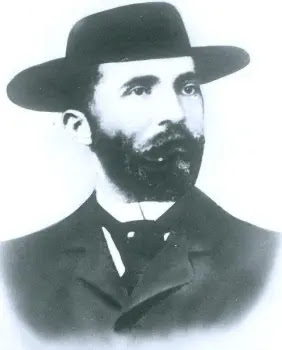
Con Man & Gambler Jefferson R. 'Soapy' Smith ~ Julie Lence

courtesy Denver Post
 Jefferson R. Smith was born into a wealthy Georgia family in 1860. By the end of the Civil War, his family was in financial ruin and moved to Texas, where Jefferson received a good education, due in part to his father’s position as a lawyer, and became an eloquent speaker. But proficient in speech didn’t net him a job, so he hired on with a cattle drive to Abilene, Kansas. He made good money, but while in Abilene, Jefferson’s attention was snagged by a con man and the ‘what walnut shell is the pea hidden beneath?’ game. Jefferson lost the money he made on the cattle drive, and found his calling in life as a gambler and con man.

       Having the gift of gab, he spent the next decade roaming the west and perfecting his skills, determined to be the best poker player. He made his way to Leadville, Colorado in 1885 and met up with Old Man Taylor, whose reputation pegged him the King of the Shell Game. The two joined forces and set up a con involving bars of soap. Taylor would blend in with the crowd while Jefferson, using a tripod and suitcase, would set out several bars of soap and invite people to play a game, hooking their interest with the line, ‘Cleanliness is next to godliness, friends, so step right up and watch me very carefully’. Players were to find the greenbacks he’d hidden within the bars of soap. Taylor would volunteer to be the first plyer and find the $100 bill, giving others the incentive to try their luck, but most only 5 cents, while Jefferson and Taylor raked in the cash, though Jefferson didn’t always keep the money for himself. He gave substantially to churches, widows, the poor, and often paid for the funerals of the girls from the red-light district, and never would he con the townsfolk. His games were strictly for unsuspecting tourists.

         Jefferson eventually left Leadville for Denver, where he added singing and joke telling to his routine. A complaint was filed against him and the sheriff, when filling out the paperwork, couldn’t remember Jefferson’s name but remembered the complaint had something to do with soap, so he wrote Soapy Smith and the nickname ‘Soapy’ stuck.

Soapy went on to become a successful gambler in Denver and opened his own saloon, Tivoli Saloon and Gambling Hall, with the Latin inscription Caveat Emptor (Let the Buyer Beware) above the door. He also formed a gang and a bond with the police department, which benefited both sides. Soapy helped the poor, especially at Thanksgiving by giving out turkeys so none were stolen, and by donating to churches. He even rescued an innocent girl from a detective agency trying to force a confession from her. Eventually, he learned of the silver boom in Creede, Colorado and left Denver for more riches.

In Creede, he formed another gang and put into motion taking control of the town, much to the dislike of rival Bob Ford, better known as the man who killed Jesse James. Ford wanted in on the controlling of Creede, and a third party arranged a meeting between them before bloodshed broke out. The two agreed to keep out of each other’s way, but Soapy went on to build the New Orleans Club with his longtime pal, Joe Simmons. From there, Soapy and his gang did take control of Creede, with Soapy still helping the poor. But the townsfolk tired of Soapy’s control and he went back to Denver and opened a ticket office, where he advertised tickets to Chicago for $5. Another scam, as when people tried to buy these tickets, he told them they were only sold on certain days, of which the present day was not one of them. With Colorado’s governor looking to clean up the lawlessness in Denver, he called in the militia to run Soapy out of town, but Soapy hunkered down in city hall with dynamite, threatening to bomb the building if the militia fired at him. Federal troops from Fort Logan were brought in to keep the peace. The governor withdrew the militia and finally ran Soapy out of town.

Making his way to Mexico, Soapy joined forces with Mexican president, Porfirio Diaz and set up other scams. But when he tried to convince Diaz that Mexico needed a foreign legion and set up a recruiting office for a hefty price, his scam was discovered and the deal broken.

1897 found Soapy heading to Skagway, Alaska when news of the Gold Rush broke. There he built another saloon/casino under the name Jeff’s Place, assembled another gang and used his winnings to open a phony telegraph office; the wires were under water and folks ‘often’ received word from back home to send money, of which Soapy kept. Eventually he stole $3,000 from a miner and a vigilante group demanded he pay it back. Hearing about the meeting the vigilantes were holding on the docks, Soapy armed himself and went, only to meet up with Frank Reid, a foe of Soapy’s. Soapy struck Reid with the butt of his rifle. Reid fired at Soapy and missed. The two got into a scuffle, with guns firing again. Soapy was killed and Reid died almost 2 weeks later from his injuries.

Soapy is buried on the outskirts of Skagway’s cemetery. A plain marker gives the dates of his birth and death. He was 38 and left behind an estate of $250.

Tuesday, June 4, 2024

Oreo Cookies and Mallomars


While I was doing research for my next release, I happened upon the fact that Oreo cookies were introduced in 1912 and Mallomar cookies in 1913. 

Perfect!

My story is set in 1914, and I love to incorporate everyday historical things into my books. Having the characters enjoy these newly invented treats was such a fun addition to my sweet romance.


America's favorite cookie was first developed and produced by the National Biscuit Company (known as Nabisco) in 1912 at the Chelsea, New York City factory. The sandwich cookie consisting of two cocoa cookies stuffed with a sweet fondant filling was introduced in March 1912.

The original design on the face of the cookie featured a laurel wreath around the edge with the name OREO in the center. In the United States, a pound of the cookies in a metal canister with a glass top were sold for 25 cents. The first Oreo was sold March 6 to a grocer in Hoboken, New Jersey. 

Although it is often believed the Hydrox cookie was a copy of the Oreo, it was Oreo that imitated it, since they were introduced in 1908, four years before Oreo made it's debut.. However, Oreo proved far more successful.

No one is completely certain how the cookie got its name. Some believe it derives from the French word for gold, or the Greek word for nice. A food writer, Stella Parks, claims the name was derived from the Greek word Oreodaphne, a genus of the laurel plant family. Others believe Oreo was a short, easy to pronounce word and good for marketing purposes. 

Regardless of the name, Oreo has been popular for more than a century. In 1921, it was renamed, "Oreo Sandwich" and in 1948, that changed to "Oreo Crème Sandwich." In 1974 it became "Oreo Chocolate Sandwich Cookie." 

Today, Oreo cookies are sold in more than a hundred countries and is the highest-selling cookie brand in the world. 


Mallomars were introduced in 1913, also from the National Biscuit Company (Nabisco). A graham cracker circle is overlaid with a mound of marshmallow, then coted in a shell of delicious dark chocolate. The first box was sold in West Hoboken, New Jersey to a grocer there. 

Because of the tendency of the chocolate coating to melt in the heat, the cookies were only sold from September through March. That tradition continues. If you want to eat these wonderful cookies, stock up in the fall and early spring. 

Reportedly, 70% of all Mallomars are sold in New York, which was spot-on for my story, because my heroine, Luna, is from New York.


She’s searching for peace and grace

He’s ready to step into his next big adventure

Haunted by memories of the fateful day that changed her life, Luna Campanelli seeks a fresh start in Pendleton, Oregon. Life in the wild western town is nothing like she imagined, although the rugged beauty of the area soothes her troubled spirit. An unlikely friendship with one of the area ranch hands lifts her hopes, until she discovers the cowboy isn’t who he’s led her to believe.

Hunter Douglas didn’t intend to hide his identity from the woman he met on the train, but when she assumed he was his sister’s hired hand, he didn’t correct her. He never anticipated forming such a deep connection to her, especially when thoughts of her continue to infiltrate his carefully made plans. As a recent college graduate with an inheritance he intends to use to start his own ranch in Pendleton, Hunter must decide if he is willing to open his heart and include Luna in his future.

Will they embrace the unexpected love that has blossomed between them, or let fear tear them apart?

This sweet and wholesome romance is a story of love, healing, and the power of hope in a delightful western setting. Join Luna and Hunter on their journey as they discover what it truly means to love unconditionally.


After spending her formative years on a farm in Eastern Oregon, hopeless romantic Shanna Hatfield turns her rural experiences into sweet historical and contemporary romances filled with hope, humor, and hunky heroes.

When this award-winning author isn’t writing or covertly seeking dark, decadent chocolate, Shanna hangs out with her beloved husband, Captain Cavedweller.

Shanna loves to hear from readers. Follow her online at:

ShannaHatfield | Facebook | Newsletter


Monday, June 3, 2024

Nighthawks – The Nightjar Family


 By Kristy McCaffrey

Nighthawks are a member of the nightjar family, with large eyes, brown and gray coloring, and resemble swallow-like birds, sailing and diving as they fly. They're misnamed as they’re neither nocturnal—they’re active at dawn and dusk—nor are they closely related to hawks.

They have long pointed wings and medium-long tails, but the most striking feature is their small bill, which is barely visible at the tip of their mouth. They feed by flying with their mouth open, swallowing prey whole, and feed on thousands of insects every night.

They were called goatsuckers because of the myth that they used their wide mouths to suckle goats directly from the udders, drinking the milk to sustain themselves. It was thought the goat would stop producing milk and go blind.

Fossils of nighthawks have been found as far back as 400,000 years ago during the late Pleistocene. A group of nighthawks is called a kettle.

* * * * *

Don’t miss my new western coming July 2024. 

Pre-order THE NIGHTHAWK now.


Sophie Ryan’s dream of working for a newspaper has come true. Accompanied by her cousin, Lucas Blackmore, a newly appointed U.S. Deputy Marshal, she arrives in Jerome, one of the richest mining towns in America. And one of the most remote. Although she’s been hired to report for the Jerome Mining News on education and cultural issues, she soon finds herself immersed in something more serious when she finds an enigmatic injured man in the Black Hills claiming to be an ornithologist.

U.S. Deputy Marshal Benton McKay is undercover tracking the notorious train robbing Weaver gang, and the trail ends in Jerome. When he’s injured in the Black Hills and found by a determined and beautiful young woman, he must gain her trust to keep his identity a secret. But keeping her out of trouble proves a challenge, especially with her cousin assigned to assist him. As they track down the band of outlaws, another agenda emerges—the renegades are searching for lost gold believed to have been left behind by the Spanish Conquistadors. And Sophie Ryan is determined to report on it.

Come along with Sophie and McKay as they find adventure, mystery, and love. 

Sophie is the daughter of Logan and Claire from THE DOVE.

 Coming July 17, 2024

Pre-order at

Amazon US

Amazon UK

Amazon CA

Amazon AU

Apple Books

Nook

Add it on Goodreads

Find it at BookBub

Will also be available at Kobo, Google Play, and in paperback.