Wednesday, March 11, 2020

Finding a New Doctor in the South by Rhonda Frankhouser

Photo Copyright
This blog is far from cowboy related, 
but even a sexy cowboy needs a good doctor! 

Moving across country was an exciting adventure, but re-establishing a personal care network was an overwhelming undertaking, to say the least.


It’s funny the things you take for granted when you live in the same town your entire life. I knew everything about my central California hometown. What to do in an earthquake. All the short cuts to avoid traffic. The best hole-in-the-wall pizza places. Most effective schools. Fastest dry cleaner. Coolest hairstylist. Cheapest gasoline. Even the highest ranked doctors…or so I thought.

But I knew zero about Georgia when I first moved here.  

New restaurants would be fun to discover, and trying a new hairstylist was only risking a bad cut, but finding a good doctor would take some serious research. So, I googled, read reviews, then finally I did what any respectable newcomer would do, I asked around.

I don’t know if I got lucky or if I just asked the right people, but what I discovered in my search was astonishing. Not only did I find a professional, savvy, and personable primary care physician, I was shocked by the differences between the healthcare system in California compared to what I found here in Georgia.

On my first visit, everyone on the staff greeted me with a sincere smile. I was taken back to the room on time, and I waited no more than ten minutes for the doctor to enter the room. When she sat down to talk with me, she moved her computer aside and looked me in the eyes. Without interruption, she LISTENED carefully as I explained my medical history and current concerns.

My life changed with her prophetic words. “We’re going to figure this out and bring back your quality of life.”

I swear I heard angels sing.
Photo Copyright

It’s been almost two years since that first visit. Since that time, with the help of some amazing specialists with a dogged commitment to helping me feel better, the following ailments have been discovered, cured and/or avoided.

Colon Cancer
Degenerative/Herniated Lumbar Spine
Gallbladder Disease
Gastritis/Esophogitis
Liver Disease
Varicose Veins


Turns out, she was an angel. I can say without hesitation, if I hadn’t moved to Georgia and found this amazing doctor, one or more of these diseases would have continued unfettered.

Now to be fair, I’m not sure if California has more regulations on doctors discouraging them from ordering appropriate diagnostic tests, but having someone really listen to me, then having a comprehensive care plan created to address my problems, was a true miracle.

If you are suffering with an unknown ailment, seek the answers you deserve. Don’t settle. It’s not all in your head. Push for testing. It could save your life.  

Rhonda Frankhouser is an award-winning novelist, now living in the beautiful state of Georgia.  Follow her at www.rhondafrankhouserbooks.com.  

*This article is based on my own personal experience and is not to be taken as medical advice of any kind.


Tuesday, March 10, 2020

MARTHA, MARY, ROSE, AND MARIE: THEY MADE A DIFFERENCE

Post by Doris McCraw
writing as Angela Raines

Image result for buffalo peaks ranch free images
Buffalo Peaks in Colorado
from Wikipedia
Sunday was International Women's Day, and March is National Women's History Month. As most of you know, I am fascinated and research a lot about the early women in this county, especially those who were part of the Westward expansion west of the Mississippi River. This is in no way a discount of those women who came to this country in the 1600 and 1700s. All women and men who had the courage to make something of their lives and create what we now have deserve to be remembered.

Here is a brief look at some of those early women in Colorado.

1. Martha Maxwell - Naturalist: Martha Ann Maxwell was born in Pennsylvania in 1831. She married widower James Maxwell, who had four children, in 1853. The couple moved to Colorado following the gold rush of 1859. It was while here that Martha began killing and stuffing her own animals. Her work was so lifelike and her practice of posing them in their natural habitat was unique. Prior to her death in 1881 she wrote the book: "On the Plains and Among the Peaks or How Mrs. Maxwell Made Her Natural History Collection".

Image result for images of Martha Mexwell
Martha Maxwell
from Wikipedia

2. Mary Florence Lathrop - Newspaper Reporter, Lawyer: Born in Pennsylvania in 1865, she began her first career as a reporter in Philadelphia. She traveled the world as a reported and after contracting tuberculous she moved to Denver, Colorado. There she attended the University of Denver, studying law and graduating in 1896. Her scores for the bar exam remained the highest for the Colorado Bar until 1941. She argued cases in front of the Colorado and US supreme courts. She was one of the first two women to be admitted to the American Bar Association in 1917.

Image result for images of Mary Florence Lathrop
Mary Florence Lathrop
from Wikisource

3. Dr. Rose Kidd Beere - Physician: Dr. Beere was born in Indiana in 1859. Her father was a military man stationed in the West after the War Between the States. She married Edmund Burke Beere, an attorney in Las Cruces, NM, in 1883 and had three sons. After the death of her husband, Dr. Beere moved to Chicago where she studied medicine at Women's Medical College at Northwestern University in Chicago. She graduated in 1892 and moved to Durango, CO., where she practiced prior to moving to Denver. During the Spanish-American War, she went to Manilla with the Red Cross as a nurse, since they wouldn't let go as a doctor. She had told her father since he had no sons to serve in the military, she would go as the family representative in that conflict.

Dr Rose Leona <I>Kidd</I> Beere
Dr. Rose Kidd Beere
from Find a Grave

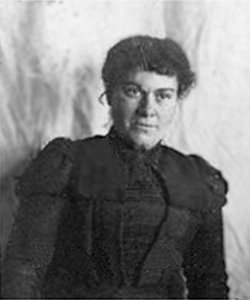
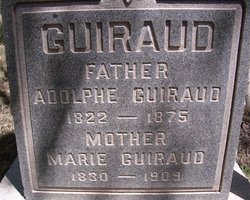
4. Marie Guiraud - Rancher: Born in France in 1830 she moved to Colorado, via Louisanna, Ohio, and Kansas, in 1862. She and her husband homesteaded in Park County, Colorado in addition to Adolphe running a store in a nearby town. After Adolphe's death in 1875, Marie grew the 640 acres into one of the earliest ranches in Park County. In her obituary in the Fairplay Flume, on June 11, 1909, they wrote the following: "After her husband's death, with a large family of little children and heavy financial reverses she struggled on and not only kept their property together but prospered well, added to their possessions and accumulated and estate very nearly as great, if not equal, of the largest estate ever built up in Park County."

 Adolphe Guiraud
From Find A Grave

For those who would like to know  more see the links below:

Extra information on Martha Maxwell

Additional information on Mary Florence Lathrop

Obituary of Rose Kidd Beere & Dr. Rose Kidd Beere

Guiraud Fairplay Obituary & Historic Significance of the Ranch & Buffalo Peaks Ranch

And be sure to check out the novellas in the Agate Gulch stories where the town of Agate Gulch located in Park County, and Teller County, CO.


Doris Gardner-McCraw -
Author, Speaker, Historian-specializing in
Colorado and Women's History
Angela Raines - author: Where Love & History Meet


Friday, March 6, 2020

AMERICA'S CELTIC LEGACY

Irish Immigrants
By C.A. Asbrey

I'm sure it's not a surprise to anyone that Scottish and Irish immigrants to the USA have left an indelible mark on the country. As a Scot, it's a joy for me to see something straight out of my own culture writ large and proudly used a a part of America. It makes me feel included and that there's something in there for me. The way the USA has assimilated so many cultures and traditions is not only fascinating, it's a tangible link with the past still playing out in the present. In music there are so many obvious examples such as Alison Krauss singing this song which was so American it was featured in O Brother Where Art Thou.

https://www.youtube.com/watch?v=DbgfQ48hWuY
And then there's the original version in Scottish Gaelic, Sios Dhan An Abhainn - which also means Down to the River.

https://www.youtube.com/watch?v=X2toIQxHxiM

My ancestors, both Scottish and Irish, also left a linguistic mark on American English in a way which is distinctly different to the English spoken by the English. Both Caledonian English and Hiberno English are recognized as dialects in which the Gaelic grammar and syntax leaks over to change the way sentences are built. It particularly impacts on descriptions, superlatives, and the use of gerunds. Over and above that, Scotland has another language called Lallans or Scots which mixes a Germanic language with old French and Gaelic. That also seeps over to the English spoken by Scottish people and was taken to the USA in the form of some very colourful expressions which we'll look at in this post.

There were also many famous American figures who may not immediately be associated with Gaelic. Henry McCarty, aka Billy the Kid, spoke fluent Gaelic. In fact, the poorer the immigrant the more likely they were to be Irish speakers as the rich were beginning to turn away from their native tongues in both Scotland and Ireland. Gaelic was as the first language of most Irish Americans who immigrated in the big flood of Irish after the famine. A recording of Clark Hust, a cowboy who reportedly worked on a ranch with the infamous gunslinger, tells us that Billy the Kid helped translate Irish for his employer. In the recording, Hust tells that while he and Billy the Kid were working at the ranch, the owner, Pat Coghlan, had a niece, Mary, who came from Ireland to stay with the family. The girl could only speak Irish and Coghlan spoke only English, so they used the Kid who spoke both English and Irish as a translator. Newspapers from the period were checked. Coghlan’s niece really did visit, which meant that Hust was not lying about her existence. 

Billy the Kid

Academics steeped in the classics and linguistic training based only on the English taught in the haughty circles of academia often dismissed some word origins as unknown or slang. It took a proper academic examination of the language by scholars who understood the linguistic roots of the Goidelic branch of Indo European tongues to pull apart words and phrases which were previously dismissed as Americanisms to find that they were, in fact, a form of Gaelic which melted into the lexicon of 19th century America.

Of course there are many in use in the English language in general like brogue (bròg) trousers (triubhas), slogan (sluagh-ghairm meaning battle cry) and even glamour (Lallans meaning magic, enchantment).

Daniel Cassidy's book, “How the Irish Invented Slang”, and Niall Ó Donaill's “Foclóir Gaeilge-Béarla” has helped to unravel the origins of words now thought of as American. I've added a few of my own too.

Gaelic words used in American English -  both Irish and Scottish

Poker - Surely the most iconic of card games played by cowboys? Scottish - pòca Irish - póca.
The eagle-eyed of you might note that the word is the same but the direction of the accent changes. Irish and Scottish Gaelic are related  but they are not the same. There are many differences, but some words are, indeed, very similar.

Sap/saphead - This one is Scottish and comes from the Lallans word for bread soaked in milk to be given to invalids and infants. It literally means soft-headed.

Shindig - From sìnteag (Scottish) to skip, or jump around.

Shindig!


Whiskey or Whisky - Scottish spelling is without the 'e'. I'm sure everyone knows that it comes from the Gaelic and means the water of life in both Scottish and Irish.

Yeah, right  - That typical cynical response may not seem very Celtic, but it does seem typically American and defies the norm in English on double negatives and the apocryphal double positives. It does, however,  translate directly from the Irish phrase commonly expressed by many people challenging authority, "Mar dhea". It also perfectly displays the way superlatives are built in Gaelic by adding words together. Another example of this is the way the Scottish term for boss translates literally as 'the high head one.' Another example of this syntax came over to English as out and out. That is a direct lift from Scottish 'amach is amach' to add intensity to the words coming next.

Shanty - Irish and Scottish Gaelic sean taigh meaning an old house 
Shanty


Gee is the approximate pronunciation of Dia, or the word for God in both Scottish and Irish Gaelic

Holy cow - is Holy Cathú or Holy Cahoo or Holy Grief.

Darn it is another Gaelic exclamation. In Irish you say daithairne ort, which means, "misfortune on you."

Gee whiz comes from Dia Uas pronounced Geeuh Woous which means "noble god."

Hillbilly - The pejorative term for people living in rural areas of the United States, particularly around the Ozark Mountains (Oklahoma, Missouri, Arkansas) and Appalachia, initially related to the 18th-century Ulster Protestant settlers in the Appalachian Mountains. Some think the term comes from supporters of King William III, Billy’s Boys; others point to a Scottish word for companion, “billie”, combining both the Ulster and Scottish terms. It should be noted that the protestant followers of William of Orange were natural enemies to the Catholic Irish, hence the unflattering connotations. 

Hillbilly


Swell  - the word sóúil or "luxurious"

Ballyhoo - Is basically the phonetic pronunciation of bailliú, which means exactly the same thing.

Swanky -  the Irish word somhaoineach or "valuable".

Buddy is another Irish Gaelic word, which comes from the Irish expression, a bhodaigh, which means something like "pal." The root of the word bhodaigh is strangely, bod, which is the Irish word for penis, and pronounced like bud.

Can - If you kick a guy in the can, you're kicking him in his ceann which is the "extremity" of a thing, and also "head," which is at the other end from the tail end.

Skedaddle in a jiffy - you are sciord ar dólámh (make an all out slip) in a deifir (in a hurry). Trust me. They sound alike when I say them. Gaelic isn't very phonetic.

'Messing with'  and other gerunds - this gerund meaning, to trifle with was first seen in print in mainstream English in 1903, but like most colloquial terms was in full use long before it transmitted to the world of English academia. It's quoted in the Dictionary of Scots Language as far back as 1340 and is a direct transposition of the way the Scots words 'footer' or 'bauderin' are used. Gaelic doesn't have Gerunds, it has verbal nouns instead. Gaelic expresses habitual aspect in present tense. It also borrows from Gaelic syntax with the use of the durative tense, which means the translation of mess has to turn into 'messing'. Passive tenses in Gaelic speech patterns also show that things are at, or with, a person. Both Scots and Irish are more likely to say things like, "He is after eating his dinner" versus, "He has eaten his dinner" They are also likely to use the dative as in, "The fire went out on me" (very American) or "The soup boiled over on me". Therefore someone teasing or annoying someone is likely to be told they are 'messing with' them, using the verbs in a previously unEnglish way which is now very American.

Verb nouns didn't exist in Old English, but did persist in the Celtic fringes in a way which differentiated the way people actually spoke to the written form. John McWhorter stresses again and again in Our Magnificent Bastard Tongue how unique English is, how odd these constructions are, and how therefore they must have come from the Celtic languages. It also explains why English is the only Germanic language to develop them.

The syntax leaks over in other areas too. Where British people would say, "She resigned on Thursday", Americans often say, "She resigned Thursday." US English will also drop the word 'on' before stating a date in a sentence.

I know many Americans are very proud of their ancestry. I hope this post helps you feel part of something else they left behind - their language - and it is still recognizable back in the old country to the present day.

Blurb: 
After suffering a horrific loss, Nat and Abi must try to piece their lives together, build a future, and repair the past. But before they can figure out their own complicated relationship, they must unite to help Jake find his children—no easy task, since their mother has disappeared, and they’ve been left with a priest who is bent on giving them away!
In a maelstrom of grief, anger, and legal complications, one of Abi’s friends, Dr. Vida Cadwallader, also a female Pinkerton, steps up to help. As Vida tries to help The Innocents make sense of what’s happening, she soon becomes embroiled in mysterious happenings within the brutal insane asylum where she consults part-time. When one of her colleagues is murdered, Vida quickly becomes a suspect.
With no time to lose, Vida, Abi, Jake, and Nat band together to free one of the asylum’s unwilling patients who may hold the key to all their unanswered questions—if she only lives long enough to survive the escape.  Now, with an unknown murderer on the loose as well, time is running short for them to find the children, solve the crime, and spirit the patient away to safety. Can they keep their necks out of the noose and buy enough time to solve the mystery shrouding their lives? Can anyone make sense of this world of shadows, darkness, and madness?

Excerpt

A wobble on the mattress jolted Sewell out of the arms of his dream-woman. He grunted and shifted under the covers, moving onto his other side. He suddenly felt a dead weight on top of him, an immobilizing, ponderous pressure which left him paralyzed and unable to move. Sewell gasped, sucking in a breath of a sweet, sickly miasma which filled his lungs as he took short pants of fear. His eyelids opened snapped open as the horror of his immobility climbed. He was pinned beneath his bedclothes, unable to move a limb, except for the feet which flailed and floundered beneath the tangling sheets.

He tried to cry out but found his impotent screams lost in the fabric jamming his mouth. He lay, pinned to the bed, rigid and immobilized as his eyes became accustomed to the darkness and a figure loomed into view. Sewell’s heart stilled at the sight of a hideous crone looming over him, her wild white hair standing straight out from her head in a tangled mass in every direction. Her lips curled back in disdain around a mouth which appeared to be laughing, but not a sound was to be heard. The hag’s eyes were in shadow, lending her the appearance of a screaming skull floating above him. She sat on his chest, rendering him unable to scream, or even move as the smell filled his nostrils. It felt like powerful arms and legs kept him pinned down. What kind of nightmare was this?

The gorgon pressed close, so close he could feel the heat of her breath on his face. All he could do was blink and tremble, too stupefied to move. It seemed like the longest time before the blackness crept in, and his eyelids dropped closed once more. The nightmare didn’t leave, it took him; engulfing him entirely until he felt nothing.

Dawn crept in by inches, the dark transitioning from black to gray, until the low morning sunshine added a warming brightness to the scene. The shadows were as long as the sunbeams were cleansing, chasing down the retreating darkness to a mere frown until the morning smiled on another new day. The sun’s confidence grew, climbing higher in the sky, proud of the majestic light which gave life and succor to the whole planet—well, not all of it. Sewell Josephson never saw another day. That day saw him though, swinging gently by the creaking rope fixed to the newel post at the turn of the staircase on the top landing. The ligature bit into the neck below the engorged face from which a purple tongue protruded from his dead gaping mouth.

The only life in the house stared at the figure with unblinking black eyes and a twitching tail. The cat turned her head at the sound of a key in the back door. A human at last. Maybe the cook would know what do to?


        Kindle Link        Trade Paperback Link

C.A.Asbrey


Chris Asbrey has lived and worked all over the world in the Police Service, Civil Service, and private industry, working for the safety, legal rights, and security of the public. A life-changing injury meant a change of course into contract law and consumer protection for a department attached to the Home Office.     
In that role she produced magazine and newspaper articles based on consumer law and wrote guides for the Consumer Direct Website. She was Media Trained, by The Rank Organization, and acted as a consultant to the BBC's One Show and Watchdog. She has also been interviewed on BBC radio answering questions on consumer law to the public. 

She lives with her husband and two daft cats in Northamptonshire, England—for now. She’s moving to the beautiful medieval city of York.
Where to find C.A.:
Blog - C.A Asbrey - all things obscure and strange in the Victorian period  http://caasbrey.com/
The Innocents Mystery Series Group  https://www.facebook.com/groups/937572179738970/ 
Link to latest book - In All Innocence - mybook.to/InnocentMinds


Wednesday, March 4, 2020

History of the Sewing Machine By: Julie lence

Courtesy of Wikimedia Commons

I think it’s true what some folks say—authors sometimes incorporate a bit of themselves into their stories. For me, I tend to turn some of my fears or lack of skills into character strengths. One such talent I don’t possess is the ability to sew. In high school, I took a Home Ec. class where we had to make a dress. That was the last time I attempted that, though I can sew a button on a shirt. Most of my heroines can sew, and in one particular scene from No Luck At All, it was the hero who brought up my topic for today’s blog. Creel spent weeks crafting a surprise for his wife, but before he could give it to her, he had to go to Denver for an item the surprise needed. He couldn’t tell her his reason for making the trip without her, so he brought along his father and gave the excuse his father needed to go to Denver to purchase a sewing machine, which made me wonder when the sewing machine was invented.

Saint's Machine Courtesy of Wikipedia 
In 1755, German engineer Charles Fredrick Wisenthal received the first patent for a needle from the British. His design featured a double pointed needle with an eye at one end. In 1790, Englishman Thomas Saint invented the first sewing. His machine used a chain stitch, with a stitching awl piercing the fabric and a forked point rod to carry the thread through the hole where it would hook underneath and move on to the next stitch. Featuring an overhanging arm, a feed mechanism, a vertical needle bar, and a looper, the machine was only meant for canvas and leather to aid in the manufacturing of saddles and bridles, but was also used in the manufacturing of a ship’s sails. Though advanced for the era, Saint’s machine required steady improvement in the decades to follow. William Newton Wilson found Saint’s drawings in 1874 and went on to make adjustments to the looper, building a better machine which is currently owned by the London Science Museum.
Thimonnier's machine courtesy of https://www.contrado.co.uk/
Before Wilson, several others designed their own sewing machines. Englishmen Thomas Stone and James Henderson created their own version in 1804. Austrian Josef Madersperger presented his first working sewing machine in 1814, received financial support from his government and unveiled a sewing machine that imitated the weaving process by use of a chain stitch in 1839, but it was Barthelemy Thimonnier who created the first practical and widely used sewing machine in 1829. A French tailor, Thimonnier’s machine sewed straight seams with a chain stitch. He went on to contract Auguste Ferrand to help with the drawings of his machine, which was made of wood and used a barbed needle, and earned a patent in 1830. That same year, he went into partnership with others and opened the first machine based clothing manufacturing company, sewing uniforms for the French Army.   
The first American sewing machine was invented in 1832 by Walter Hunt. His machine was equipped with an eye-point needle. The curved needle went through the fabric horizontally, leaving the loop as it withdrew. The shuttle passed through the loop and the feed let the machine down, requiring the sewing machine to be stopped frequently and reset. Hunt lost interest in his invention and sold individual machines without securing a patent. It was John Greenough who secured the first American patent for a sewing machine in 1842.  
Howe's Machine courtesy of https://www.contrado.co.uk/
The first sewing machine to incorporate all of the elements from past inventors was built by Englishman John Fisher in 1844. American Elias Howe came next in 1845. His machine was similar to Fisher’s, only his fabric was held vertically and not horizontally. Howe traveled to England to gain interest in his invention and later returned to the states to find some folks had infringed on his patent, one of whom was Isaac Merritt Singer.
Singer's invention courtesy of Wikipedia
Singer’s machine, which featured elements of Hunt’s and Howe’s machines, was awarded an American patent in 1851. He’d seen a rotary sewing machine in a Boston repair shop and elaborated a better design. Instead of a rotary shuttle, his had falling shuttle. The needle was mounted vertically and included a presser foot to hold the fabric in place, and since Fisher botched the filing for his patent, he didn’t receive recognition for the modern sewing machine. That honor went to Singer. However, Howe sued Singer for using his ideas and won the case. Later, Singer took out a license under Howe’s patent, paid Howe for each of his machines then partnered with Edward Clark to create the first hire-purchase agreement, which allowed people to buy a sewing machine and pay for it in timely installments.
In 1856, Singer, Howe and a few others formed the Sewing Machine Combination; four companies pooling their patents, with a result that all other manufacturers had to obtain a license and pay $15 per machine. This lasted until 1877 when the last patent expired. In 1885, Singer patented the Singer Vibrating Shuttle sewing machine, which some suggest was the first practical sewing machine for domestic use worldwide. Millions of these machines were made until the rotary shuffle came along in the early 20th century. Singer Sewing Co. developed the first electric sewing machine in 1889, and by the end of World War I, these machines were being sold to the public.
Currently, Singer is still one of the top selling sewing machines. 

Tuesday, March 3, 2020

A Season of Mud

by Shanna Hatfield

During my growing up years, I lived on a farm that was located about a mile and a half from the closest paved road. 

In the summer, great billowing clouds of dust on the packed dirt road would surround vehicles, sometimes making it dangerous to see if someone was coming at you or about to crash into you from behind.

In the winter, the county kept it plowed for the most part, since we tended to get quite a bit of snow.

But just about this time of year, when the snow would melt and we sometimes had spring rain on top of it, all that dirt would turn into a messy, rutted, quagmire that lasted for about three weeks. Eventually, the county road crew would come and blade it and occasionally even put down a layer of gravel.


Until that happened, though, it was nightmarish mess. Sometimes the best you could hope for was to get in a rut and stay there until you hit the pavement. One year, it was so bad we ended up with three vehicles stuck in the road in one day.

Mom, my sister, and I were on our way to town. We made it down our lane and turned onto the road. A neighbor had a feedlot just a few yards down the road that sat on a slight incline. As the snow melted and the rains came, I think every oozing thing on the ground in the feedlot eventually slid out onto the road. Anyway, Mom managed to find a rut and stay in it until we hit a big pothole and from there, the car was stuck. Like up past the hubcaps stuck.

I was outvoted as the one who had to get out and walk back to the house, and tell dad of our predicament.

He got the pickup and went to pull Mom out. Only the pickup ended up stuck.  He then had my brother bring the tractor (thank goodness for CB radios before we all had cell phones). Guess what? The tractor got stuck, too.


One of the neighbors had a huge piece of heavy equipment that they finally used to get us (and the other vehicles that had also tried and failed to make it through) unstuck.

You can read about some of the adventures of my youth in the scenes they inspired (and continue to inspire) in many of my sweet romances.

Right now, you can get Heart of Clay for free.


It's available from the following retailers:

USA Today bestselling author Shanna Hatfield is a farm girl who loves to write. Her sweet historical and contemporary romances are filled with sarcasm, humor, hope, and hunky heroes. When Shanna isn’t dreaming up unforgettable characters, twisting plots, or covertly seeking dark, decadent chocolate, she hangs out with her beloved husband, Captain Cavedweller.
Shanna loves to hear from readers. Follow her online at:
Find Shanna’s books at:


Monday, March 2, 2020

Whiskey in Early America


By Kristy McCaffrey


To the early settlers of America, alcohol was a necessity. While drinking was certainly done for pleasure, it was also used for health concerns. Water was notoriously unhealthy, particularly in settled areas where waste and drinking water intermingled. Even small children drank a mildly alcoholic thin beer.

Stills were used, and everything was thrown in, from wild berries to pumpkins. Favorites were pear brandy, applejack, and metheglin (a type of mead flavored with cinnamon, chamomile, and other herbs and spices).

In 1640, William Kieft, director general of the Dutch New Netherland colony, opened the first commercial distillery on Staten Island. He used corn and rye, making him the first whiskey distiller in the colonies.


As the Americas expanded, where you lived influenced what you drank. Farmers had easy access to grain alcohol. Urban centers imported brandy and wines, such as Madeira. The most popular drink, however, was rum, which was distilled in New England from molasses imported from British colonies in the Caribbean.

By the early 1800s, rum consumption had declined, and whiskey took its place. The explosion in production coincided with the influx of German, Scottish, and Irish immigrants, who brought a cultural knowledge of distilling with them.


Jacob Beam (born Jacob Boehm) was the son of German immigrants and the creator of the Beam distilling dynasty. He moved from Maryland to Kentucky, found fertile soil for growing corn, and was able to create affordable liquor for the masses.


Connect with Kristy


Friday, February 28, 2020

KANSAS FORTS AND TRAILS by Zina Abbott


I’m sure I’m not the only historical author who has found herself in this position.

I’m writing another book for the Lockets and Lace series. My earlier books have dealt with the Atwell family that (mostly) settled in Salina, Kansas. They have dealt with Fort Riley and the Kaw, or Kansa, Indians, as well as suffered some excitement because of the hostile native tribes. Although I have researched quite a bit about these topics, my current book is set in the second half of the 1860s, which means several more forts were built in Kansas, especially as the American Civil War drew to an end.

In 1858, gold was discovered at Cherry Creek in Denver and started the Pike’s Peak gold rush, thus turning the Indian trail that followed the Smoky Hill River into a prospectors’ and freighters’ trail. In 1862, several bills were signed into law by President Lincoln, including the Homestead Act. That act opened the floodgates of those Americans choosing to move west to claim land. Many chose to homestead on the buffalo hunting grounds of the Cheyenne, Kaw, Arapaho, and several other tribes. After Butterfield lost his contract to use the Southern route, he established his new route to Denver through Kansas.
 
Frank C McCarthy- The Run to the Way Station
While the white Americans were fighting each other in their civil war, several native tribes took advantage of the situation and raised havoc with the whites who settled on or crossed their land. This continued through the late a860s and 1870s until all the hostile Plains tribes were subdued, forced to sign treaties, and confined to reservations.

These forts were not established for long-term use like Ft. Leavenworth or Ft. Riley. The following is from Marvin H. Garfield who wrote The Frontier Defenses of Kansas:
 
"THE name “fort” is perhaps a misnomer when applied to the military posts of the western frontier during the sixties. No huge, grim structure of defense which usually is associated with the name fort was ever erected on the western border. Nor did the western fort usually possess a stockade or blockhouse for defensive purposes. Officers' quarters, soldiers' barracks, stables, military storehouses and headquarters buildings, grouped around a trim parade ground, constituted the frontier fort. While no doubt a disappointment to many of its critics the military post of the Middle West admirably fulfilled the purposes for which it was constructed, i. e., the keeping open of lines of travel and communication and the protection of outlying settlements."
                              
Fort Larned 1867
Here is a tidbit about Fort Larned that explains the purpose for the existence of most of the Kansas frontier forts of the 1860s and 1870s:

     Fort Larned came into existence on October 22, 1859, in response to the need to protect the constantly increasing traffic and the recently established stage stations on the Trail from the resistance of the Plains Indians. The post was first called "Camp on Pawnee Fork." On February 1, 1860, orders were issued changing the name to "Camp Alert" because the small garrison of about 50 men had to remain constantly alert for Indians. 

Back to my research. I have my heroine interested in two Army officers she meets at Fort Riley. However, with the building of the frontier forts to the west, and Fort Riley having been established as the primary supply fort for many other forts she must deal with them being sent where needed.

I found some great information about the Kansas forts. The Kansapedia Kansas Historical Society and Legions of America sites are wonderful sources for information. However, I’m a charts and graphs girl. I needed the big VISUAL picture.

Author's chart of Kansas frontier forts (partial)

First, I searched for information about the Kansas forts, the part of the state each fort served, and its primary purposes. I put together a excel spreadsheet that probably only makes sense to me. However, it did allow me to understand three things: 

  *  Most of the newer forts (camps, cantonments) were built along one of two trails: Santa Fe Trail or the Smoky Hill Trail. In fact, Fort Leavenworth that was first established in 1827 as Cantonment Leavenworth had as one of its missions the protection of the Santa Fe Trail.
  *  Most of the newer frontier forts in Kansas were built specifically to deal with protecting white American interests from the hostile Native American tribes. Once their purpose was served, they were discontinued.
  *  Civilian towns grew up around several of the forts. Once the forts in those locations were abandoned, all that remained were the towns.

Why am I so late posting today? I’ve been making a map. Why did I not use one already available? I was unable to find one in the public domain. However, I did find a public domain Kansas river map, and little ol’ mapmaker me put this together. It does the job. It also convinced me I need to invest in one of those pens that goes with my photo-editing program. The mouse and I don't get along well when it comes to freehand drawing.
 
Author's towns, forts, and trails map - not drawn to scale

Based on this information, I have decided my Jake Burdock in Hannah’s Handkerchief will be sent to head up a freight train escort from Fort Riley to Fort Harker. After, he will be assigned farther west to help deal with the hostilities. My Hannah falls in love with Andrew Call at Fort Riley. he also is involved in supplying the forts on both the trails. Seeing the map, and knowing the years the forts were built, helped me put it all together--important since my story starts in 1865, and some of the forts were established a year or two later.

Now I have the big picture before me, it is time to finish the fine details in my writing and get the book out to my readers.

Hannah’sHandkerchief just has its cover reveal earlier this week. It is now on preorder. It will be available March 27th. You may read the book description by CLICKING HERE.

Here is a snippet:

         Finally, he stood before her and asked her for the next dance, which happened to be a waltz. She noticed he was not more than three inches taller than she was. Although compactly built, his broad shoulders and narrow waist filled out his uniform well. His dark brown eyes appeared to dance with a light that came from a different source than those that lit the ballroom.
         “May I introduce myself. I’m Lieutenant Burdock.”
         “Pleased to meet you, lieutenant. I’m Miss Atwell.” Much to Hannah’s chagrin, Mrs. Prescott had earlier coached both her and Kizzie not to offer their first names.
         “Ah. I have already had the pleasure of meeting another Miss Atwell this night.”
         Hannah had to force herself to keep from grimacing. She did not want Lieutenant Burdock to be overly impressed with Kizzie. Instead, she smiled. “Yes. That would be my cousin.”

If you think I went to all this work for one book, think again. I will be writing two short novellas—just the right size for quick summer reads—and will use this same research for their plots. Mail Order Roslyn and Mail Order Penelope, both part of the Widows, Brides & Secret Babies series, do not have preorder links yet. I just barely shared their covers. Here are three things I can tell you about this pair of stories:
  *  Although written as stand-alone books, this pair of novellas will be a duet—a series within a series.
  *  Roslyn and Penelope are cousins.
  *  Both stories involve stagecoaches (along the new Butterfield Overland Despatch trail that follows the Smoky Hill Trail protected by above-discussed Kansas frontier forts.)


Sources:
https://kshs.org/p/the-military-post-as-a-factor-in-the-frontier-defense-of-kansas/12525

https://www.santafetrailresearch.com/research/fort-larned.html