“Black Friday” is a fairly recent marketing innovation
designed to help businesses to get their profit and loss sheets “in the black”
through promoting sales for Christmas. However, in the 1800s, when many people
still lived in rural areas, the situation was much different than from today.
Most of what people acquired they either made themselves, or they bought from a
local dry goods store or mercantile—or specialty shops. However, what about
those items that were either not available from local shops, or which, by the
time the local retailer added his profit margin, were too expensive for the
average person to purchase?
Toward the end of the
century, another means of purchasing wanted goods at a reasonable price became
available—mail order catalogs.Unlike today, those shopping by catalog dared not wait until the Friday after
Thanksgiving (especially in the years Thanksgiving fell on the fifth Thursday
until the Forth Thursday was established).
Between the mid-to-late 1800s and the mid-1930s, Chicago was
one of the most important industrial centers in the country. It was from
Chicago folks all over North America could order goods from a catalog.
MONTGOMERY
WARD
The first of what became the two biggest general appeal mail
order catalogs was the Montgomery Ward catalog founded by Aaron Mongomery Ward.
It is believed he started his business at his first office, either in a single
room at 825 North Clark Street.
or in a loft above a livery stable on Kinzie Street, between Rush and State
Streets.
While
working as a traveling salesman for various dry-goods retailers, Aaron
Montgomery Ward came in contact with members of rural American communities, who
desired strongly the comforts of city life. Unfortunately many in rural areas were
subject to inflated costs passed on by intermediaries. Also, the levels of
product quality were often at question. Ward’s goal was to eliminate the intermediaries,
and, thereby, provide goods for rural community members at a lower cost. Using
his catalog, customers would purchase goods by mail and have them delivered to
their nearest train station.
Ward
experienced a challenging beginning to his business, including having his
inventory destroyed by the Great Chicago Fire of 1871. He did manage to establish
his business at his offices on the corner of North Clark and Kinzie streets
with two partners and $1,600 in start-up capital.
 |
Early Mongomery Ward catalogs
|
On
August 18, 1872, the first Montgomery Ward catalog—designed by Mr. Ward himself—was
released. There were other businesses that published mail order catalogs, but Aaron
Montgomery Ward is credited with coining the term “general public mail order
catalog.” The catalog was first
distributed as a single sheet of paper that sold 163 items and included
instructions on how to order.
The
following year, Ward was abandoned by his two partners. He continued his
business with the help of his future brother-in-law, Richard Thorne.
Throughout the next several decades, Ward experienced rapid
growth. Most rural customers were attracted to the wide range of items they
otherwise could not purchase locally. Starting in 1875, Ward began his policy
of satisfaction guaranteed or your money back, which prompted customers to
place a great deal of trust in his catalog products. Ward’s
catalog would quickly prove to be a success, with the catalog growing to 32
pages by 1874 and to 152, with 3,000 items, in 1876.
By
1883, a single page had turned into 200 pages, with over 10,000 items. The
catalog, which became popularly known as the "Wish Book", later grew
to 240 pages and 10,000 items with over three million subscribers.
In
1896, Wards encountered its first serious competition in the mail order
business, when Richard Warren Sears introduced his first general catalog. In
1900, Wards had total sales of $8.7 million, compared to $10 million for Sears. Both companies struggled for dominance during much of the 20th century.
SEARS
(SEARS & ROEBUCK)
After his family lost their fortune, Richard
Warren Sears went to work for the railroad. In 1886, when he was twenty-three, his station received
a shipment of gold watches from a Chicago manufacturer.
A common scam existing at
the time involved wholesalers who would ship their products to retailers who
had not ordered them. Upon refusal, the wholesaler would offer the already
price-hiked items to the retailer at a lower consignment cost in the guise of
alleviating the cost to ship the items back. The unsuspecting retailer would
then agree to take this new-found bargain off the wholesaler's hands, mark up
the items and sell them to the public, making a small profit in the
transaction.
Knowing about the scam, the
local consignee, jeweler Edward Stegerson, refused the unsolicited shipment.
Sears jumped at the
opportunity, and made an agreement with the wholesaler to keep any profit he
reaped above $12, and then he set about offering his wares to other station
agents along the railroad line for $14. The watches were considered an item of
urban sophistication. Also because of the growth of railways, and the recent
application of time zones, farmers and railroads alike now needed to keep time
accurately. For those two reasons the station agents had no trouble selling the
watches to passers-by.
Within six months, Sears
had netted $5,000. He felt so confident in this venture that he moved to Minneapolis
and founded the R. W. Sears Watch
Company. Possessing a talent for writing promotional copy, he placed
advertisements in farm publications and mailed flyers to potential clients. He used
the personal approach, speaking directly to rural and small-town communities, using
his ads to persuade them to purchase by mail-order.
In 1887, Sears moved his
company to Chicago. The same year, he also hired watch repairman, Alvah Curtis
Roebuck to repair any watches being returned. Roebuck was Sears's first
employee, and, in 1891, he became co-founder of Sears, Roebuck & Company.
In 1895 the company was
short of cash. Roebuck left the business. Sears sold one half of the company
for $75,000.00 to Aaron Nusbaum and his brother-in-law, Julius Rosenwald. The
company was incorporated in Illinois as Sear Roebuck & Co. of Illinois on
September 7, 1895.
The first Sears catalog was
published in 1893 and offered only watches.
By 1897, items such as
men's and ladies clothing,
Children’s clothing,
Footwear,
Sewing machines, sofas, chairs, and baby buggies
Stoves, silverware,
Bicycles, and athletic equipment were offered.
The 500-page catalog was
sent to some 300,000 homes.
Like Ward, Sears catered to
the rural customer. He knew what the rural customer needed. He also had
experience working with the railroad and he knew how to ship merchandise to
remote areas.
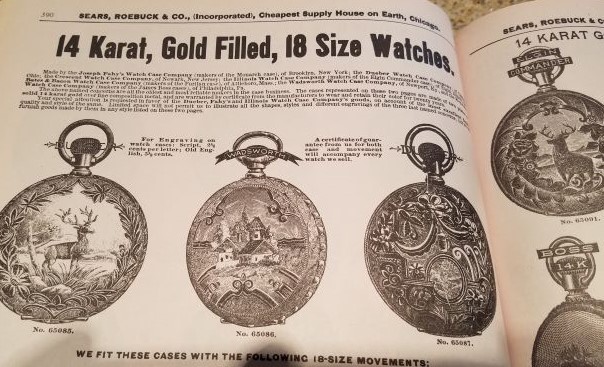
I have a reproduction copy of the 1897 Sears Roebuck
& Co. catalog. What fun it is to scan through it and see the “hot” items of
that era. Oh, if prices today were only the same.
After claiming land in New Ponca, Oklahoma Territory,
during the 1893 Cherokee Outlet Land Run, Marigold Calloway, my heroine in Marigold,
Christmas Quilt Brides, Book 2, ordered in a kit house to be shipped in by rail
and assembled on her town lot. Although Sears catalog sold kit homes starting
in 1908, hers was not from that company. However, in 1894, the year this story
takes place, she definitely could have shopped using either of the featured
catalogs.
To find the book description and link for Marigold,
please CLICK HERE.
Sources:
http://websites.umich.edu/~eng217/student_projects/chicagoretail/wardstore.htm
https://www.chicagohistory.org/montgomery-ward/
https://en.wikipedia.org/wiki/Montgomery_Ward
https://archive.org/details/catalogueno13spr00mont
https://en.wikipedia.org/wiki/Richard_Warren_Sears
https://en.wikipedia.org/wiki/Sears

.png)
.png)


.png)